tunisian tagine
November 15, 2009
Last summer, when we were in New York at the Fancy Food Show we met the owner of Moulins Mahjoub, a Tunisian producer of olive oil, olives, pepper and tomato pastes, and sweet preserves. We fell in love with the products, and ordered them right away for the store. When they arrived, we weren’t really sure what to do with them. We had a few recipes, and a vague idea about the uses of some of them, but we really wanted to learn more about the food, and food culture. Terry, a customer from Burlington came in one day and was looking at our savory food products, and happened to mention that she had a friend from Tunisia. One thing led to another, and we ended up having Cecile Houle (a pastel artist from France and Tunisia) come and do a cooking demonstration for Art Walk, as well as a cooking class! I really loved the food that she made. So much so, that the next day, on the way home from work, I stopped and gathered all the necessary ingredients to attempt to recreate some of the dishes that she made. This is the Potato Tagine, seasoned with pickled lemons, salted mountain capers, and harissa.

The recipes are simple, but the combination of ingredients are unique, and delicious. One of my favorite combinations is of fresh cilantro and parsley together with onions, garlic, and other spices. The mixture is unique, and smelled so good while it was being prepared!
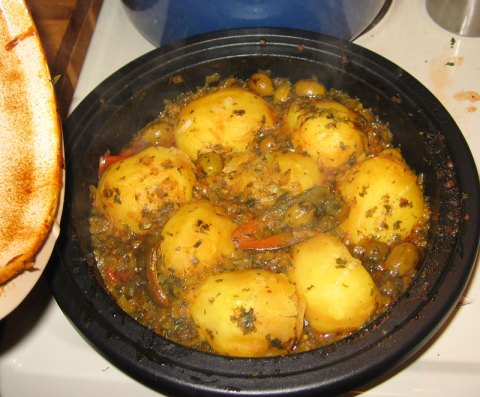
I ended up with a huge tagine full of potatoes as well as an entire 5.5 liter pot of stew…I had to call in the reinforcements to eat everything, and even then, it lasted several days. I tend to make too much, but it is usually eaten by someone.
canning kraut
November 11, 2009
I came home last monday night to a “matured” crock of sauerkraut. I left it with my mom for this last week, and when I returned, it was a lovely golden color, tart, and crunchy! I started the sauerkraut about 3 1/2 weeks ago, and it sat in my kitchen, periodically scenting the whole house. I had to watch it, making sure that the top remained clean throughout the process of fermentation. Making sauerkraut is much easier than I had initially imagined. It is amazing to me how simple a recipe can be, yet taste so good! Basic sauerkraut is made with salt and cabbage. Thats it!
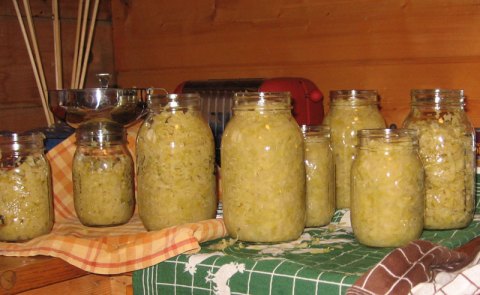
Fully fermented sauerkraut was traditionally placed in a cool location to spend the winter. Now days, around here anyway, it is canned, frozen, or eaten when it is finished. I used a recipe for processing my sauerkraut from The Joy of Pickling. The remaining kraut I have put into jars to hand out to family (and the little left is going to go in the freezer). I know that sometimes freezing is better, but for some reason I really prefer to can things. I guess it has to do with the possibility of a storm leading to a power shortage, leading to frozen goods going bad…
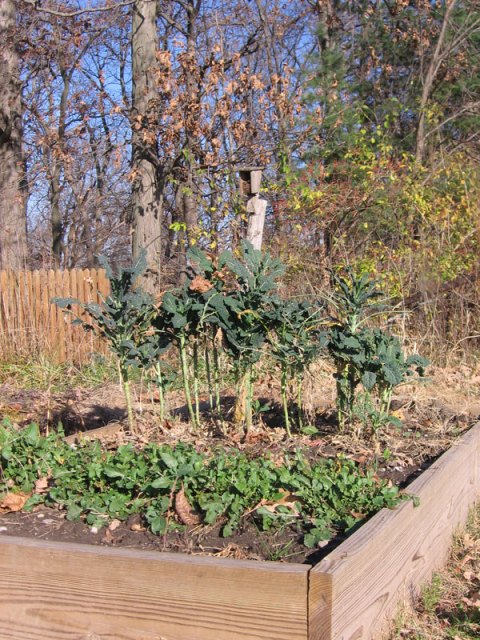
I was out of town for a week, and when I returned, I imagined that everything in the garden would be brown. Fortunately things disappear in stages. The arugula, kale, thyme, and parsley seem to be holding out for as long as they can.
My two favorite November fruits, pomegranates and persimmons, were ripe when I was visiting California, and I made sure to bring as many back as I could. (We picked some and purchased some from farmers, and from the farmer’s market!)
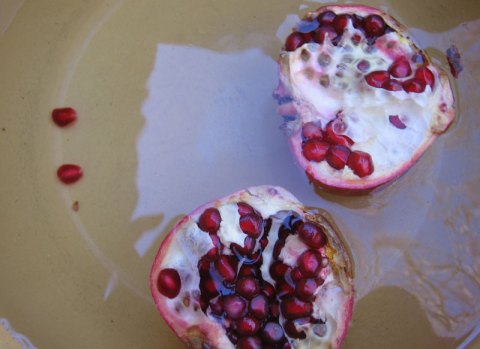
Pomegranates must be my favorite fruit. There is something SO satisfying about carefully peeling each seed away from the bitter white surrounding it, making sure that each seed remains whole, and then collecting the seeds in a glass, or perhaps eating them one by one.

There is a trick however, if you ever find yourself without the time to spend on carefully peeling each seed. Simply fill a deep bowl up with cool or room temp water. Score the outside of the fruit all the way around in several sections with a knife and submerge the fruit in the water.
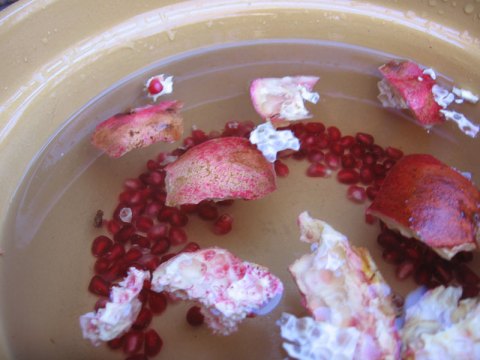
When the pomegranate is submerged, carefully break the pomegranate sections apart, keeping the fruit under water so that the seeds wont burst and spray you with the bright red juice. When all the seeds are removed from the white, the seeds will sink, and the white will float to the surface to be gathered and discarded. Then remove or strain the seeds, and gently dry with a kitchen towel. The entire process is done under water, and this helps to reduce or eliminate staining, and keeps the seeds separated from the inedible white part!

For lunch today, I wanted to mix fresh Iowa greens with fresh California pomegranate. I picked some of the lingering spicy arugula, and topped it with sweet ripe pomegranate seeds. For salad dressing I spooned on top some raspberries that I preserved in apple cider vinegar about a month ago. Then I drizzled the whole thing with a little bit of olive oil. And a sprinkling of salt and freshly ground pepper. Yum! This salad is also really good with the addition of fresh crispy pear slices.
sauerkraut
October 17, 2009
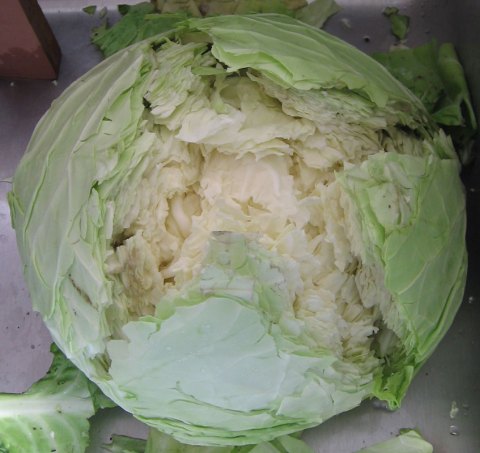 Today I went to my friend Moni’s house and she showed me how to make sauerkraut! I have been wanting to make sauerkraut for a long time now, and have spent quite a bit of time reading about how to make it, looking at different recipes, and methods, etc. Although it is simple to make, with a basic ratio and set steps, I have been a little shy to try it. But last weekend when I was visiting Heli in Ann Arbor, cabbage was available at the farmer’s market, and I grabbed a few heads to take home. I love cabbage, fresh and fermented, so I figured that I would be able to make use of it even if I didn’t make the kraut. Heli kept telling me that I should call Moni, her friend Daren’s mom, so I did, and not only did she tell me all about how to make sauerkraut, but she had me over this morning, shared cabbage from her garden, and taught me all about how to make sauerkraut. It was so much fun!! We had lots to talk about (she knows all about gardening, canning, and insects, to name a few things), and the process went by very quickly.
Moni has been making sauerkraut the same way her mother taught her. The first step is to prepare the crock (which Moni lent me and is now happily situated in my kitchen). This particular crock is huge!!  The number 5, stamped on the side, indicates that it is 5 gallon crock, which means a lot of cabbage. The crock must be cleaned thoroughly, and fitted with a plate, which will be placed over the cabbage at the end to weigh it down.

Then the cabbage is cleaned, trimmed, and either thinly sliced or put through a food processor. This year was a very wet year so the cabbage was huge, and some of the heads that we used were even bursting open!
 We both shredded and chopped our cabbage. Then we added the cabbage to the crock, a little bit at a time, mixing it with salt to taste as we went.
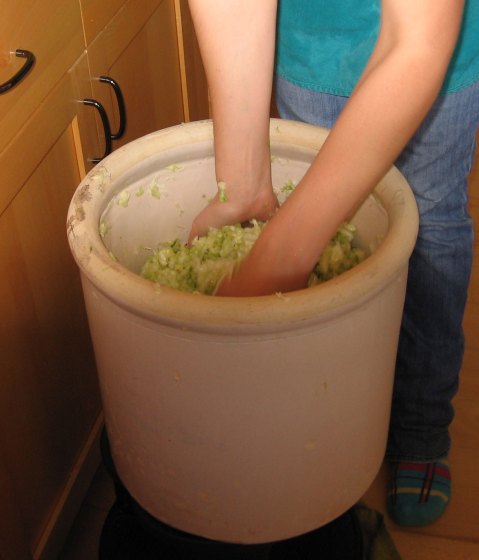
Adding salt to the mixture draws the moisture out of the cabbage, which creates the briny solution that the cabbage ends up “stewing” in. According to Moni, the best time to pick cabbage for sauerkraut is in the morning. The more moisture in the cabbage, the quicker the liquid is released to form the brine.

After all the cabbage was added we mixed the contents of the entire crock to make sure that there was enough salt. We ended up adding more, and as we were remixing, I noticed that liquid was already collecting at the bottom of the crock. By the time I got home with the crock, and added the plate and weighted bottles, the liquid had reached the top of the cabbage.

The plate covering the cabbage is there to keep the bulk of the cabbage submerged in the brine. I placed two clean quart bottles full of water on top of a dinner plate, which fit perfectly inside the crock. On top of all of this I tied a tea towel to protect the contents from any fruit flies or other possible vermin.
Now it is time to wait and let the lactic fermentation take place!!!
I will post more pictures as the sauerkraut develops.
green tomatoes (not fried)
October 15, 2009
Yesterday and today I made some green tomato pickles. I used two different recipes, one that reminded me of my Grampa, and the other because it called for lime (calcium hydroxide) which I have never used. Both recipes are from The Joy of Pickling, by Linda Ziedrich. I started the pickles yesterday (after a trip to the store for lime) as they required an overnight of soaking before they were ready to process. 
Freshly sliced green tomatoes. So many shades of green, marbling in and around seeds and cavities.
Tomato slice soaking in a solution of lime (calcium hydroxide) and water. This process creates much crisper pickles. I soaked the tomatoes overnight, and when I took them out of the solution they were stiff as a board! Quite different from the tomato slices soaking in salt for the curry pickles.

After rinsing and soaking, rinsing and soaking, and rinsing and soaking again, I mixed the lime tomatoes with onions and spices and simmered for a little while, and then I had to stuff them into the jars. The lime made them so stiff that I ended up cutting the big ones in order to fit them in.
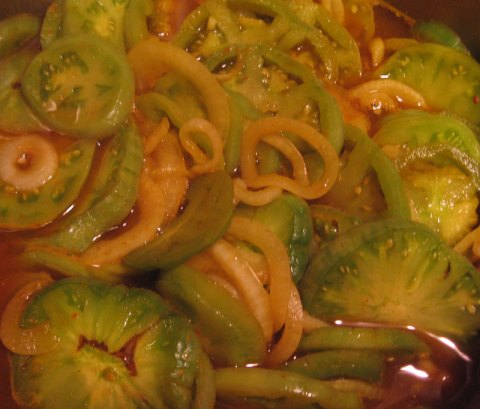
The second pickle was made with curry powder and other spices. I made them because they reminded me of my Grampa, who always seemed to like spicing food with curry powder. The tomatoes for the curry pickle were significantly softer (no lime, just sitting out with salt).

These are the lime pickles after the jars were processed in boiling water. It is always sad to me when fruits and vegetables lose their vibrant color. They have to sit for at least three weeks now until they are ready to eat!
pimento pickles
October 4, 2009
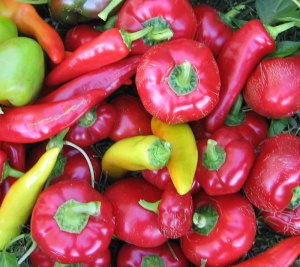
Fresh pimento peppers, with a few hot peppers as well. These peppers are at the end of the season, and nicely ripe and red!
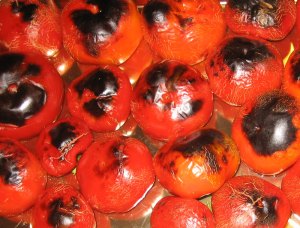
The peppers need to be roasted to remove the skins. I broil them in the oven, placing the peppers on the top rack right next to the heat coils. I like to have the skins all the way black (the above peppers are only partially blackened) before I put them in a bowl covered with a plate to sit for a few minutes until I can peel the skins off without burning myself. ( I usually burn my thumbs anyway.)
Once they are peeled and seeded they are ready to be placed in jars. It is helpful to rinse them and dry them gently with a clean tea towel (colored so that any stains are camouflaged).
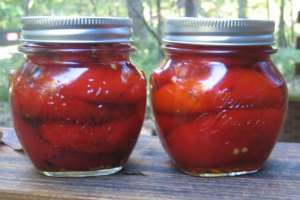
They are nicely flat, and look lovely when stacked in the jar, topped with pickling liquid (vinegar, sugar, etc.). I got this recipe from The Joy of Pickling by Linda Ziedrich. It is very simple, and can be used for sweet peppers and hot peppers!
how to defend chestnuts
October 3, 2009

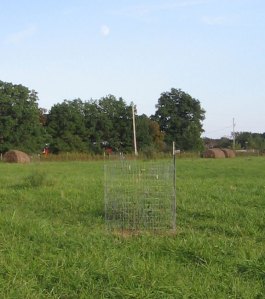
This is how I like to protect my chestnuts. Cage the trees.
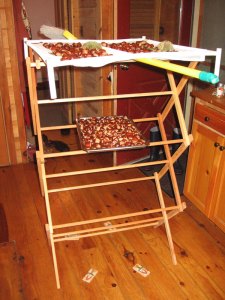
Protecting the nuts, a little more challenging.
Top layer, drying rack, supplemented by broom handle.
Second layer, additional chestnuts drying on a cookie sheet.
Ground floor, mousetraps, baited with peanut butter.
Success?
ketchup
October 3, 2009
Here is my first attempt to make ketchup. It takes a long time to finish! Roast tomatoes, puree them, cook them down with spices, puree them again, cook them down again, and then jar them and boil the jars! But I think that the result will be worth it for brunch on roasted potatoes.
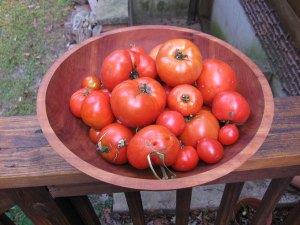
fresh tomatoes, about 8 lbs

spice mixture

spice mixture simmering with tomato puree
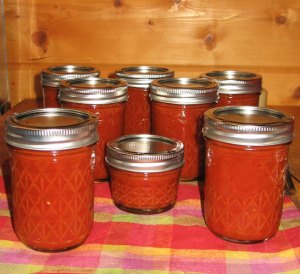
Finished jars of tomato ketchup!
peppers
September 28, 2009
We have several bell pepper plants in the garden, and Heli was always trying to make me save them until they ripened. So here they are! All ripe, and in the pan with some small onions to make Erika’s Peppers.
Erika’s Peppers
Simply slice some red and yellow bell peppers and sweet onions into strips. Add a sprinkle of salt too. Cook over low heat, with enough olive oil so that nothing sticks, until peppers are caramelized, and cooked way, way down. (about 45 minutes or an hr) Add white wine to the mixture as it is cooking for extra flavor. This is delicious spread over fresh bread with cheese, or alone with a drizzle of Erika’s Traditional Balsamic Vinegar. 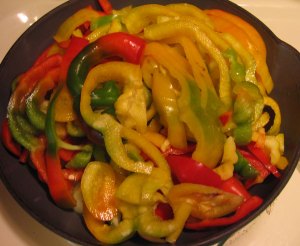
I also found a pickle recipe on a wonderful blog called Saving The Season (savingtheseason.com) which is all about canning. I got so inspired that I went to the market in search of red jalapenos to make jalapeno pickle. Unfortunately no one had any. I think the cool weather that we have been having has caused peppers to ripen much more slowly. So I opted for green jalapenos, and roasted them to make pickle. I forgot to wear gloves and had slightly warm sensitive hands all day…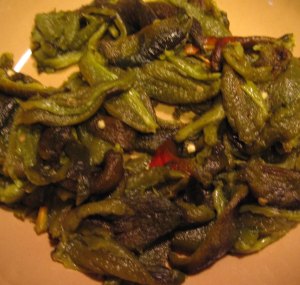
Below is a sterilized jar waiting for the peppers!! It looked so cute all arranged on the counter, I couldn’t help taking a picture. I ended up with three jars of peppers, one with my mom’s name on it for sure (she loves pickled hot peppers!).  And I keep thinking about peter picking pickled peppers, or pickling pints of peppers, but I can’t remember exactly what..
the yummiest squash.
September 17, 2009
 These winter squash are my favorite so far this season. They are from Cypress Villages, and have been available at the Farmer’s Market for a few weeks.
A way to cook the squash.
Slice squash in half, top to bottom and scoop out seeds and gunk. Flavor with apple butter, marmalade, or maple syrup, and salt, and butter. Place in a casserole dish or pie pan, with a few inches of water in it. (Use hot water to speed up the cooking time.)

Bake in a 350 or 400 degree oven for about an hour, or until tender when tested with a fork. Carefully remove squash halves to bowls, making sure not to lose any of the liquid inside the squash. Stir up and top with freshly ground black pepper!!
 living in the woods and making stuff