pine cone hat
October 27, 2011

This hat is all about texture. The yarn is textured (an unusual knitted cord) and very thick. The hat makes use of the texture of the yarn and knit stitch and is still quite simple.

The little bobbles made by knitting three together and then knitting into the same stitch three times create the pine cone seeds. The stitches swirl in the same way a pine cone might, and the hat is a cute little top to keep a head warm.

There are two sizes in the pattern, and the larger would fit a medium adult head (18″ around), and the small would fit a child (16″ around). For a copy of the pattern, stop in to the store or download here.
Note: please let me know if you have any questions about the pattern. I just finished it and would love any feedback!
warmer hands
October 26, 2011
This is a pattern that we got in at the store this fall. The mitts are easy to make, with simple shaping and cables up the front and back. They are great to wear, and keep hands warm and cozy.
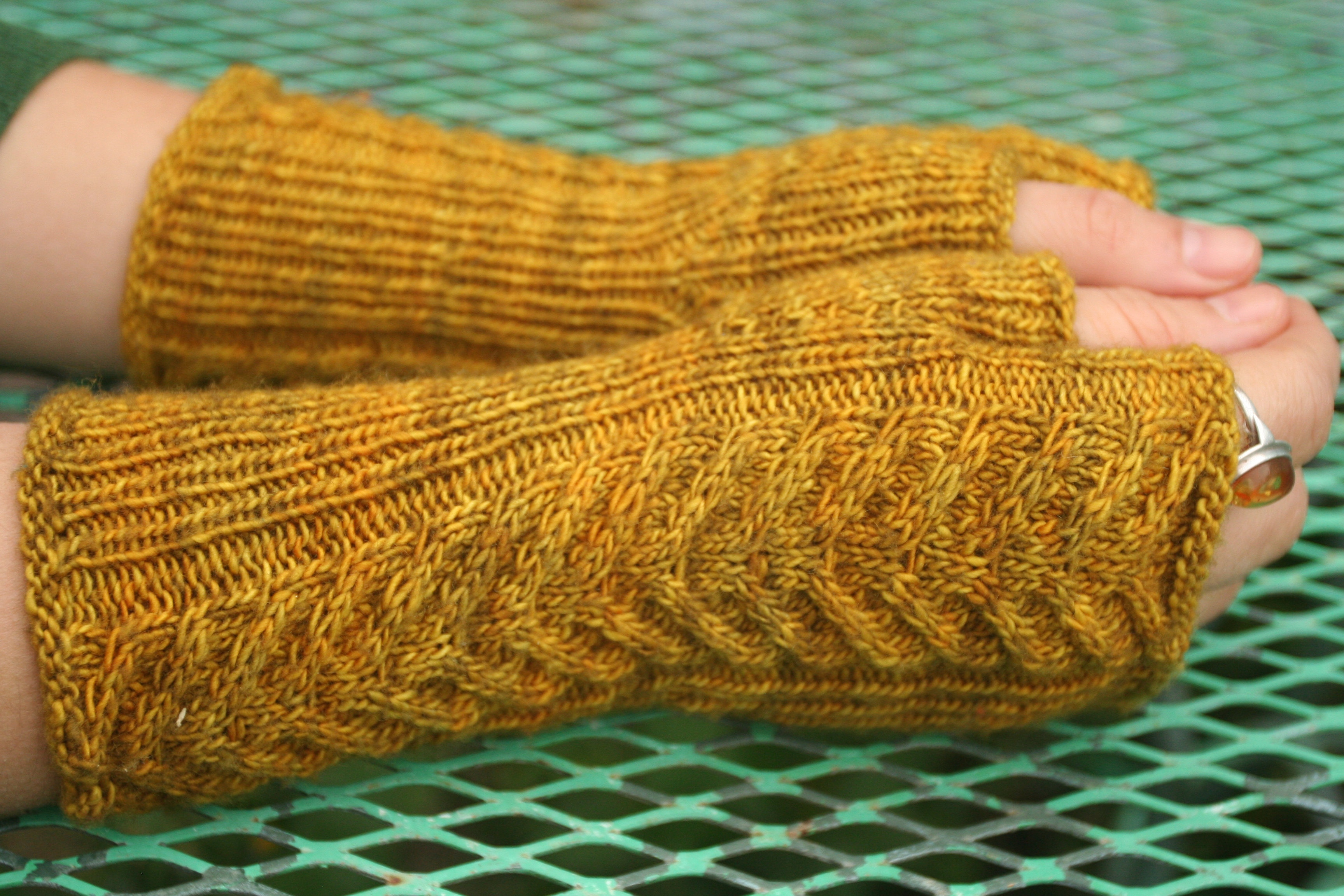
The yarn is Madeline Tosh Merino Light, and is soft and machine washable (which is handy for hand warmers, as they tend to get a little dirty with use).
The mitts are knit on double points. I started using the suggested size two, and moved to a size three as they were just a little too tight. They worked up quite quickly, and with one ball of yarn I was able to knit two pairs and have a little left over!
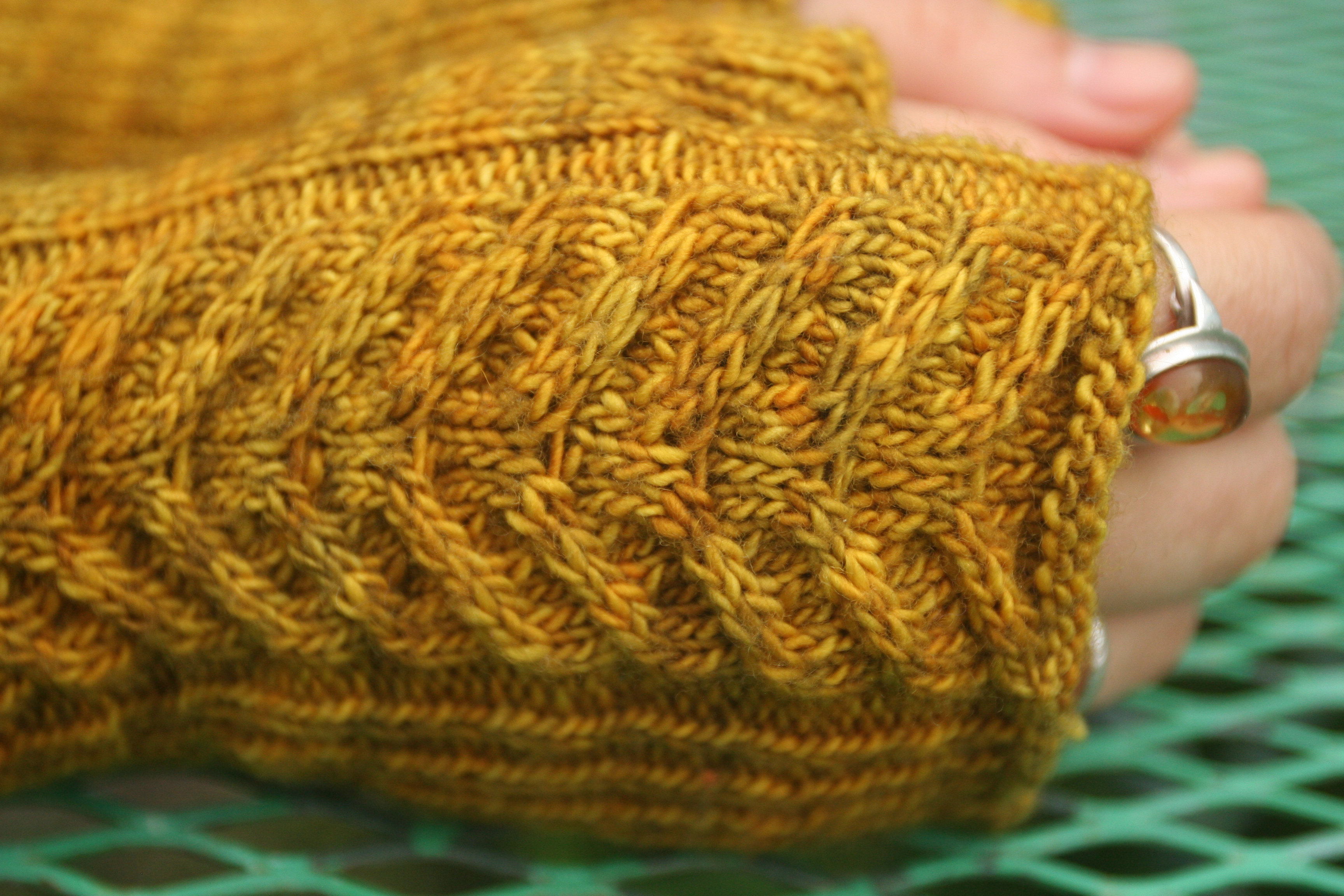
The thumb shaping is done with left and right leaning increases. The pattern makes a clean line, and the purl edge at the top of the thumb coordinates with the purls at the top and bottom of the mitts.
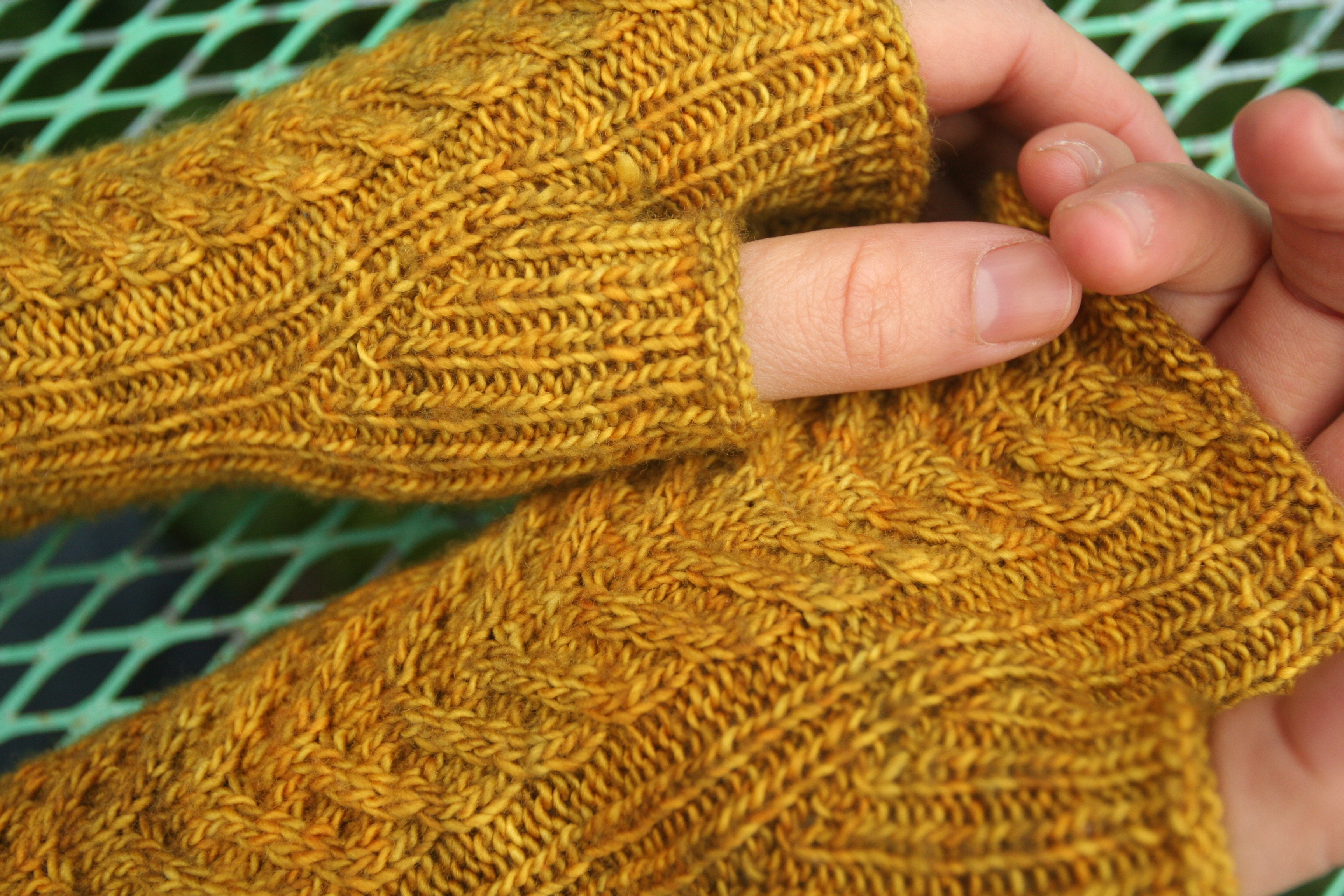
The nice thing about knitting hand warmers with thin yarn is that they don’t get in the way. I like to be able to use my hands while wearing them, and these fit the bill! They are perfect for morning walks in not too cold weather, playing music outside, and of course more knitting!
mushrooms-on-toast
September 29, 2011
Below is my take on mushrooms-on-toast. With greens and cheesy white sauce.
First step is to wash and trim the mushrooms. Then slice them and put them in a pan with butter and fresh sage. Sautee until they are nice and juicy. Add herbs to flavor at the end. And some salt to taste.

While the mushrooms are cooking, sautee some onions and tomatoes in a pan over medium heat. After they are nicely cooked, add the finely sliced greens and cook until tender.

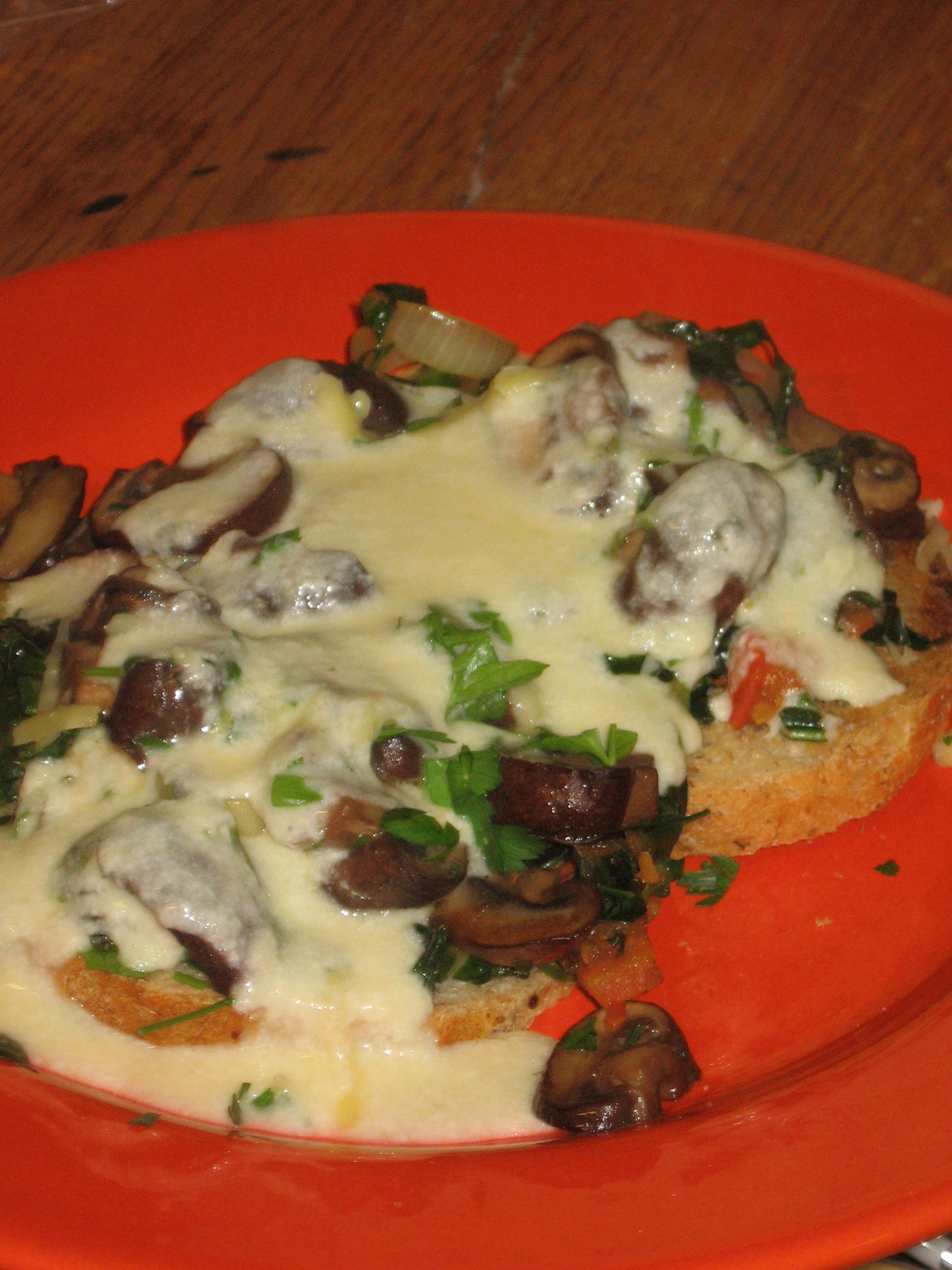
For the cheesy white sauce, mix a little butter with a little flour in a pan, and add some milk and salt. Then grate in a little cheese (prairie breeze). I find that cheese sauce gets a little bit grainy, and I am not sure how to remedy this. The sauce should thicken in a few minutes over medium heat.
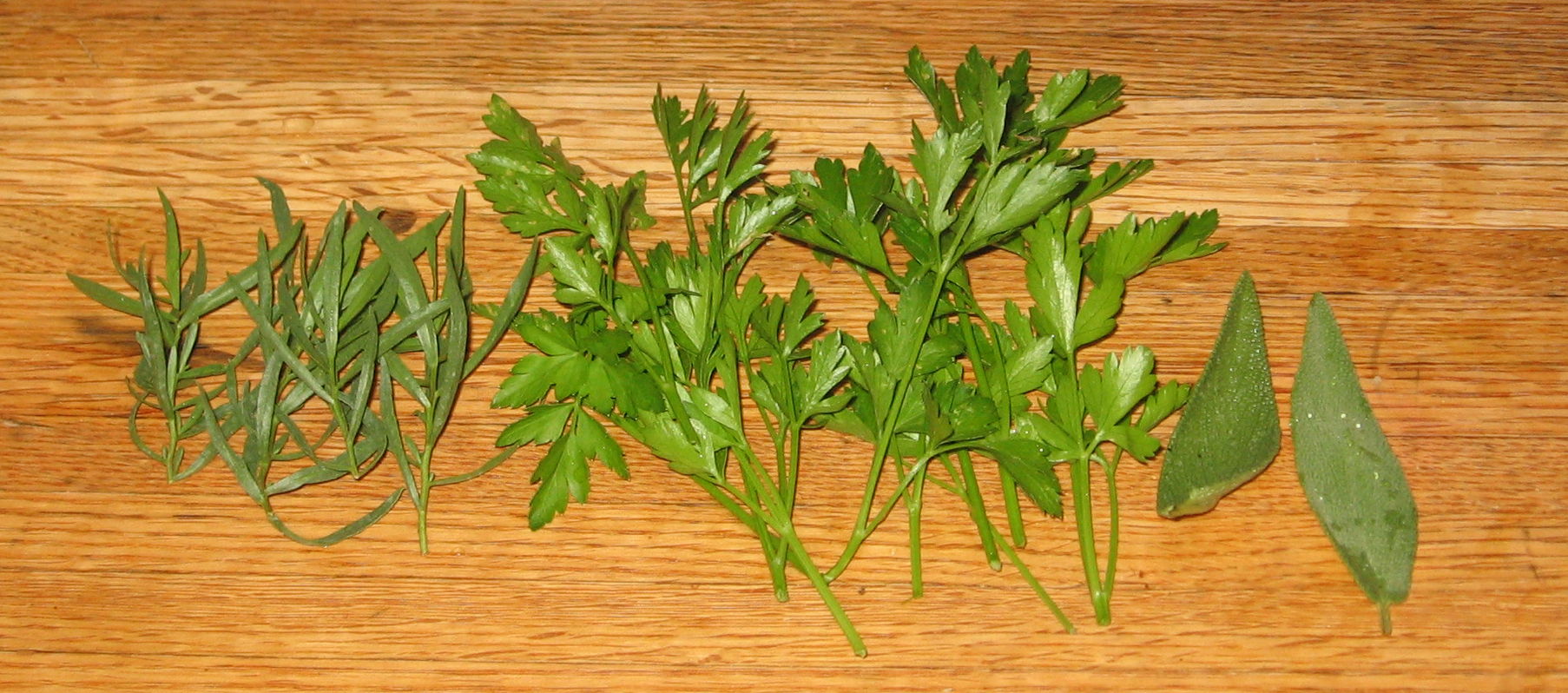
Then mix the herbs (parsley and tarragon) with a little more grated cheese and layer everything on freshly toasted bread. Vegetables, cheese, mushrooms, cheese, and then cheesy white sauce.
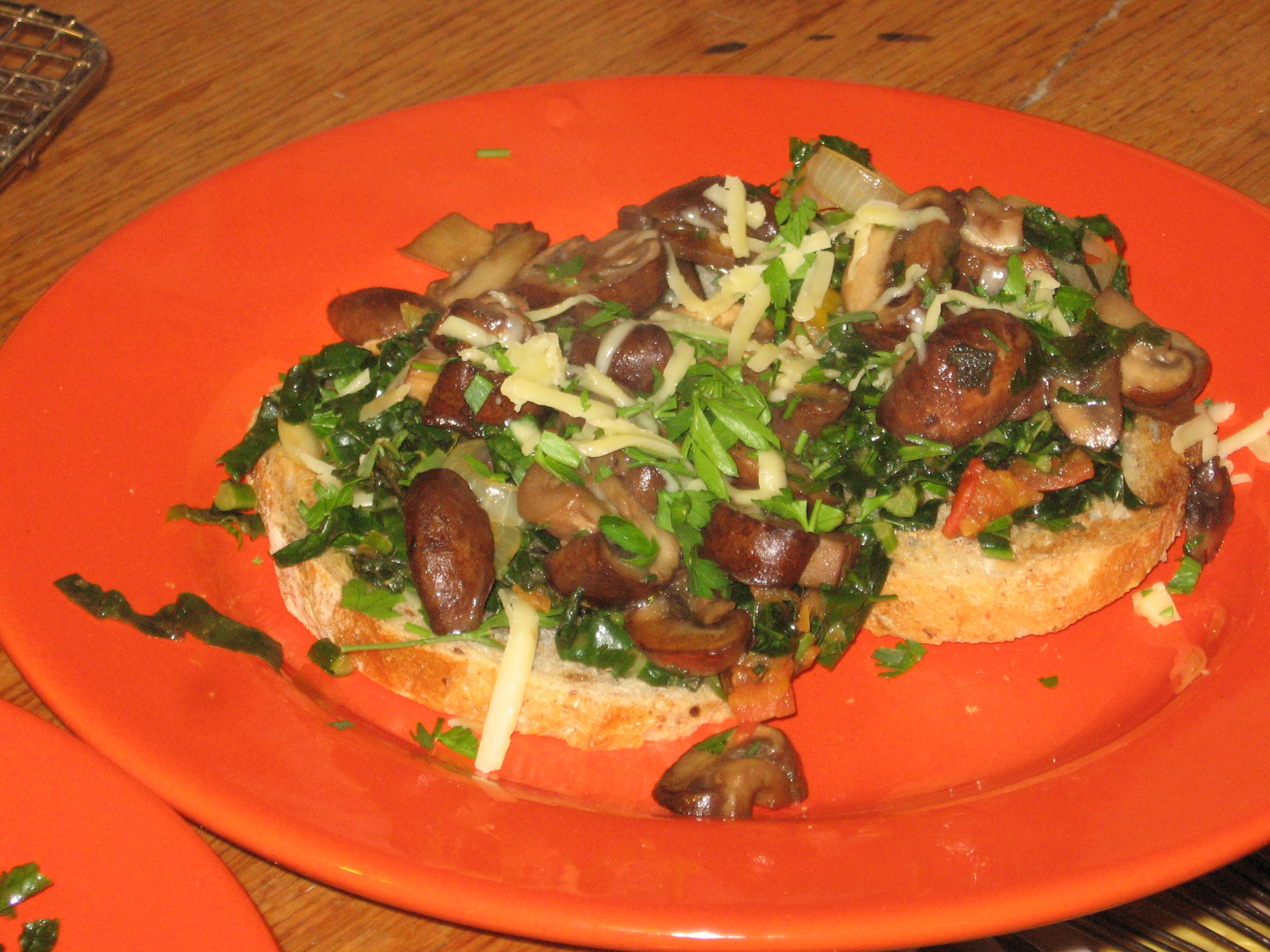
Eat with a fork and knife before everything gets cold and soggy…
two very large pots of soup
September 26, 2011
I picked up a huge hubbard squash a few weeks ago at Kathy’s Pumpkin patch because I can’t help buying pumpkins. The weather has been cold and rainy, and I am waiting for my chimney to be inspected before I light a fire in my wood stove. Any excuse to turn the oven on is welcome. I have been baking bread, and roasting things.

Winter squash soup is easy if the vegetables are roasted in the oven first. Place cut and seeded squash pieces, tomatoes, apples and hot peppers on a cookie sheet with edges. Onions, garlic, and other aromatics are really nice here as well! Drizzle the vegetables with olive oil, and sprinkle them with salt.
Pour some water over them so that they don’t dry out too much. Leave them in the oven (350 or 400 degrees) until they are well done, and a bit toasty.

Remove the vegetables from the oven and allow them to cool. This can be done in stages (roast one night, and then prepare the soup the next day). Scrape the meat out of the squash pieces leaving the peels, and combine with peppers, tomatoes, apples, etc.

Meanwhile, sautee some onions in a generous amount of olive oil until translucent, and then add cooked squash mixture. Add water or broth to thin mixture to desired consistency and puree or simply stir for a more rustic look. Sometimes I will add a spoonful of harissa for more flavor, and a little spice! Let simmer on the stove top over low heat for about 30 minutes.

Serve with parmesan cheese, olive oil and freshly ground pepper, and a slice of fresh bread (another reason to turn on the oven..).
The lone hubbard squash made two very large pots of soup for the very small price of $5.00.
orange (red, yellow, pink) sweater
September 22, 2011

This is another orange sweater. One strand of thick yarn, and one strand of thin yarn held together throughout. The thin strand kept changing, from yellow, to pink, to red, and back and forth between. The thick strand stayed orange.

The sweater was knit top down, on size 10 needles. I wanted to use Malabrigo worsted weight yarn for the base, and added a strand of lace weight so that I could use the size 10 needles for the gauge required.
I had been looking at the four colors of yarn in the store for a while, thinking of what to make. I was considering a lace project, and when I realized that I could put the two weights of yarn together it was a perfect plan.
The sweater is knit in reverse stockinette, with garter stitch borders. I liked the effect of the constant change of threads and the more bumpy texture of reverse stockinette. I changed the lace weight yarn every row, or every other row, at random.

The inside of the sweater shows the striping differently, and I managed to tie away all the color changing ends. (Except for in the sleeves, where all the little lace weight ends are flailing around…)
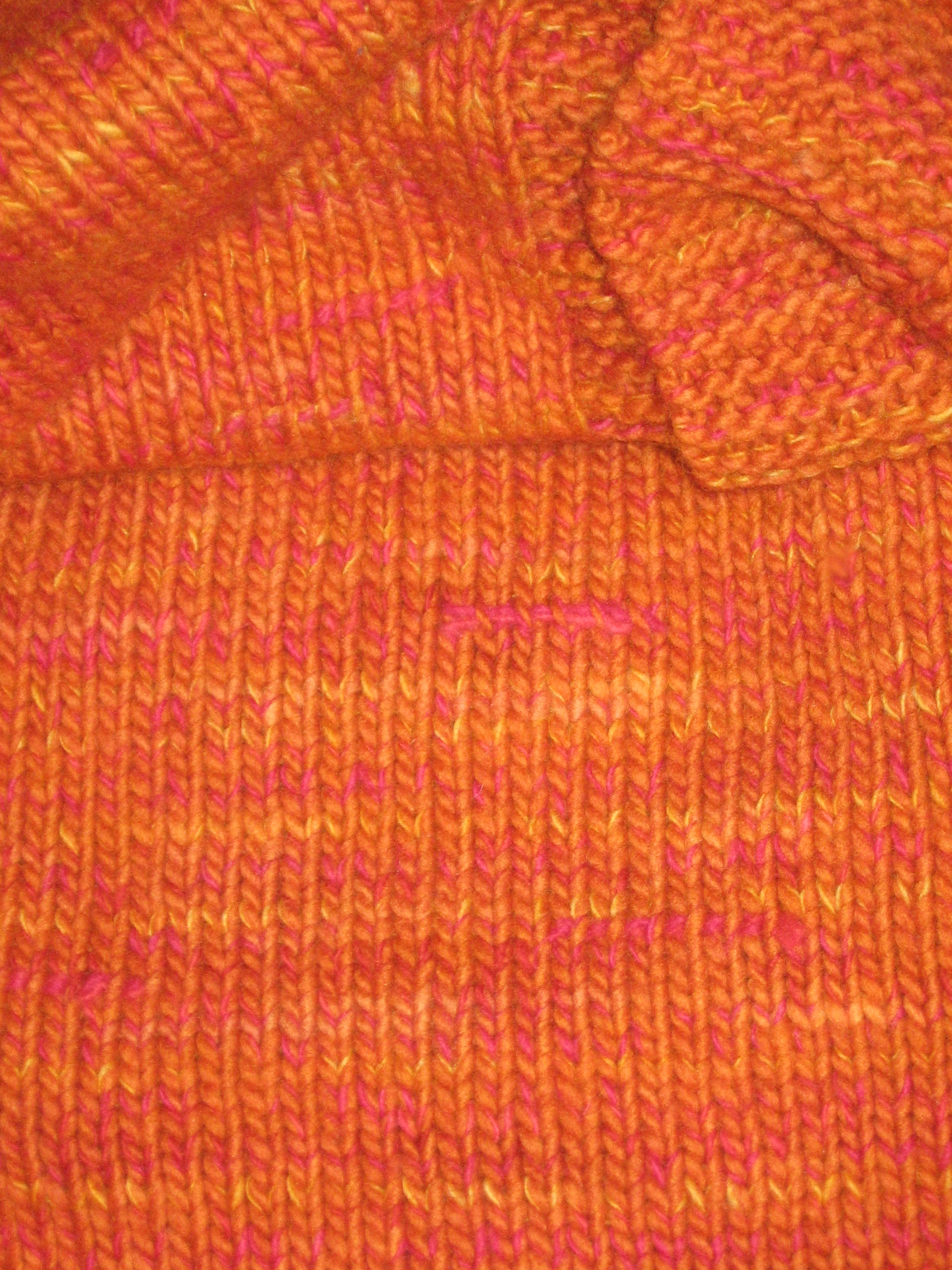
The side “seams” were created by a row of stockinette, and add a nice little touch.

All together a very simple sweater, and worked up quickly, with the big needles.
denise’s chocolate cake
September 8, 2011
One of my favorite easy cake recipes. Rich, not too sweet, and full of chocolate.
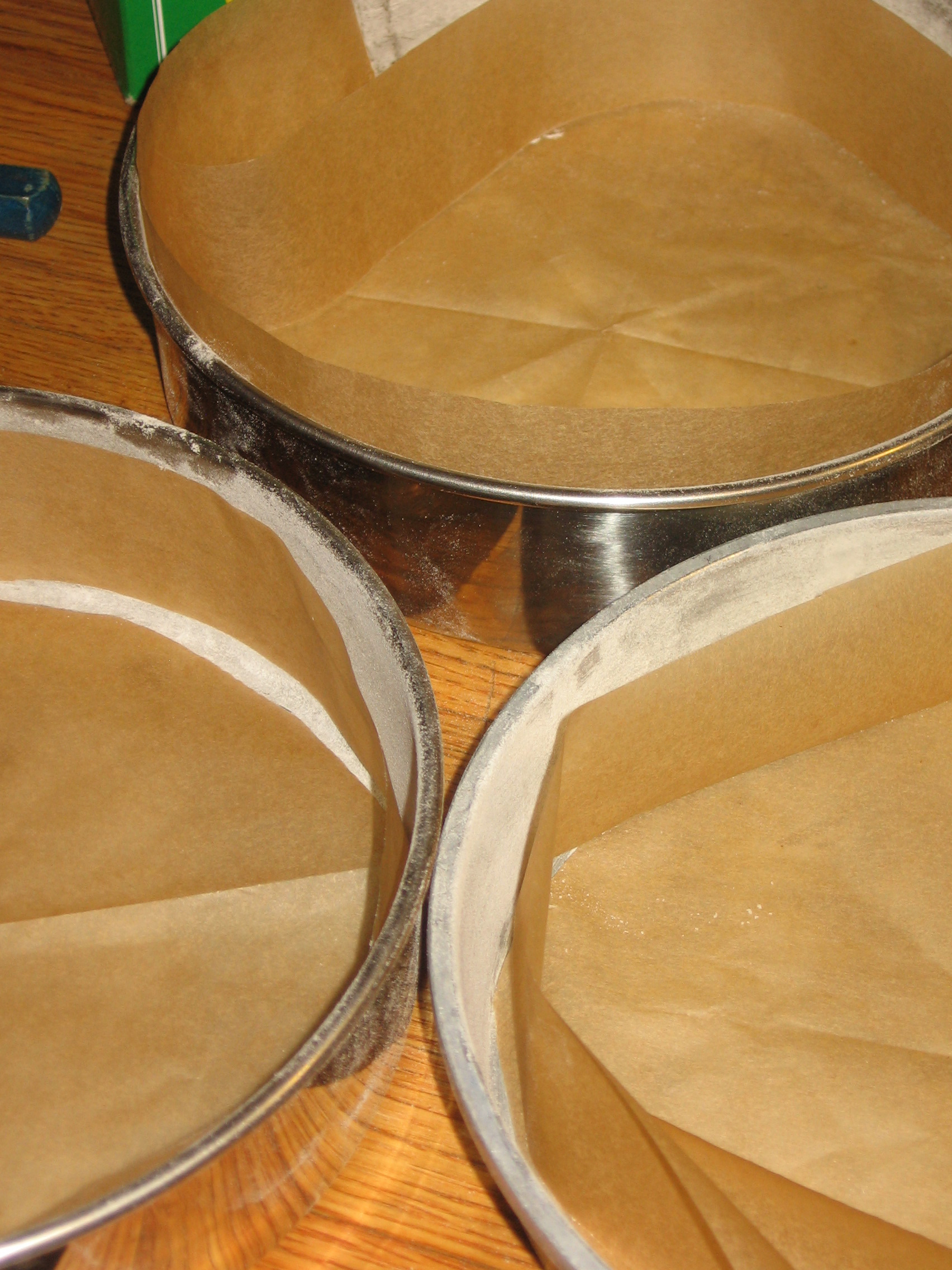
First was to butter, flour, and paper the baking tins. I learned the hard way not to skimp on this step. The cake comes right out of the pan, no problem, if you do this!

Next I melted the chocolate pieces. (I used 8oz semi-sweet baking chocolate from the store. ) I melted the chocolate in an improvised double boiler, and set it aside to cool.
I mixed the dry ingredients (flour, salt, sugar, and baking soda), and added the slightly cooled chocolate, and then all the liquid ingredients (water, sunflower oil, vanilla, and vinegar).

The vinegar and baking soda worked to raise the cake (it was eggless). The mixture looked a little funny at first, but with a bit of mixing everything worked together well.

I poured the batter into three 8″ cake pans. (According to my mom, three 8″ cake pans are the equivalent of two 9″ cake pans.) The smaller pans make a cute round and tall cake with more layers.
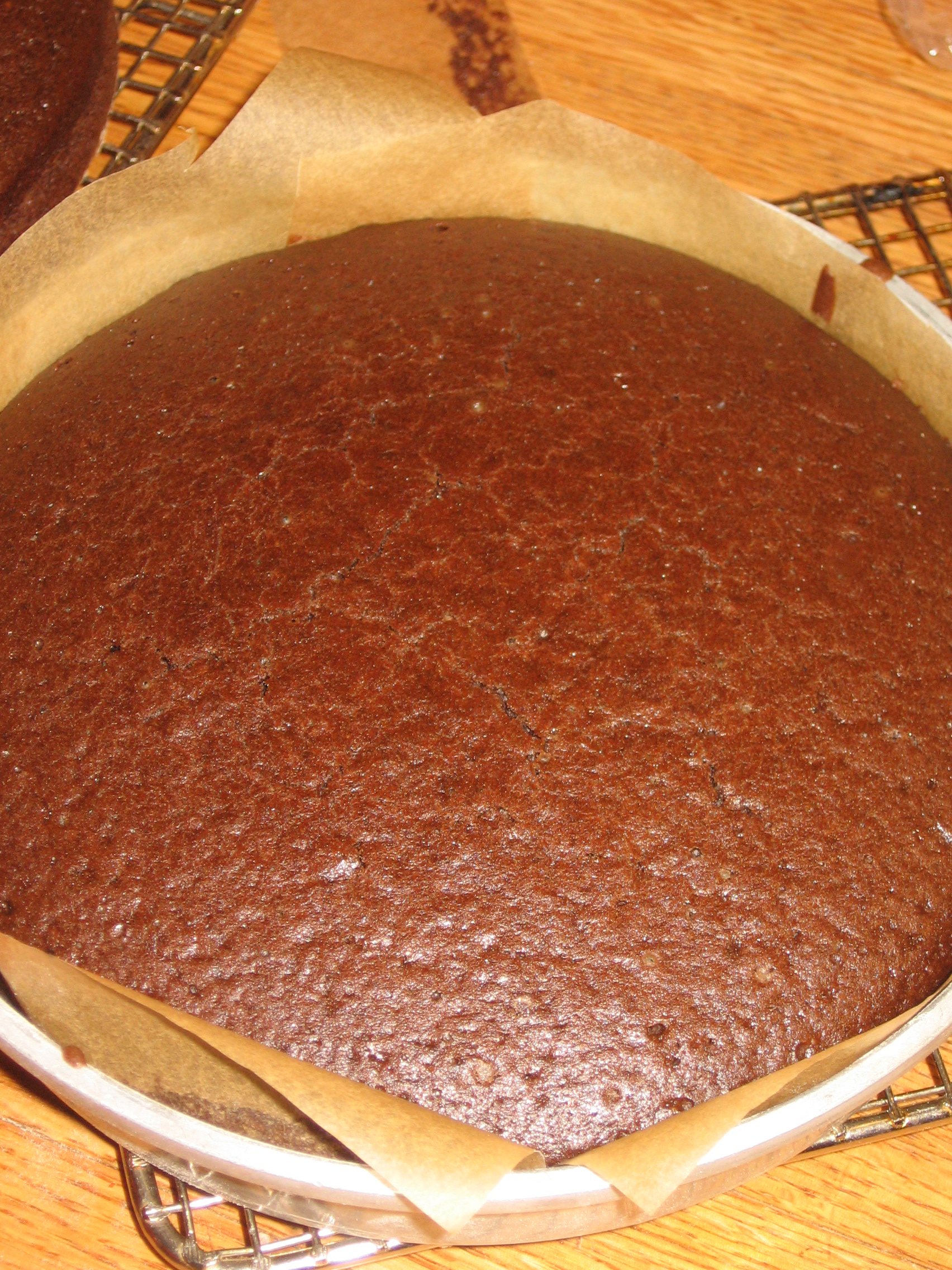
The cakes baked for about 30 minutes. Meanwhile, I made the frosting, which I somehow messed up and it wasn’t very smooth and creamy. I think that I might have melted the butter by mistake…

I made a mixture of preserved peaches and rose petal jam and put this in the layers along with chocolate frosting.
The end.
mid century modern…and sewing
August 25, 2011
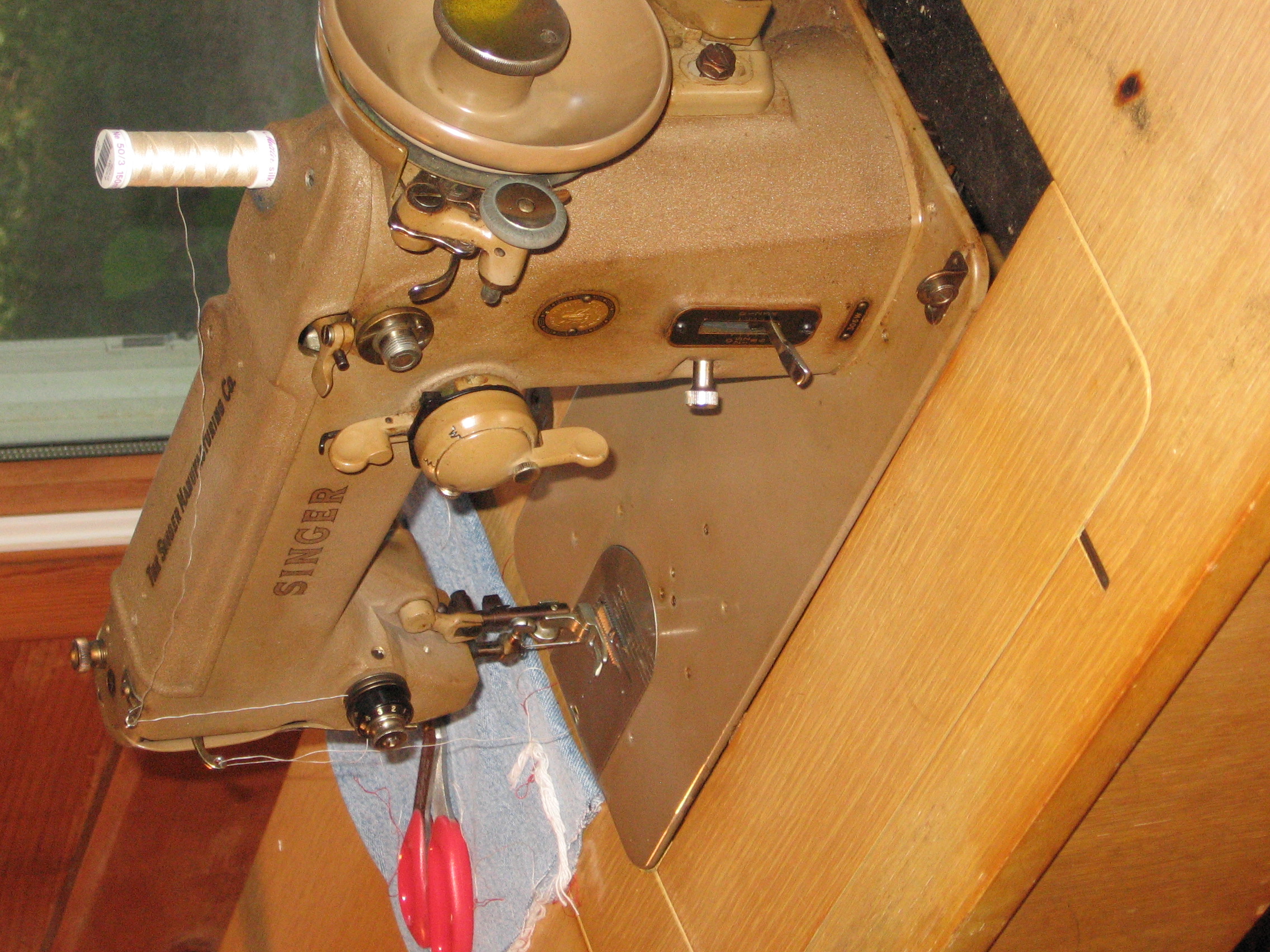
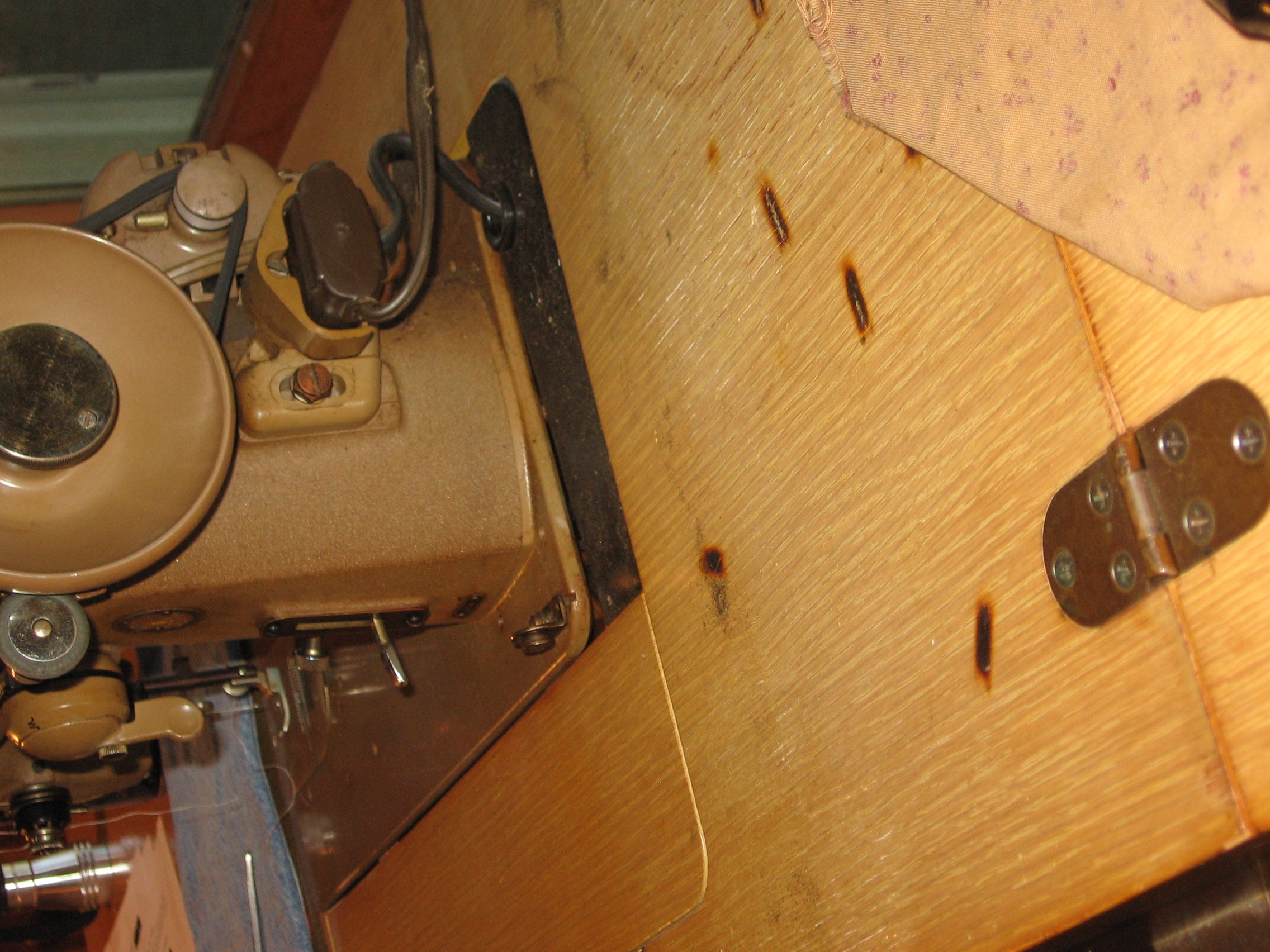
My brother found this little beauty for me a few days ago. It is a Singer 306W, and works for sewing denim, canvas and leather. Seriously exciting.
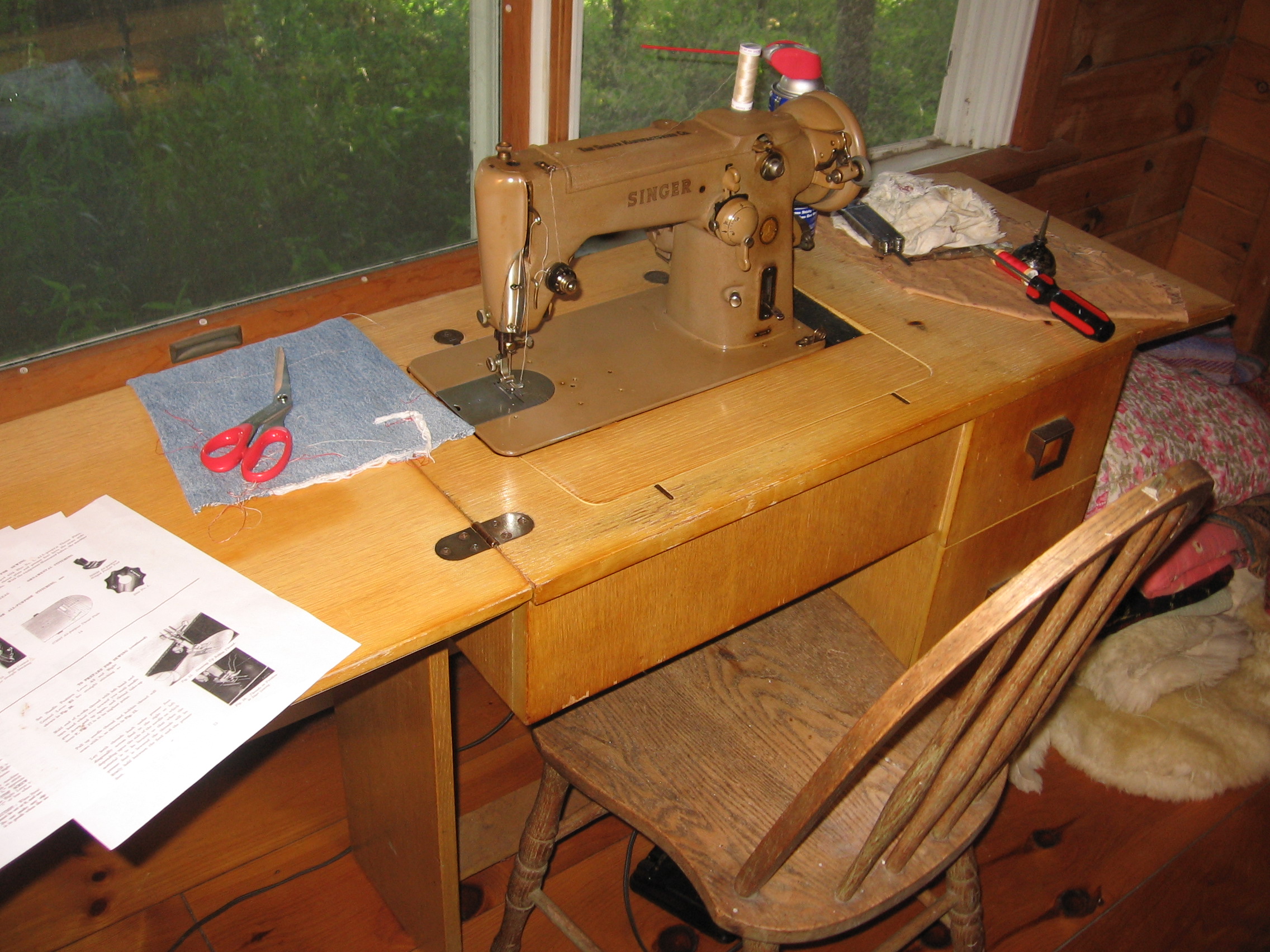
This particular machine was made in the 50s, and comes with a motor and light, and a nice little cabinet in good condition. Plus, it seems to be built like a tank.

I have been testing it out on one of my denim scraps (I have a collection now, and am planning some sort of project with them all..)
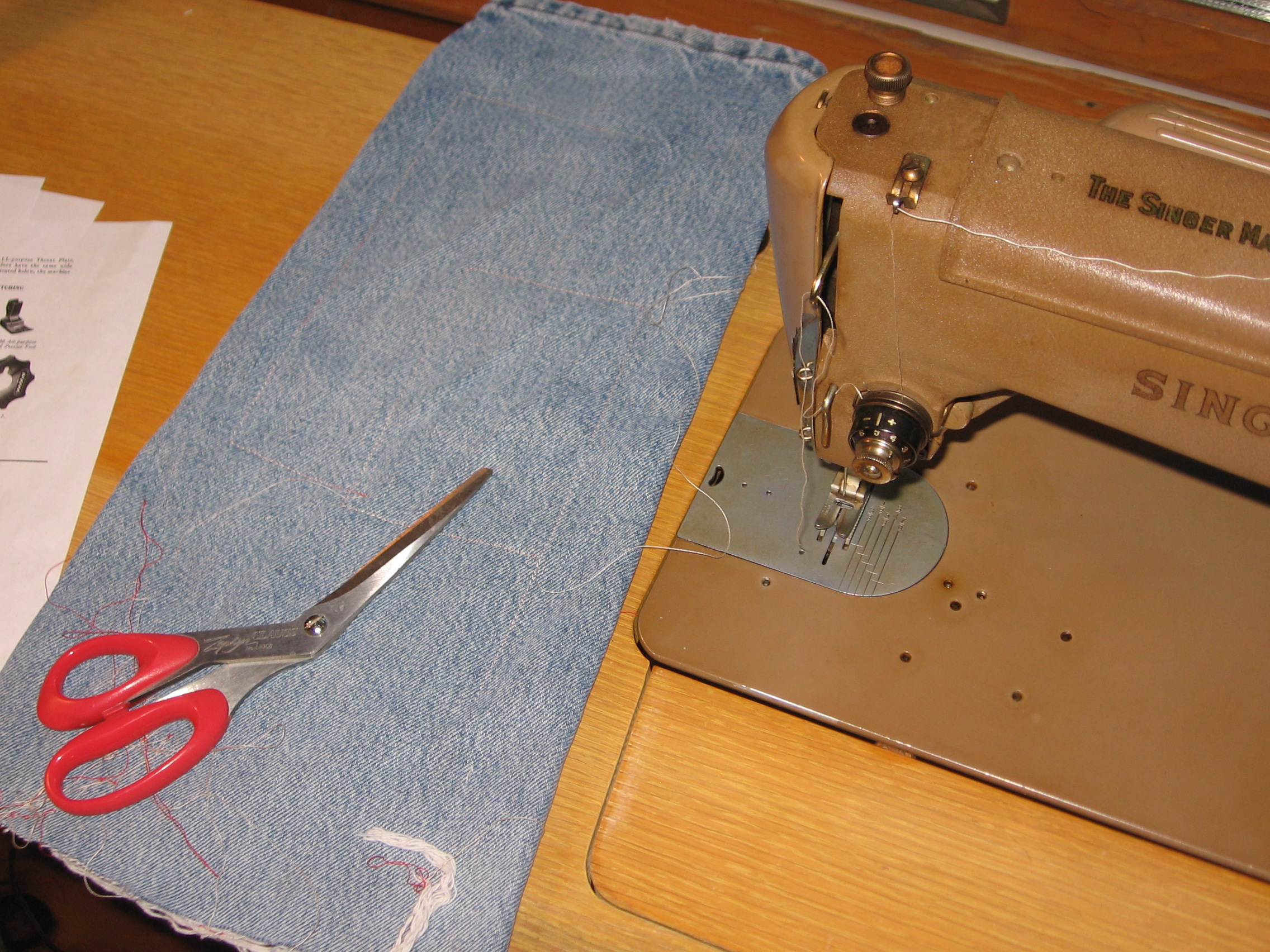
The motor is in good shape, and once I am able to tune it up (with help from my friend Pat) should run easily. The stitch length/backstitch lever was frozen and we had to do a little tinkering with oil and wd40, but we got it working.

The underside is pretty cool. The belt (far right) is in good shape, and all the parts are built to last! No plastic down here.
The cabinet is in good shape. There are three drawers on the right hand side, and the machine folds down into the cabinet.

The top has burn marks, and the machine and cabinet smell like cigarettes. I can imagine the former owner sewing late, getting tired, and letting the cigarette fall from his/her hands onto the cabinet top…
a welcome guest
August 20, 2011

oh the vine borers
August 20, 2011
Last year I planted a huge patch of pumpkins and not much else. So when I went out to the field and found that the majority of the pumpkins and squash had been invaded by vine borers I was devastated…

This year, I diversified. I planted lots of different things, and have had pretty good luck with many of them. The pumpkins though…vine borers again! My plan of defense this year was by default. It was so wet for so long that I was unable to work the ground in the pumpkin patch until the beginning of July. By the time that the pumpkin and squash seeds were in the ground, it was after the middle of July.
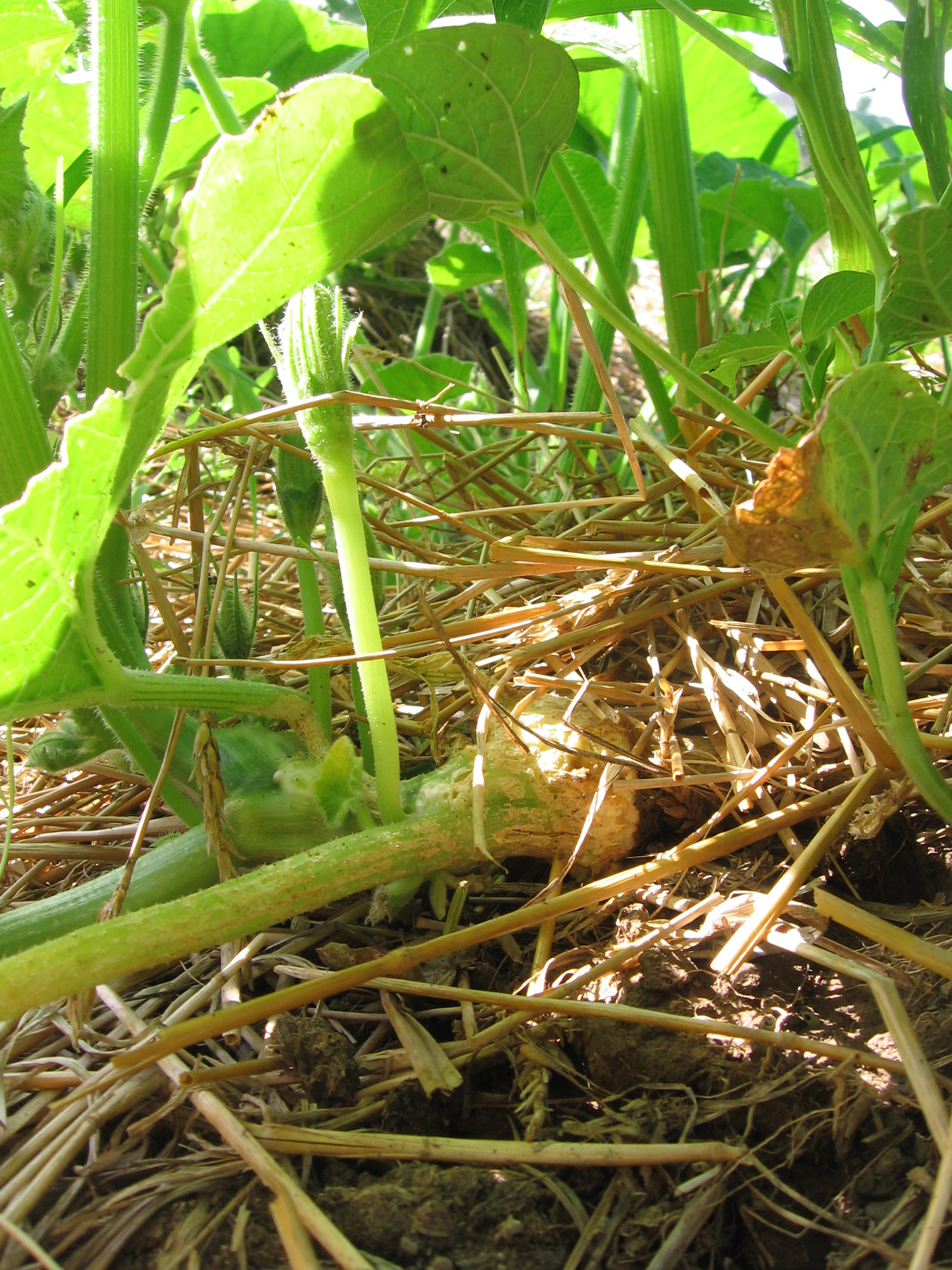
I had understood that the vine borers would no longer be laying eggs by this time. But no…most of this year’s crop was invaded. I went out yesterday morning with my handy pocket knife and carefully slit the stems to kill the borers and try to save the plants. Some might live, but I wont hold my breath.

I planted a patch of pumpkins (Ronde de Nice from Seed Savers) in one of our raised beds, and they were fine. These I planted in June, and I don’t know if the Ronde de Nice is resistant to VBs, or if that patch didn’t have any of the vermin.

(Note: the above photo is of the Ronde de Nice flower. There are quite a few cucumber beetles and one bee in the flower. I don’t know if the beetles are counter productive to the pollination process, but the bee is definitely welcome!)
This particular pumpkin can be harvested as summer and winter squash. I have been eating them tiny and they are delicious. The squash below is a few inches across and perfect when stewed with onions and tomatoes.

We missed a few (including the one below) and they are going on to be pumpkins! They remain green, but should harden and last for a while!

I have been talking to many people about vine borers, and have gotten a good amount of advice.
Remedies include wrapping the young stems with tinfoil, washing stems with insecticidal soap, and covering the entire plot with row cover. I am actually quite excited to try some (or all) of these measures next year, as well as continuing to try the staggered planting. I will report for sure!!
P.S. any further advice/experience with vine borers is greatly appreciated. Please leave comments. Thanks!
a dress for a day like today
August 18, 2011
Today was beautiful. Misty, and almost rainy in the morning, then breezy, cool, and sunny all day. I was working at home, and wearing this dress, which I made a few months ago, but haven’t been able to wear.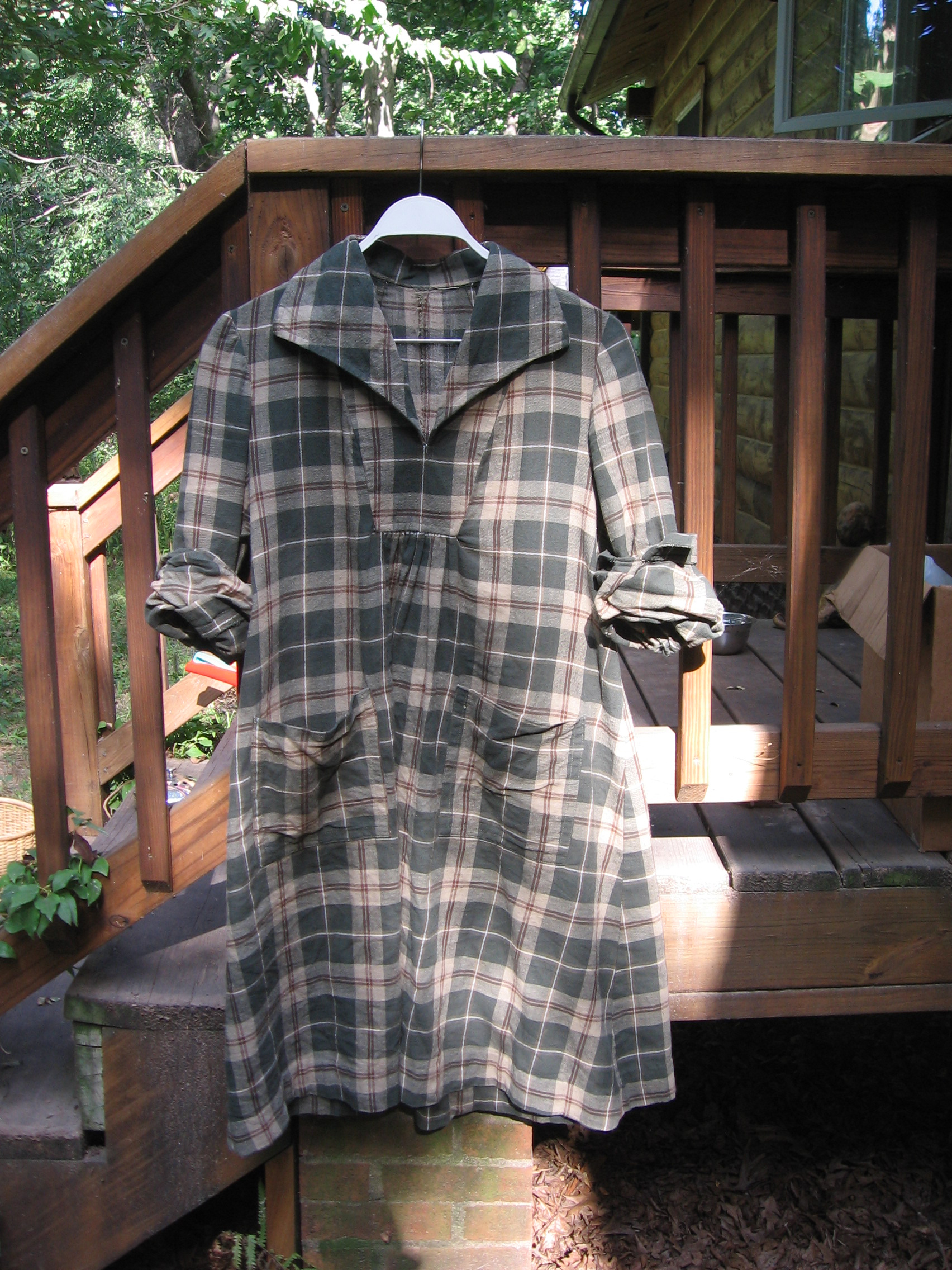
This dress makes me feel like baking bread, or picking apples. Or roasting pumpkins. Things to look forward to!
The pattern came from a garage sale, and was a little bit too small. So I added a bit of fabric to different spots, experimenting to increase the size.
The fabric is cheap flannel. There is something satisfying about making a dress for $12, plus time. I am hoping that the flannel will hold up to a little bit of wear though…you pay for what you get!

The front of the dress is gathered, and I added some fabric there to increase the size. I also changed the placket a little, and had to adjust it quite a bit more when I realized that the lines of the pattern weren’t matching up well…something more to worry about with plaids!
The sleeves are long, but need to be worn pushed up past the elbows. Otherwise there is just too much green going on! I never put buttons on the cuffs, and if I push them past my elbows and then pull some extra fabric down they seem to hold up well enough.

The pockets are awfully handy. They are conveniently located on the front of the dress, and can hold quite a number of things. The only problem is that the fabric isn’t too strong, and I am worried about the corners of the pockets tearing. I suppose I should have put some interfacing on the underside of the dress for reinforcement, but I didn’t think of that while I was making the dress.

The back is simple, with a bit of shaping at the neck. I was hesitant about putting that in, but I did anyways, and it seemed to work out all right. Again, I was having a little trouble adjusting the fabric so that the lines matched. I am going to need to be a little more vigilant about that!
 living in the woods and making stuff