teal sweater day four
February 20, 2011

teal sweater day three
February 19, 2011
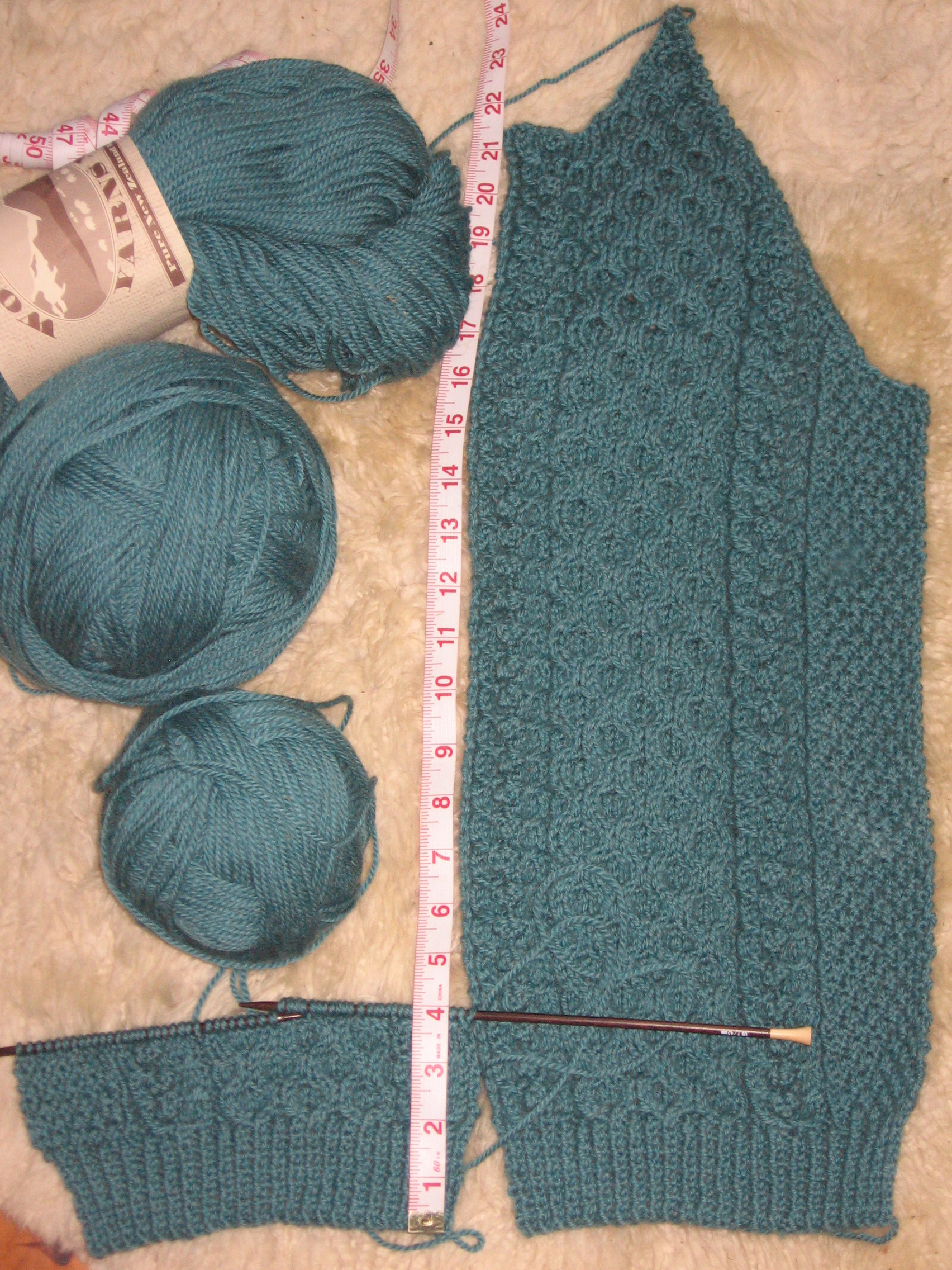
teal sweater day two
February 18, 2011
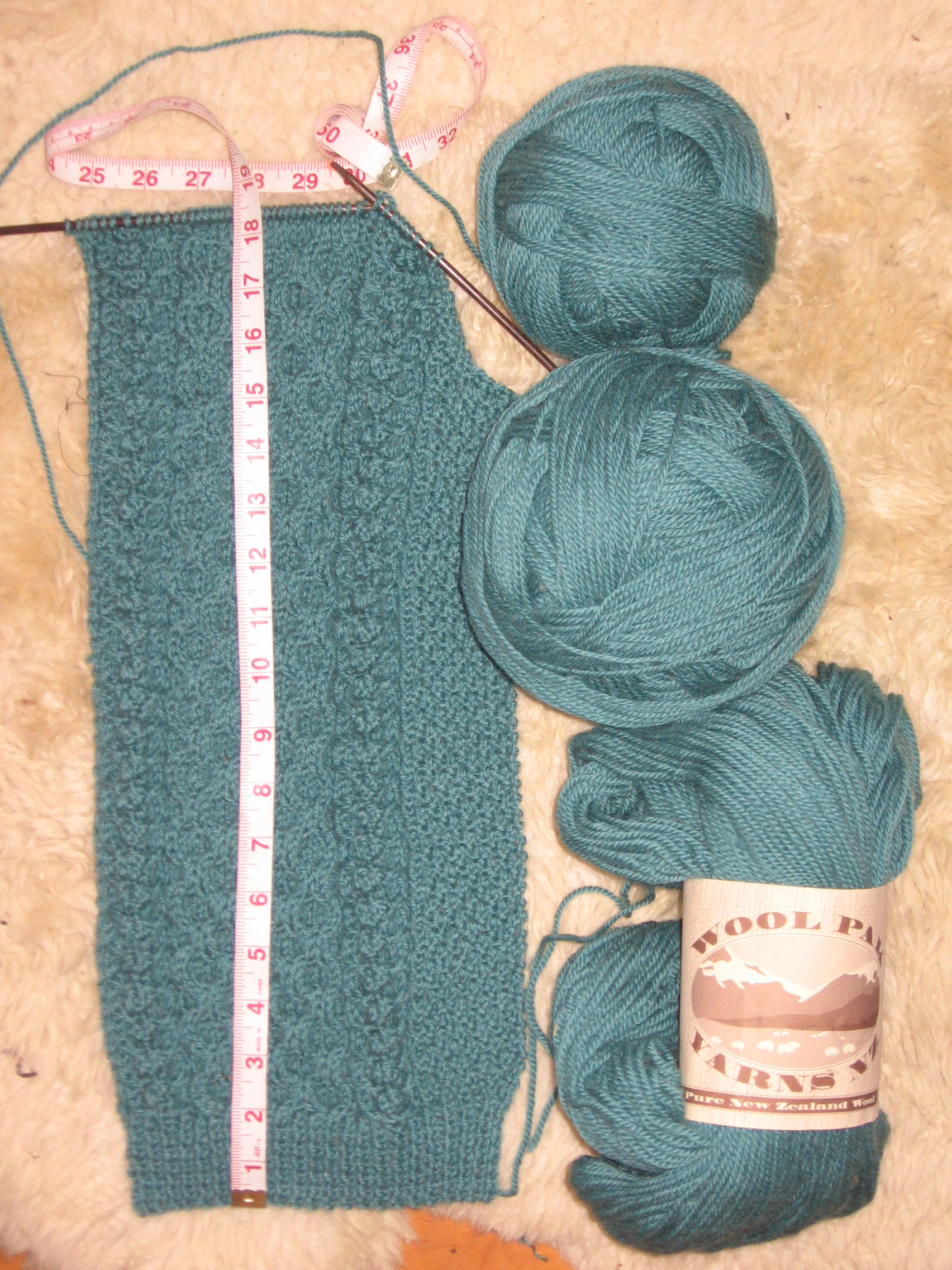
teal sweater day one
February 17, 2011

super bird
February 7, 2011
You might not be aware of it, but my brother is actually a bit of a super hero. The worn corduroys, spectacles, calculator, divided binder, engineering thing…quite the disguise.

Even super heroes need socks. These socks are knit to fit the bill, with super strong Jawoll sock yarn. A yarn that is reinforced with nylon and acrylic, and machine washable and dryable…because super heroes don’t always have the time to let things air dry.

The legs and tops of the feet are knit in k2 p2 ribbing, to stay nice and snug while in use. 68 stitches, knit on size 1 needles.
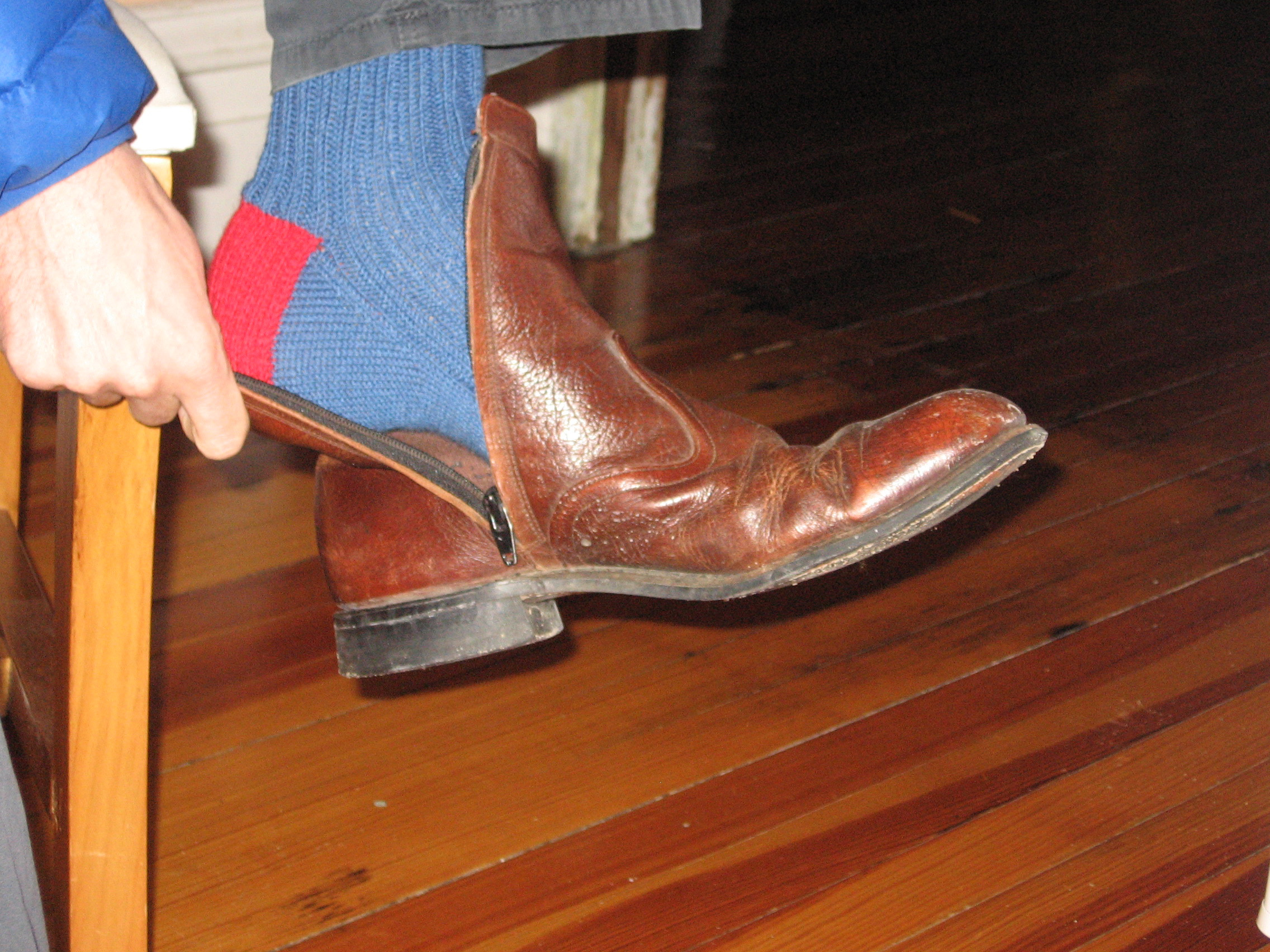
The contrasting red heel is knit with the addition of reinforcement yarn, which comes with every package of Jawoll.

These socks are custom engineered to fit, and certain to warm the feet of super bird (most likely flying your way sometime soon…).
an owl hat (made with scraps)
February 3, 2011
I had a bit of yarn leftover from the scarf that I made yesterday, and looked online for patterns for it. I found this free pattern and just had to make it! I have seen quite a few patterns with this owl, or a variation of it, and they are just cute!
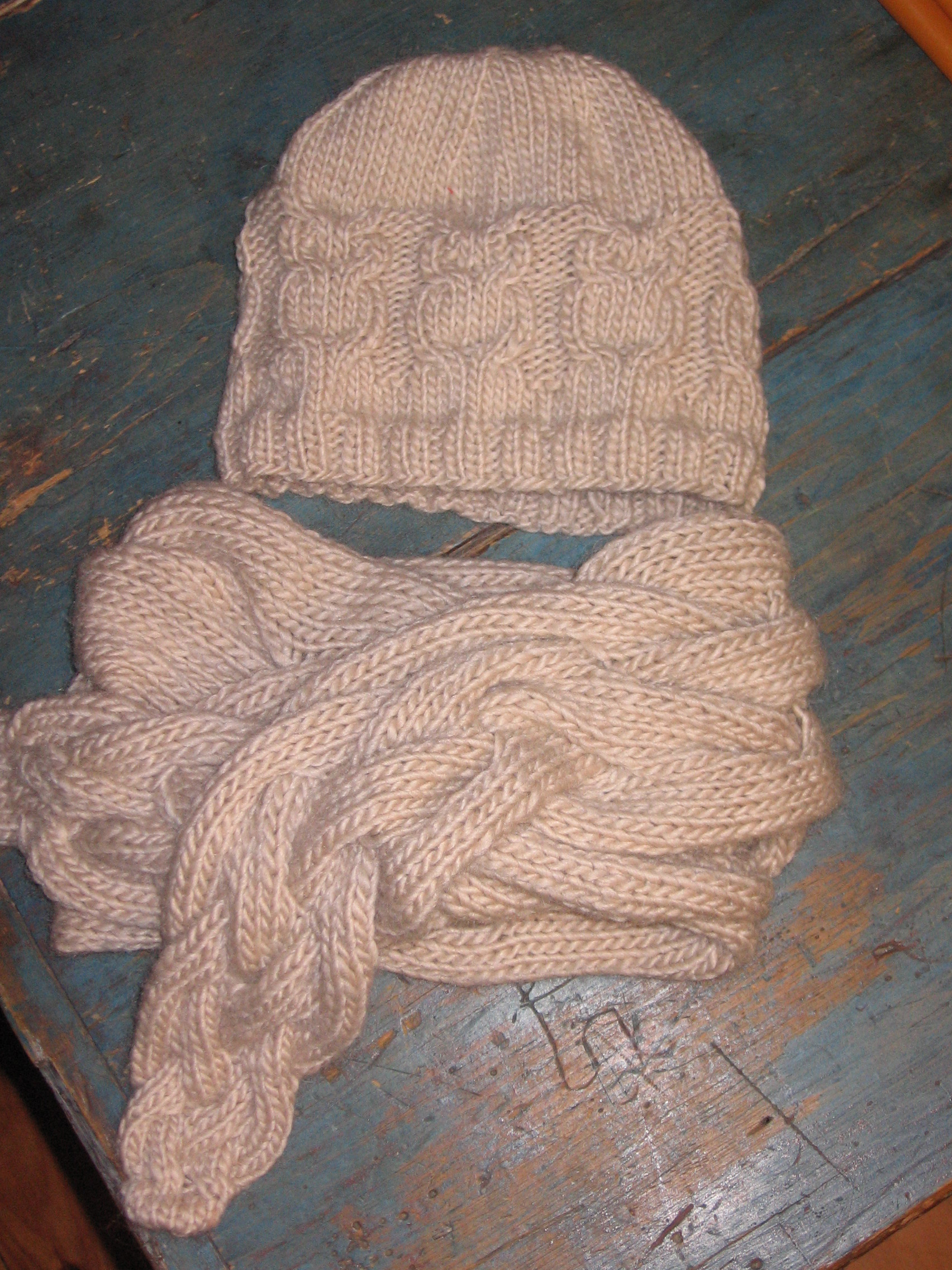
There is an adult version and child version. I made the larger one, using the cocoon yarn that I had left over. The owl pattern is quite simple. It is a series of cables, a few knits and purls, and not much else. You basically repeat the same three pattern rows in different arrangements.
I am going to find some buttons to put on the purls for eyes, when I get around to it…

The owls are pretty cute, hanging out around the hat. The pattern is pretty subtle, and I think that the eyes will bring out the owl-ness a little more!
knitting a scarf because there is a snowstorm
February 2, 2011
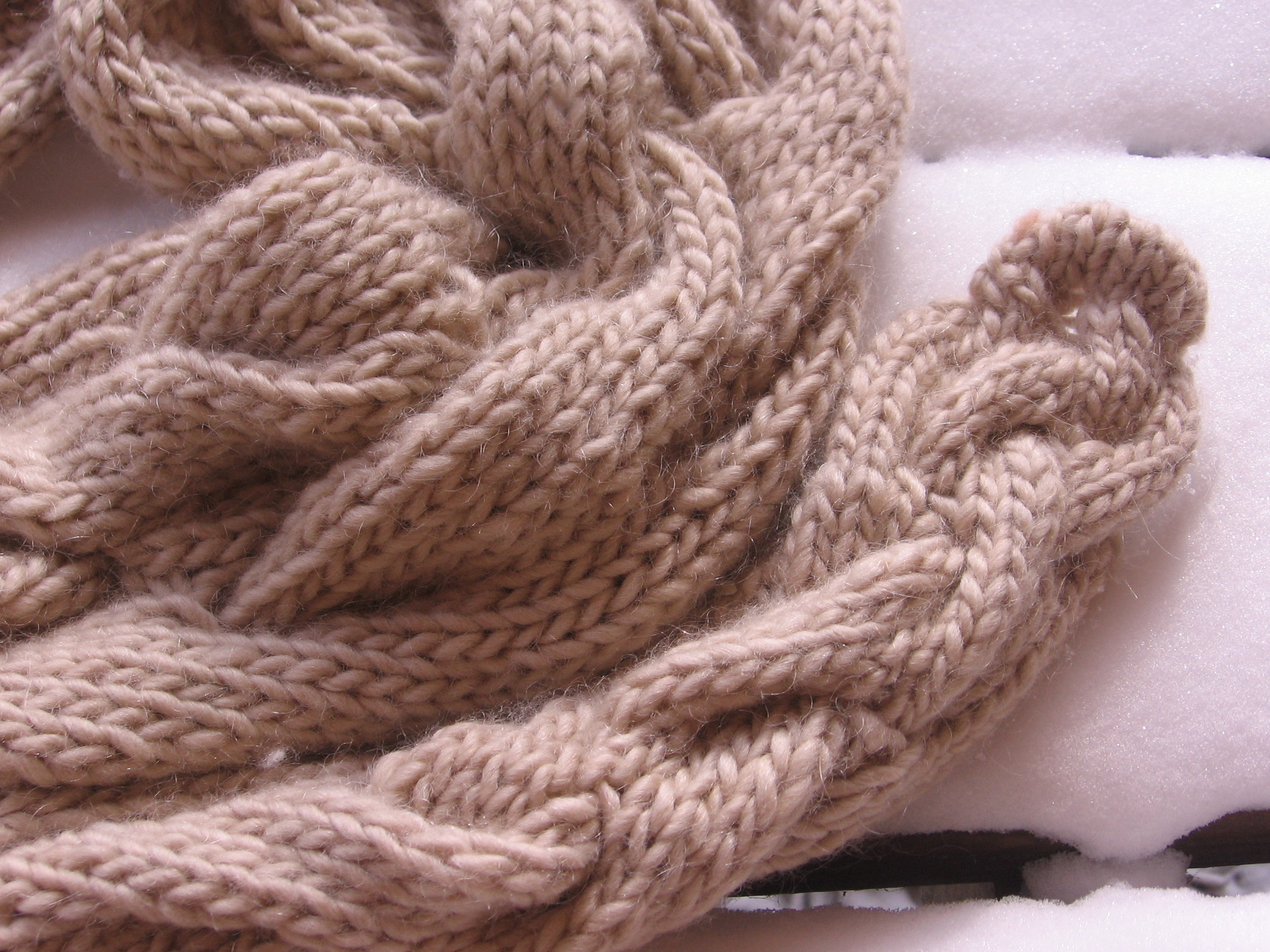
I went home early from work yesterday, and was busy tending to the fires (three of them), baking potatoes, and knitting a braided sort of scarf pelt. I toyed with the idea of knitting strips and braiding them together, but decided on making a sort of cable braid. I made it as if there were 5 strands woven together, and started with 3 stitches in each strand. As I continued, I added stitches to each strand, and rows between the cables.
Once I made it about half as long as I wanted, 11 stitches in each strand, and about 18 rows between cables, I started to decrease, in approximately the same manner that I increased. I wasn’t exact, and one end is a bit shorter than the other.
The increase was more pronounced at the beginning and end, as I was increasing at the cable crossings and they were coloser together. This seemed to be a good measure for increase though. Because I used only 5 strands for the cable, the scarf wasn’t able to grow quite as wide as I was imagining. I am thinking that the same design would work well with 7 or 9 strands too.
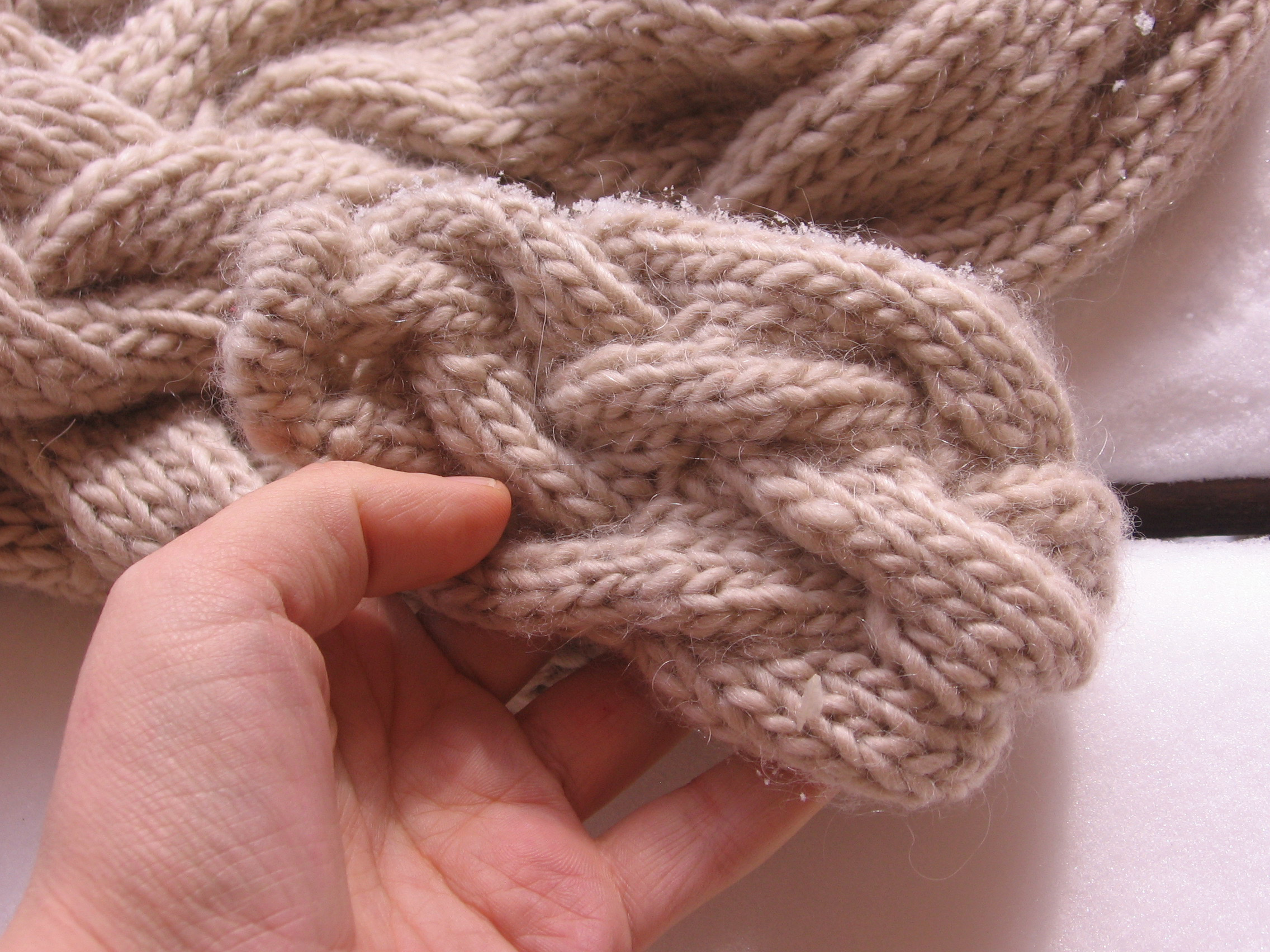
At the edges, I cast on 7 stitches, and knit in stockinette stitch for a few rows. I folded under and sewed these edges (below), as I wasn’t sure what else to do…too bad I don’t have some animal paws to sew on. Then it would really feel like a pelt..

I used Rowan Cocoon, and started the very beginning with size 10 needles. I quickly moved to 10.5s for a few rows, and then settled on 11s for the majority of the project. I wanted the finished material to be a little bit softer, not too stiff. Before blocking the scarf was a little bit stiff, but after blocking, the material developed a lovely drape.

My only problems with the scarf were the huge holes created at the cable cross overs. I am not sure what, if anything I could have done to improve this. Will research!

The finished scarf is long enough to wrap around my neck about 2 times, and the ends tuck in nicely. And it is warm, soft and cozy!
a vest for my dad, and a visit to the alpaca with the fur
January 23, 2011
My dad and I were at the farmer’s market this summer and he purchased the alpaca for me to knit this vest for him. I finally got around to making it. The pattern is an adaptation of a basic Penny Straker pattern for a pullover vest. I turned it into a button down vest, and added a pattern so that it was a little bit more interesting. The alpaca fiber was sport weight, and I ended up knitting the vest on size 4 needles to get the appropriate gauge.

The pattern is made by knitting three, purling one, for the first row. The second and fourth rows are purl (or knit if you are working in the round). The third row is knit one, *purl one, knit three, repeat from * until 2 stitches remain, knit two.

The 1 x 1 ribbing at the bottom, and around the arms and front is a ‘raised rib.’ Created by knitting into the back of every knit stitch, and purling the purl stitches as normal.

For the button band, I picked up three out of four stitches up the fronts, and then when the decreases started, I switched to 7 stitches out of 8. This seemed to be a good formula, and the button band isn’t too tight or too loose. I followed the same plan for the armholes, picking up one for one at the cast off edge. Without counting, I ended up with the exact amount of stitches that the pattern called for around the armhole. To finish, I sewed on little wooden buttons.
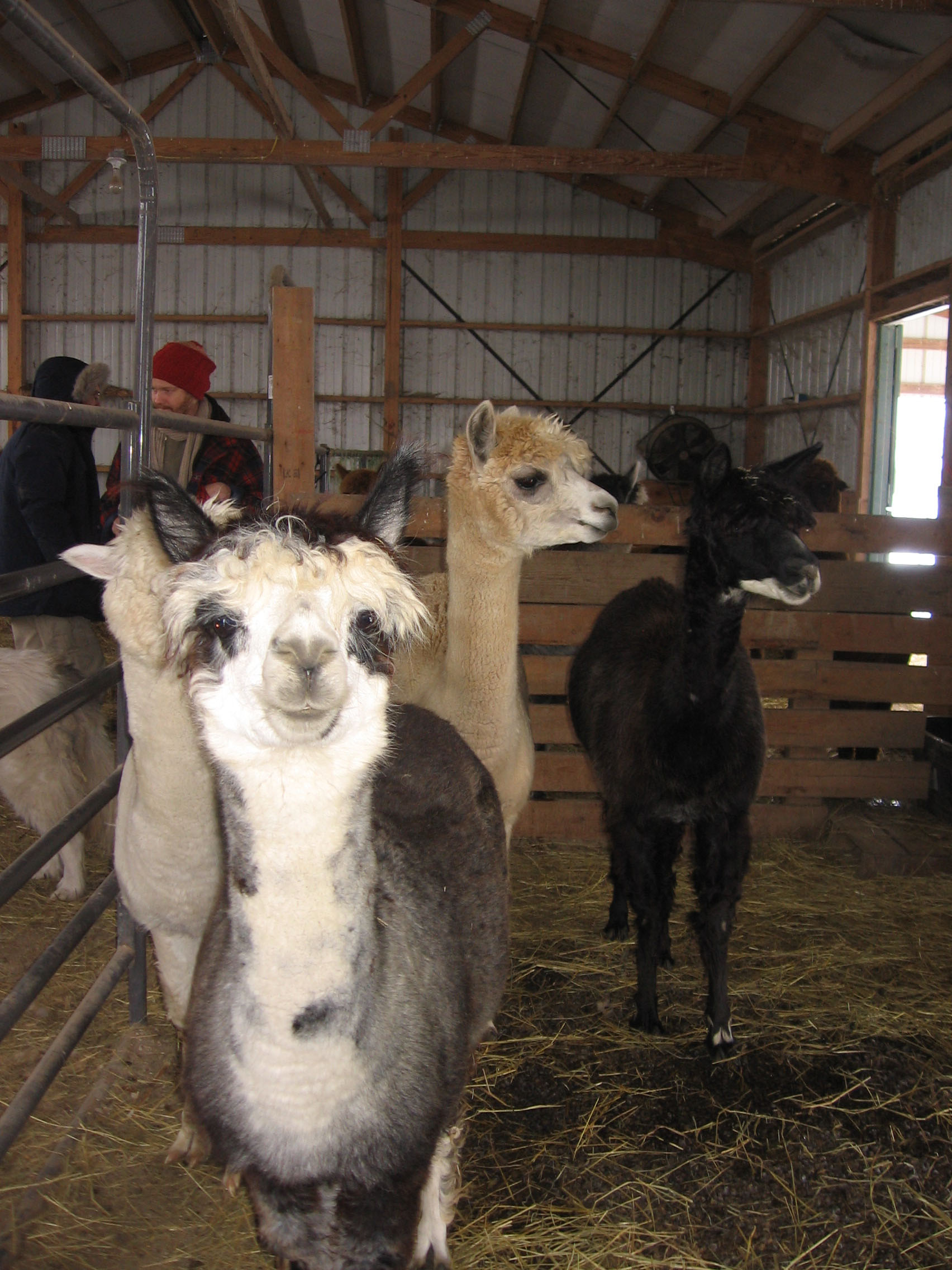
I find it fascinating that materials for this vest grew in right outside of Brighton, IA, on a lovely little farm called Dutch Creek Gardens. They have 12 alpacas, fruit trees, native prairie, and a vineyard. My dad and a friend and I went to the farm to visit the alpacas, and let them see the vest!

Mr. Bojangles, the first alpaca we met, posing for the camera!

The vest was knit with fiber from Star Gazer. She was the first alpaca born on the farm! Here she is chatting with my dad.
Talk about buy fresh, buy local! The alpaca fiber traveled to Morning Sun to be spun into yarn , and then back to the Brighton, and then to the market. Then it came home with me, and was knit into the vest. That is it!

Here is my dad with Star Gazer and her baby, Morning Light. Maybe they detect a bit of alpaca. They definitely were sniffing the vest, although they might have been looking for food, as we were feeding them..
an orange sweater for a green dress
January 21, 2011
I started this sweater in the summer. It was almost finished, and then I was worried that it was too short, and that I would never wear it. It ended up in a ziplock bag until yesterday, when I needed a short sweater.

I have recently gotten back into sewing, and found a pattern for and made a little green dress. The bodice (I think that’s what it is called) is short, and when I tried a normal length sweater over it, the skirt rumpled up kind of funny. I dug into the knitting pile in my spare room this morning, found the unfinished orange sweater, tried it on, and it worked just about perfectly! The sweater sleeves are a little bit tight over my arms and the corduroy sleeves, but I think that I can manage, and maybe the wool will stretch a little.

The sweater is knit with Malabrigo lace weight yarn. I ended up using a little over two skeins of yarn, so have a bit left for another project…I knit the sweater on size six needles, starting at the top and knitting down. I added seed stitch at the bottom, sleeve edges, and around the front, instead of ribbing and stockinette. When I picked up stitches around the front, I think that I picked up a few too many at the bottom. The border extends down, making little points. I am actually growing used to them though. The seed stitch (on size two needles) was taking so long, and I didn’t feel like ripping it out, so I kept it.
The good thing about using such thin yarn is that you get a more delicate sweater, and it costs less. The three skeins of yarn cost about $8.20 each, so the total sweater cost was around $25.00. Not too bad if you ask me!

The dress was from a pattern that I picked up in Iowa City. I also purchased some pretty fabric to go with the pattern, but as of yet am unable to cut it. (I have a hard time cutting into new pieces of fabric.) I had some fine whale green corduroy (already washed and dried) sitting around, and used it to make a prototype.
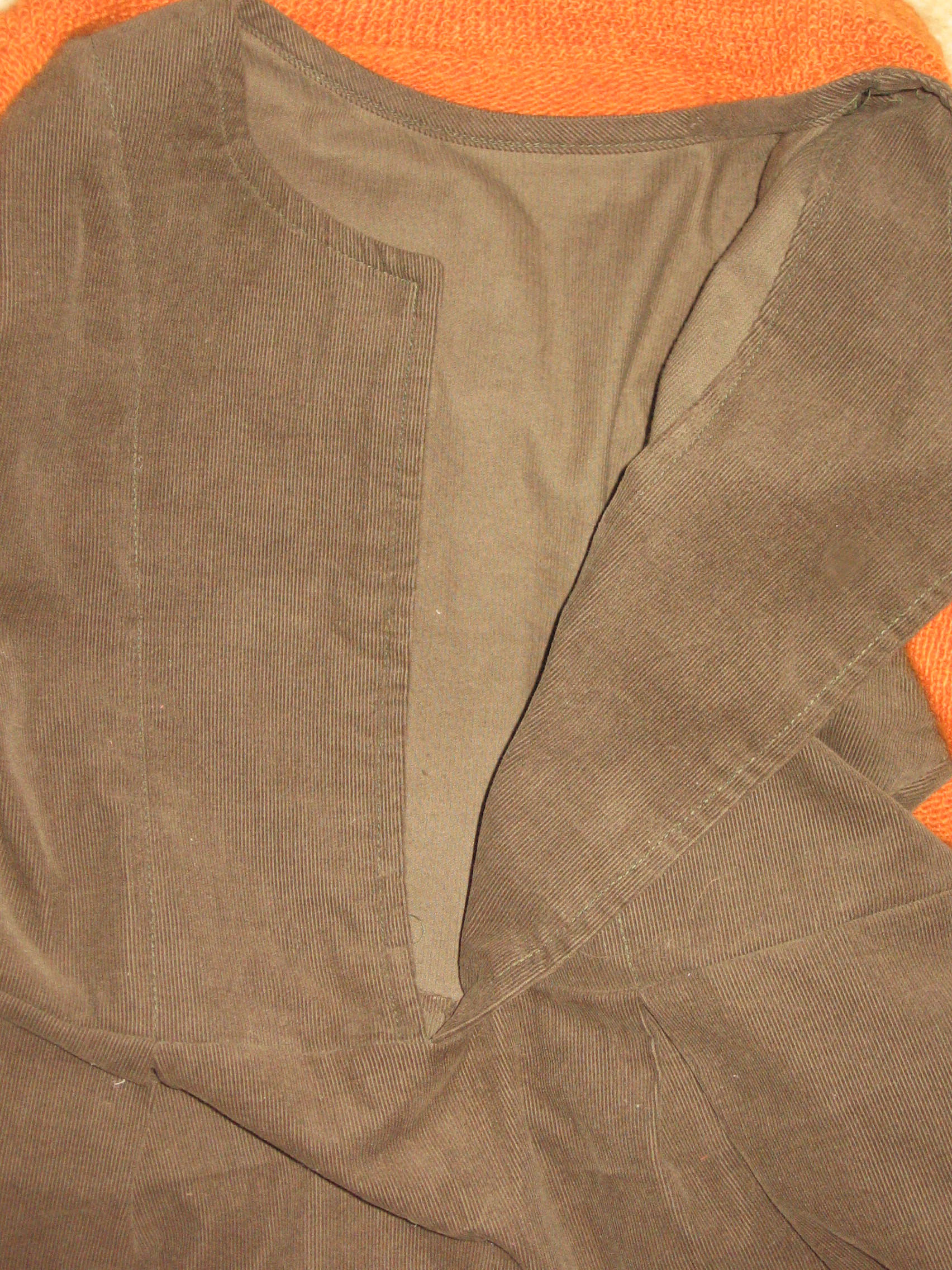
I cut and laid out all the pattern pieces, and marked them with my new white fabric pen. Then I managed to sew everything together, mostly correctly. Only ripped a few times…
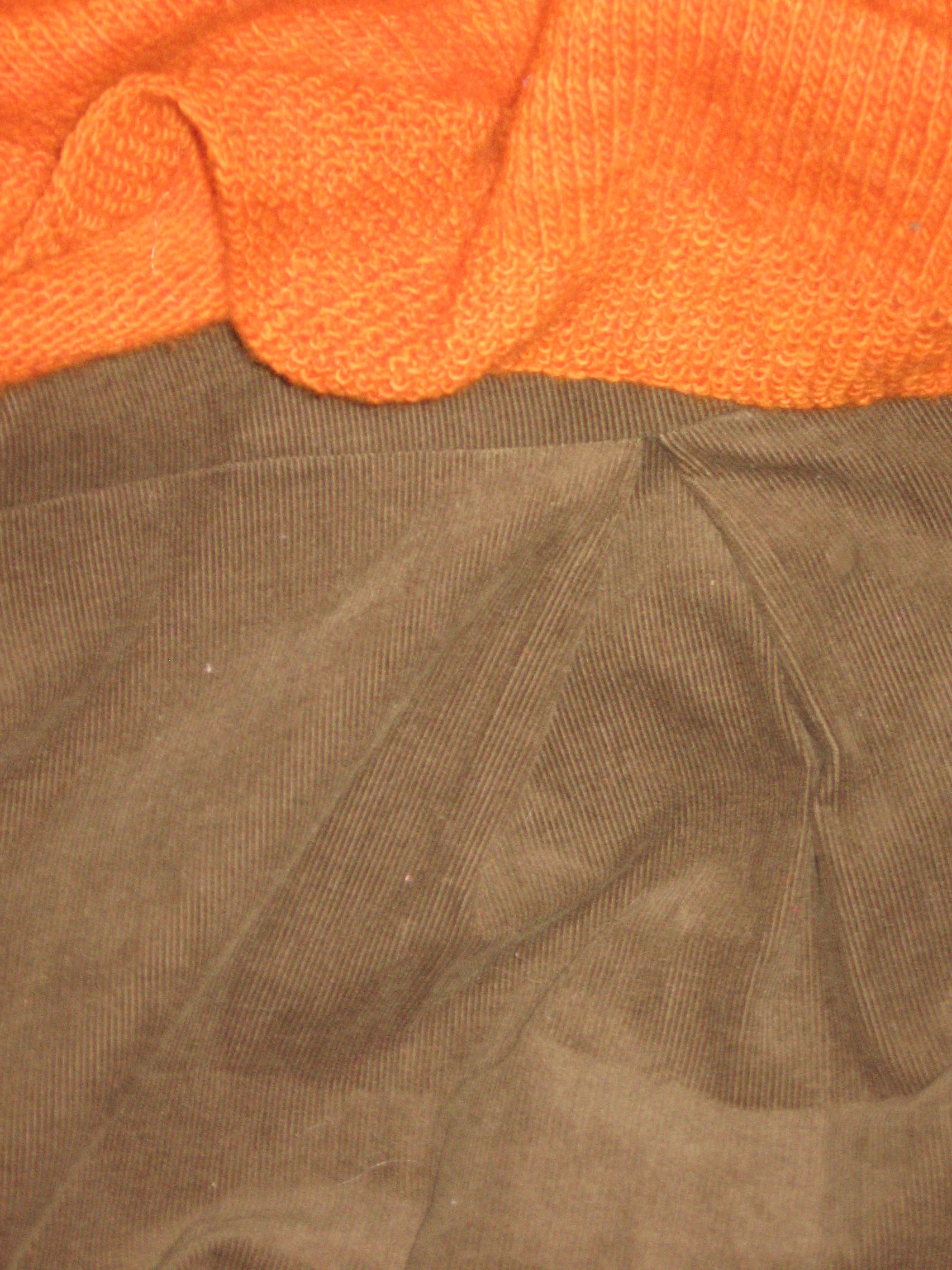
The front is made up of two pieces, with plackets on the back side (shown above). It is a simple, effective design. No buttons or other fixtures used! The back is one piece, and I very slightly gathered the sleeves and sewed them in once the front and back were attached at the shoulders. Then the skirt front and back. With reverse box pleats. Two in the front and one in the back (below).
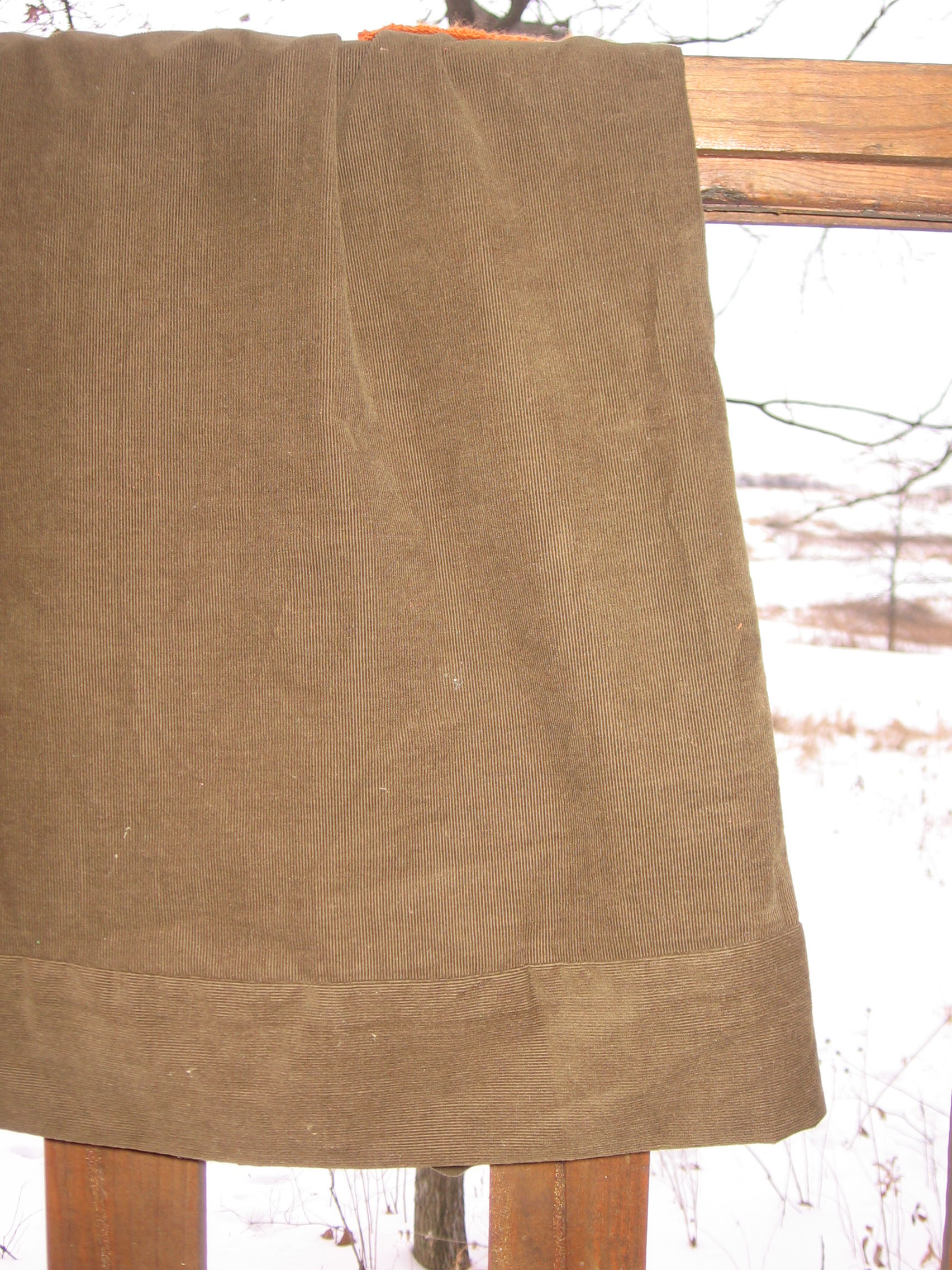
When I tried the dress on to show my mom, we decided that we liked it longer, and she had the thought to run a band around the bottom to add a few inches. I tried this and liked it. The material is going in the opposite direction, and it creates a nice edge effect.
That’s about it. A quick and easy sewing project. I am happy with the fit, and am planning on making another one with my new fabric…maybe over the weekend. I had forgotten how fun sewing can be. And it goes very quickly, which is quite satisfying!!
warm, fuzzy hands
January 13, 2011

It is really cold today. Perfect inspiration to make some mittens. Slightly bulky, and two color, which means extra thick and quick to knit!

I made these mittens with one strand of Rowan Cocoon, and one strand of Rowan British Sheep Breeds Bulky. A good combination. The cocoon is super soft and shiny, and the strand of British Sheep Breeds is soft, fuzzy and warm.

I took the basic pattern from a Lion Brand Pattern, and adjusted it so that the mitten fit…and the colors lined up well. As I was knitting, following the pattern I kept on having to rip and re-knit to adjust colors and sizes. Finally I stopped following the pattern, and made up my own. It worked out better that way.
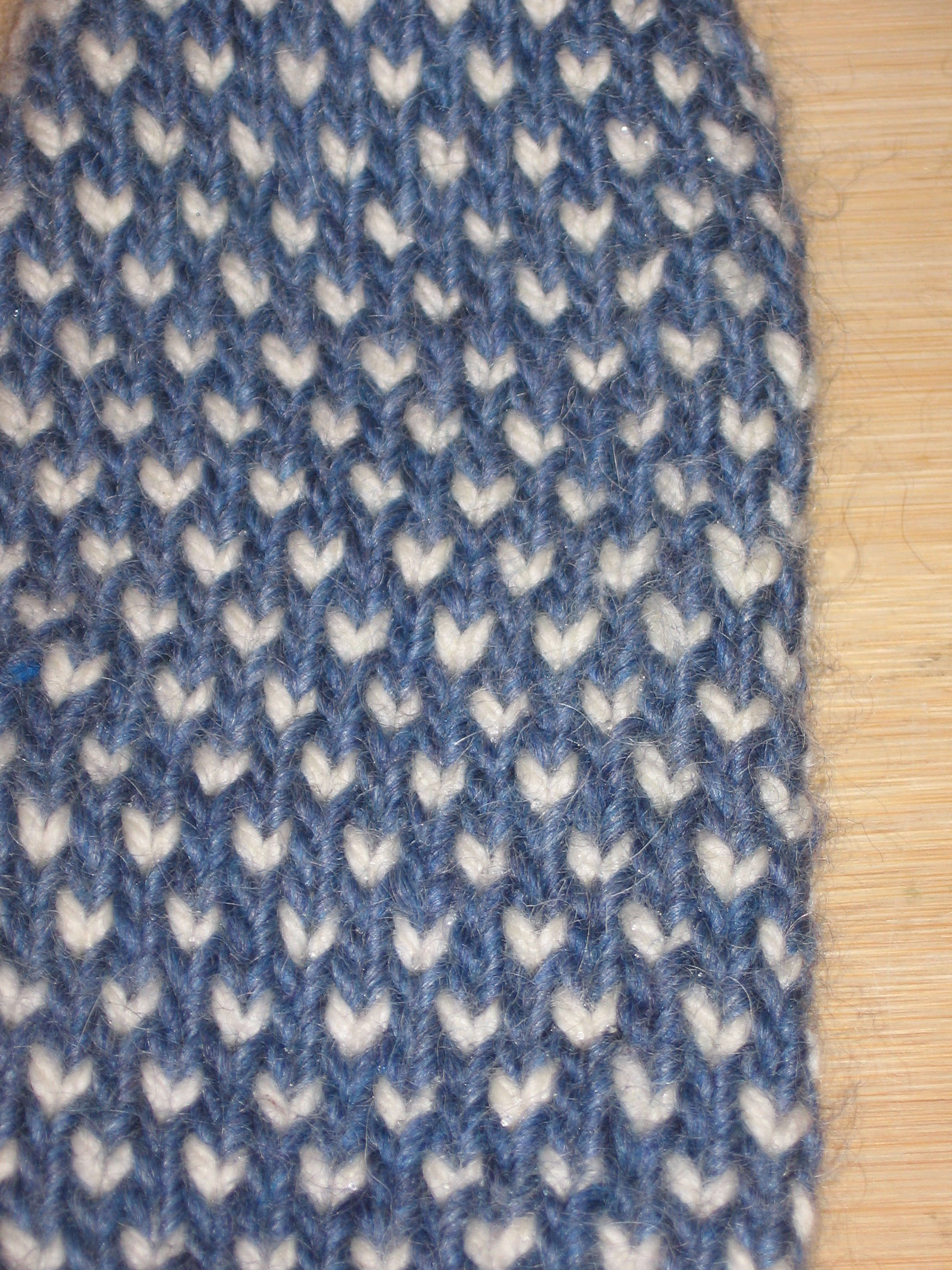
The overall stitch pattern of the mitten is offset, alternating blue rows and blue and white rows. On the thumb there is a subtle difference, and the white dots line up, creating vertical as well as horizontal blue stripes. It worked out better this way with the thumb gusset increases.
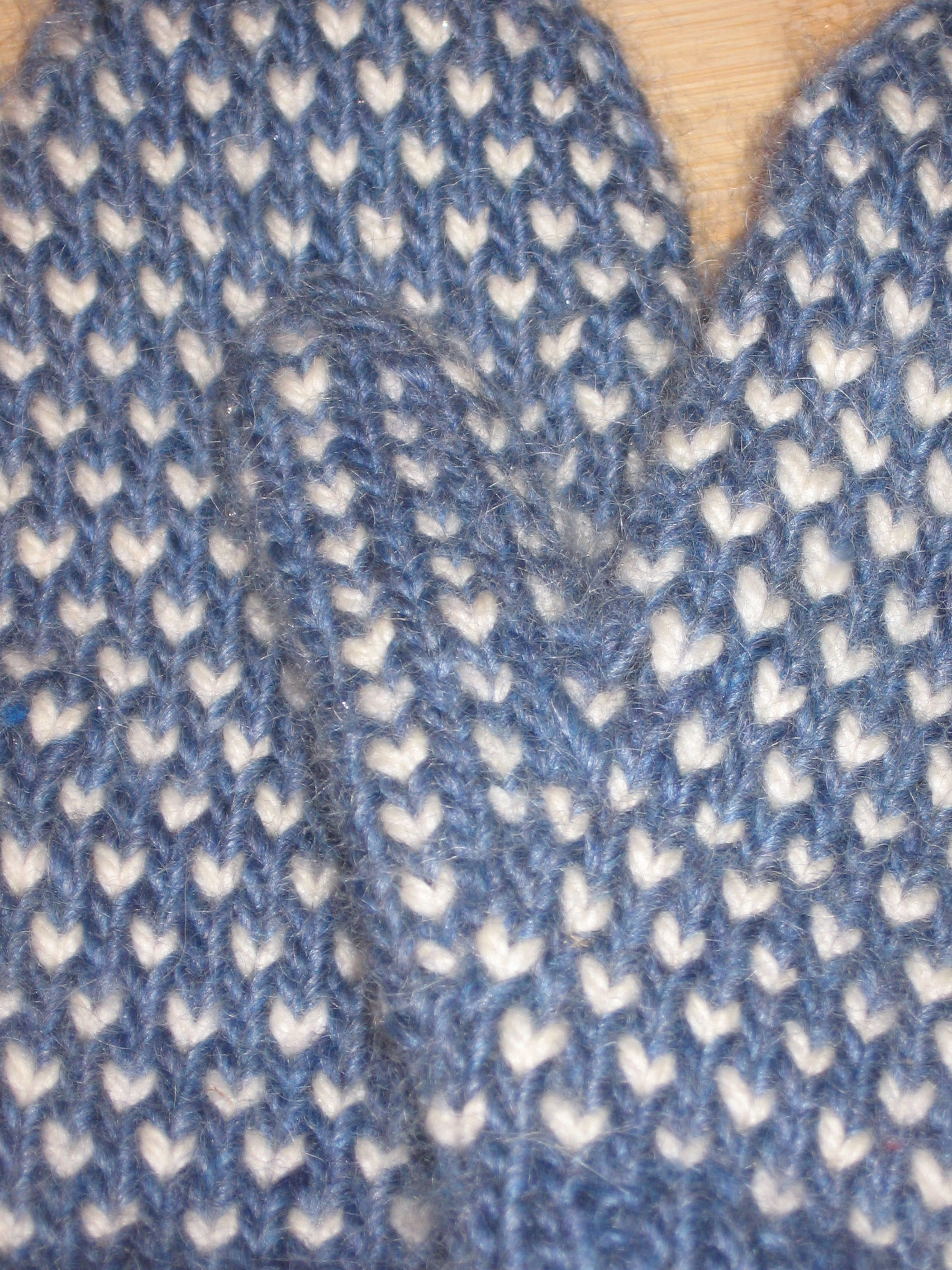
I made the top decreases on either side to create a bit of a pointy tip, and kitchener stitched the last 16 (I think) stitches together with blue.

I used size 7 needles for the ribbing, and 8 to knit the mitten, so that the material was dense. It will felt a little with wear, which will make the mittens extra warm! These pictures are all pre-blocking, and the mittens are drying on my hearth now. I was chastised by Emmy for not blocking them, and so stuck them in the sink at the store for a few minutes. Now they are a little bit fuzzier, softer, and the stitches have come together. If only they would dry already!
 living in the woods and making stuff
