pomander balls
December 9, 2009
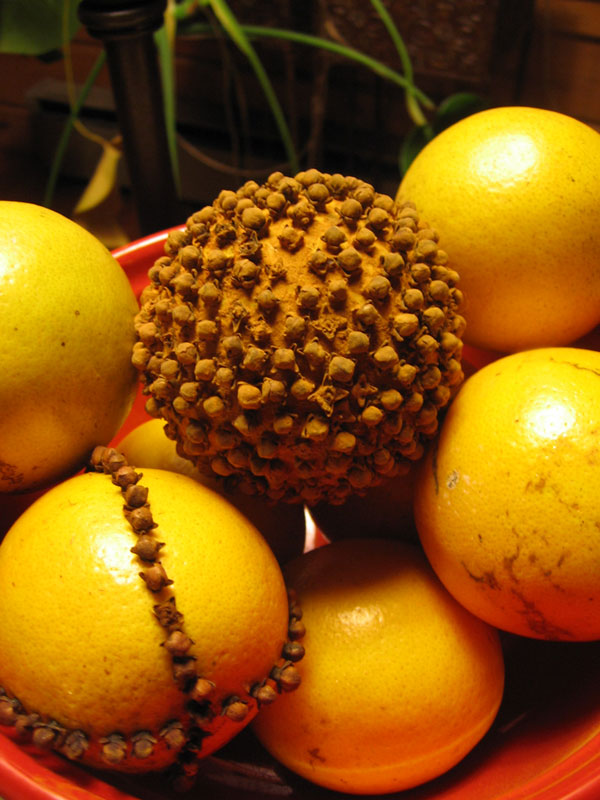
When I was little, I remember my mom sitting us down at the kitchen table with a bowl of oranges, and a bowl of cloves. My friends Adrien and Dain were over, and we all set out to work on our pomander balls.
Our sort of pomander balls are made by poking holes in oranges and filling them with whole cloves, and then dusting the finished product with powdered cinnamon. The whole process smells lovely, and the result is a beautiful ball that can be used for decoration, or to keep out moths and bad smells. They are nice to keep in a dresser drawer.

Supplies:
as many oranges as you would like to make (I used smallish, firm, not too juicy oranges)
a dish of whole cloves
a little dish of powdered cinnamon to dust on the studded oranges at the end
a thick darning needle, a nail, or a thin metal knitting needle
a tea towel to place in your lap during the process
optional ribbons
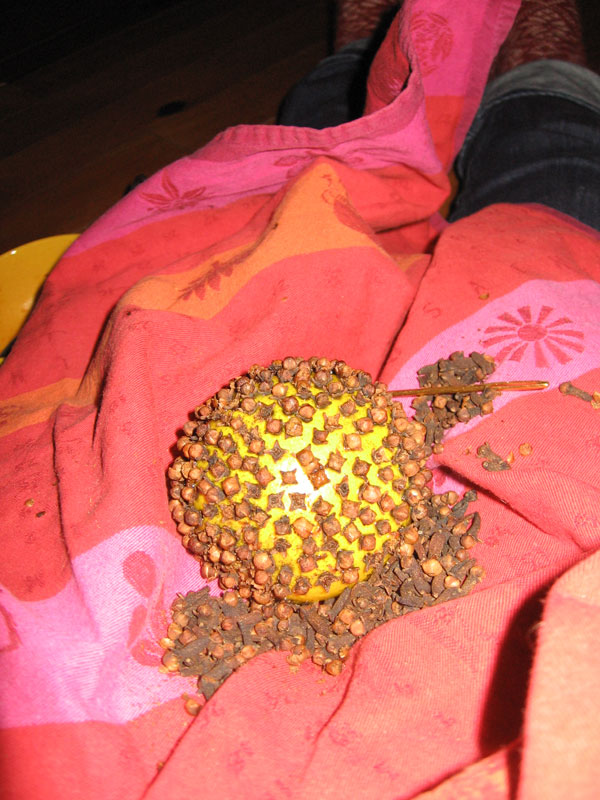
Step one is to poke holes in the orange with the needle. You could skip this and dig right in with the cloves, but I have found that the needle step saves your fingers a little.
Step two. Place the cloves into the holes as carefully as you can. I found that some of the cloves broke easily, but most of the heads stayed on.

When you have covered the orange with cloves (or have gotten fed up with the process), dust the orange with cinnamon. I dusted it lightly, and then tapped the orange gently to remove excess.
The finished oranges can be decorated with ribbons tied around the middle. Leave the orange alone where the ribbon is to go (stick with cloves on either side) and then tie the ribbon around the orange after dusting with cinnamon.
The oranges will dry out and remain sweet smelling for a long time.
comfort and simple food
December 8, 2009
 I have a really fond memory of cooking in my friend Lucy’s kitchen during college. We had a mini summer cafe for a little while and would cook lunch once a week from mostly local foods. When I got over to her house on one of these days, she was cooking up a pot of sauerkraut. It smelled delightful, and I asked her what it was. She replied that it was sauerkraut, and that I wouldn’t want to eat it because there was bratwurst in there as well. I sadly agreed, and we went about our lunch prep.
Although I didn’t try the sauerkraut dish, I did quiz her about the recipe, which was from her grandmother. It was a classic recipe containing bratwurst, sauerkraut, apples, and onions.
Now, you either love sauerkraut or you hate it. I (in case you haven’t noticed) love it. Pretty much any way. Out of the jar, with potatoes, out of the jar, on pizza, etc. When my dad served some veggie bratwurst last week with some of the sauerkraut that I had given him, I remembered back to the recipe, and decided to give it a vegetarian try. First I browned the bratwurst in a little oil in my skillet and set it aside. Then I chopped up some onions, cooked them in a little oil, and added some diced granny smith apple. I have a vague memory of Lucy using a granny smith, but I am not exactly sure. When the apples and onions were slightly golden, I added the sauerkraut (well drained), some “winter broth” (optional), a little water, and the bratwurst, then turned the burner to low, covered the whole thing and simmered it for a while. When it was finished, I cooled it and YUM! What a delicious, simple, hearty meal for a snow storm (ok the snow is tomorrow, but I can pretend!). Now I just want to curl up into a ball and go to sleep.
“not a creature was stirring…”
December 6, 2009

This was my mom’s idea. (And borrowed from an adorable product that we are carrying in the store.) A mouse in a match box. An “easy” way to do the whole ginger bread thing. We made a mistake a few years ago and spent hours and hours on our gingerbread house, and after that decided that we either wouldn’t do one, or plan something simple. For those who don’t know, the first Friday of every month in our town we have an art walk. Somewhere along the line the December art walk (they all have themes) got the theme of ginger bread houses. Now in December every store, restaurant, gallery, etc., has one or more ginger bread houses displayed prominently in the windows. Ours isn’t quite a house, but in my mind sleeping quarters count too.
I kept thinking that I would start the gingerbread experimenting long before the December 5th deadline, but of course I ended up Tuesday afternoon with a batch of chilled dough that behaved like a rock.
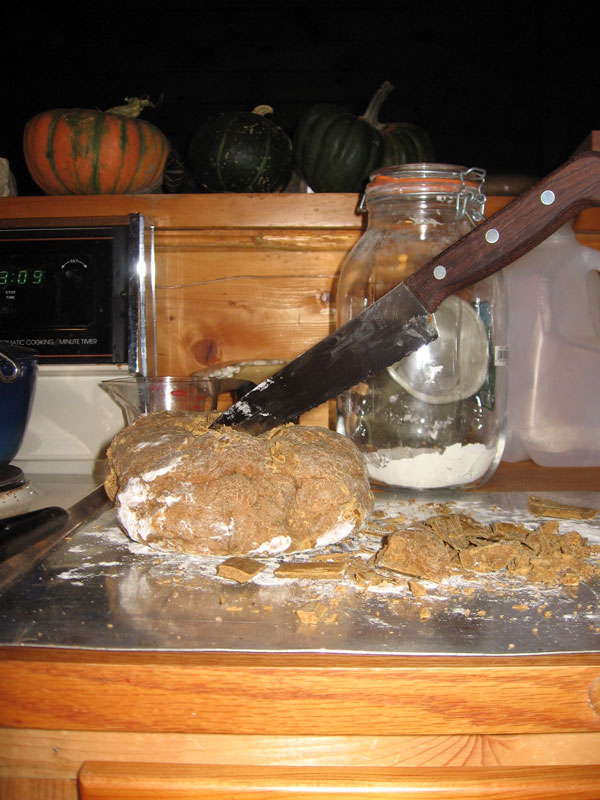
I could barely cut it with a knife, and had to toss it out. (For the record, I didn’t do the best job of following the recipe, and heated the butter, sugar, and molasses up too hot. I think!)
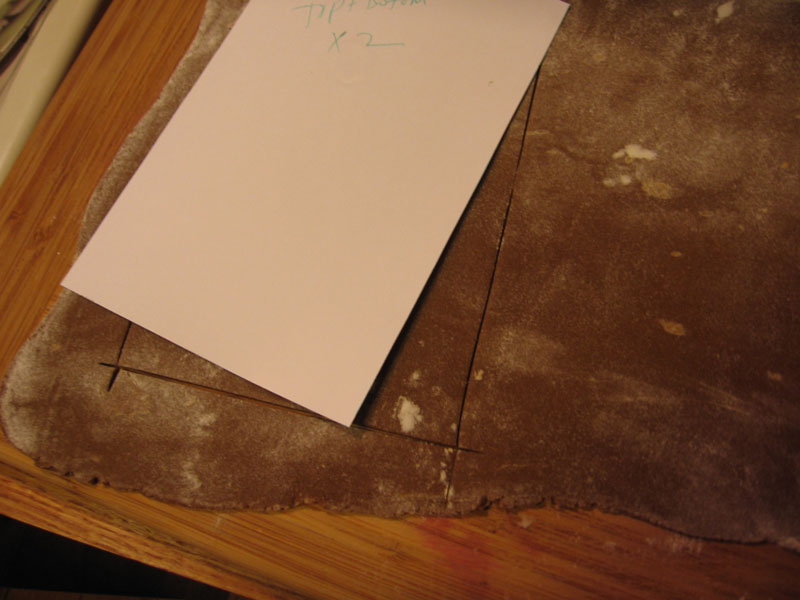
Tuesday night I made what was the first of many trips to Hy-Vee for a new jar of molasses. Batch two, on Wednesday worked out much better. I was still afraid of chilling the dough so I just rolled it out warmish, and cooled the pices on a cookie sheet on the porch before baking since it has turned bitterly cold here. I made the design for all the pieces on stiff paper, and then placed the paper directly on the cookie dough, on a cutting board, or directly on the cookie sheet, and cut out the shapes. It is harder to keep the shapes exact when the dough is warm, but I managed ok.
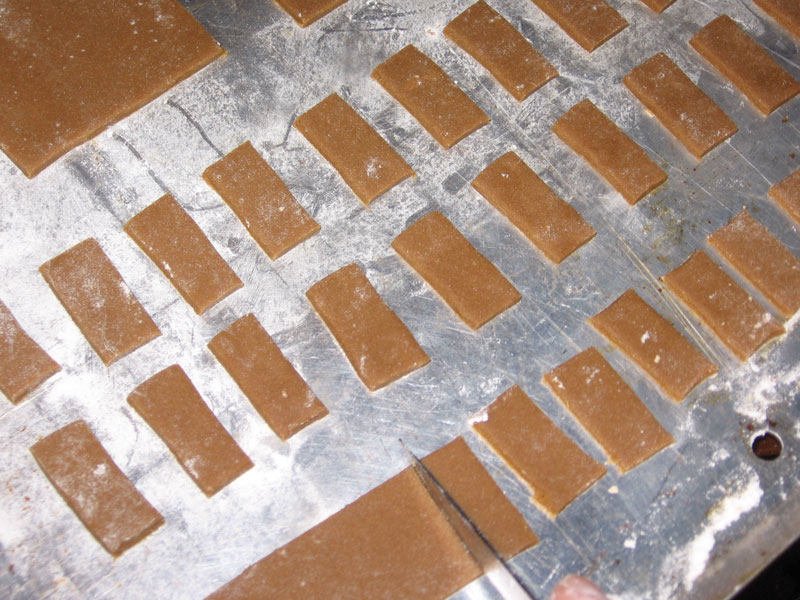
I made a lot of bricks, some logs, a few stockings for the mantle, and the box and fireplace this way. I had a few pieces break as I was removing them from the cookie sheet, but other than that, no major disasters. I kept on changing things around, and needing to bake extra parts. I had a ziplock bag full of left over dough saved for such emergencies, I would turn on the oven, roll out the part, bake it, and go on to the next part.
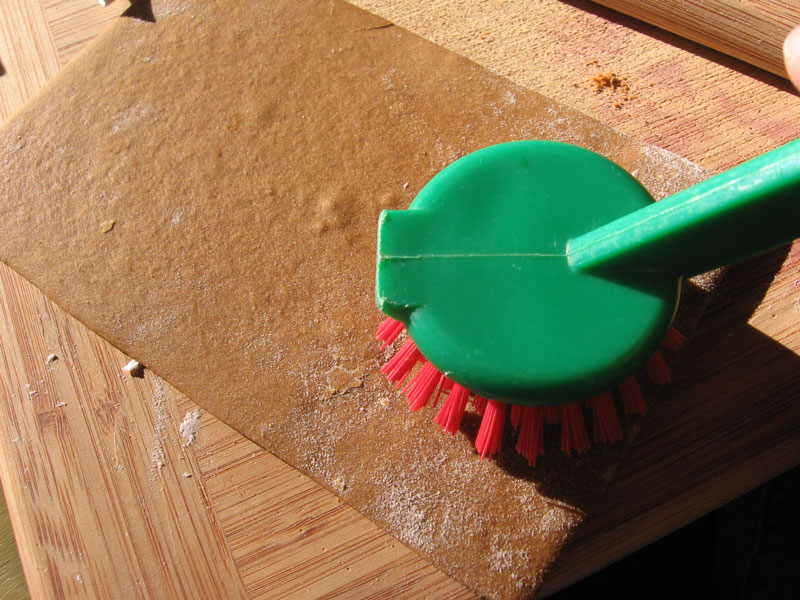
Cleaning the flour off of the baked sheets of gingerbread. My vegetable brush worked out to be the best tool for this.
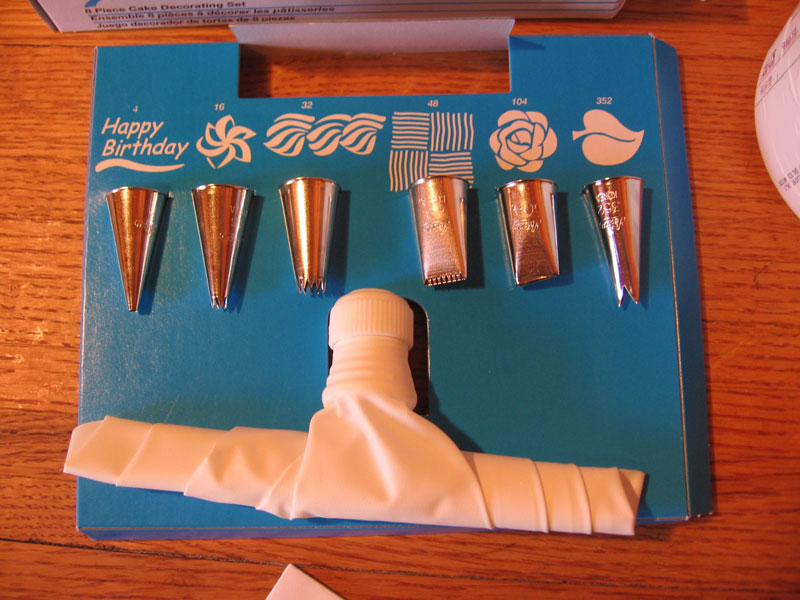
Thursday morning, after another trip to Hy-Vee, this time for junky powdered sugar and egg white powder, I assembled the pieces and stuck them together with royal icing. Royal icing is the best icing for this kind of thing. It is made of sugar, egg whites, and water. It tastes kind of gross, but when it is dry it holds like a ROCK. (When I was in 2nd grade we had a gingerbread house party for my birthday and the person who was in charge of the icing used some other recipe, and we had a night of houses falling all over the place!)
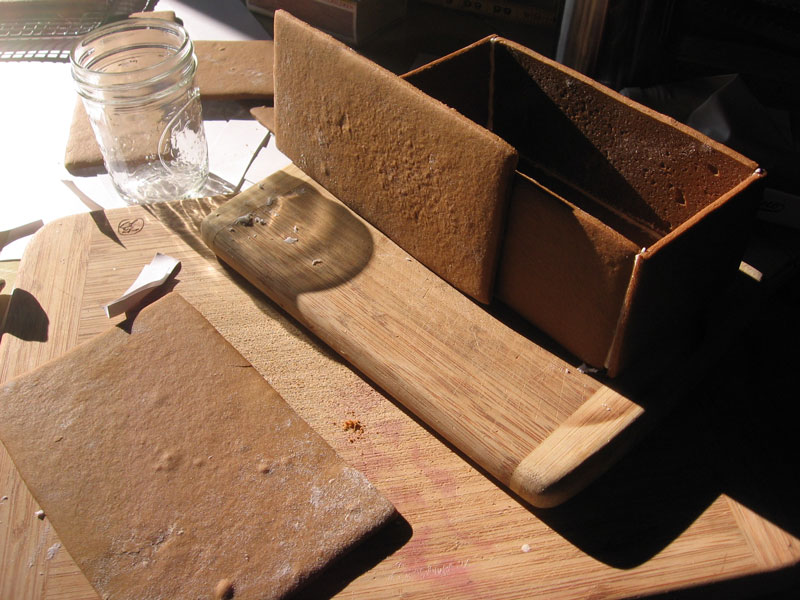
One more trip to Hy-Vee (you would think that I could have made a list and picked up all the ingredients at once…) for marshmallows, and the pillows and quilt were under way. I wanted to make the bedding out of something soft, and marshmallows came to mind. Even though you can’t really see them in the finished product, they create the right shape and feel of cozy bedding. The red candies are really yummy peppermint pillows from the store. They made the perfect topping for a downy satiny quilt.
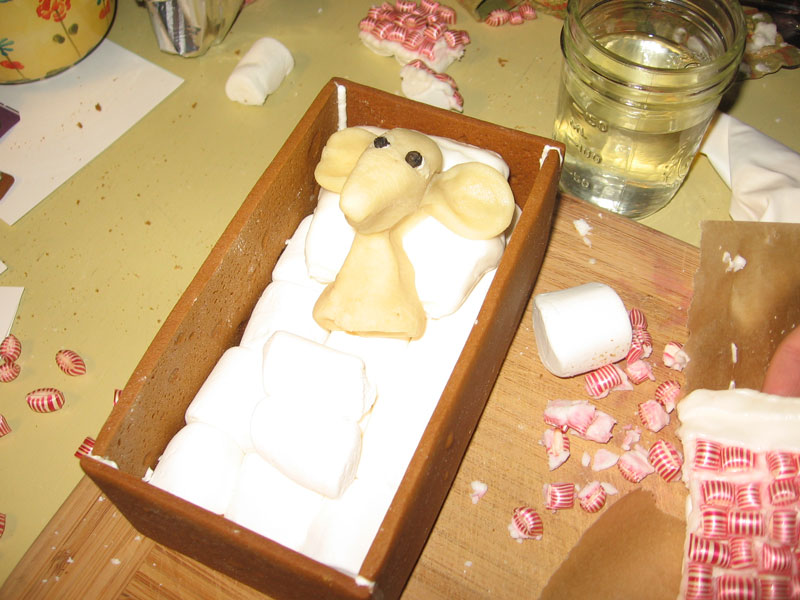
My mom came over to sculpt the little mouse. I made an attempt, and called her directly to finish it off. She molded the head out of marzipan, and the body is just a padding of marshmallows under the quilt (the old pillow technique). The mouse was finished in stages. First he was placed in bed to check his positioning.
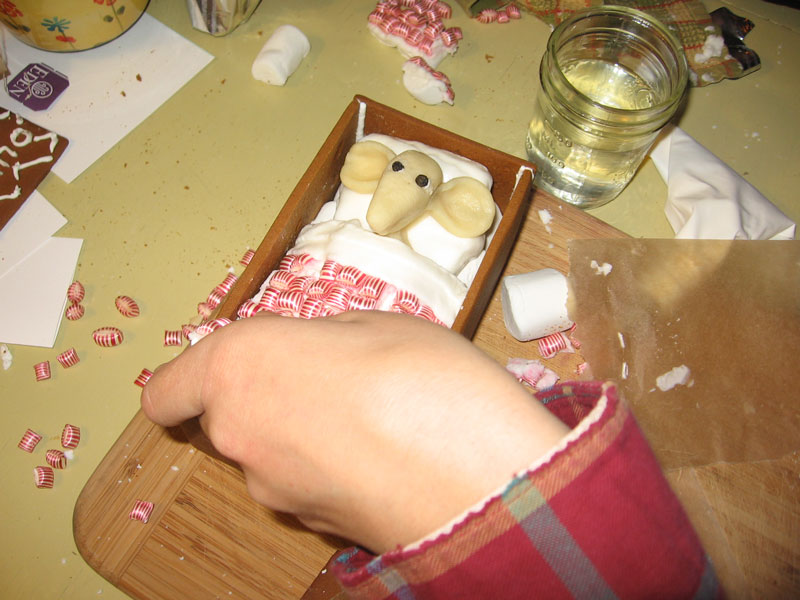
Then he needed a little color. His nose and ears were a little too much marzipan colored. In came my mom with the pink frosting.
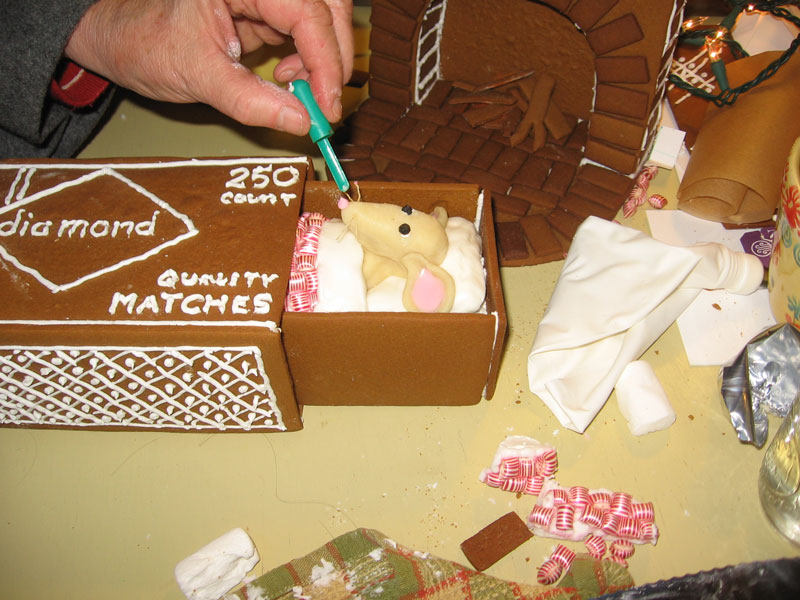
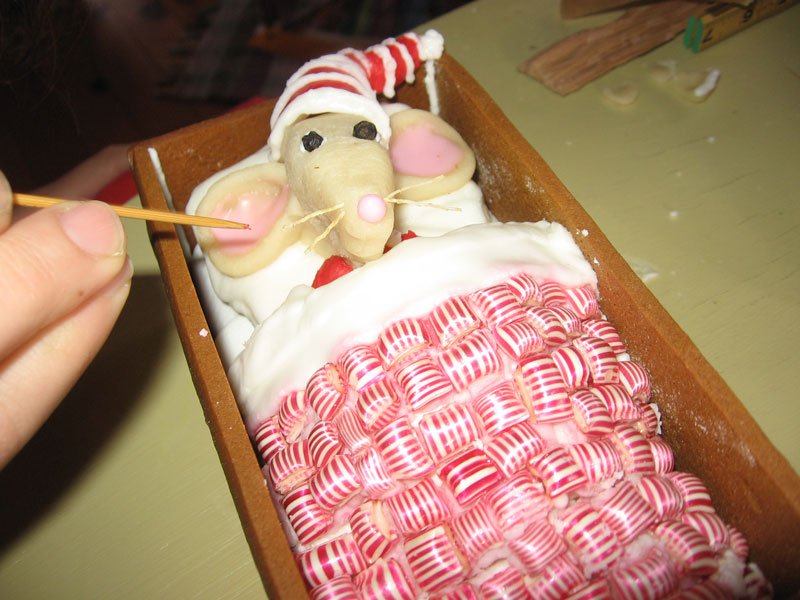
We decided at the end of mouse production that we needed to have him wearing a red sleeping cap and red pajamas. We molded the parts with marzipan, and carefully painted them with red icing. We inserted the red shoulders into the box using my size 0 knitting needles. Tricky tricky work. If we got even one drop of red dye on the white pillow we were sunk.
(I can’t decide if I like the peppercorn eyes or the shredded wheat whiskers better here!)
On to the fireplace. I wanted to give it a more “authentic” feel, so I made it three dimensional, and ended up having to brick the inside arch. That was tricky! The hearth ended up working out well.
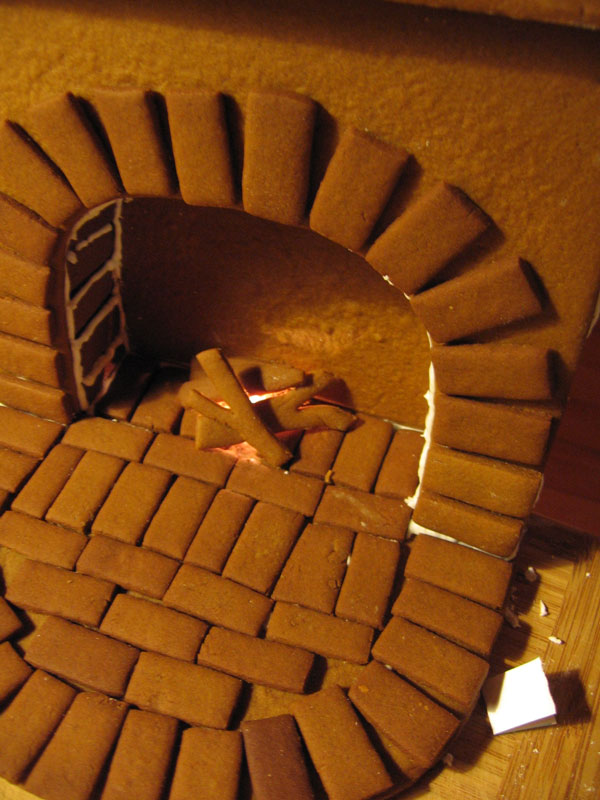
I made a piece of gingerbread for underneath the bricks, and then glued them all on with the royal icing. The fire was lit up from underneath with a christmas light. I ended up painting some of the logs red later on down the line.
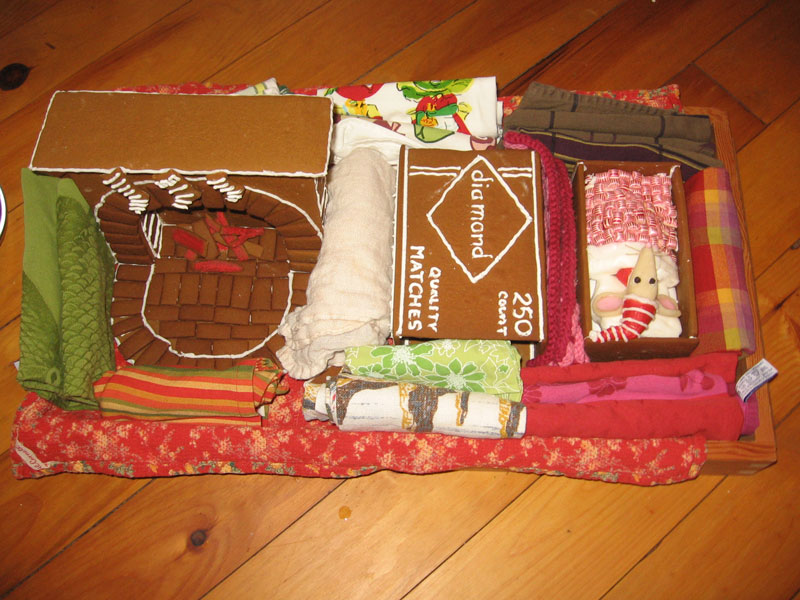
We were a little worried about transportation to the store. My mom brought over a large wooden tray, and we placed each part in a bed of tea towels. The pieces were snugly set in, and the trip was successful. My mom drove, and I held the setup on my lap.
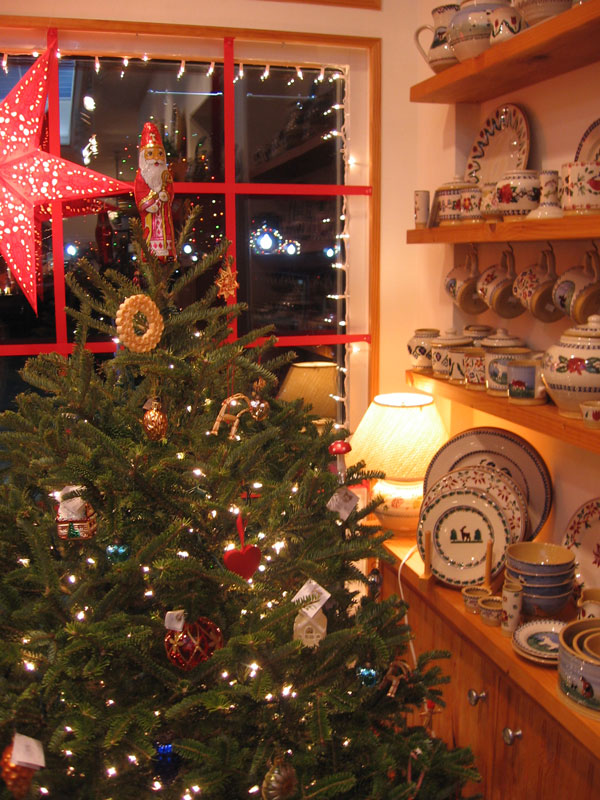
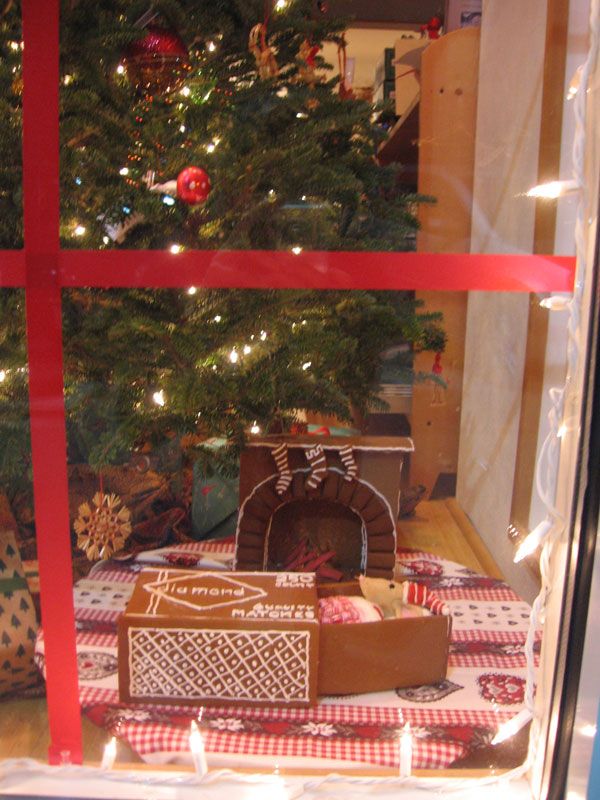
Kathy did an amazing job decorating the tree, and it looked so beautiful in the window! Little mousie got a corner under the tree, and enjoyed the festive atmosphere!
a mini study in stripes
December 4, 2009
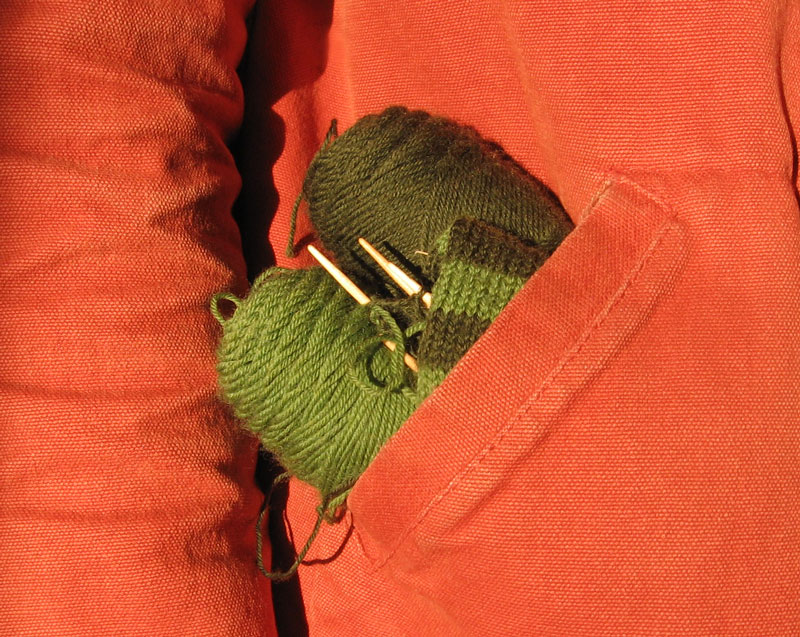
I have really gotten into stripes this fall, particularly when applied to socks. I love to see how colors change when they are stuck boldly next to other colors. Right now I am working on a series of socks, or “Christmas Stockings for the Miser.” They are the perfect size to hold an orange or a hard boiled egg, and a sprig of holly…
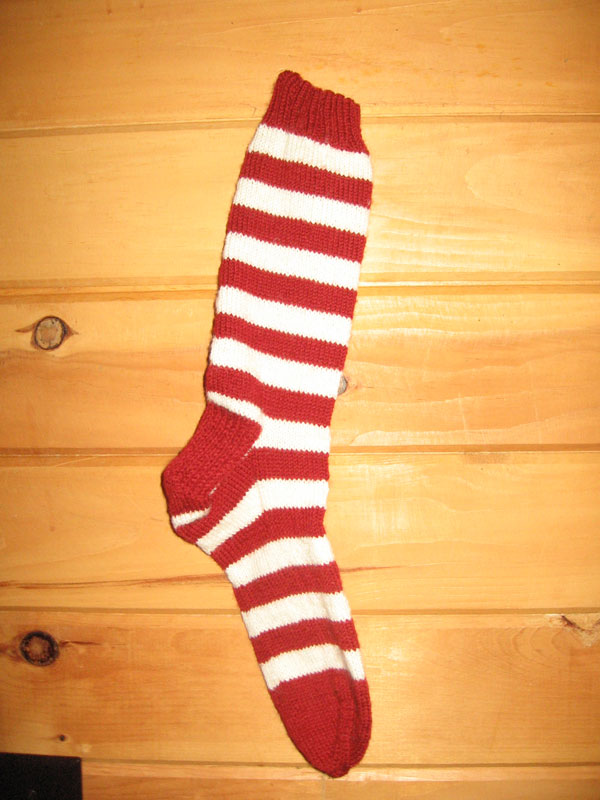
I might put them up in my cabin for my house guests this holiday season. (Makes you want to visit me doesn’t it…?)
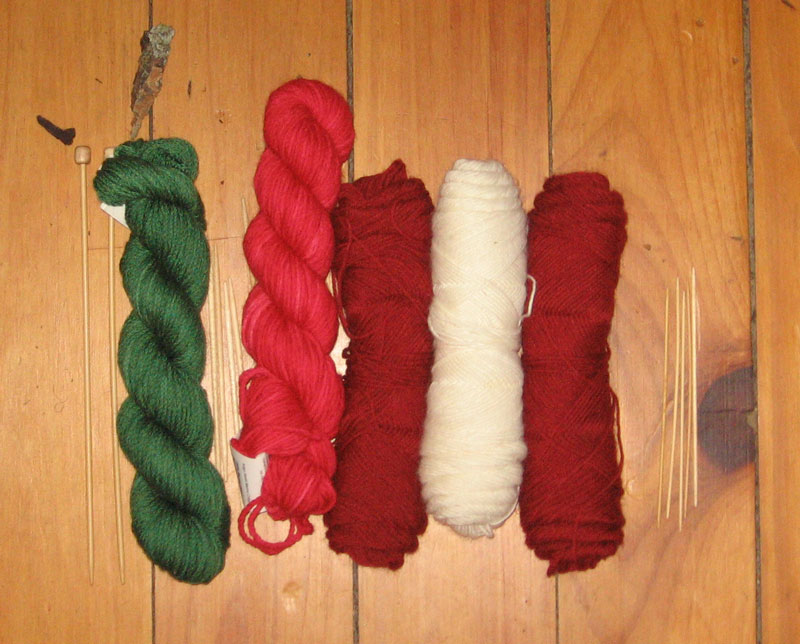
I have found knitting socks to be a great way to test out new patterns. I am currently using socks as a swatch to test the results of color and stripe width mixing. I started off simply, making a red and white striped sock with 8 rows of red, 8 rows of white. Now I am moving onto a dark green and light green sock, making each stripe 6 rows wide. My plan is to make a vairiety of socks, each unique, with different variations on the color themes. I have several balls of red yarn, some greens, and white to work with currently. Maybe I need to throw some non-traditional holiday colors in there for fun, but haven’t gotten that far yet. I also have two balls of sport weight yarn. A red one, and a green one, that when striped could make an exceedingly cute or tacky (depending on how you see it) pair of socks. I have a thought in my mind of a ruffle trim. We will see how much of this project I finish before Christmas (the goal date, so that I have something to hang on my banister, or give my guests to wear on their feet…)
Note on the yarn: the sport weight yarn I am using is Koigu Kersti, and the sock weight yarn is Jawoll, which I am having SO much fun knitting with lately. (The same yarn as the baby booties, which I did somehow manage to finish!)
some more on firewood
November 30, 2009
My dad and I went out scouting for new trees today. I kind of consider myself a treehugger, but when I was out wrapping orange tape around the trunk of large trees, I doubted that particular classification. But then I thought about other sources of heat, such as mining coal or natural gas. And I thought about the only thing that really keeps me warm in the winter-sitting by the fire. We aren’t going out and clear cutting our forest. We have 40 acres of trees, and if we collect firewood carefully, it really is a sustainable operation.

Our mission was to find dead standing trees that were suitable for use this year, as well as live trees that we could cut down this year, split next year, and burn the following year. There are so many different elements involved in selectively cutting trees. Things to look for include the texture and type of tree and the location of the tree (closeness to the road and to other trees). It is also important to know if the tree is dead or alive, and whether something is currently living in or eating the tree. We carefully looked at all of these factors with every tree that we banded.
The variety of tree is very important when choosing trees to cut for firewood. Every type of tree has a different character. More ashes, less ashes, higher heat (BTU), easier to light, etc, etc. Some woods even smell better than others, which does actually make a difference. There is a great chart that outlines the specifics on burning different hardwoods on the website Demense. Great if you are collecting or buying firewood. We have been harvesting mostly oak, hickory, and locust. We leave the walnuts, as they have lower BTUs, and create a lot of ash! And if the wood is mostly limb wood it will burn well, but because there is a higher ratio of bark to wood you will get a lot more ash. The limb wood is great for starting a fire though!

Looking up to the sky tells a big part of the story. It is important to pick trees that are crowded in, have less of a chance to reach sunlight, and are leaning heavily and or awkwardly. The hickory in the images above and below is leaning significantly to the right. When we cut it, the space will open up for the surrounding trees to grow. According to my dad we are speeding up the clock a little. Taking down trees that are more likely to die sooner anyway.

Below is another example of trees that are crowded. The tree on the bottom of the image below is banded to be cut for future use. It has grown underneath the rest of the trees, and is growing almost sideways at the top. The tree is still alive, but not getting as much sunlight as the surrounding trees. The tree on the right is a dead tree, also banded to be used this fall. Once these trees are removed, the sky will open up, and the surrounding trees will have more of a chance to grow and expand their canopies.

Another important factor is the path for the tree to fall. When you chop down a huge tree, there is always a chance that it will take some of the surrounding trees with it. It is better to find a path for the tree to fall that doesn’t wreak major havoc on the surrounding trees. And since we are felling these trees for firewood, it is important to have a good access point for the truck so that we can winch the trees out with relative ease.
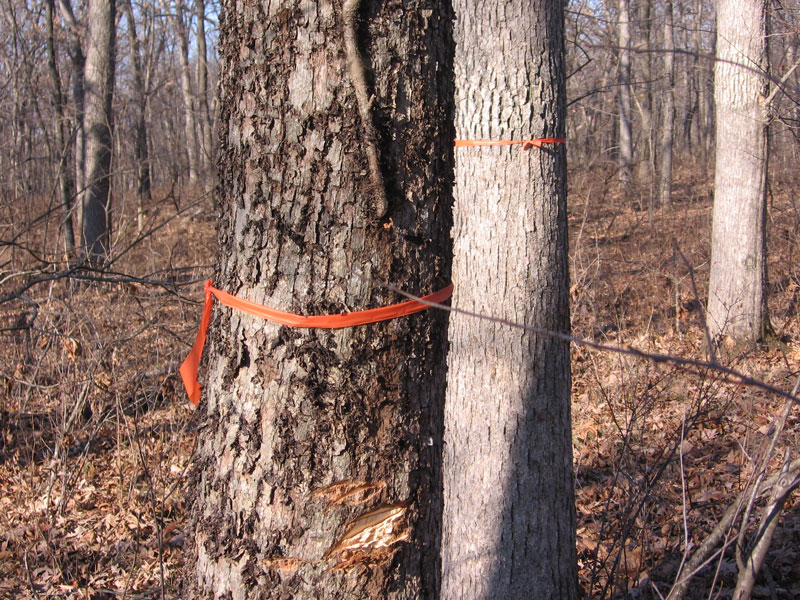
Back to type of wood. We tested the dead standing trees by chopping away at them with an axe. If they had a nice ring to them, the trees were solid, and good for firewood. We wrapped these trees with two bands of orange tape to indicate that they were ready for use this fall. (We didn’t start the double wrap until after this tree..) Dead trees are ready to cut, split and use right away.
The single band wrap was for trees that are to be cut this year and used later. Trees that are cut alive, or green, take about a year to dry out, and then they are ready to be sliced into rounds and split. It is okay to cut the green wood, but it is difficult to split it because of all the moisture present in the cells. The plan that we have come up with is to cut the tree one year, cut and split it the next, and then burn it the following year. That way the firewood is given a chance to cure, and is great for burning!

It is important to leave dead trees for wildlife too. Ants, beetles, birds, squirrels, raccoons, mushrooms, etc. need homes and food too. We left rotton trees, or trees that had a lot of evidence of animal life alone. There were some trees up for debate here, but we didn’t end up with too much of a feud (for now anyway).

The above tree is home to a whole colony of puffball mushrooms. This picture is only one of the stumps in the small area that is covered with puffballs. They seemed to have taken over. All the trees were elm, and I have always looked for morel mushrooms under dead elm trees, so there might be a connection here as well.
chestnut cornbread stuffing
November 28, 2009
I made it home Wednesday night with a package of cornbread stuffing and a bag of cornmeal. (I wasn’t sure if I would be up to baking the cornbread and all…) But when I woke up Thursday morning, I was kind of excited about making stuffing from scratch. The recipe for stuffing that I came up with was inspired by a recipe from Chestnut Cookbook, the package of stuffing that I brought home, and my sister’s comments while I was cooking.
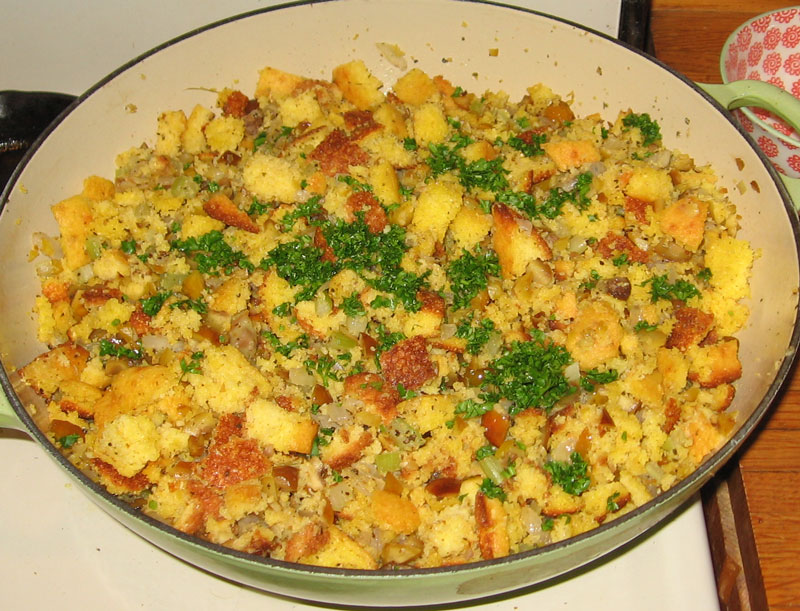
The steps were pretty simple, but it took a while to bake the cornbread, let it dry out, etc, etc. I was particularly excited because a few months ago I froze some chestnuts that I gathered. (I know that you can bury them in sand, sawdust, or other things, but I didn’t really have time to figure that all out. I was also concerned about the likely mouse problem that could result from leaving a huge pile of unguarded chestnuts in my basement.)

My Approximate Recipe for Chestnut Cornbread Stuffing
1 recipe southern style cornbread from Joy of Cooking (preferably baked in advance so that it can dry out) cut into 1″ cubes
1 lb fresh/frozen chestnuts (still in shells)
2 stalks celery finely chopped
1 medium onion finely chopped
1/3 cup butter
2 generous tablespoons sage (to taste)
salt and pepper to taste
a bit of fresh parsley for garnish
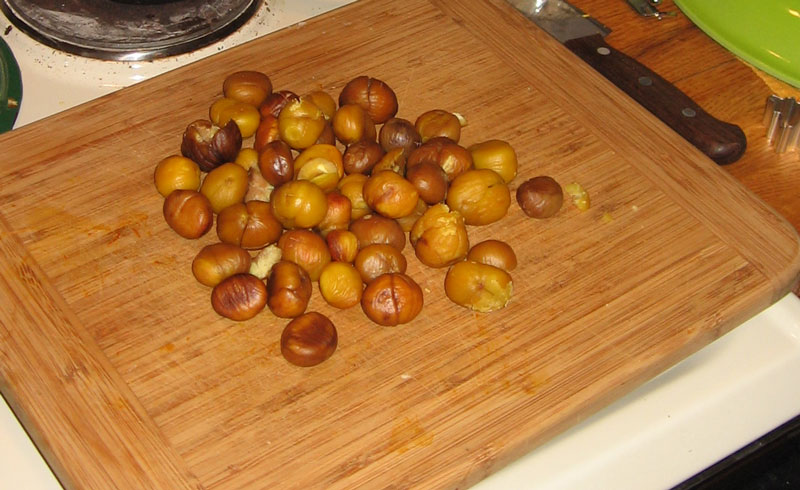
Cut an X into the top of each chestnut and then bake them in a 350 degree oven for about 30 minutes (or until tender). I bake them in a covered dish, and when I remove the dish from the oven I take a few nuts out at a time, leaving the rest warm for easier shell removal. Remove shells and chop finely. Set aside.

Meanwhile, melt butter in large pan over medium heat. Add onions and then a minute or two later the celery. Cook until translucent, taking care not to burn. Add sage, salt and pepper to taste, and chestnuts. Stir for a few minutes, and then add breadcrumbs. Pour in a little boiling water (I am sorry to say, I have no idea how much I used here..maybe about a cup). It should be enough to moisten the breadcrumbs, but not make them soggy. Cover and place in a 350 degree oven for a few minutes to warm before serving. I guess that you could stuff it inside a bird too, but I really don’t have any idea how!
my grandma’s pumpkin pie
November 27, 2009
When it comes to pumpkin pie, this is the recipe that I always use. It is my dad’s mom’s recipe, and since I never met her, it is one of those things that makes me feel closer to her! I love to know that I do some of the same things that she did sometime way back when.
I was so tired last night when I got home from work, that I didn’t have any energy to put the pumpkin in the oven to bake. The result was that I had to drag myself out of bed at about 5:30 this morning to pop the squash in the oven!

Baking pumpkin is actually really easy. Whack off the stem of the pumpkin or squash. You can also use sweet potatos if you don’t have pumpkin, or you want to try something new. Cut the pumpkin in half, from top to bottom and remove seeds and any other stringy things. Place pumpkin cut side down on a jellyroll pan or in a baking dish. Fill the pan about 1″ high with water (if you are in a hurry you can use boiling water here to speed up the process). Bake in a 350 degree oven until completely tender, about 1 or 1 1/2 hours. When you stick a knife into the top it should go in really easily.

Remove pumpkin from oven, take out pan with water, and remove the peel. Place pumpkin pieces into a collander to drain. This is important especially if the pumpkin is particularly moist.
Here is my Grandma’s Recipe for Pumpkin Pie (more or less)
Preheat oven to 450 degrees.
1 9″pie crust (recipe for about 2 crusts, or one pie crust with decorations, etc) It is best to have the dough prepared in advance so that it can chill in the fridge while you are preparing the filling.
1 teaspoon nutmeg (use a little less if freshly ground)
1 teaspoon cinnamon
1 teaspoon ginger
1 teaspoon cardamom (use a little less if freshly ground)
1/2 teaspoon salt
3/4 cup sugar
6 tablespoons sour cream
2 1/2 cups pumpkin (her recipe calls for 1 3/4 cups, but my sister and I both prefer it with more pumpkin)
Whisk the above ingredients in a medium bowl. Stir until ingredients are combined, then add 1 can evaporated milk.
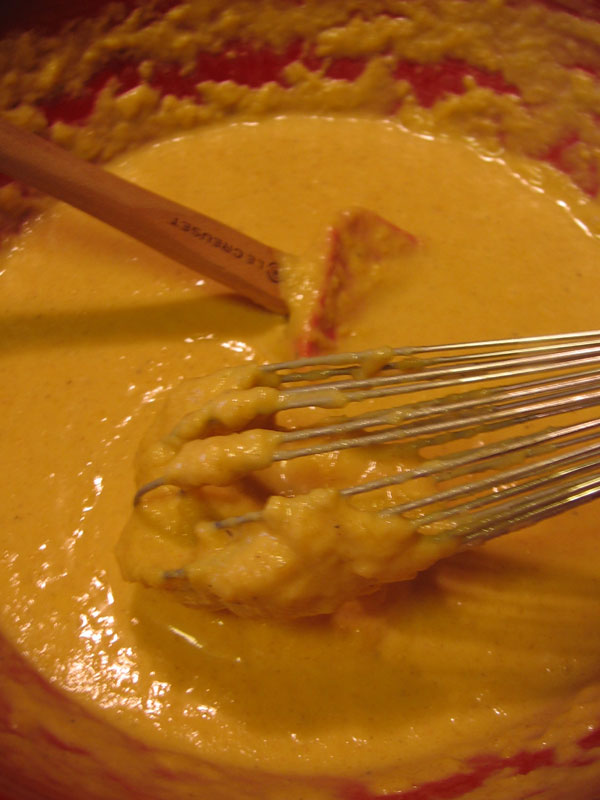
Mix thoroughly and then put through a food mill, or in a food processor. The above image is before the food mill. I personally like my pie with more texture, so I use a food mill, or nothing at all. A food processor takes out all the texture! (NOTE: My sister purees the pumpkin by itself first. I think that this might be the usual way to do it!!)

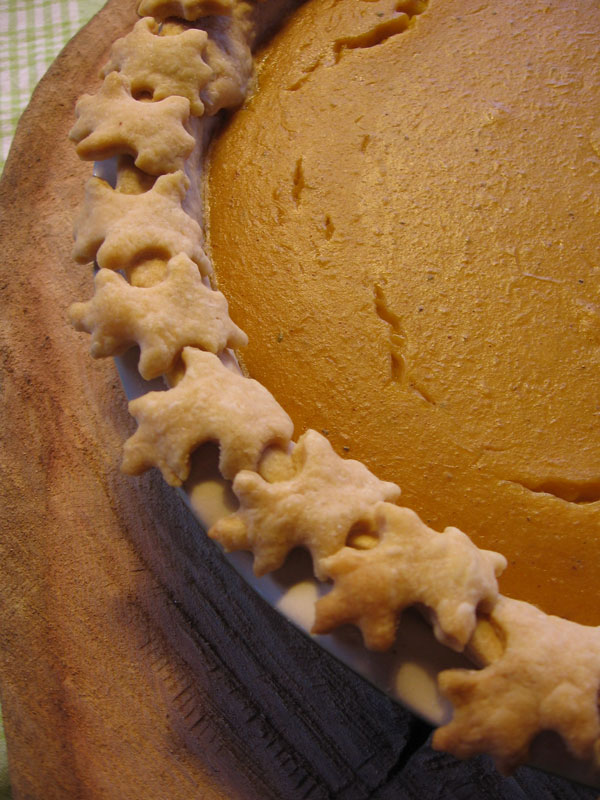
Roll out dough and place in the pie pan, cutting edges nicely. I added little leaves that I cut out with a miniature leaf cookie cutter. It was really fun to make them and I loved how the extra detail looked on the finished pie.

Pour the pumpkin filling into the pie and place into oven. After 10 minutes, turn the oven down to 350 degrees and bake until pie is firm, and a knife comes out clean when stuck into center of pie (about 35 minutes more). I placed some parchment paper around the edges to protect the crust from burning. I find that my pies generally take more than the additional 35 minutes to cook. Not sure why.
tofu turkey legs (thanksgiving part I)
November 27, 2009

This isn’t really my favorite Thanksgiving food item, but there is something so magical or whimsical about it that I have to say it is my favorite Thanksgiving idea. Being vegetarian, I have never had the fun of eating turkey. I don’t really have a problem with that, and don’t really feel like I am missing some huge taste or anything. Maybe I just haven’t had any really good turkey yet…some day I will probably get around to trying it, but for now I will be happy with enjoying the company of the wild turkeys that strut down my lane, and be satisfied with tofu turkey legs.

I don’t know who came up with this recipe. But I do have a clear memory of my siblings and I wandering through the woods in search of the perfect “bones” (actually twigs). And then I have an image of tofu turkey legs roasting in the little toaster oven on the counter, probably because there wasn’t any room left in the oven. I can imagine my mom, busy all morning with baking, getting ready for guests, polishing silver, etc, etc, enjoying a quick break when we all trooped outside in search of twigs.
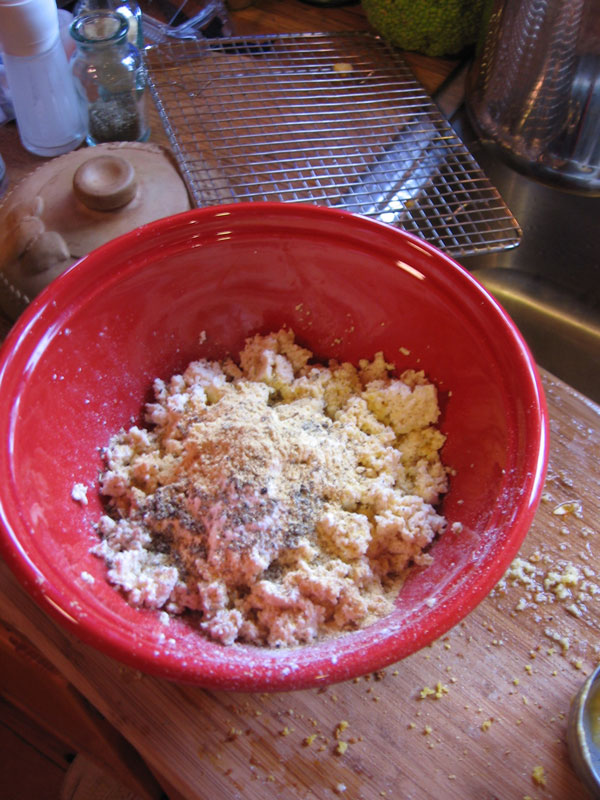
I went over to my mom’s house this morning and borrowed her hand written recipe card for tofu turkey legs. The general recipe is vague. I ended up adding a lot of sage to make the tofu taste good. And quite a bit of pickle juice from some bread and butter pickles that I made in the summer. Salt and pepper, mustard powder, and more sage. And some fresh parsley from the garden (still going!!!). And cornmeal for texture.
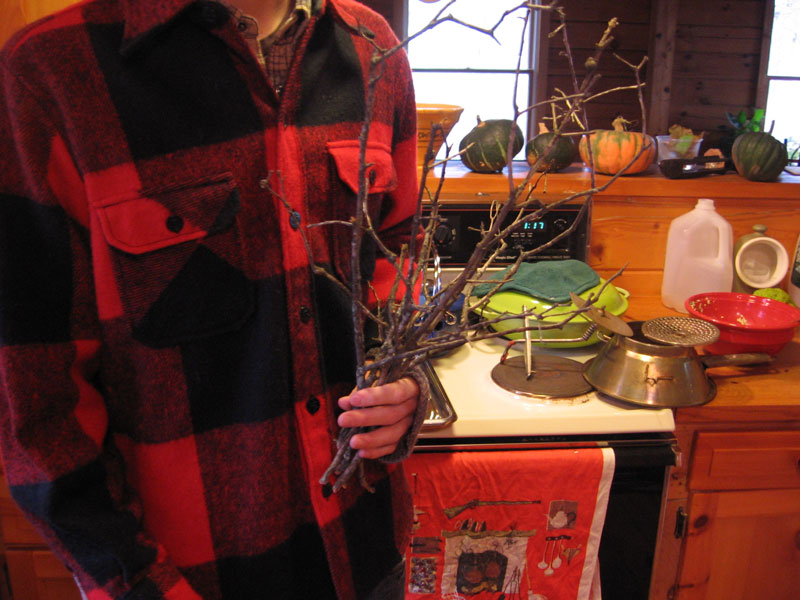
I sent Skye out to forage for the bird legs in the yard. He came back in, and we broke off a good bunch for our legs.

Break the branches into as manageable sizes as you want. I think that they end up being easier to handle if they are about 6″ or so long. Generally I would suggest to wash them, but we didn’t and the toasty oak bark definitely gave the legs a nice flavor! It ends up being a bit more rustic that way.

Mix up the tofu, and whatever you add to make it taste good and stick together, and press it onto the sticks. This step needs to be done carefully. The tofu really needs to be pressed onto to the sticks well, or it might fall off during cooking or transferring…

The finished turkey leg looks lovely on a plate full of thanksgiving sides. We opted for kale over green beans as the kale was fresh and green and in our garden!
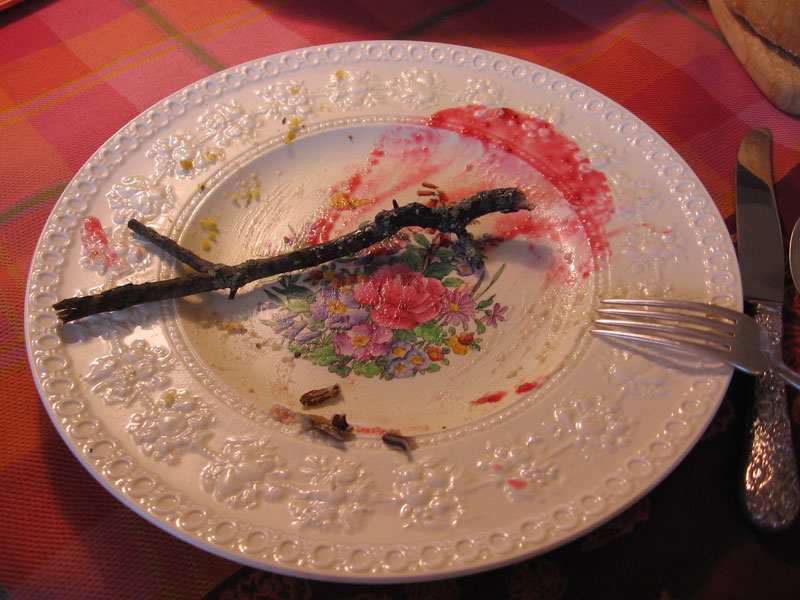
I just love the finished dinner plate. Fancy china, freshly polished silver, pressed linen tablecloth, and a lichen covered dirty twig. hehehe
tomten sleeves
November 26, 2009

My tomten jacket seems to keep on going. I thought that I had the sleeves figured out perfectly, using a short row method to create a bit of a raglan shape. This looked really good on one of the people who was making the jacket in my class, but for some reason it kind of backfired on me. Instead of having a nice shapely shoulder, I ended up with an exaggerated football shoulder, complete with puffiness and shoulderpad like shaping…

OK, maybe it wasn’t really that bad, but it somehow didn’t work for me. So, I decided to go with the original pattern, as written by Elizabeth Zimmerman. Keep the arm heading out perpendicular to the body. Sounds good, right? This time the arm ended up too short. I shaped the arm by decreasing 2 stitches every 3 ridges, as specified in the pattern, but because I changed the yarn weight I ended up finishing the decreases too soon. I thought that it might look ok, but have decided to take the arm back, and make the decreases every 4 ridges.

Right now I have one shoulder pad shoulder and one too short arm and I am hesitating to rip either. The sweater is living on my living room floor, until I get around to ripping the sleeves out and reknitting them.
birthdays, moms, and crepes
November 24, 2009

My mom came over this morning with a bowl of crepe batter, a bowl of sugar, her crepe pan, and a bundle of packages wrapped in recycled wrapping paper. I have to say that I have the best mother EVER!!
So we made crepes for breakfast. With sugar and lemon juice. Very simple and delicious. My grampa used to make crepes like that, and also that is how my mom has had them in Germany (and my grampa is German, so maybe there is a connection!).

The crepe batter (she used the recipe from Joy of Cooking) is made using eggs, flour, water, milk, butter, and salt. It is fine to leave some of the lumps, as they work their way out. We used her crepe pan, which is carbon steel, made in France, as well as my pan, which is a cast iron griddle. Kind of a crepe off, to test which pan worked better. We decided that we liked the texture of the crepes from her pan, although the heat was better in my pan. She isn’t used to my stove, so her pan ended up getting a little too hot. (Might be a stove thing more than a pan thing.)
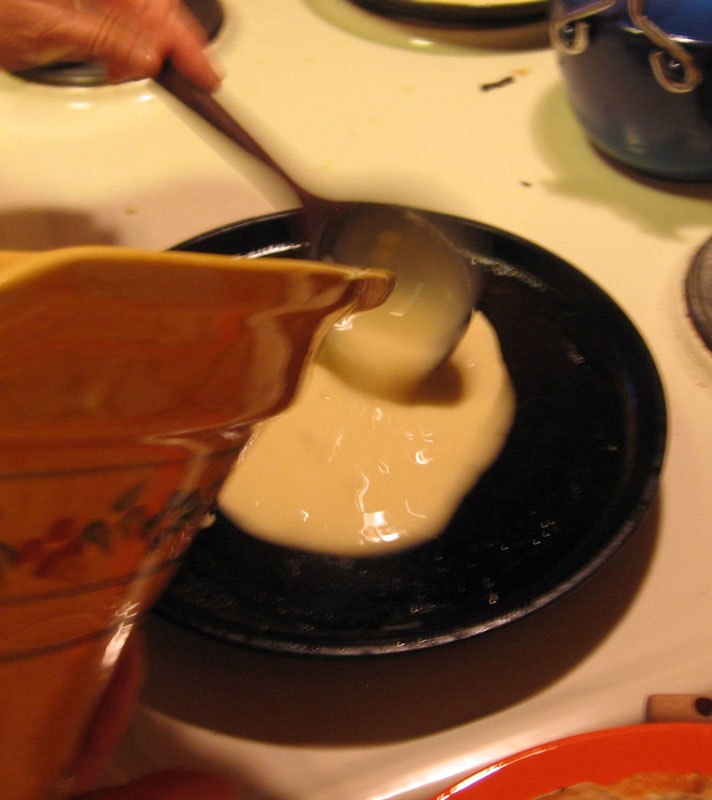
First, place a little oil in the pan. I like to swish it around with a pastry brush instead of paper towel (I don’t actually have any paper towel…). When the pan is hot, not smoking, pour in the batter and swirl the pan around so that the batter evenly coats the bottom of the pan. We used about a 1/2 cup or so of batter per crepe (I think).
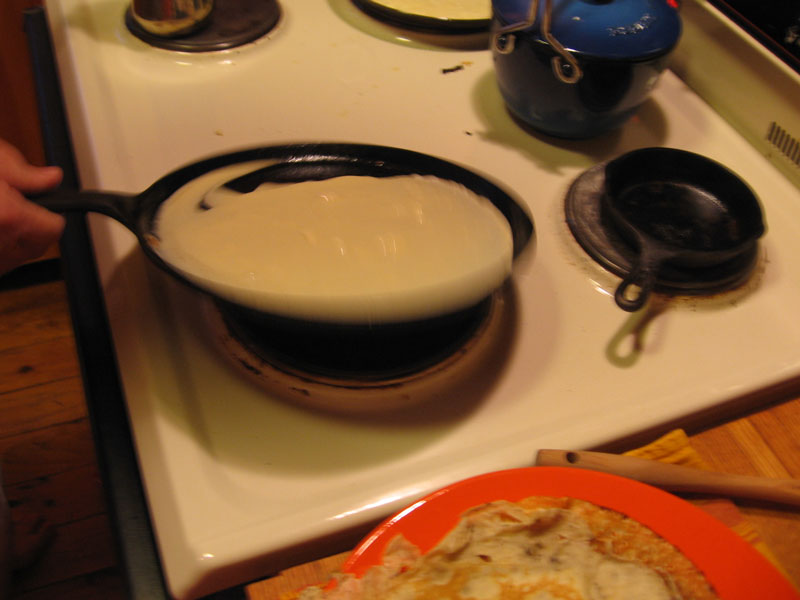
A nicely “swished” crepe, waiting to be turned. You can see that it is cooking nicely by looking at the bubbles on the edges. It is good to remember here that the first crepe often turns out a little funky. Just like pancakes. You need to make sure the temperature is correct, and work out any kinks in timing, amount of oil etc. Then things generally smooth out and work well.

Let the crepe cook, until the first side is golden. Flip crepe carefully, using a spatula to lift up the edges.

Cook the second side of the crepe, and then place finished crepe on a plate (this plate can be warmed, or placed in a low oven to keep crepes warm if you are making a large quantity).
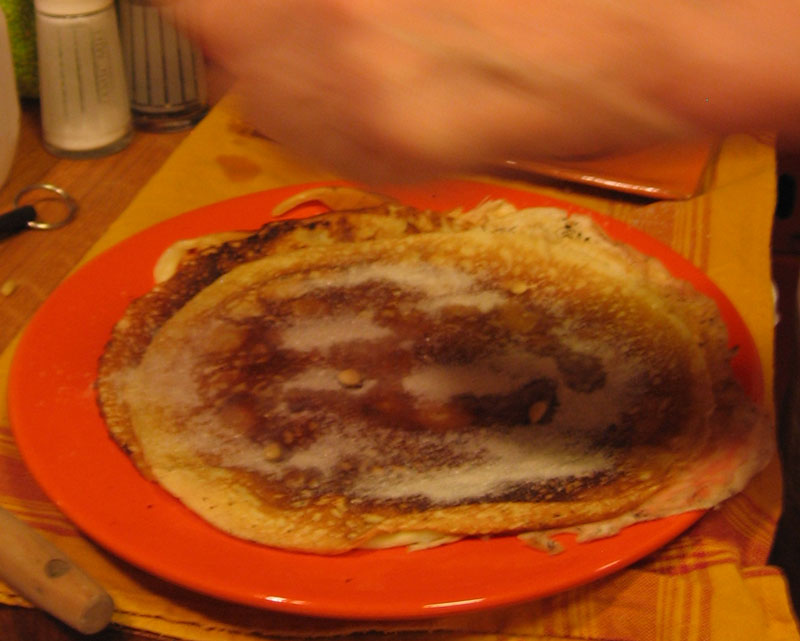
When we finished making all the crepes, we sprinkled each crepe with sugar (to taste) and then a squeeze of lemon juice. My mom folds them in half and then in half again.

We ate our crepes at the table with some coffee and a jar of apple sauce!

 living in the woods and making stuff