brambles hat
January 12, 2011
I was looking for a fun smallish project to teach cables at the store. While browsing knitty.com I came across this hat, or tam, or something in between, depending on how you block it.
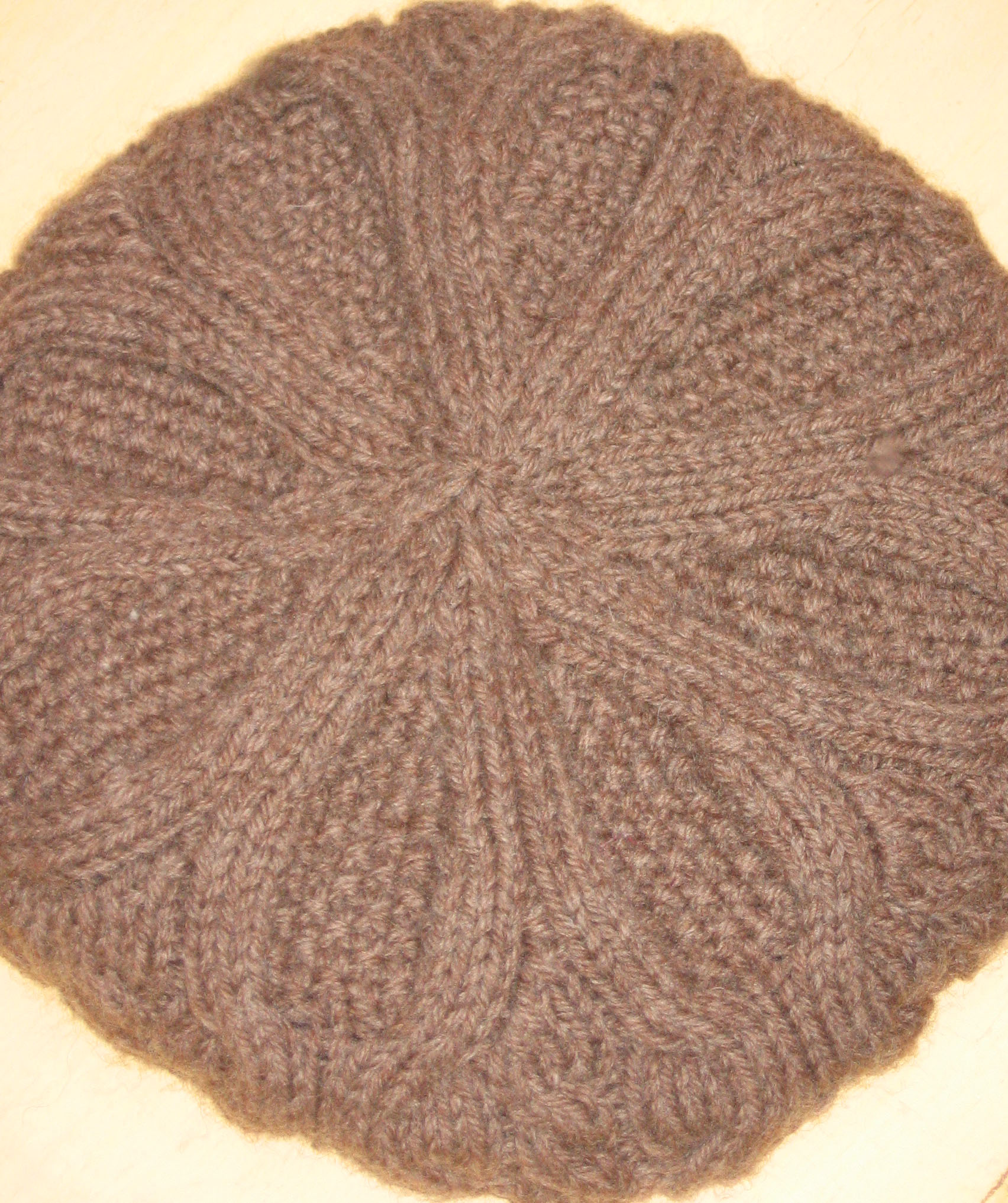
The hat is knit with cables. There is a simple 2 by 2 cable that goes up the sides, and then becomes the decrease at the top of the hat. The other cable like thing is a curvy shape with seed stitch. At the top, the cable opens up and there is a whole bunch of seed stitch.

It fits well, and I shaped it into a hat more than a beret or tam. The pattern suggests shaping with a balloon, or even a dinner plate. I knit it with cascade 220, again…and was again happy with the results.

I didn’t want mine to be too big, so I hung it on my fireplace tools holder where it was shaped nicely…and dried very quickly. It is basically a slightly loose hat, quite comfortable.

The finished hat is soft, and a little bit floppy, and fits nicely on Heli’s head.
orange and sweaters
December 27, 2010

Here is another orange sweater. I just can’t help making them. I found the pattern for this in an old magazine that someone gave to my mom. It turns out that the someone is a friend of mine and she made the sweater and wore it out!
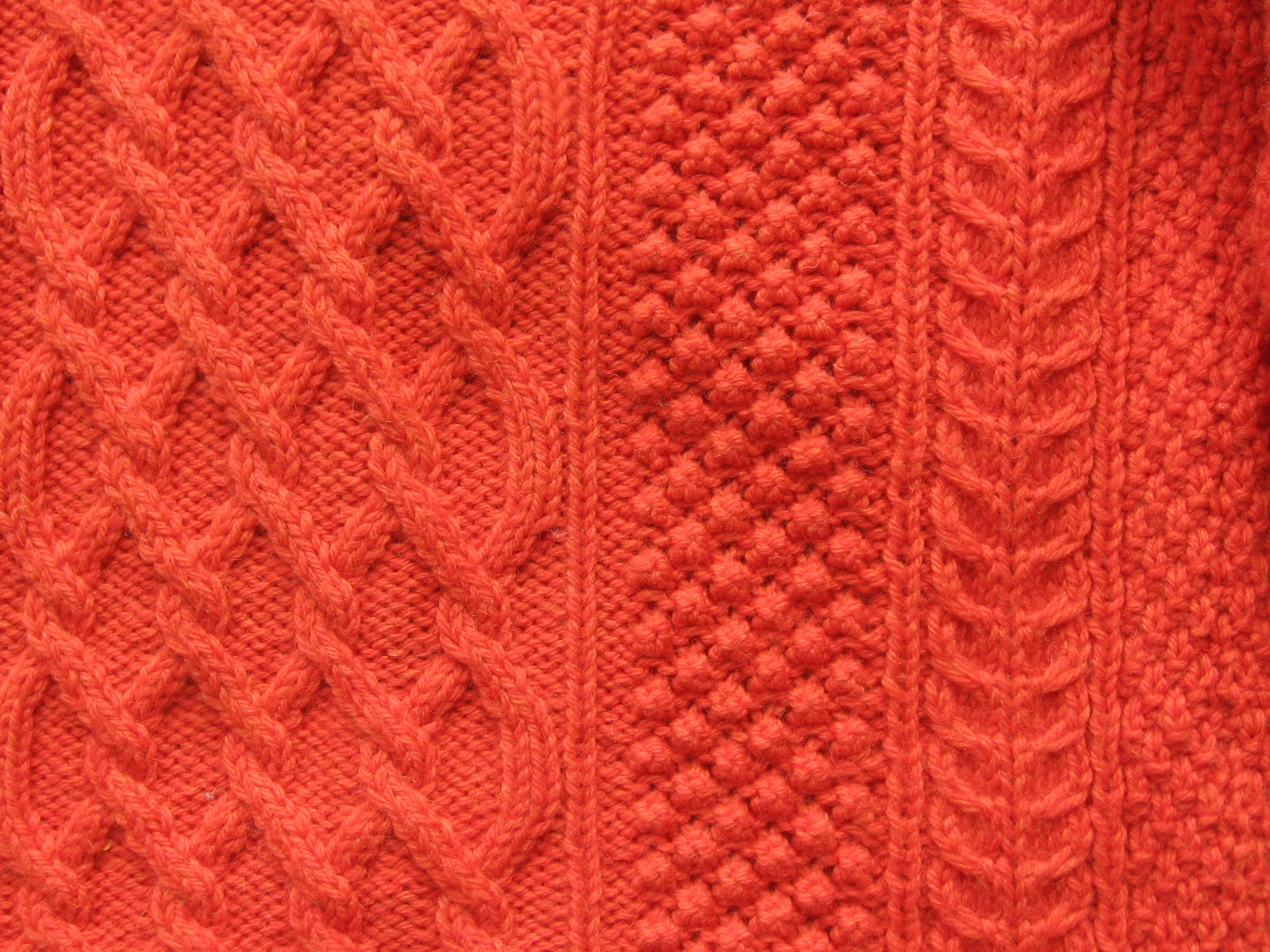
The sweater is made up of three cable patterns and double moss stitch. The first pattern is a fisherman’s cable, the second is called blackberry stitch (looks like little popcorns to me) and the third is called antler. I made a test swatch for all three patterns along with my gauge to get to know the stitches before I started the project. I also washed and blocked the gauge, which is super important. A tip from my friend Jeanne McCanless!

The sweater is pretty straightforward. No shaping on the body, which I like, and simple set in sleeves. Usually I need to sew my sleeves in a few times, but these sleeves went right in on the first try.
As I was knitting the sweater I became worried that it wouldn’t fit. Instead of waiting to sew all the parts together, I washed and blocked the whole thing minus on sleeve. The result was that I couldn’t exactly figure out where the second sleeve needed to be finished to match up with the first…and I think that I knit the sleeve cap four times…
I used Cascade 220, a relatively inexpensive yarn, and am really happy with the results. I was planning on making it in the traditional cream, but when this orange yarn came in I couldn’t help it…My sweater cost $42.37 including tax, which to me is a pretty good price for a wool sweater! (Minus the time…) I am looking forward to see how the yarn holds up to lots of wear. I have a feeling that it will wear really well.
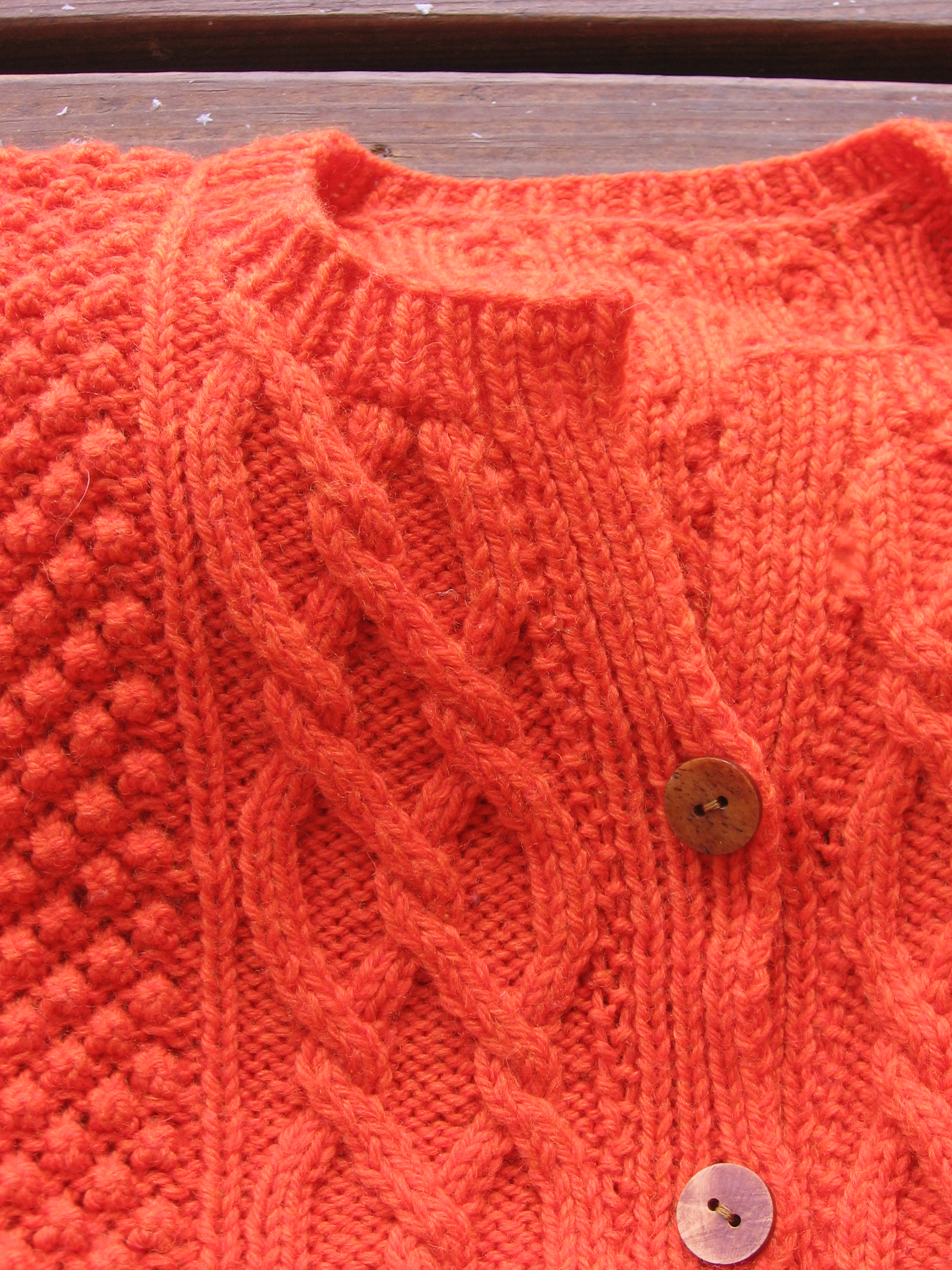
I found some bone buttons at the store. I am a little bit bummed as there were only six of them and I needed seven. I am going to look for a seventh, and until then I will leave the top button open at all times. The button band was sewn on after, and I think that I could have made it a little bit tighter and the buttons wouldn’t have pulled as much. I might go in and redo this part later….
new red mittens
September 20, 2010

Today was cold and rainy. I ended up spending most of the day outside in a barn playing fiddle tunes, which suited me perfectly. I also finished a new pair of mittens (in the car on the way to the barn). Funny that it is cold enough to start thinking about keeping hands warm..

Last week we got a shipment of wool and patterns from Classic Elite Yarns. I made a pair of mittens using princess yarn (wool, microfiber, and cashmere) and a pattern by Jared Flood. I did end up modifying the tips of the mittens. When I followed the pattern they ended up a little bit shorter than I wanted, so I added an extra repeat, and changed the tops so that the decreases weren’t so abrupt.

The pattern was fun to knit up, a lot of twisted stitches, and little cables on the cuff created a nice sideways rib. The sideways rib also ended up being functional, and the cuff hugs the wrist quite well. The thumbs were also a little short, and so I just added a few more rows to fit. The nice thing about mittens, is that you can just try them on and adjust the pattern a little so that the fit comes out well. All you have to do is remember what you did on the first mitten so that you can repeat it for the second mitten…

a pineapple roll
August 30, 2010
Another tunic. The same pattern as the last one, but made with pineapple fiber!

When we got the new tunic pattern at the store, and when it turned out well in the linen, I decided to make it with the pineapple fiber as well.
The pineapple fiber (imported from Japan by Habu) is originally made in the Philippines. It is made from the fibrous leaves of the pineapple plant (which look like, and initially are, the top of a pineapple). I had started something else with it, and never finished it, so I ripped it and made this tunic instead.

I used three very fine strands of fiber stranded together throughout. The gauge was about the same as for the linen tunic, but the weight was much much lighter!
One of my favorites things about knitting with the pineapple is that it smelled lovely, and a little bit like dried grass the whole time. I quite liked picking up the garment as I was knitting it just to smell it…

an orange sweater
August 30, 2010
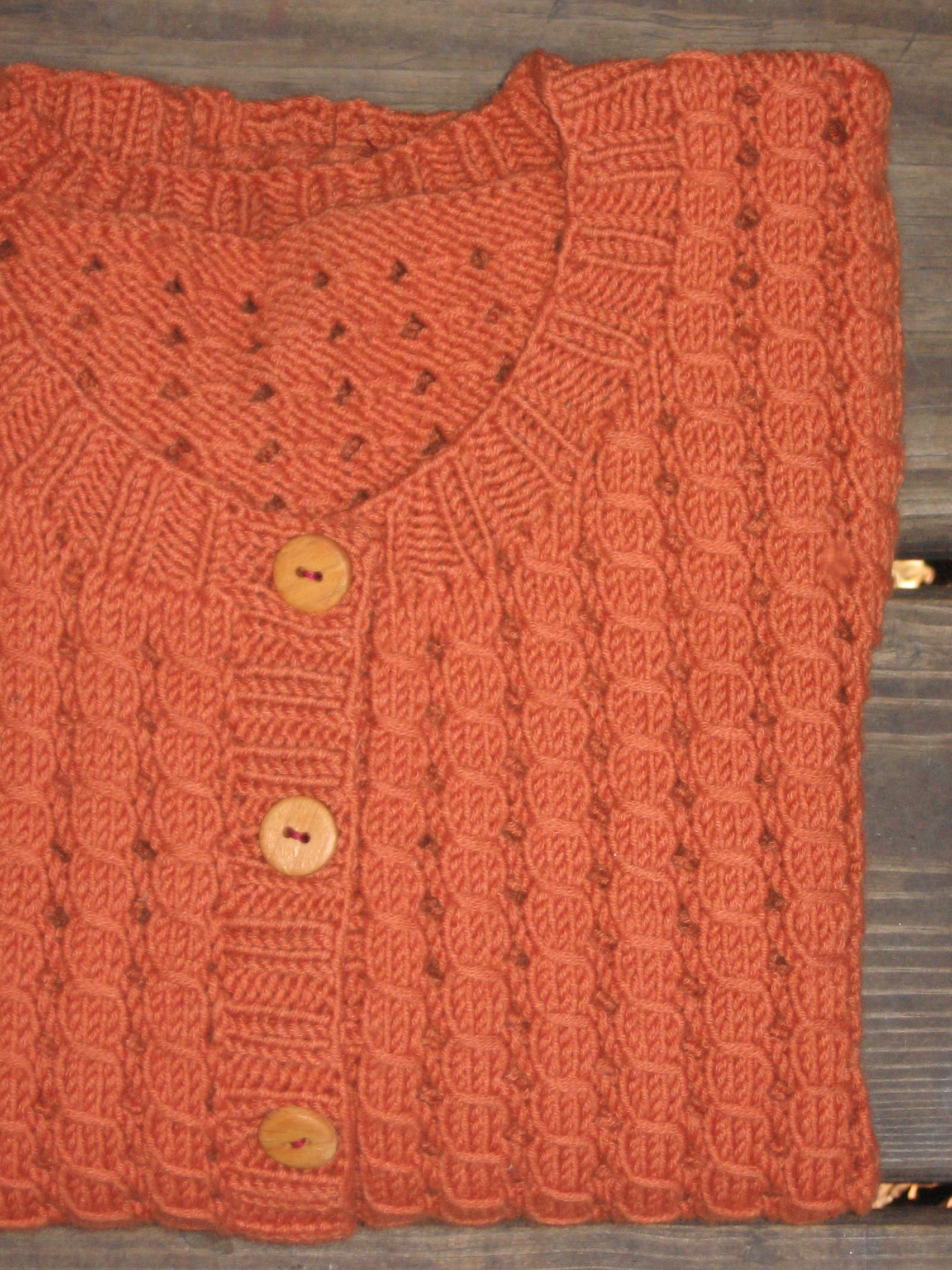
I have been on a sweater knitting kick this summer. We just got a new batch of beautiful yarn into the store. It is a Rowan wool and cotton blend, and organic! Very soft, and just a little bit shiny. I had been eying the pattern for this sweater for a while, and when we got the yarn, I decided to use it.
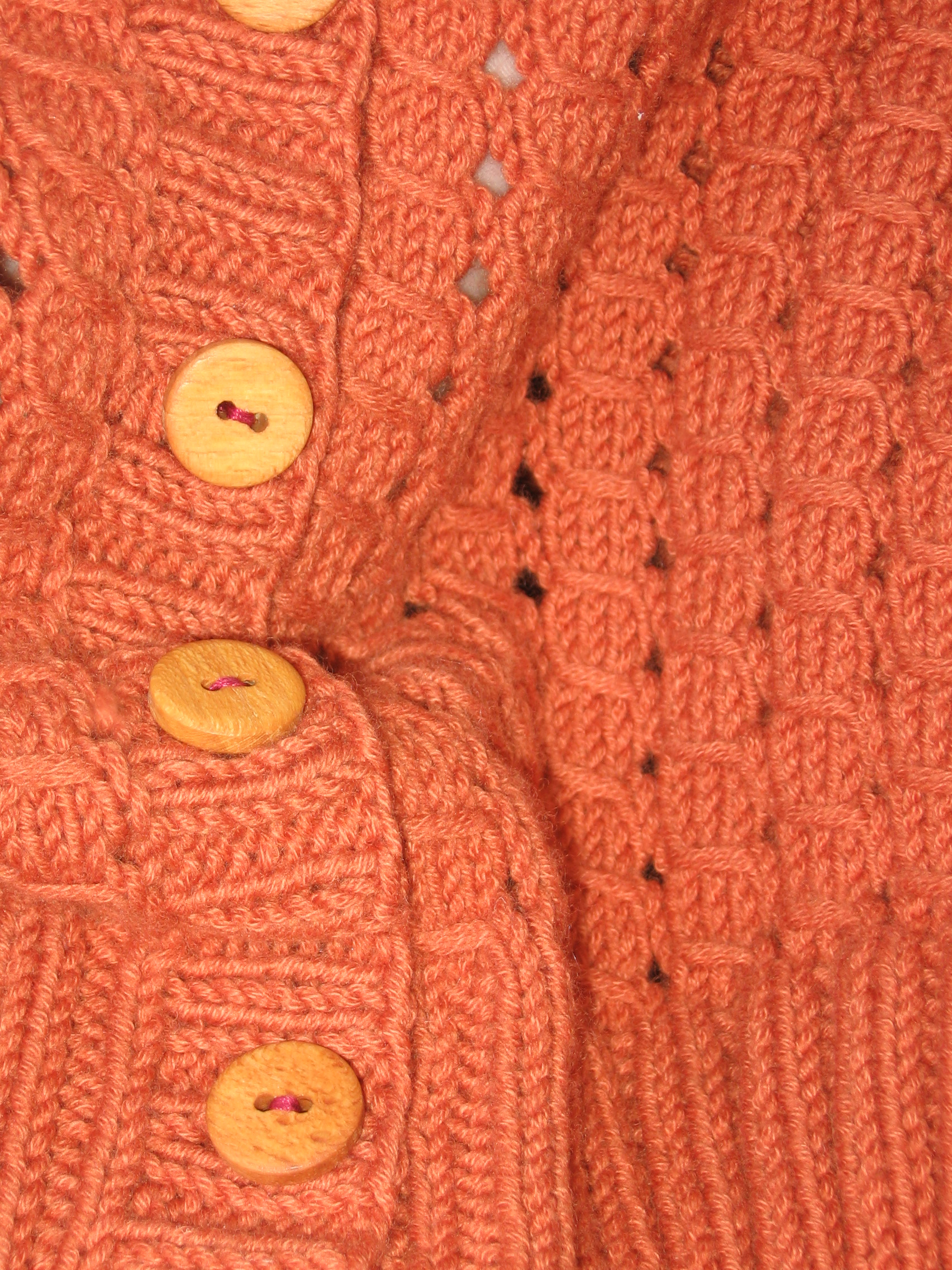
Of course I used the orange yarn…and I sewed on the wooden buttons this morning, so now it is officially finished. Except for a few stray threads.
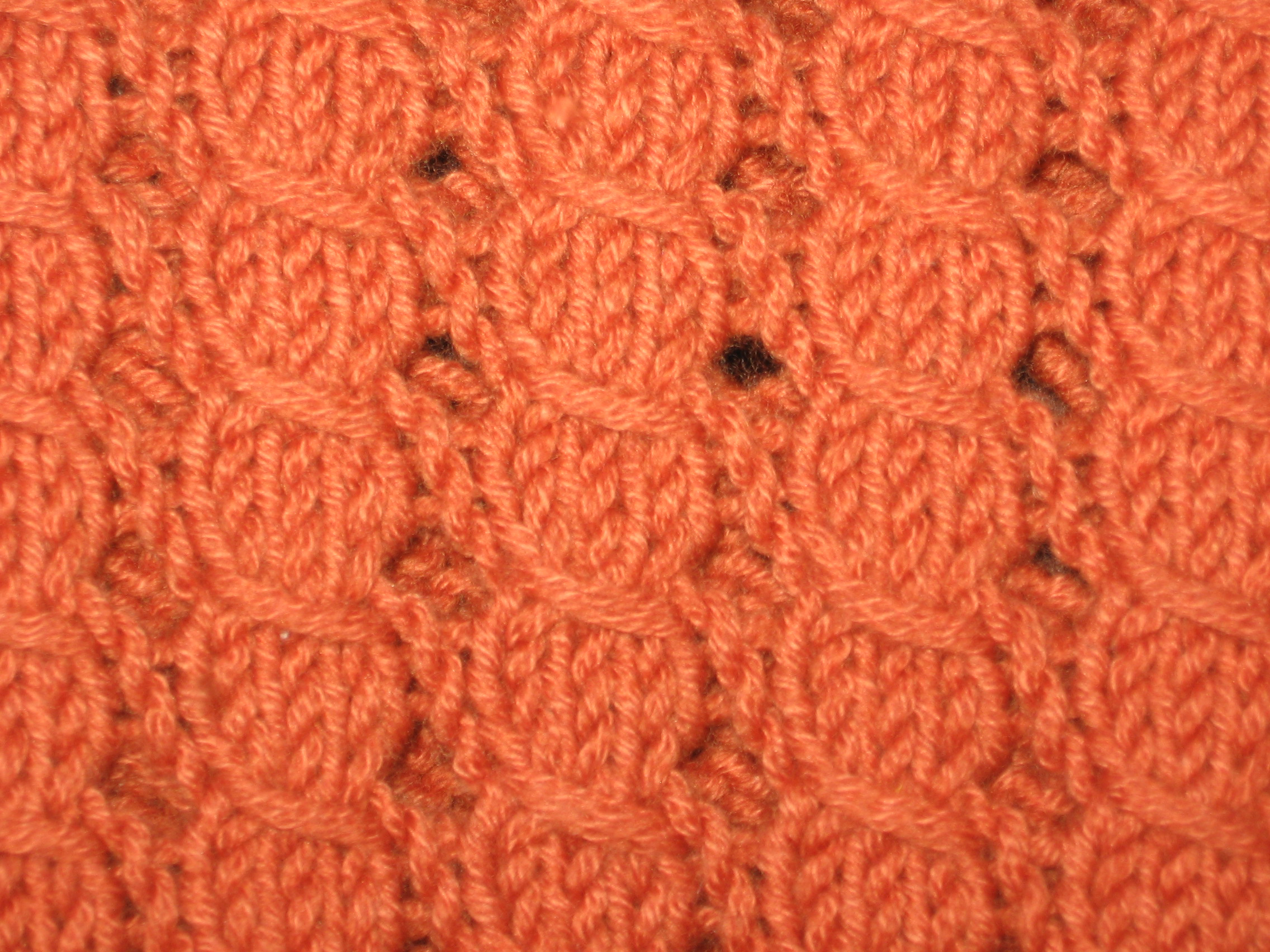
The pattern is a four stitch, four row repeat. It was simple, but engaging, and kept the knitting a little bit interesting. There is six inches of ribbing at the bottom of the sweater, and no side shaping. I was a little worried that it wouldn’t fit well, but the ribbing seems to do the trick.
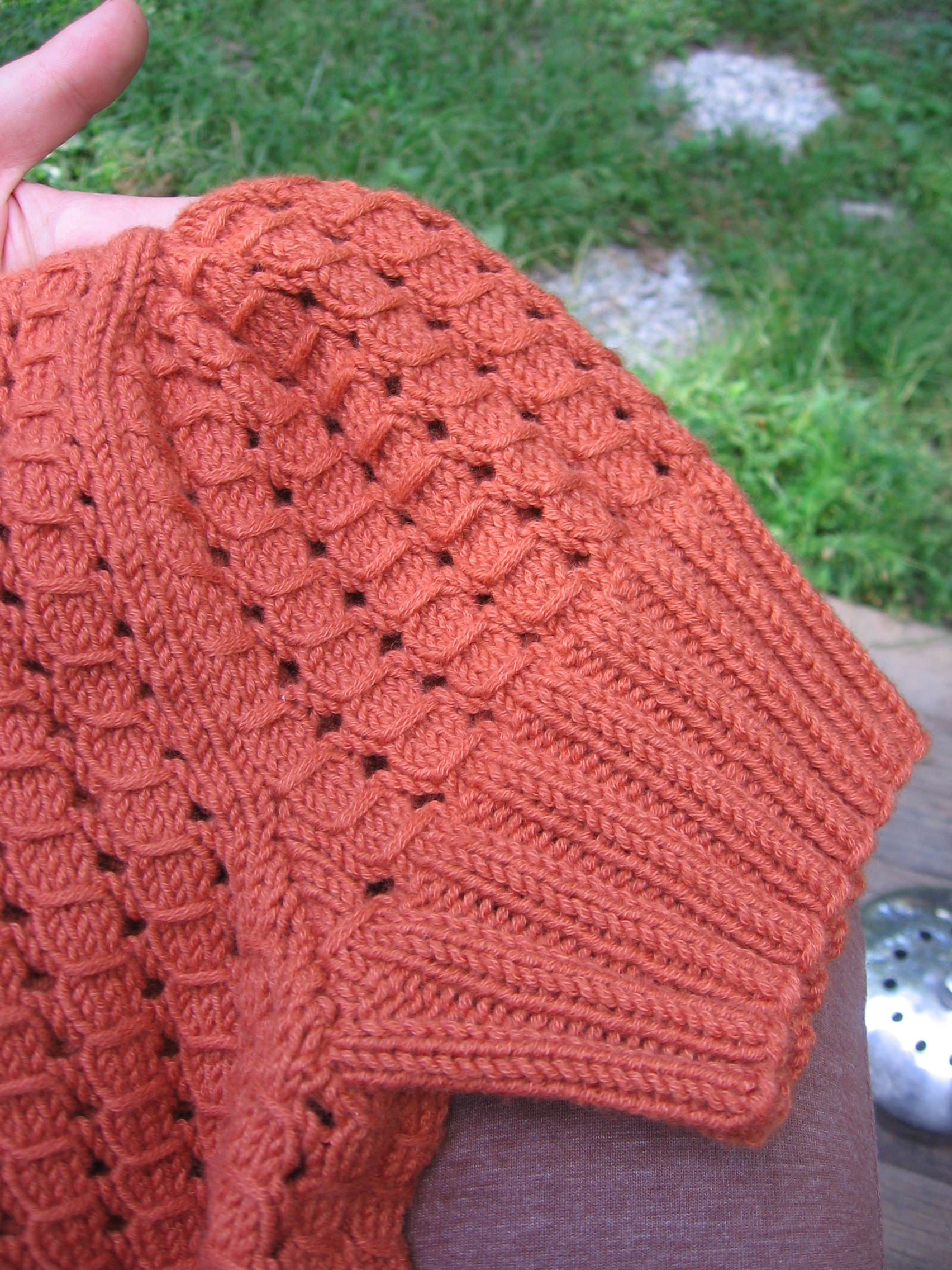
The sleeves are one of my favorite parts. They are a little bit puffy, which was created by dramatically decreasing over the last two rows of the sweater.
finished tunic
July 9, 2010

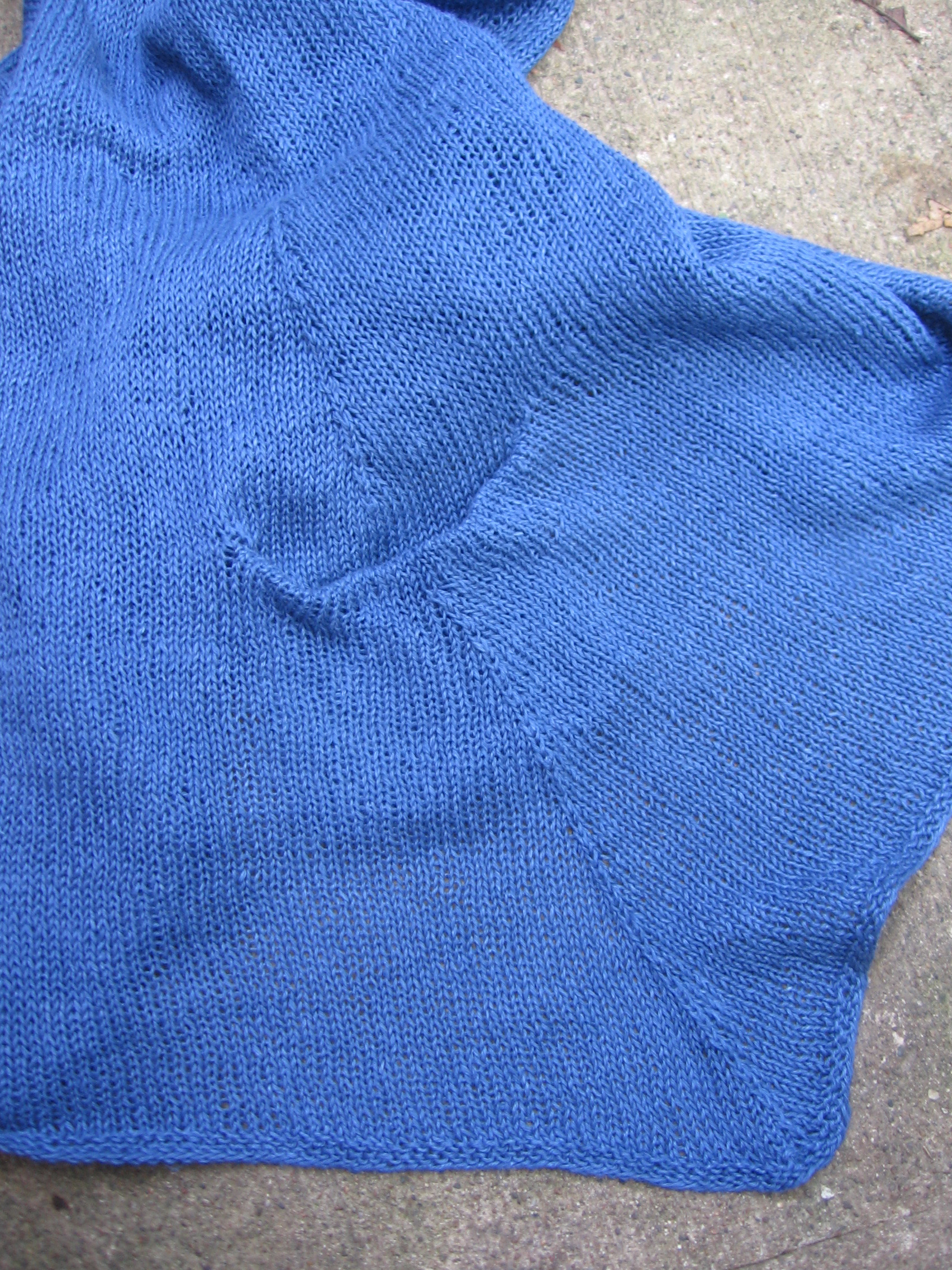
Last night I finished my first (?) tunic (liesl from cocoknits.com), sewed in most of its ends (not for the shoulder seams as I wanted to make sure that I liked the armhole length) and blocked it. I washed the garment in wool wash, and then pressed most of the water out onto towels. I have been dehumidifying my house the past few days (it is super humid here and I don’t have air conditioning) and so I left the tunic to dry under the dry hot air stream from the dehumidifier.
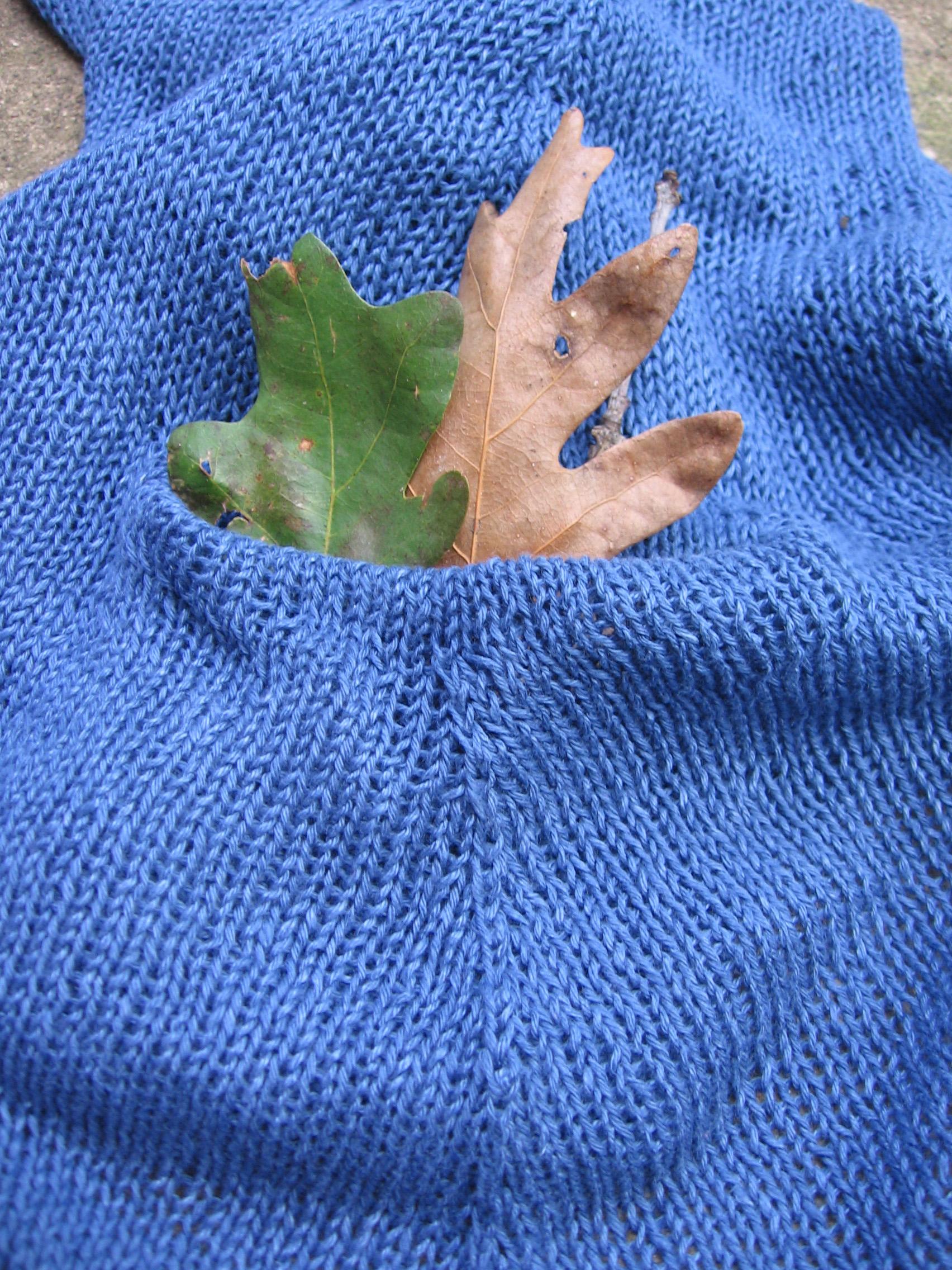
The pockets are my favorite part. I worked about 9 or 10 inches of the bottom, and then using a smaller needle, knit back and forth on the pocket stitches (about 30 on either side). After a while, I picked up the original garment and continued knitting.
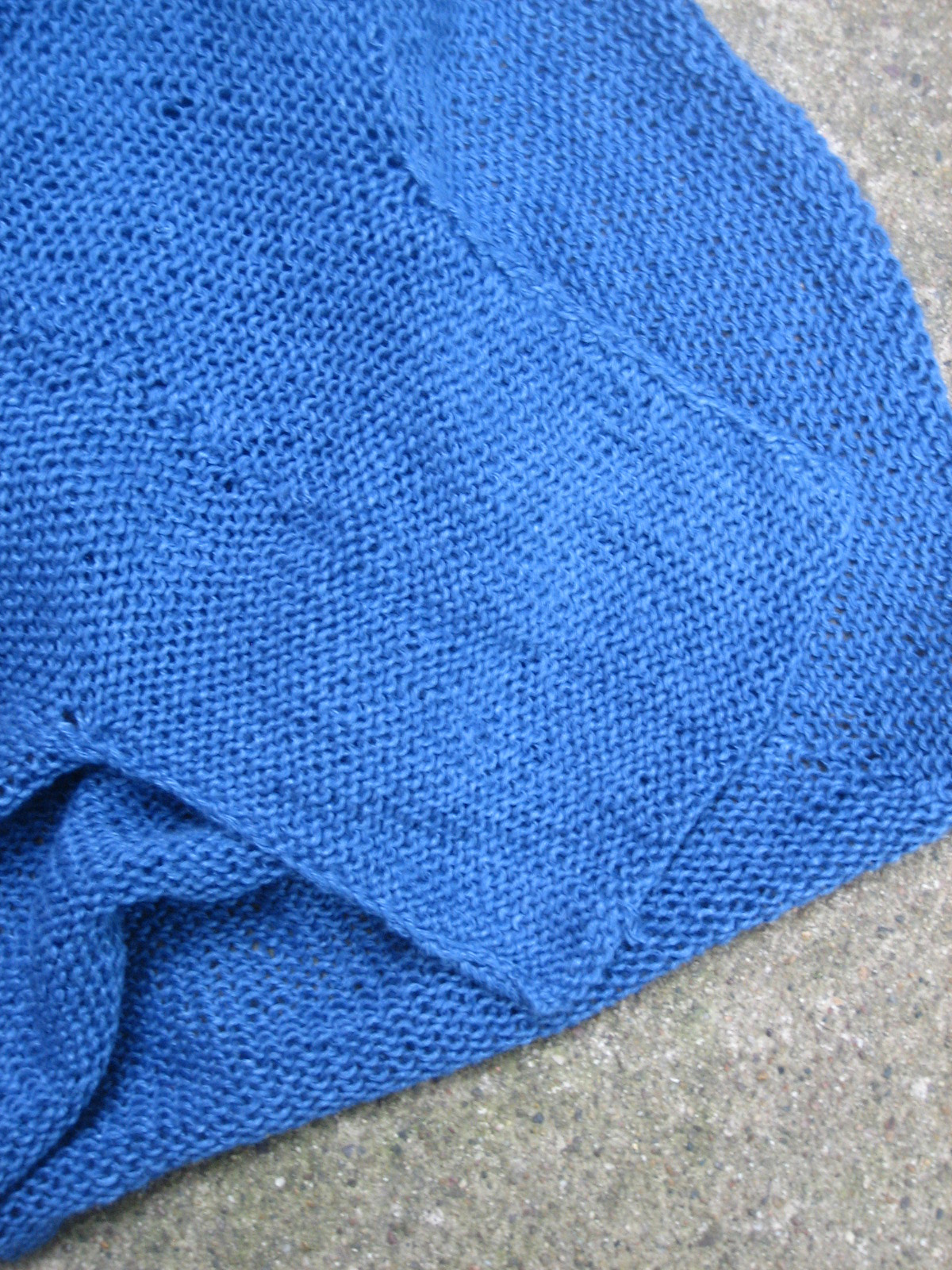
(The pockets are basically extra loops of knitting, which I later sewed together.)

Around the neckline, the pattern called for using a diagonal bind off, which created a beautiful continuous line (no need to go back and pick up stitches!). The front straps reach around to the shoulder seams, which rest on the back of the garment.

The yarn is Louet Euroflax linen, sport weight, in french blue. One of my favorite yarns, one of my favorite colors.
a tidy pair (or two) of socks
April 25, 2010
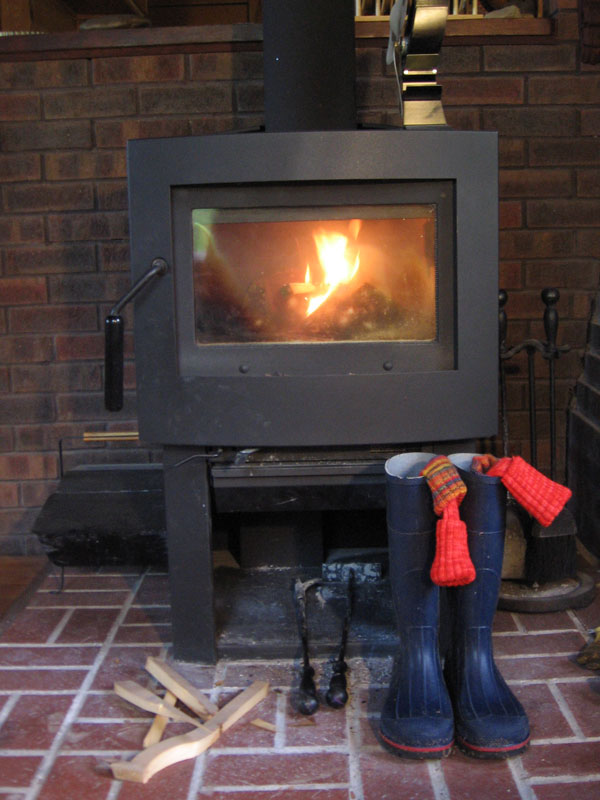
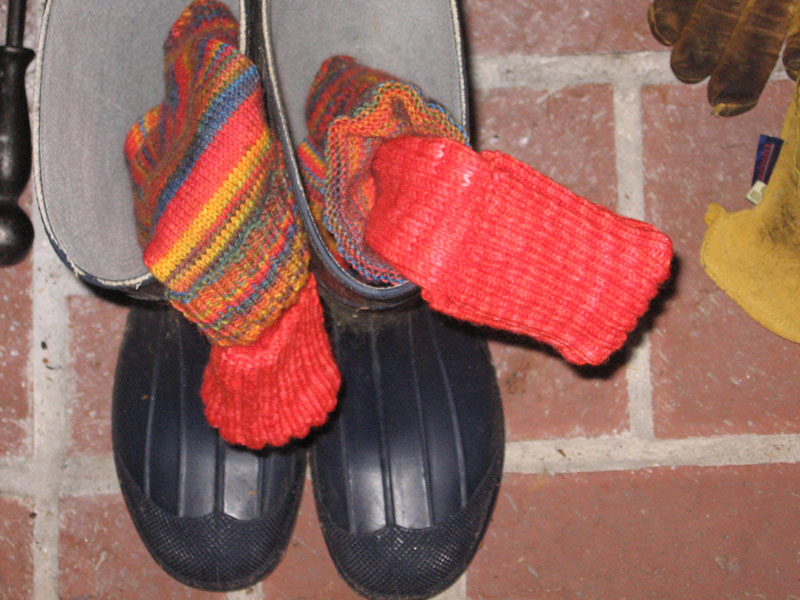
Last week I was not motivated to finish these socks. It was spring. Warm and sunny, and who needs socks when it is 80 degrees? But today, as I struggle to light a tiny fire and enjoy the pitter of rain on the roof, I also finish the socks. All four of them.

Sew in all the ends, turn them right side out, and decide what to do with them.

Maybe I will roll them up into little balls, and tuck them away for the fall. I love seasons for many reasons, including the excuse to finish something and tuck it away for later.
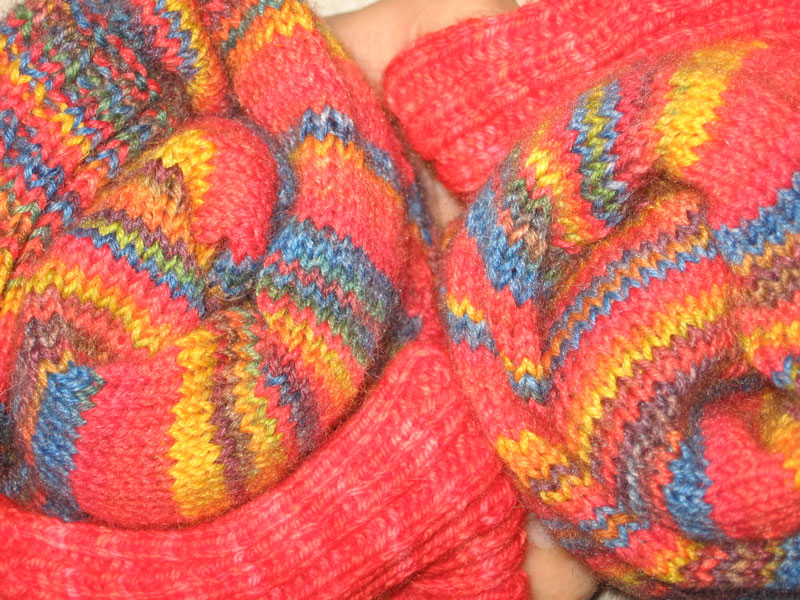
Or mabye, I will use them in my rubber boots to keep my feet warm and dry when I am stomping about in the woods.
iowa storks and lace nests
March 15, 2010
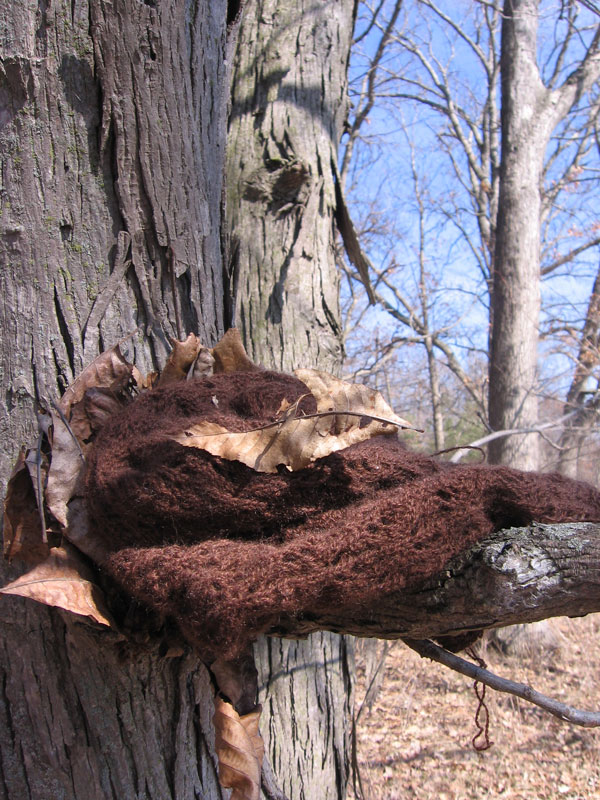
I had two tiny balls of qiviut, from the arctic muskox. Delicate, fuzzy brown, and very special. My mom gave them to me for my birthday about 4 years ago, and I have been saving them in a little bag in my top drawer for the right project. A few weeks ago I found the perfect project. A stork’s nest lace pattern, in a new Piecework compilation magazine.

I began the scarf (a little wider than the pattern instructed) and loved knitting it! Every few rows I would look at what I had done, pet it, and then continue on. I find that lace is particularly magical to knit. I love to watch as the pattern develops, and the yarn overs and decreases come together.

If I were a stork, I think that I would have been particularly happy to make my nest out of this scarf. Or at least line my nest with it. After I weave in the ends I am going to sprinkle the scraps from the scarf in my yard so that little birds, building little nests will have some extra soft fuzz to add to their nests. (And I might even get around to blocking the scarf too…)
a sock (that fits)
March 11, 2010

I love the process of knitting, trying on, knitting, trying on, to make the finished garment exactly to my size! It is nice to work with a pattern that allows for fit! Cat Bordhi’s new book, Personal Footprints, explains how to work just this way.
I started my first sock yesterday, and it was quite fun. I had to make a cardboard cutout of my foot (I did) and mark it with special lines for increasing and decreasing (I sort of did…). The cardboard foot is supposed to be the footprint that you use for making socks that fit! And the procedure is rather engaging. The sock is knit “toe up.” The toe is knit, there are increases for the instep, and then the heel is knit and closed off, mirroring the toe. Kind of fun.
The result is an elongated egg shape that has no holes. The ankle and leg stitches are then picked up and knit, with an easy snip of thread.
With a bit of measuring (on the first sock anyway) the whole thing works out rather well. The process might take some getting used to. My finished sock looked kind of funny, but when I put it on my foot, it gripped in all the right places, and the spiral increases/decreases at the toe and heel are really pretty! The hand painted yarn (Koigu KPPPM, knit on size 1.5 needles) is all over the place with the different shaping techniques, and I really like the effect.
baa baa baa
March 4, 2010

When I was 8, my mom gave me a knit your own lamb kit. I remember carefully knitting the lamb, and painstakingly sewing the seams. It was quite an ordeal. I loved my lamb, and played with it for many years. I don’t know where it is anymore…somewhere in a box in storage I guess.
A few months ago, I came across the original pattern. I wanted to make a new lamb, so I got started and knit to the end of the pattern, which ended up only giving me piece #1. It turns out that piece #1 is the body…no head. And that was it for the pattern. I realized that I must be missing page number 2…
Below is piece #1, with the addition of the head (stitches picked up and knit around the neck)…

I wanted to make a lamb in the style of the original, so I put the lamb piece #1 down and took to the internet. With no luck. I found one random posting for a kit being sold from 2001, and that was it. I called all friends that might have had the pattern, which was written in 1988. No luck there either. Then a few weeks ago, I was looking in a notebook full of recipes and other notes, and page number 2 fell out!

So I set to making lambs.
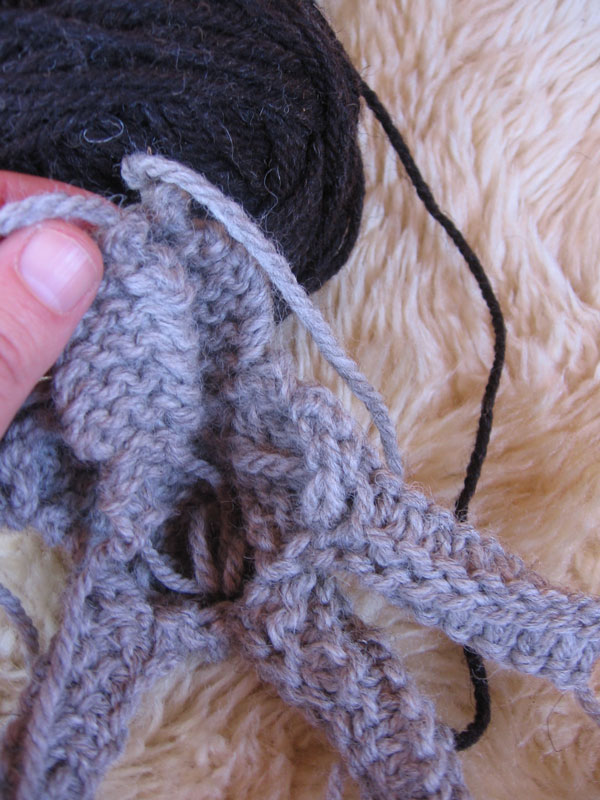
Attaching the top of the head to the chin.

Stuffing the legs by pushing wool batting to the tips with a thin pen.

Sewing up head and neck. The process of actually knitting these lambs is quite quick and easy. The time is spent in assembling the parts and sewing them all together.
Here is a lamb sewn up minus ears and tails…
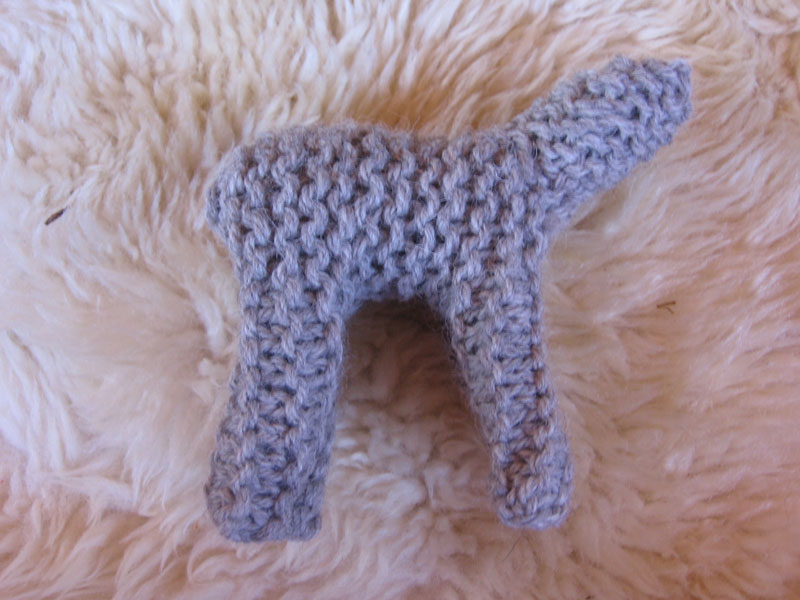
…they look rather funny! Ears and tails are attached by threading a double length of wool through a stitch or two on the head and rump.

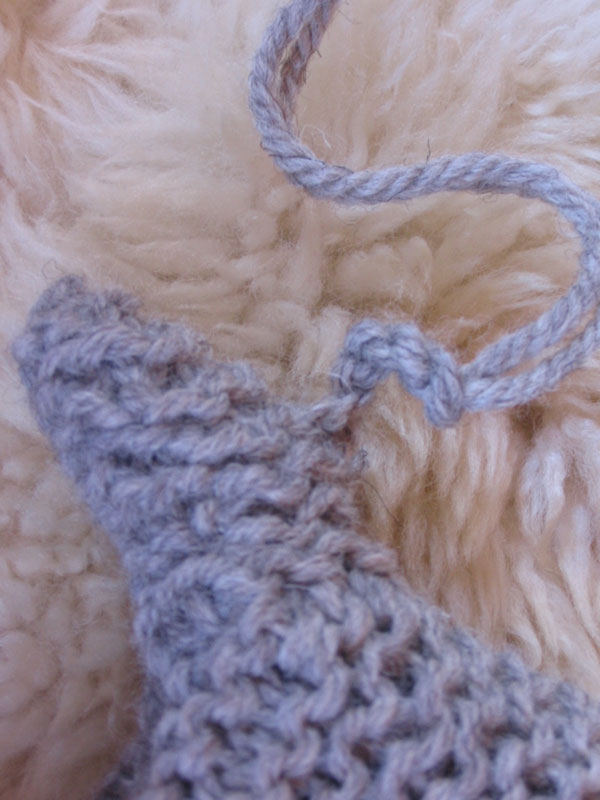
The yarn is then crocheted for a few chains, and the loops are reattached to the body, forming a little bubble for ears and tail! I was talking with my friend Jeanne, who used to raise sheep and lambs, and she said that the tails of lambs are actually rather long and floppy, but we agreed that the loopy tail looks quite sweet.
We have a beautiful undyed yarn from Rowan (Rowan Sheep Breeds) in our store, and the variations in color and texture come from the different breeds of sheep. I have knit several sweaters out of this yarn, and just love it! I wanted to make a little field of lambs, to show some of the different colors of yarn for the store window.

Kathy made a beautiful wooden box, which we lined with plastic, and filled with pea gravel and potting soil. We sprinkled the soil with grass and clover seed (and a few poppy seeds!) and covered the top with straw. I am hoping that the grass will poke up soon through the straw field, so the lambs have something to frolic in and graze on!
 living in the woods and making stuff

