pick, pit, boil, and jar
June 18, 2010
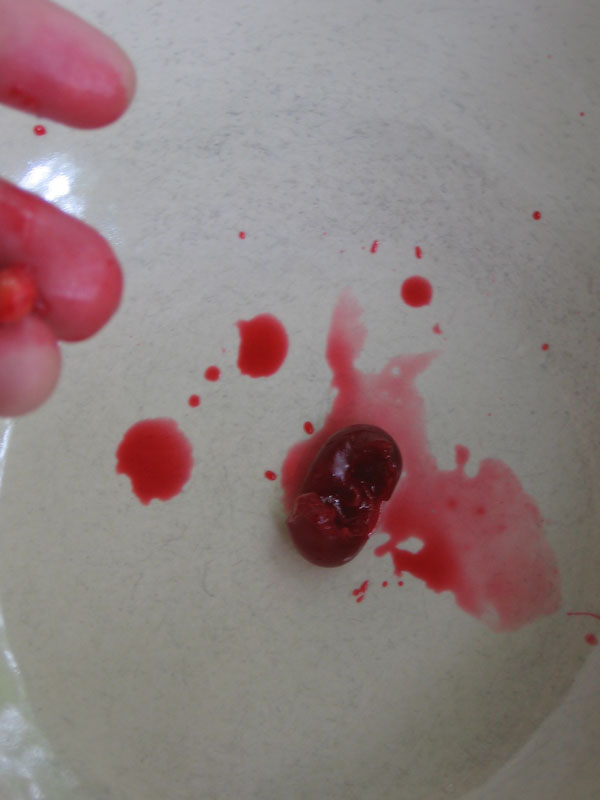 Cherries. My first attempt ended up with 8 jars of what my sister calls “Early Bird” cherry preserves.
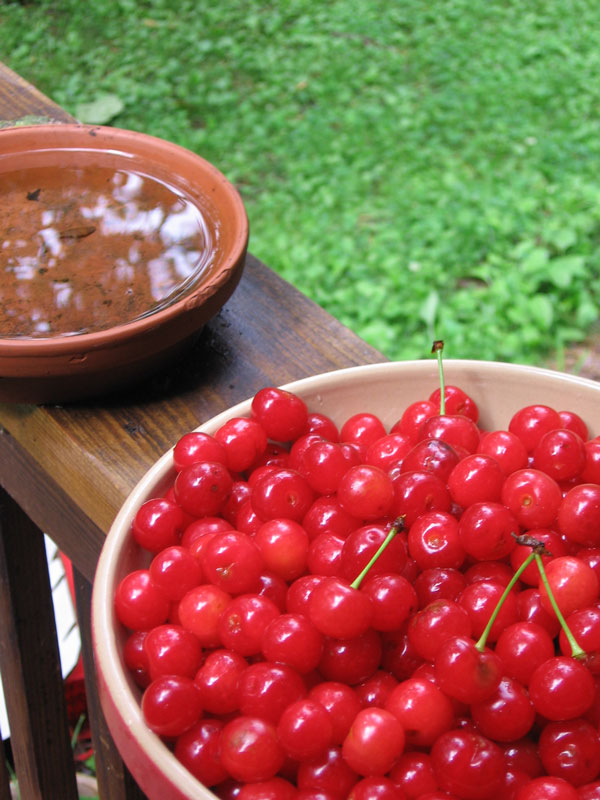 I picked cherries in the rain, which was actually delightful. The rain washed the sticky ripe cherry juices off my arms as I picked, and the glistening cherries against the dark leaves were a treat to look at.
 I brought the cherries home, set up camp on the porch (it had stopped raining) and pitted each and every cherry with my thumb. I have tried cherry pitters, but for small, ripe, sour pie cherries, the thumb works the best. After pitting the cherries, I put them in my jam cauldron layered with sugar. They sat for an hour (according to recipe) and then I heated the mixture to dissolve the sugar. Then the cherries rested again. Overnight this time. I woke up at 6 in the morning, with a clean kitchen, and heated the cherries and filled and processed the jars.
When I gave a nice little jar to my dad, I noticed, to my mild horror that there was a worm left in the jar…I guess organic means that worms get to enjoy the cherries as much as we do…and maybe I am not the best cherry worm remover.
strawberries part one (jam)
June 4, 2010
When there are strawberries, there ARE strawberries. As with most fruits, if you choose to eat them when they are fresh, you have to eat a lot of them, all at once. This is of course how to make up for not eating them the rest of the year. (It is also a good way to get a stomach ache.) Pick them, eat them, can them, eat them, make pies, and eat some more.
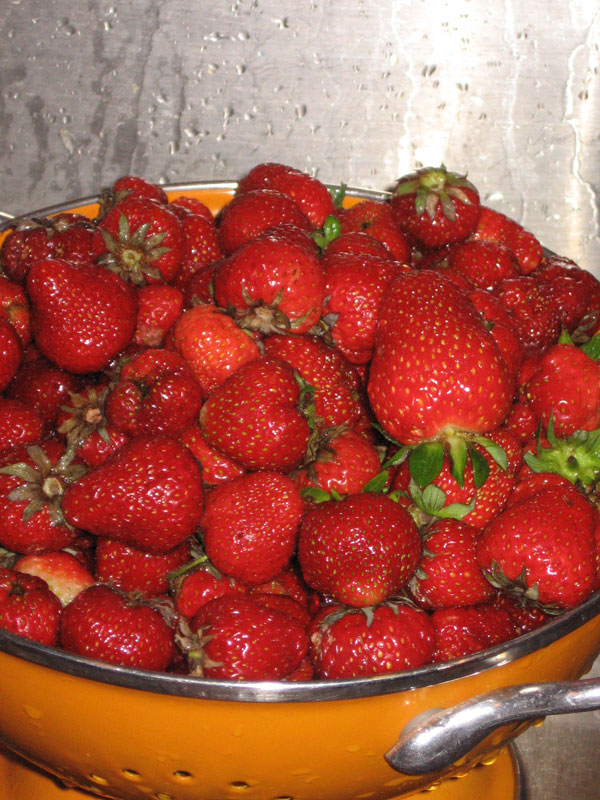
My friend Bob has a huge garden, and the strawberries were ripe for picking last night. We went by, and picked tons! I came home with two turkey-roasting trays full (which is actually half full, as the fruits shouldn’t be layered too deep..). Last night I canned a batch of jam (and started crusts for pies).

Strawberry jam is a simple mixture of sugar, fruit, and lemon juice. I didn’t use much pectin, and the resulting jam was thin, which is perfect for things like pancakes and yogurt.
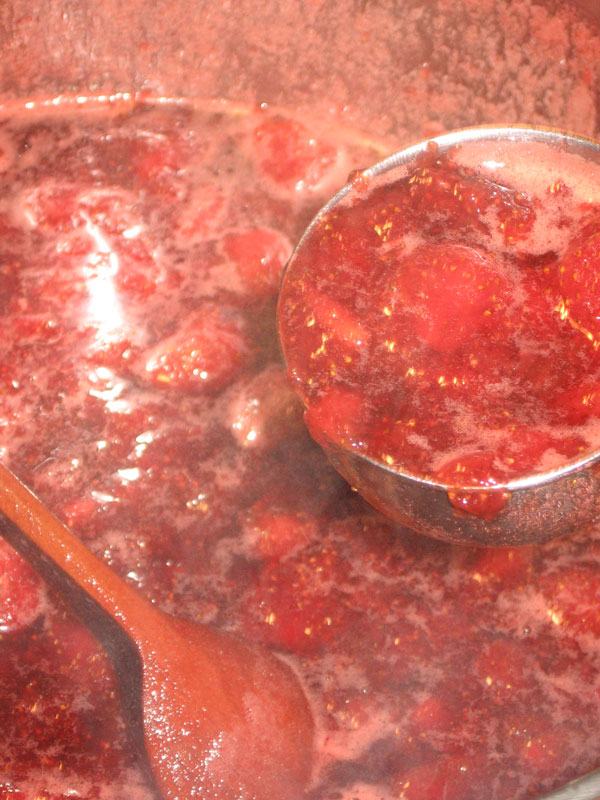
To thicken the jam a little bit, I boiled it for a while. You don’t want to boil the jam too much though, or you will over cook the fruit. hmmm..
rhubarb and rose petals
June 1, 2010

Today my friend Hilary and I made jam. She supplied two bundles of rhubarb, and I added a well packed cup of rose petals. 
The result was a sweet, delicately rose scented rhubarb jam. We ate the better part of a jar with spoons while we processed the jars.
The rhubarb and sugar were mixed first, and left to sit. When the sugar had mostly dissolved, we added lemon juice and rose petals.
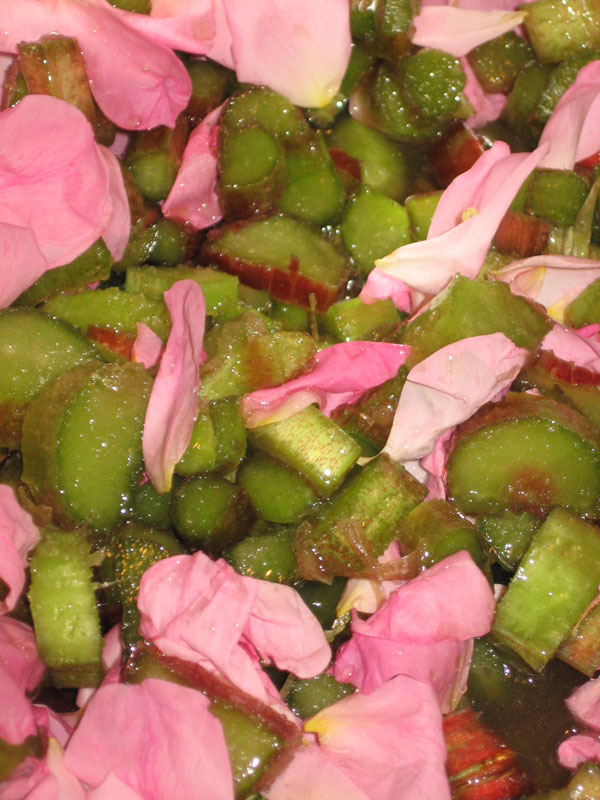
We put the mixture onto a burner and let it boil for about 10 minutes. Meanwhile, we washed, dried and set up our jars, lids, and canning utensils. We used Weck canning jars (glass jars and lids, made in Germany) which are the cutest things ever!

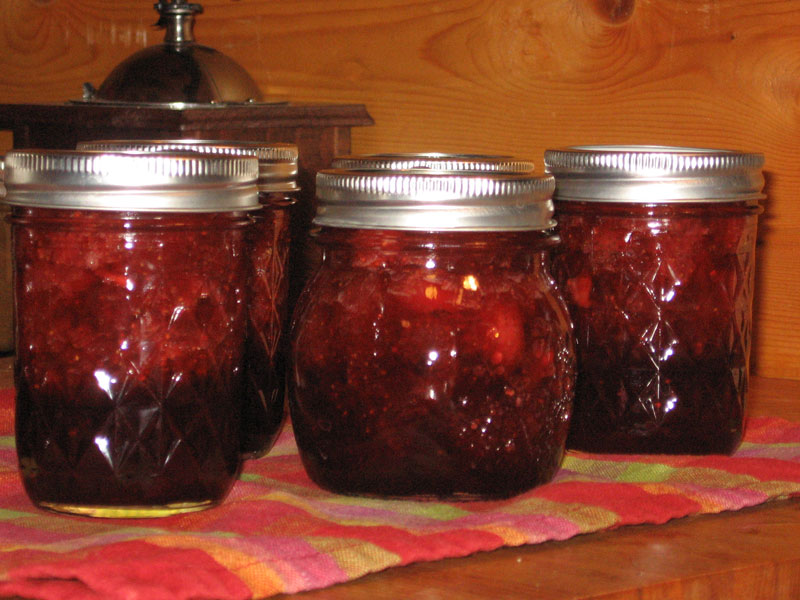
Below are the filled jars. We ended up with quite a few! The rhubarb jam is quite thin, with a little scent of rose, and I can’t wait to put it onto vanilla ice cream..

rose petals
May 22, 2010

Oh, I love making jam. And canning things. Especially when it involves picking rose petals. They smell lovely, and leave my hands smelling rose-like. And they are photogenic. I hadn’t really thought about that, until I found myself stopping to gaze at the roses, petals, and process of turning them into jam.
 Rose petals are easy to pick. They fall off the bush, and in our case, there are plenty of them! The rose bush at the store is huge. Sprawling all over the place. When the front and back doors are open at the store, the roses waft through. Mmm.
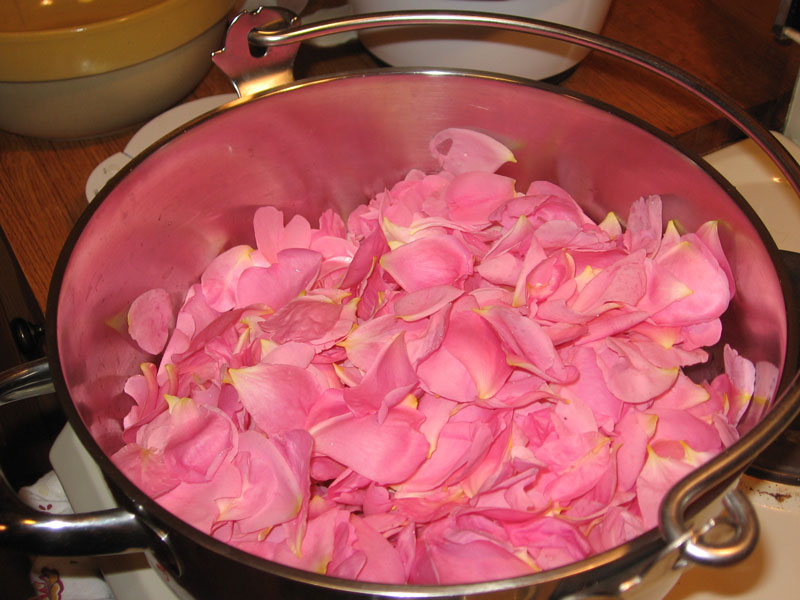
Rose petals in the cauldron. They cooked over low heat for 30 minutes. The result was a mauve rose essence, and a clump of petals.
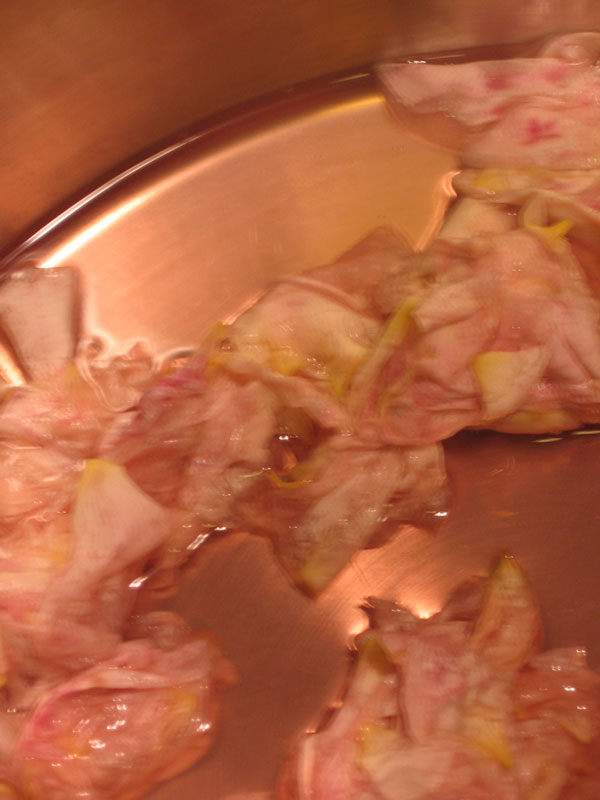
The inclusion of lemon juice brightened the color (and probably flavor too).

The lemon juice turned the mauve rose syrup a sharp, deep pink.
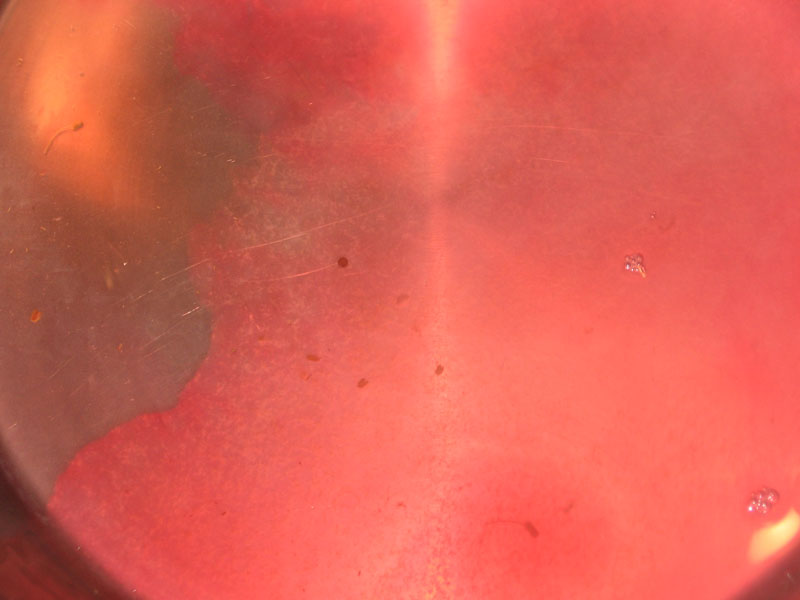
The petals re-added to the syrup, and simmered until the jam thickened. The lemon pips and pith help with thickening, and are contained in cheesecloth.

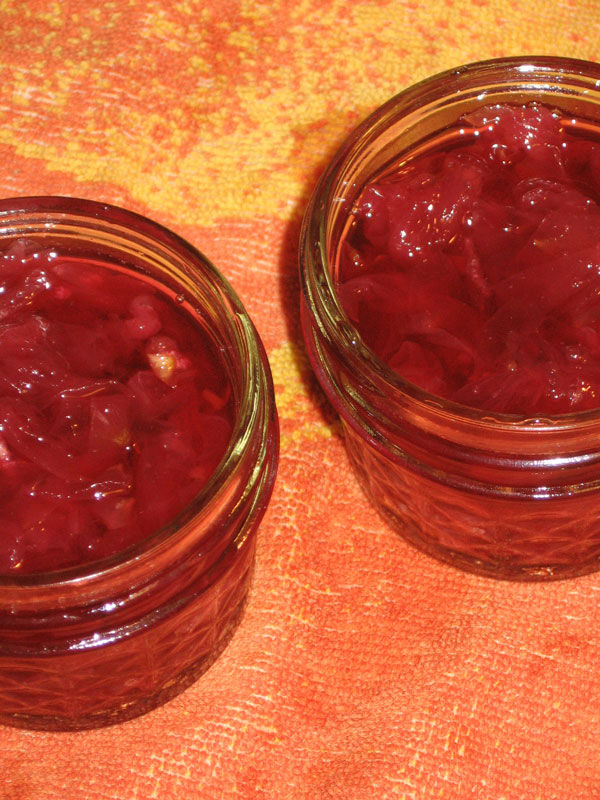
And, finished jam. I tried to cut corners and boil the jars in a smaller pot (as there were so few) but I ended up cracking one as I didn’t have a rack underneath. Not going to do that again…
crostata
May 11, 2010
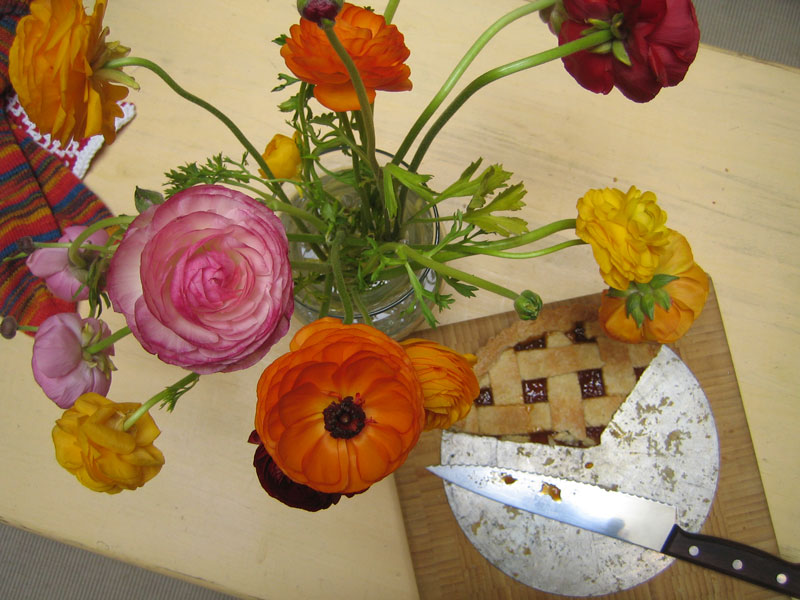
Erika taught Heli and I how to make crostata in Italy. She showed us how to make it in pretty much the same way her mother (and probably grandmother, etc, etc.) made it. Erika made one exception, she melted the butter. Somehow she was able to pull it off, but when I tried to repeat this feat, I ended up with a very very hard tart…
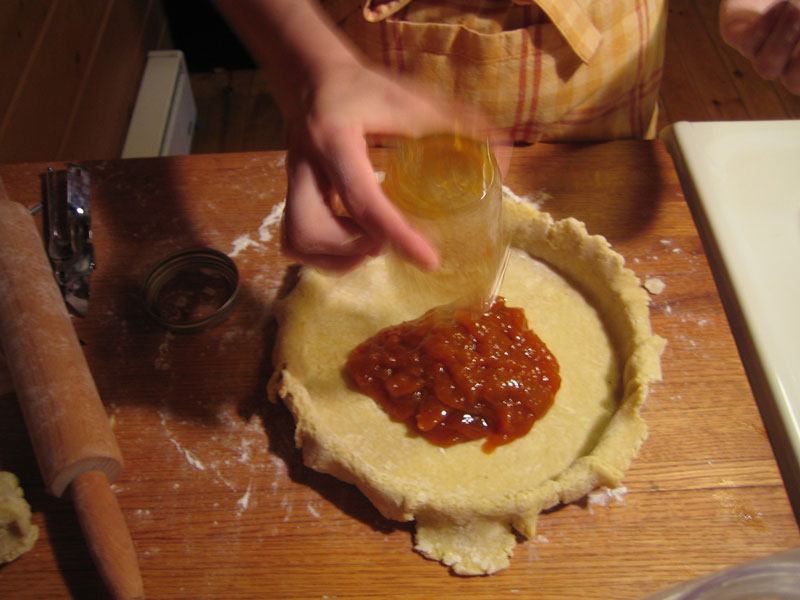
So Heli and I cut in the butter. And then add an egg, and a little milk, and let the dough chill. If you have an extra jar of jam, this is the perfect desert. Sweet, but not too sweet, and fresh with the zest of a lemon in the crust.
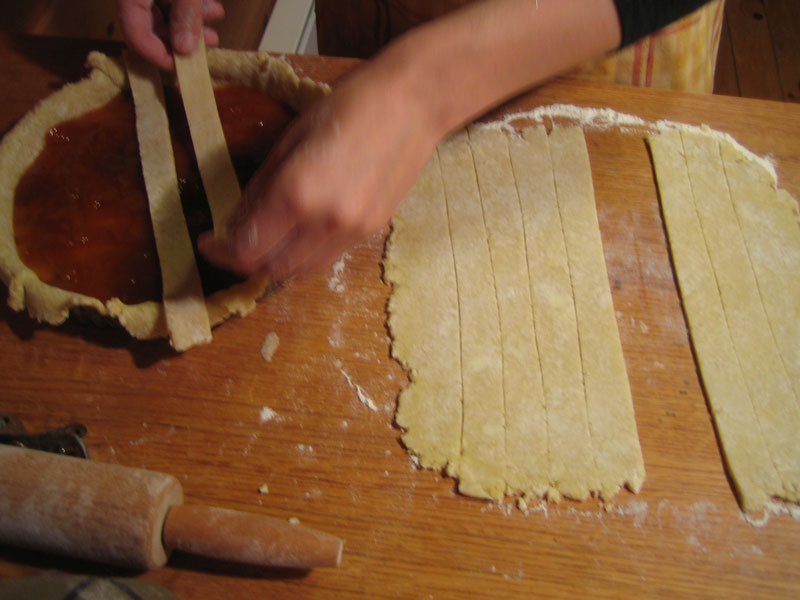
We made ours with Heli’s apricot jam. With the left over dough we made a mini crostata with pear butter.

We latticed the tops, and drove the tarts into town to bake at the store (again..).
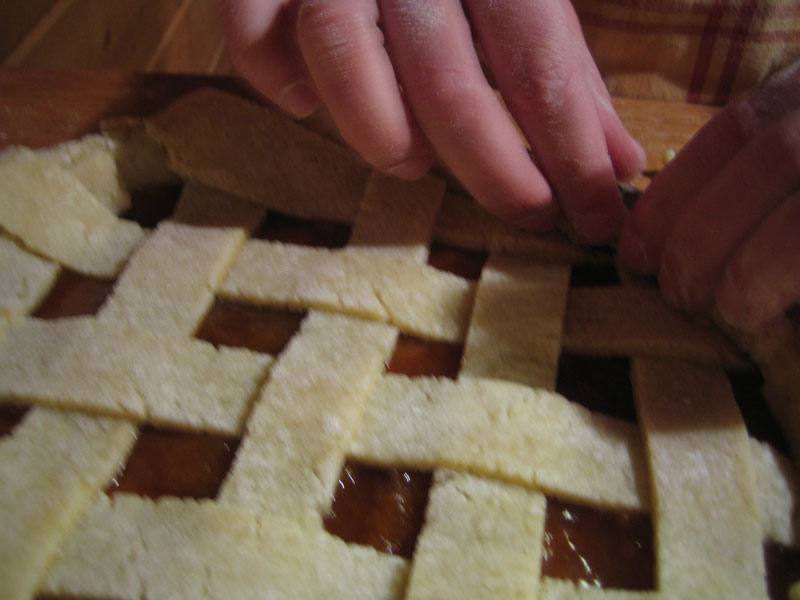
We had a little tart for my mom’s birthday, and snacked here and there for the rest of the afternoon…

kimuchi
March 2, 2010

I saved baby bok choi from my CSA share for a week and a half to have enough for this recipe (it requires for about 4 baby bok chois). Kimuchi is a Japanese style kimchi, that I found in my usual canning book, Joy of Pickling. The recipe is normally made with napa cabbage, but Joy of Pickling suggests that you can use other types of cabbage as well. Since we reliably get bok choi in our CSA, I decided to try it instead.

The cabbage is sliced into sections, ready to be salted…
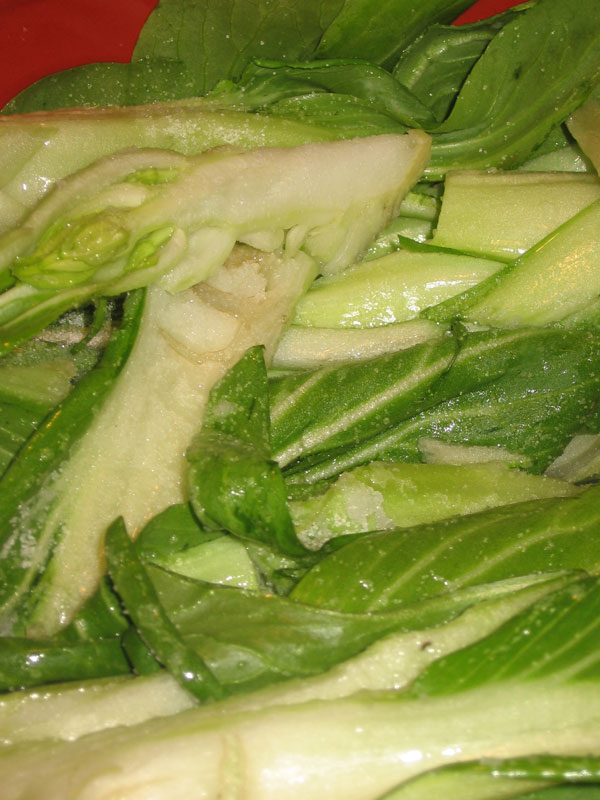
…and pressed overnight.
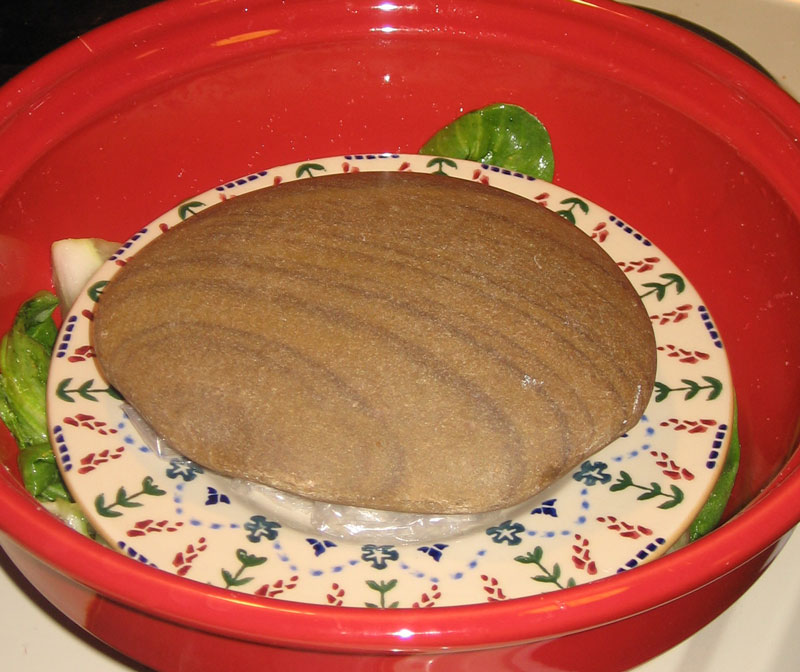
Salting draws out the moisture in the cabbage, and works as a preservative. The salted cabbage ends up looking quite shriveled.

I chopped the salted bok choi into 1″ squares, and added slivered carrots, grated apple, and the usuals: ginger, garlic, green onions, salt, and hot pepper. I used a little less hot pepper, to experiment and see what happens.
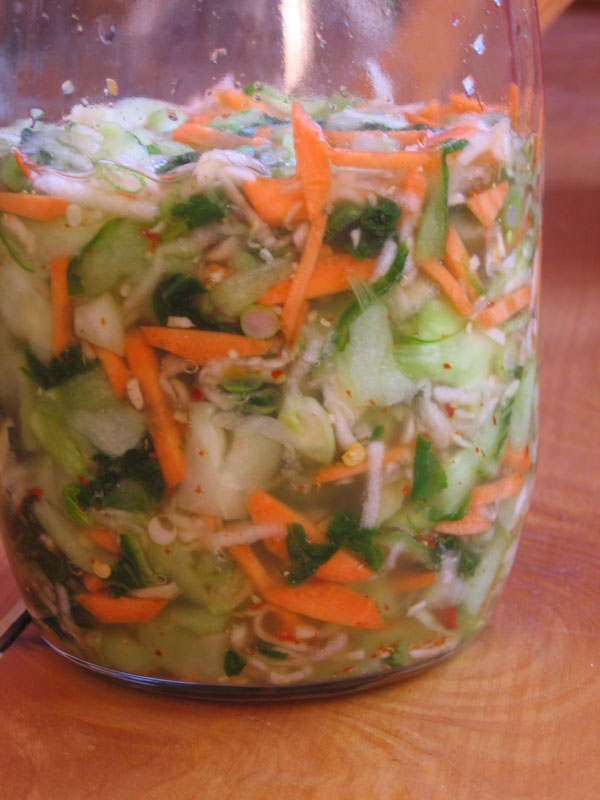
The kimuchi now has to sit, loosely covered, for a few days before it is ready. My last batch has been living in my fridge now for about a month, and it seems to get better with time. The flavors aren’t quite as sharp…
kimchee (finished)!
February 11, 2010
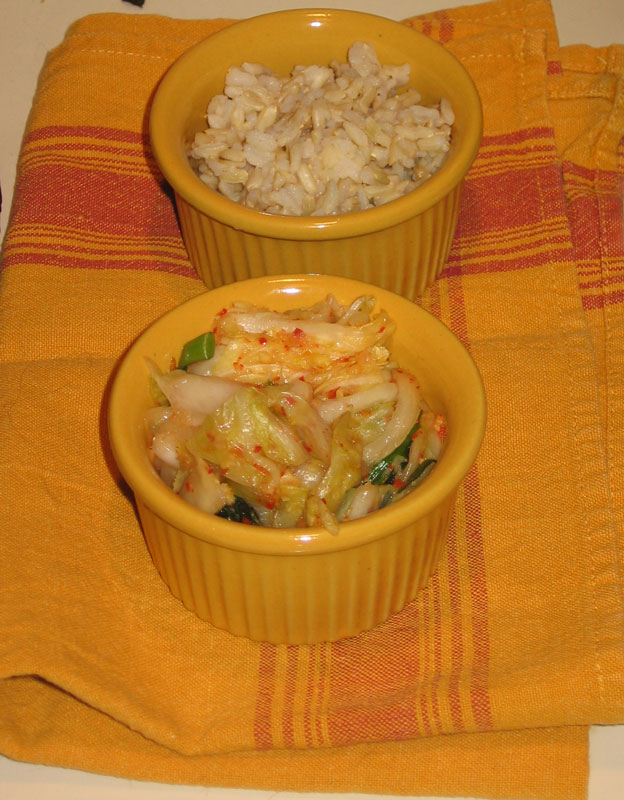
Quick update.
I opened my jar of kimchee today. According to my recipe it said 3-6 days sitting, depending on how sour you like it. A much quicker turn around time than its Western counterpart (sauerkraut)! I was kind of excited to try the finished product, so I called it finished after 3 days. And to be honest, it doesn’t change much in color, and seems to mellow somewhat in flavor. Actually, mellow isn’t really the right word. Maybe more like the flavors come together. My kimchee ended up very spicy, very garlicy, and full of ginger! A perfect combination to keep healthy in this cold weather.
It is really spicy though, and Heli suggested for me to eat the kimchee with a fried egg or rice to cut the heat. (definitely helps!) I am really excited to try making a batch of kimchee with some other greens, such as bok choy, more kale, and other assorted items that I get from my CSA share.
kimchee!
February 8, 2010

Here is my first attempt to make kimchee.
I found a recipe for kimchee in The Joy of Pickling, by Linda Ziedrich. My kimchee is a simple mixture of napa cabbage, a little bit of kale, ground hot pepper, slivered green onions, and lots of garlic and ginger. The whole mixture sits in brine for several days, until the desired sourness is obtained…

Step one is to chop and brine the cabbage overnight. So last night, I chopped my cabbage according to directions, into 2″ squares. I placed the chopped cabbage in a bowl, covered it with salt water, and placed a plate on top to keep the cabbage submerged.
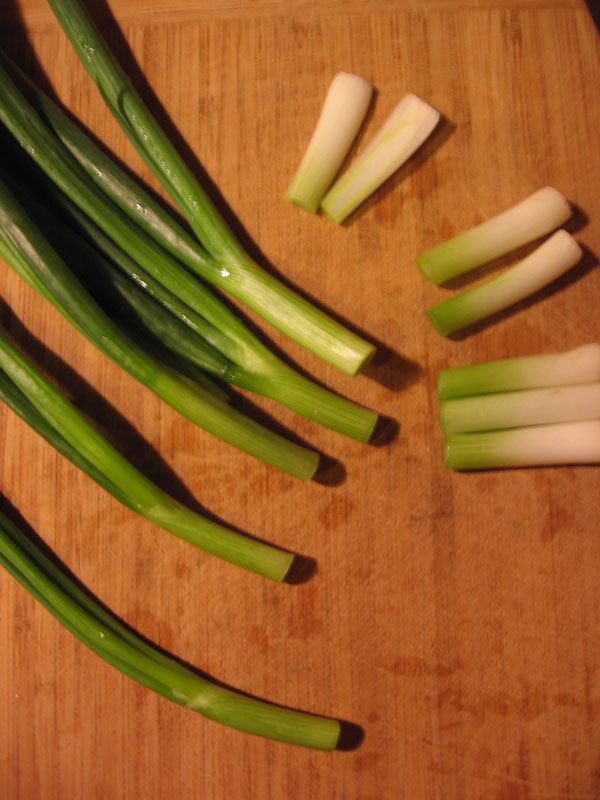
This afternoon, I added the additional ingredients to the chopped and drained cabbage. Slivers of green onions, lots of garlic…

…coarsely grated and chopped ginger. I couldn’t find my smaller grater, but the chopping seemed to get most of the big bits out. I added a little extra ginger to the recipe, as I love it, especially in the winter!
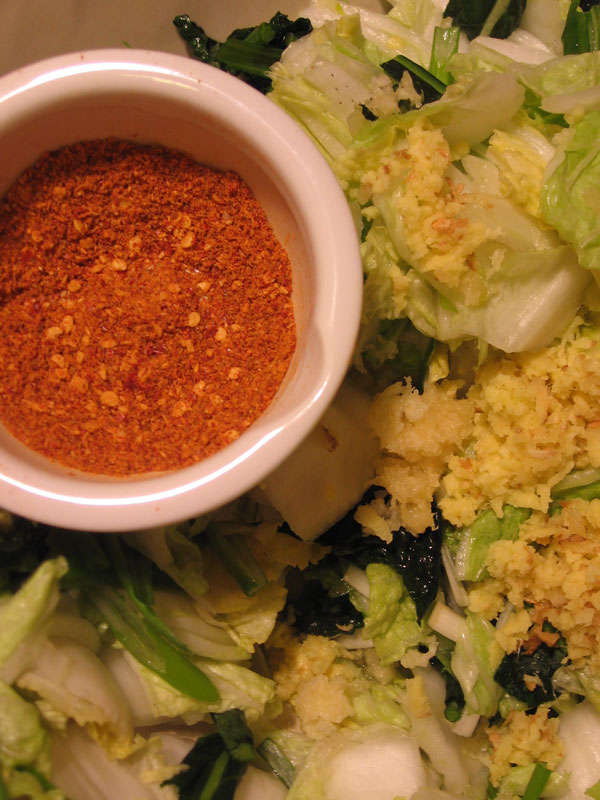
I was excited to use the dried peppers that I put up last summer. In the summer I always seem to acquire more fresh hot peppers than I know what to do with. As a result, I usually end up with more dried peppers than I know what to do with. This was a perfect use for some of my lovely dried peppers. I did have to grind them into a powder, which was a little difficult, with their spiciness…
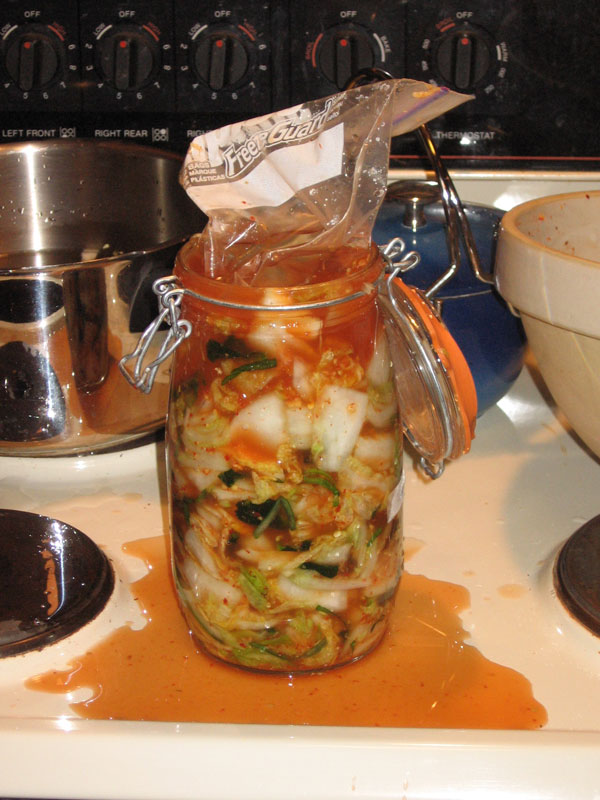
I placed the cabbage mixture into a glass jar, with a plastic bag filled with brine solution on top. Looks like I put a little too much brine into the actual kimchee…
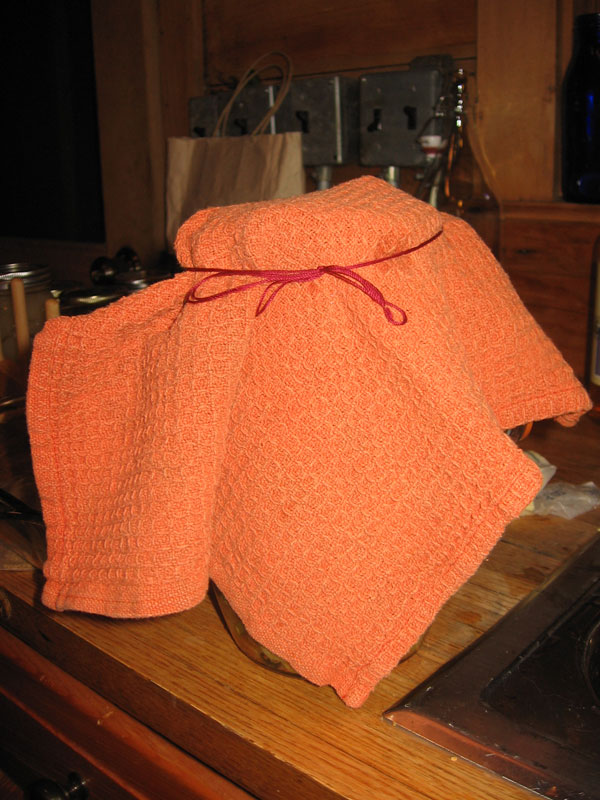
Here is the jar, all tidied up and ready to ferment in a cool corner of my house (not a problem, as I have many).
pears poached in grapefruit wine with cranberries
December 29, 2009
I made these a few weeks ago, and they were delicious! And way too easy. I have a shelf of canned pears in my pantry. They are preserved in a 30 percent simple syrup. I also have a somewhat dwindling (but still plentiful) supply of grapefruit wine. I simply opened the jar of pears, plopped them into the pan, added a cup or so of grapefruit wine, and put the pot on the woodstove to simmer over lunch.
If you don’t have home canned pears and grapefruit wine, I would recommend peeling and poaching fresh pears in water with a little sugar to taste. You can add a cup or so of regular white (or red) wine, and some additional citrus peel here as well.

Meanwhile, I prepared a sauce of cranberries. Place a handful or so of cranberries in a medium sized pot on the stove (medium heat). Add a few strands of orange zest and a sprinkling of sugar. Not too much that it makes the cranberries sweet, but not so little that they are unbearably sour. If you have just rinsed the cranberries, the water left should be sufficient, but if you are starting with dry cranberries, add a sprinkling of water. Cook over medium heat, stirring until most of the berries have popped, and the sugar has caramelized a little. Set aside.

Ladle the warm pears and a generous amount of the liquid into a little bowl. Spoon the cranberry mixture over the top and serve right away. I would definitely serve with fresh cream. The bitterness of the grapefruit wine complements the sweetness of the canned pear syrup, which is almost a juice, and the cranberries give the whole thing an extra zing!
(They look really pretty, but I didn’t get around to taking a picture of the final product…)
brandied cranberries
December 9, 2009
Last Monday my dad and I went down to the Dutchman’s store in Cantril. We found a nice collection of items including a new pair of lined pigskin gloves for firewood duty, some potting soil, hotpads, peanut butter filled pretzels, and cranberries! Fresh Wisconsin cranberries to be exact. Two large bags of them…
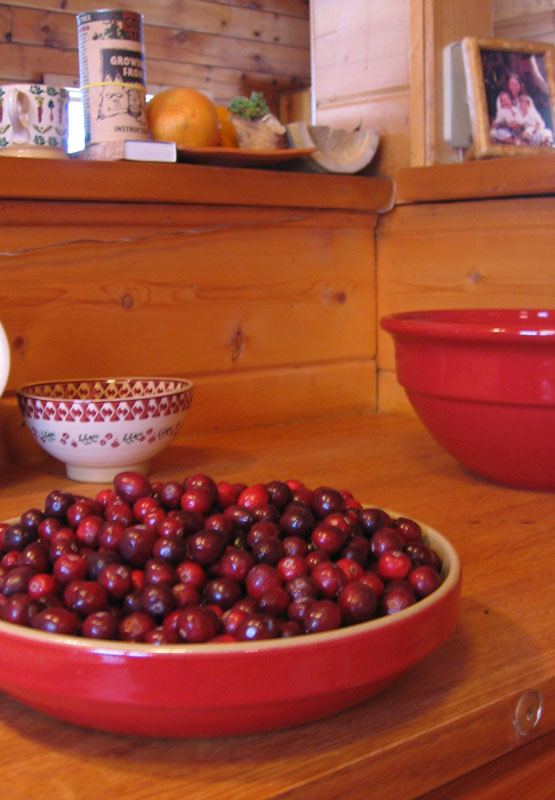
I can’t resist a good looking batch of fruit, and so I grabbed them up and brought them home, thinking the whole while about everything that I could make.

Brandy, cranberries, cinnamon, sugar, and orange zest. That is it! The recipe is from Joy of Jams, Jellies, and Other Sweet Preserves, by Linda Ziedrich. I made one batch and liked it so much that I made a second! The recipe is simple, and the preserves can be processed for storage, or eaten right away! I put mine in little jars to give away, or open and eat all by myself. (Sometimes pint or 1/2 pint jars are too big for me to finish soon enough, so the smaller servings come in handy. And they are cute.)
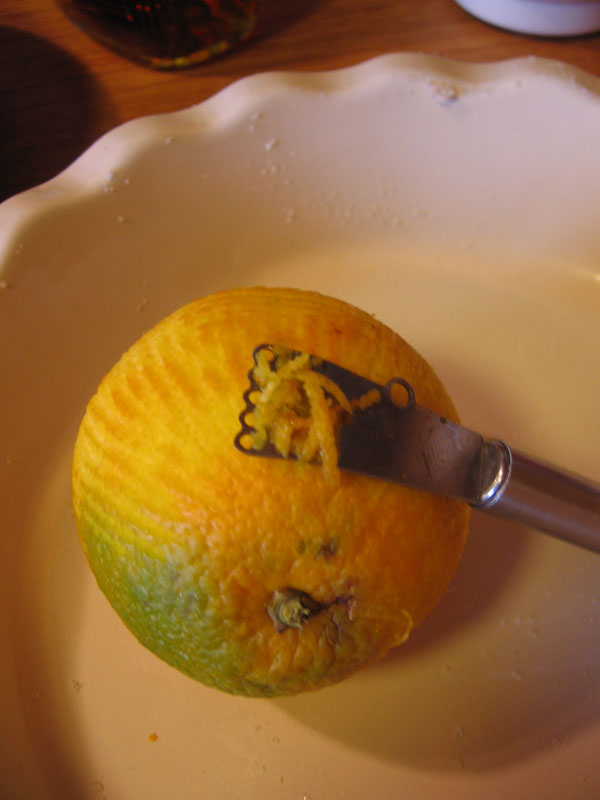
I used one of my favorite tools on this project; a citrus zester. There are sharpened little circles across the top, and you drag the zester down the side of the orange (or lemon, lime, etc) and it peels nice even strips off. The hole on the side is for larger pieces of zest. I am not much of a gadget person, but this particular tool is awesome!

Cranberries, sugar, and zest, ready to be baked in a slow oven. The sugar almost caramelizes a little, and the flavors mellow and come together. I would guess that most of the alcohol cooks out of the brandy, but the taste is definitely still there!

The finished preserve is a rich dark red, with a hint of cinnamon and a refreshing tang.
 living in the woods and making stuff