an orange sweater for a green dress
January 21, 2011
I started this sweater in the summer. It was almost finished, and then I was worried that it was too short, and that I would never wear it. It ended up in a ziplock bag until yesterday, when I needed a short sweater.

I have recently gotten back into sewing, and found a pattern for and made a little green dress. The bodice (I think that’s what it is called) is short, and when I tried a normal length sweater over it, the skirt rumpled up kind of funny. I dug into the knitting pile in my spare room this morning, found the unfinished orange sweater, tried it on, and it worked just about perfectly! The sweater sleeves are a little bit tight over my arms and the corduroy sleeves, but I think that I can manage, and maybe the wool will stretch a little.

The sweater is knit with Malabrigo lace weight yarn. I ended up using a little over two skeins of yarn, so have a bit left for another project…I knit the sweater on size six needles, starting at the top and knitting down. I added seed stitch at the bottom, sleeve edges, and around the front, instead of ribbing and stockinette. When I picked up stitches around the front, I think that I picked up a few too many at the bottom. The border extends down, making little points. I am actually growing used to them though. The seed stitch (on size two needles) was taking so long, and I didn’t feel like ripping it out, so I kept it.
The good thing about using such thin yarn is that you get a more delicate sweater, and it costs less. The three skeins of yarn cost about $8.20 each, so the total sweater cost was around $25.00. Not too bad if you ask me!

The dress was from a pattern that I picked up in Iowa City. I also purchased some pretty fabric to go with the pattern, but as of yet am unable to cut it. (I have a hard time cutting into new pieces of fabric.) I had some fine whale green corduroy (already washed and dried) sitting around, and used it to make a prototype.
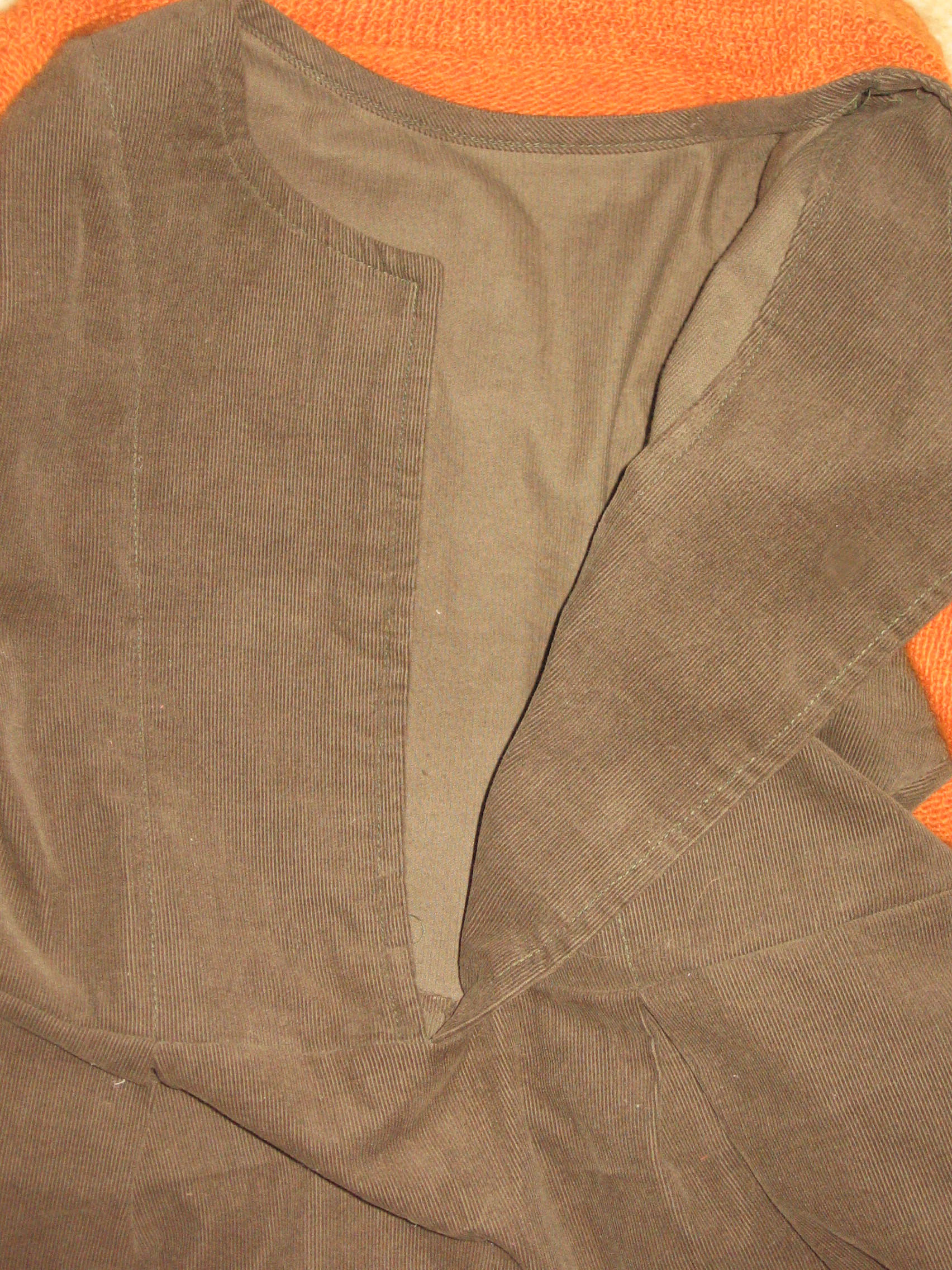
I cut and laid out all the pattern pieces, and marked them with my new white fabric pen. Then I managed to sew everything together, mostly correctly. Only ripped a few times…
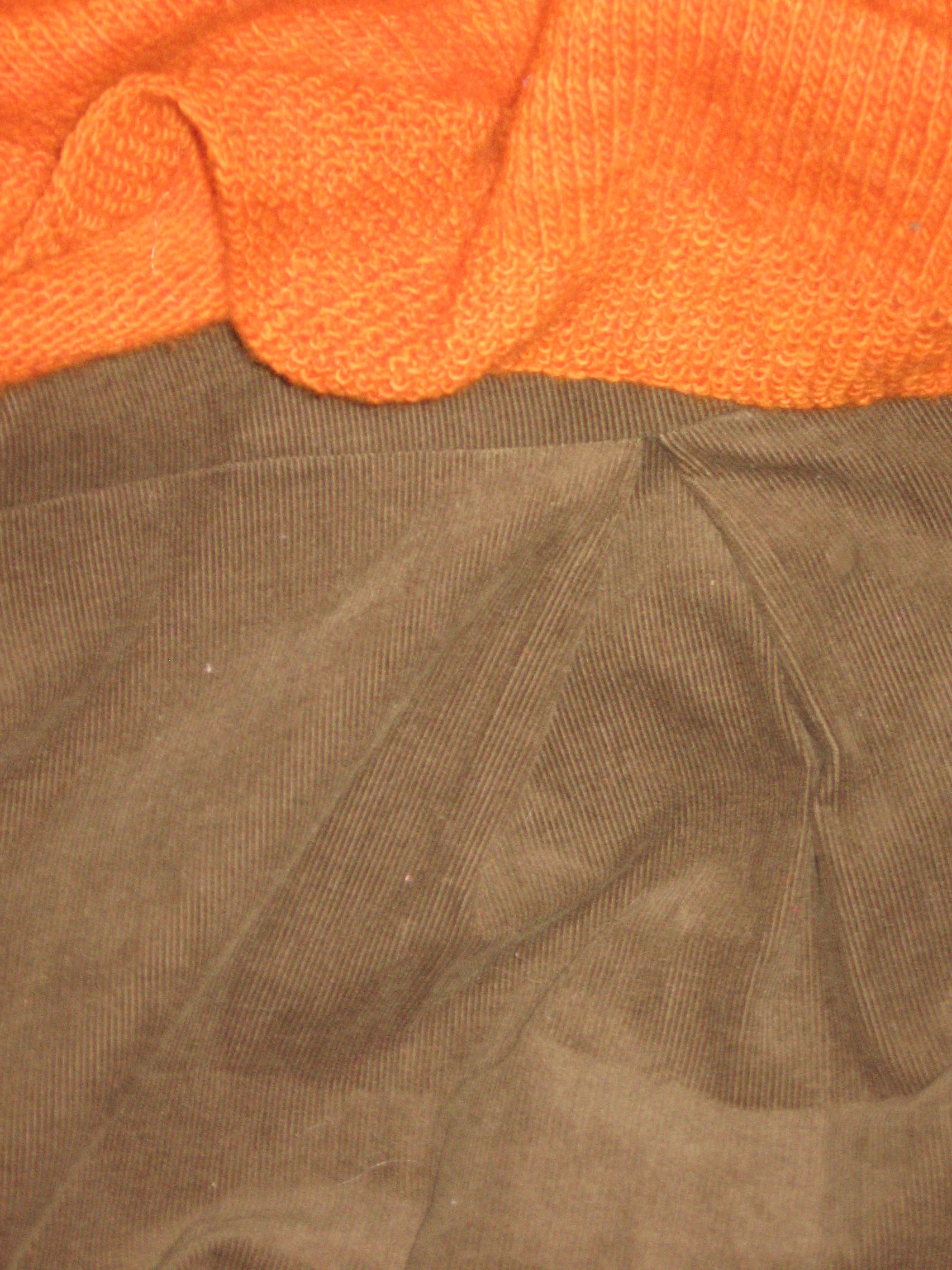
The front is made up of two pieces, with plackets on the back side (shown above). It is a simple, effective design. No buttons or other fixtures used! The back is one piece, and I very slightly gathered the sleeves and sewed them in once the front and back were attached at the shoulders. Then the skirt front and back. With reverse box pleats. Two in the front and one in the back (below).
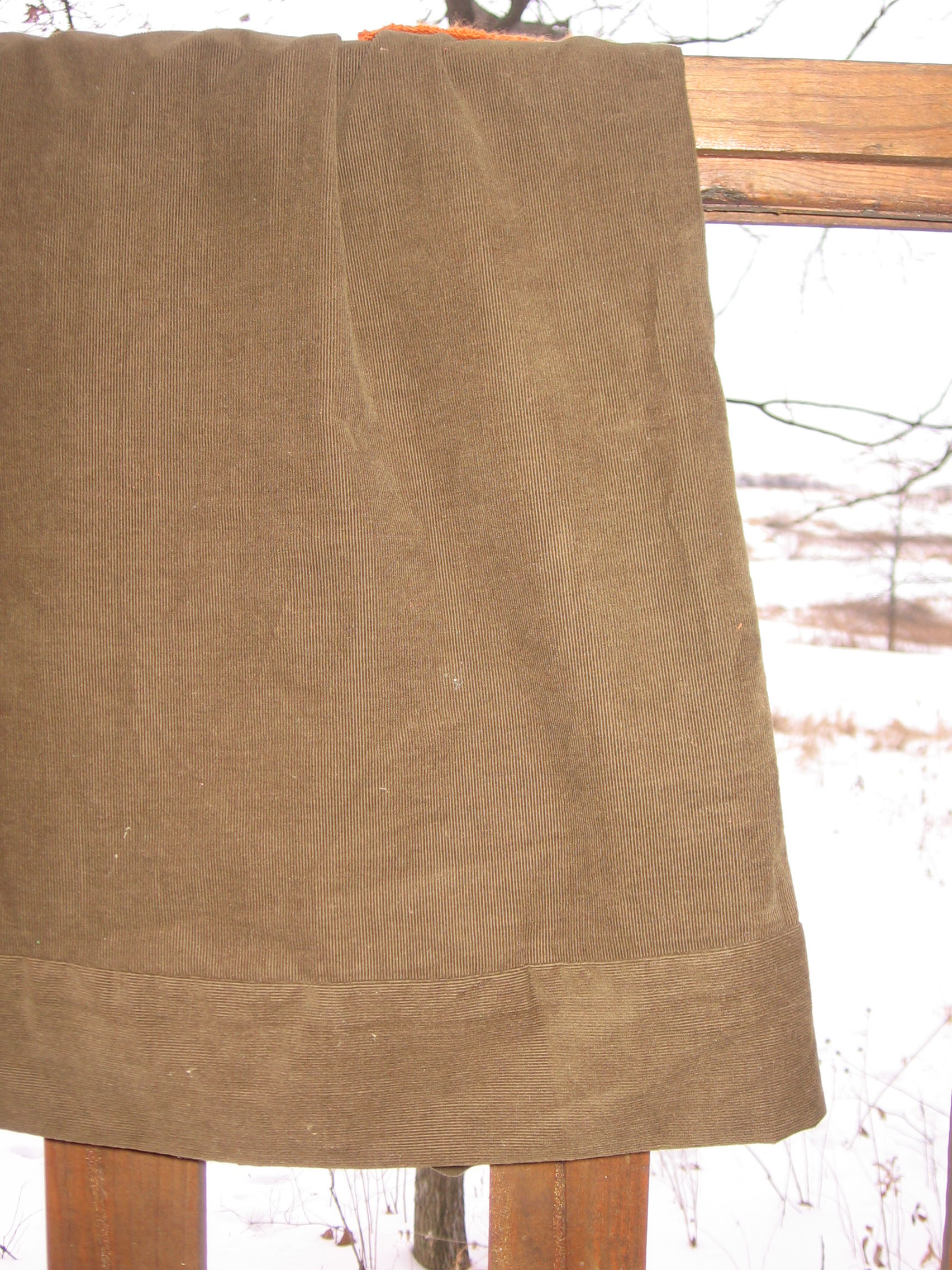
When I tried the dress on to show my mom, we decided that we liked it longer, and she had the thought to run a band around the bottom to add a few inches. I tried this and liked it. The material is going in the opposite direction, and it creates a nice edge effect.
That’s about it. A quick and easy sewing project. I am happy with the fit, and am planning on making another one with my new fabric…maybe over the weekend. I had forgotten how fun sewing can be. And it goes very quickly, which is quite satisfying!!
warm, fuzzy hands
January 13, 2011

It is really cold today. Perfect inspiration to make some mittens. Slightly bulky, and two color, which means extra thick and quick to knit!

I made these mittens with one strand of Rowan Cocoon, and one strand of Rowan British Sheep Breeds Bulky. A good combination. The cocoon is super soft and shiny, and the strand of British Sheep Breeds is soft, fuzzy and warm.

I took the basic pattern from a Lion Brand Pattern, and adjusted it so that the mitten fit…and the colors lined up well. As I was knitting, following the pattern I kept on having to rip and re-knit to adjust colors and sizes. Finally I stopped following the pattern, and made up my own. It worked out better that way.
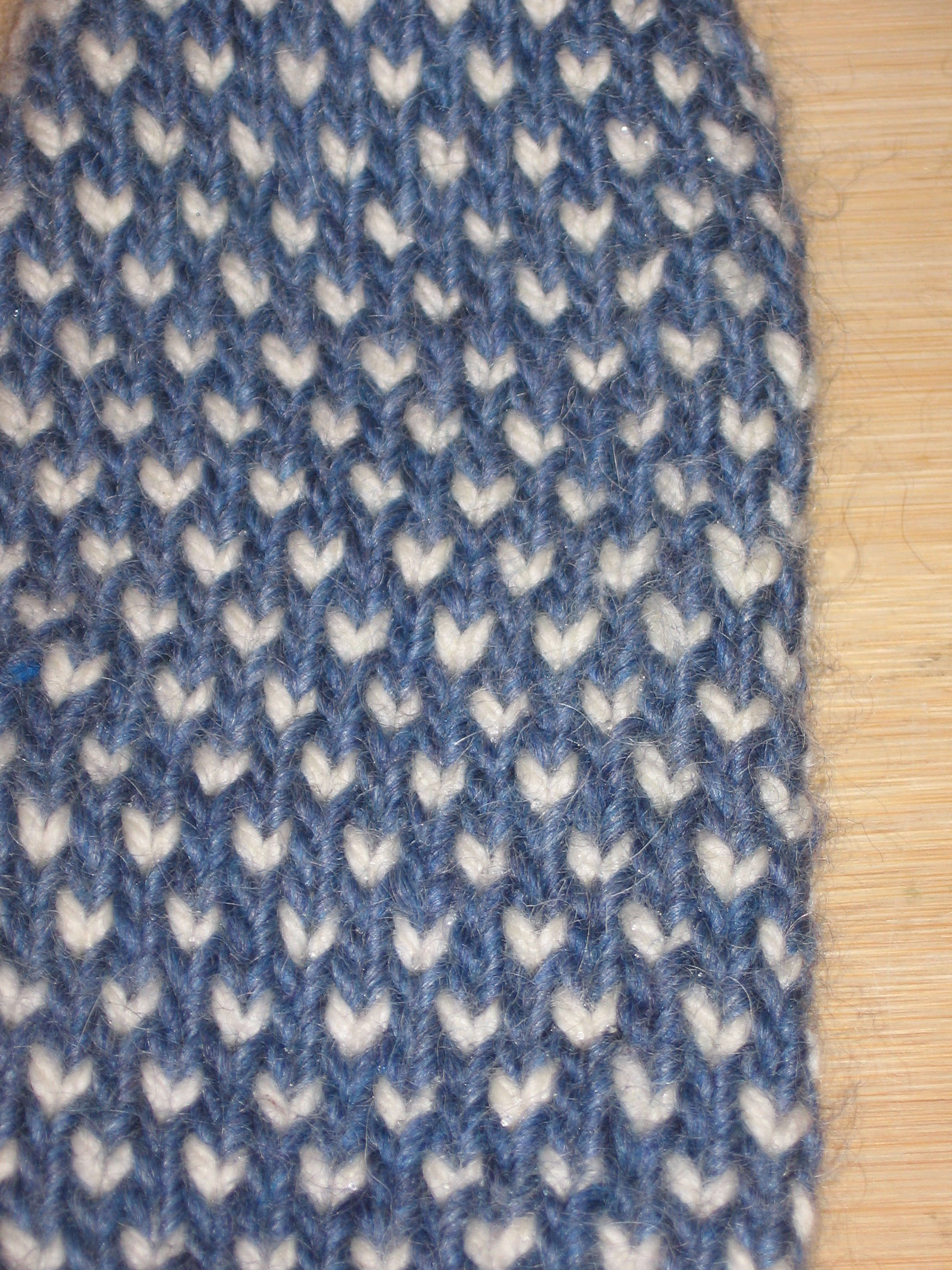
The overall stitch pattern of the mitten is offset, alternating blue rows and blue and white rows. On the thumb there is a subtle difference, and the white dots line up, creating vertical as well as horizontal blue stripes. It worked out better this way with the thumb gusset increases.
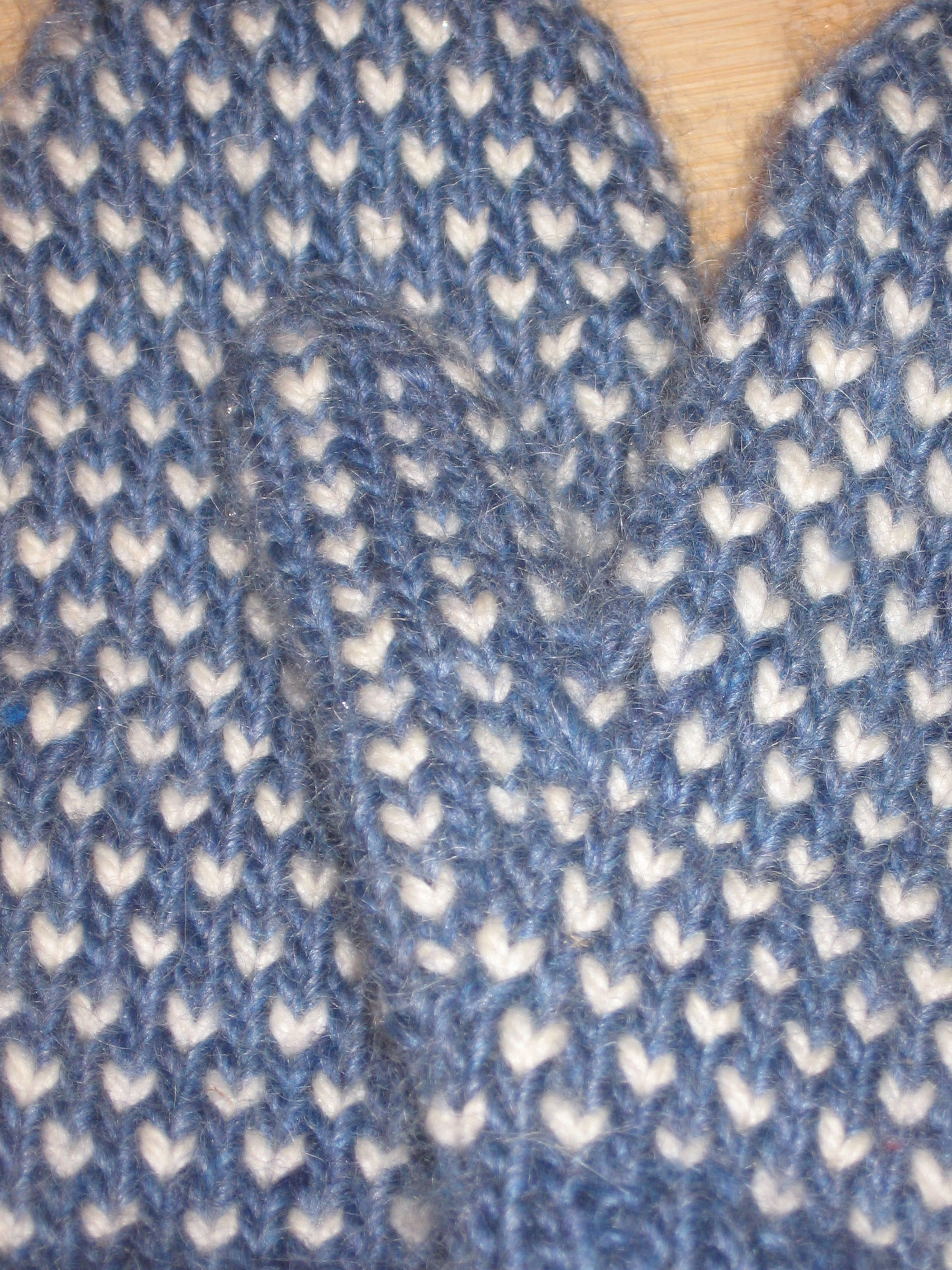
I made the top decreases on either side to create a bit of a pointy tip, and kitchener stitched the last 16 (I think) stitches together with blue.

I used size 7 needles for the ribbing, and 8 to knit the mitten, so that the material was dense. It will felt a little with wear, which will make the mittens extra warm! These pictures are all pre-blocking, and the mittens are drying on my hearth now. I was chastised by Emmy for not blocking them, and so stuck them in the sink at the store for a few minutes. Now they are a little bit fuzzier, softer, and the stitches have come together. If only they would dry already!
brambles hat
January 12, 2011
I was looking for a fun smallish project to teach cables at the store. While browsing knitty.com I came across this hat, or tam, or something in between, depending on how you block it.
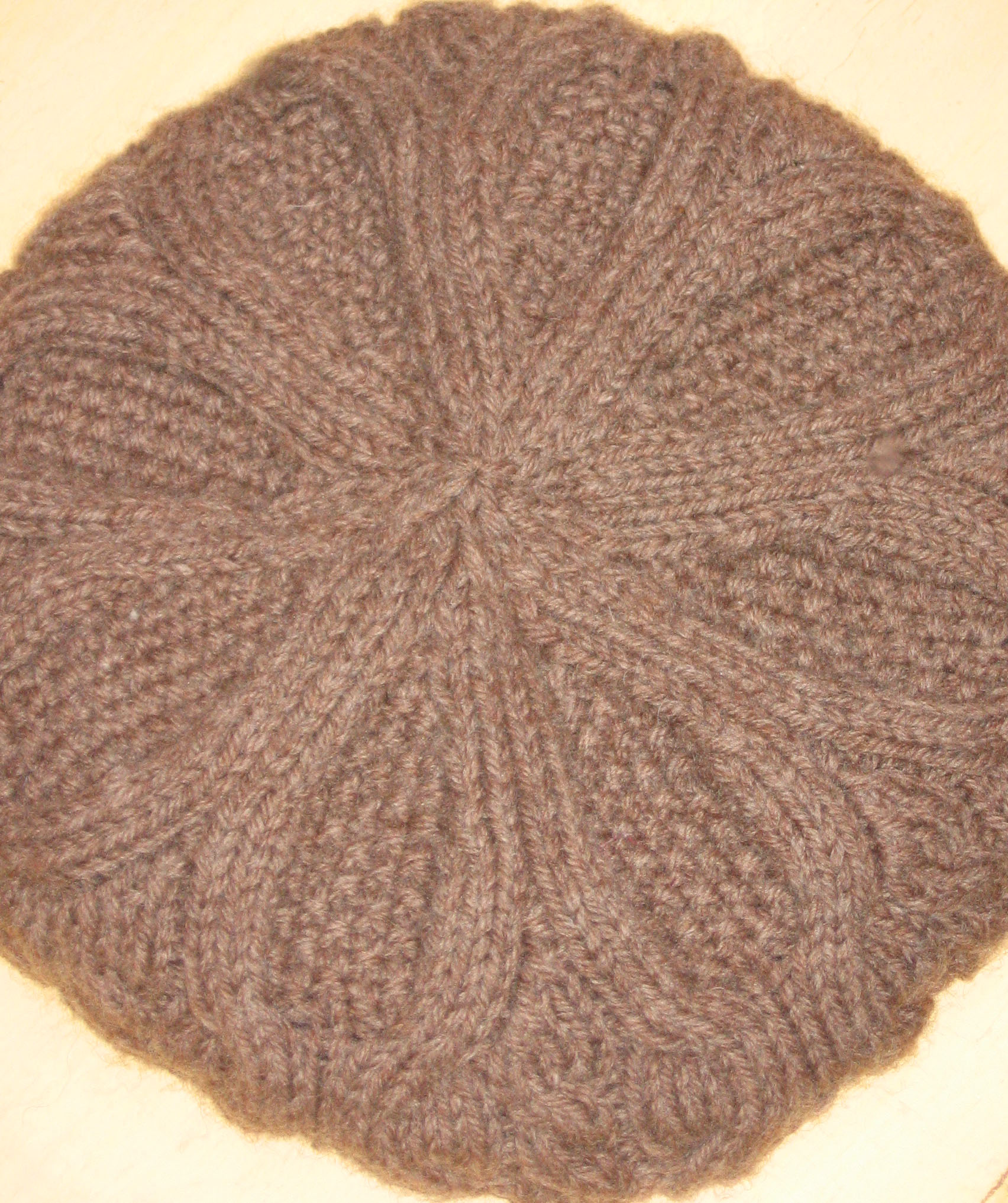
The hat is knit with cables. There is a simple 2 by 2 cable that goes up the sides, and then becomes the decrease at the top of the hat. The other cable like thing is a curvy shape with seed stitch. At the top, the cable opens up and there is a whole bunch of seed stitch.

It fits well, and I shaped it into a hat more than a beret or tam. The pattern suggests shaping with a balloon, or even a dinner plate. I knit it with cascade 220, again…and was again happy with the results.

I didn’t want mine to be too big, so I hung it on my fireplace tools holder where it was shaped nicely…and dried very quickly. It is basically a slightly loose hat, quite comfortable.

The finished hat is soft, and a little bit floppy, and fits nicely on Heli’s head.
lablabi
January 8, 2011
Lablabi is a traditional street food of Tunisia. According to my (Heli’s) friend Sarah, it is available at all times of the day and night. This version of the recipe comes from the Mahjoub family, who produce all of the Tunisian products that we carry in the store.

The base of the soup is made of chickpeas cooked with garlic.

I find that lots of garlic is especially good this time of year. It warms me up.
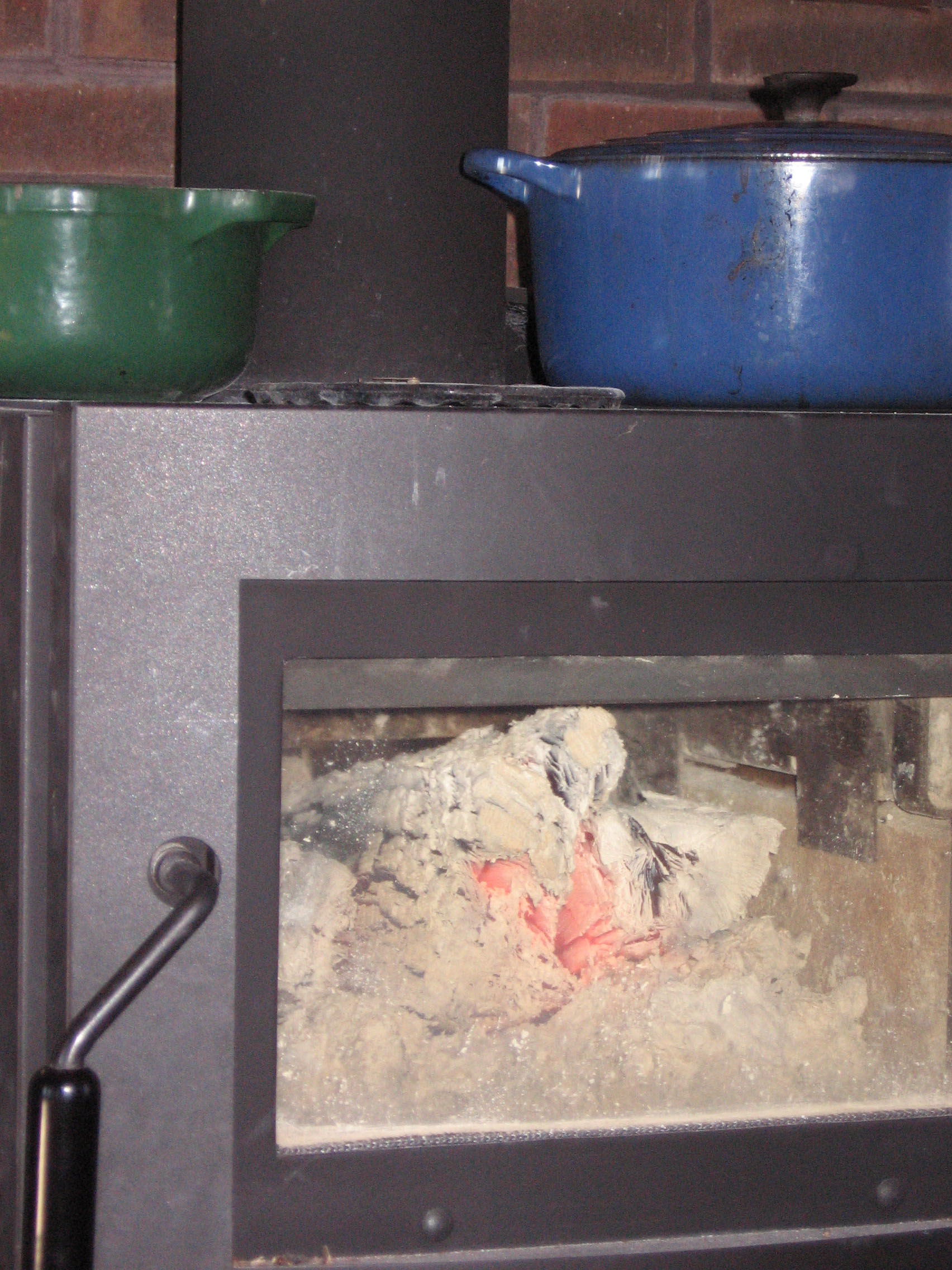
The chickpeas are best cooked slowly. I soaked them overnight and then put them in a pot with minced garlic and brought everything to a boil. Then I placed the hot pot on the woodstove to simmer slowly, until finished. I was thinking that they would take hours and hours, but the heat of the stove kept them at a tidy low boil and they were finished quickly (maybe about an hour, or a little longer??).

The fun of this stew is in the condiments. Basic chickpeas, and then little dishes of toppings.
Pickled lemons are preserved in salt, and set out in the sun for 6 months to cure. They are packed in brine with a hot pepper for a little extra zing.

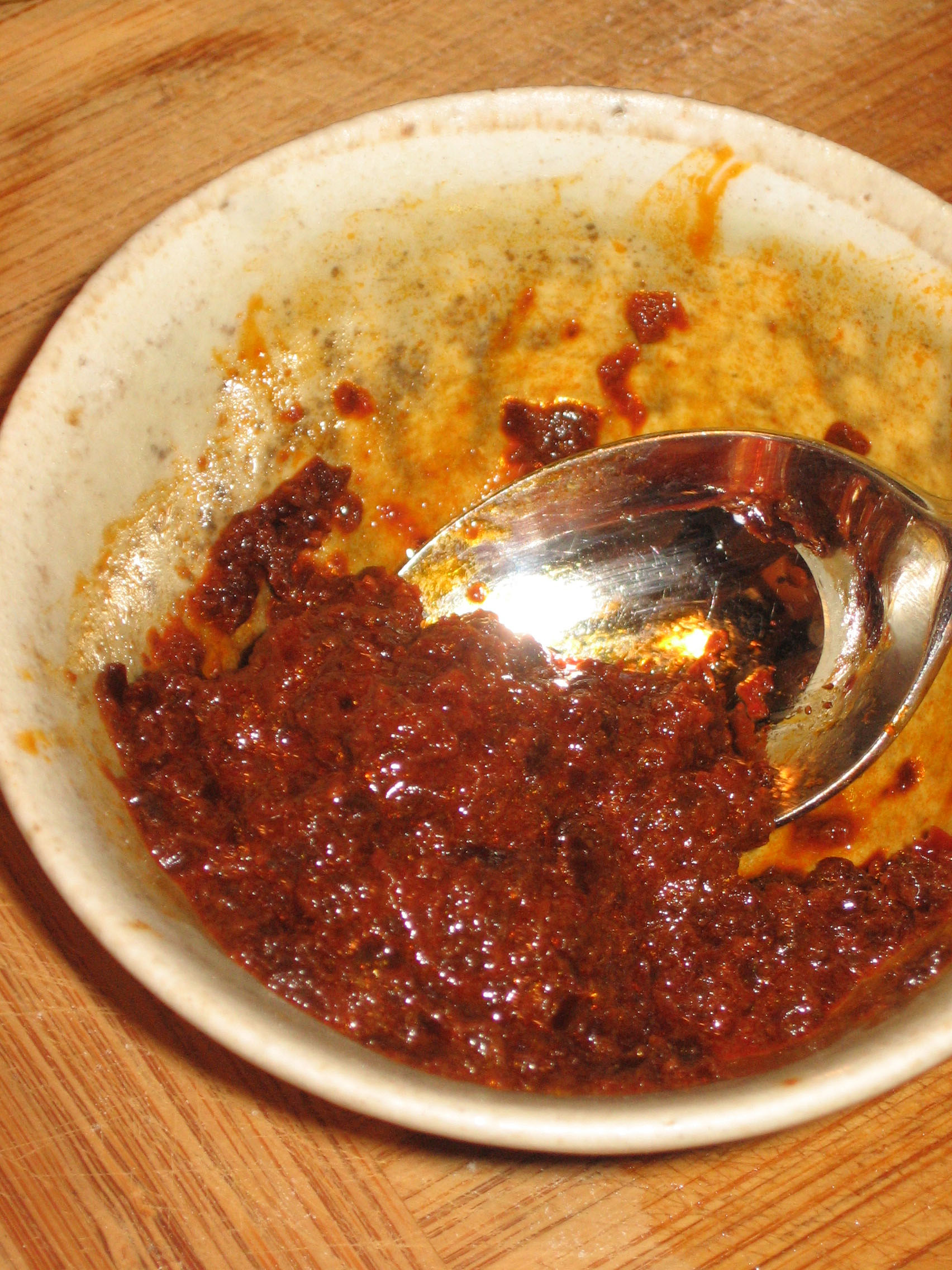
Harissa is a paste made from sun dried peppers and tomatoes, mixed with garlic, cumin and olive oil. It is my favorite condiment, delicious with so many things. Its spicy-ness adds flavor and depth! Heli taught me to mix the harissa with water and olive oil, “to open up the smoky flavors,” and to ensure that it mixes into the soup thoroughly.
Meski olives are packed in olive oil and Harissa. A few are fun floating in the soup.

Capers are salted and dried. Gathered from the wild in the mountains. I chopped them up a little bit.
The sundried tomatoes, which come in sheets (an entire tomato) packed in olive oil, are chopped up.

To top off the soup, add a little bit toasted and ground cumin.
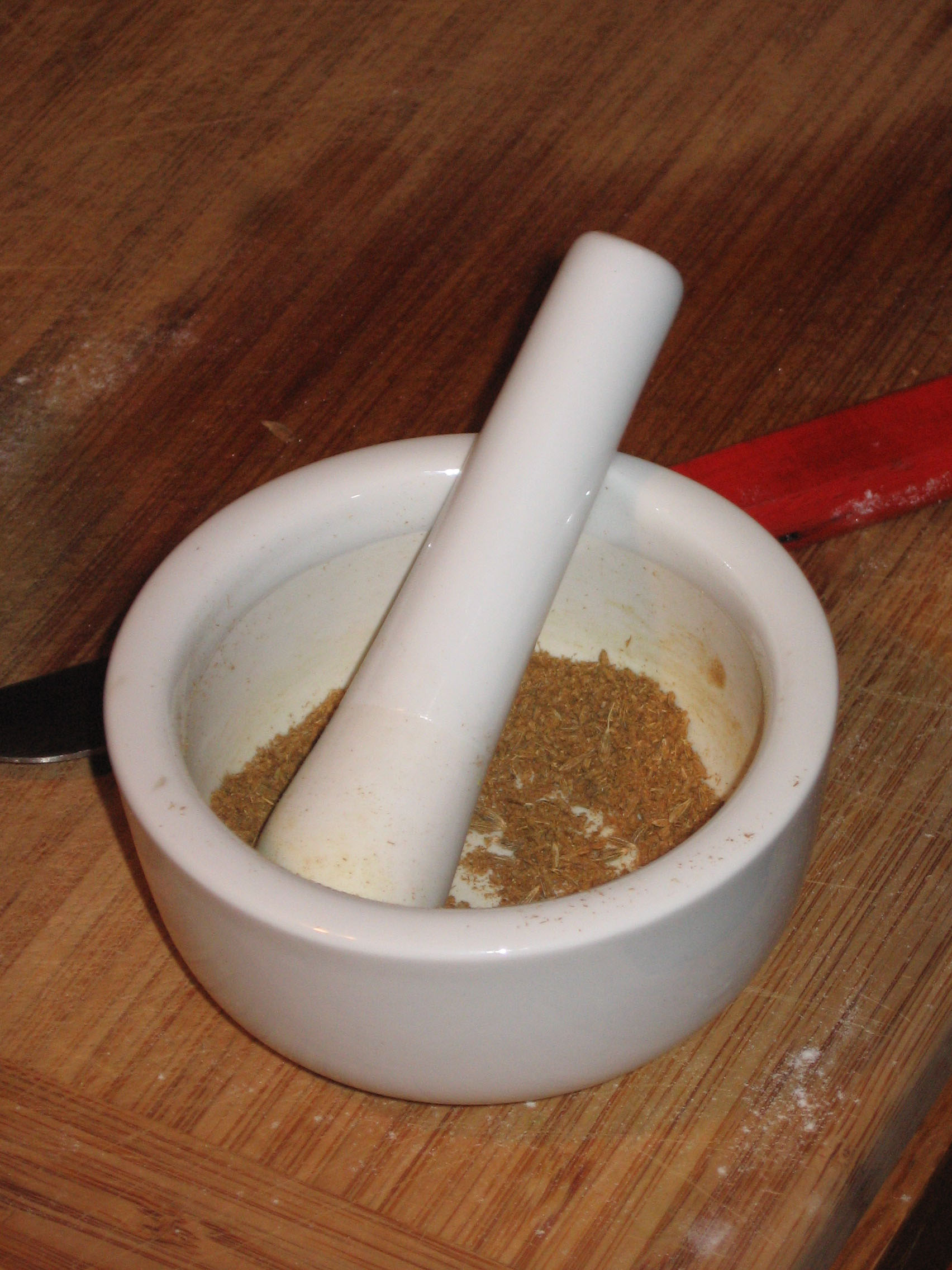
The soup is traditionally served over stale bread, but I didn’t have any, so I served it with a loaf of fresh bread. And a side of cucumber feta salad that my mom made. And a beautiful black pepper, poblano pepper, parmesan cheese cornbread that my dad brought over.

And endive and fennel with lemon juice, olive oil, salt and pepper. My favorite winter vegetable combination-something to remind me that plants are still green and growing somewhere…

babka
January 4, 2011
I feel like this should be my grandmother’s recipe. But it isn’t. I found it in Vegetarian Cooking for Everyone, by Deborah Madison. A babka, from my understanding, is a cake made with a rich yeast dough, and filled with various things. In this case, almonds, cherries, etc.
I started with the dough. It is a simple yeasted sweet dough, with a bit of sugar, sour cream, butter, and eggs. I mixed it with my mom’s Polish dough whisk, which is my new favorite kitchen tool. By far! The way that it incorporates the wet and dry ingredients is almost magical, and so much easier. I think it has to do with the way the wire is shaped. And the handle is lovely to hold, too. So well thought out!

I set the dough aside to rise, in a buttered bowl, covered with a tea towel. In a cold room, as I was going out for a little bit too long. I never seem to be able to match up my rising and baking times with when I can actually be home to let the dough rise, shape, bake, etc…
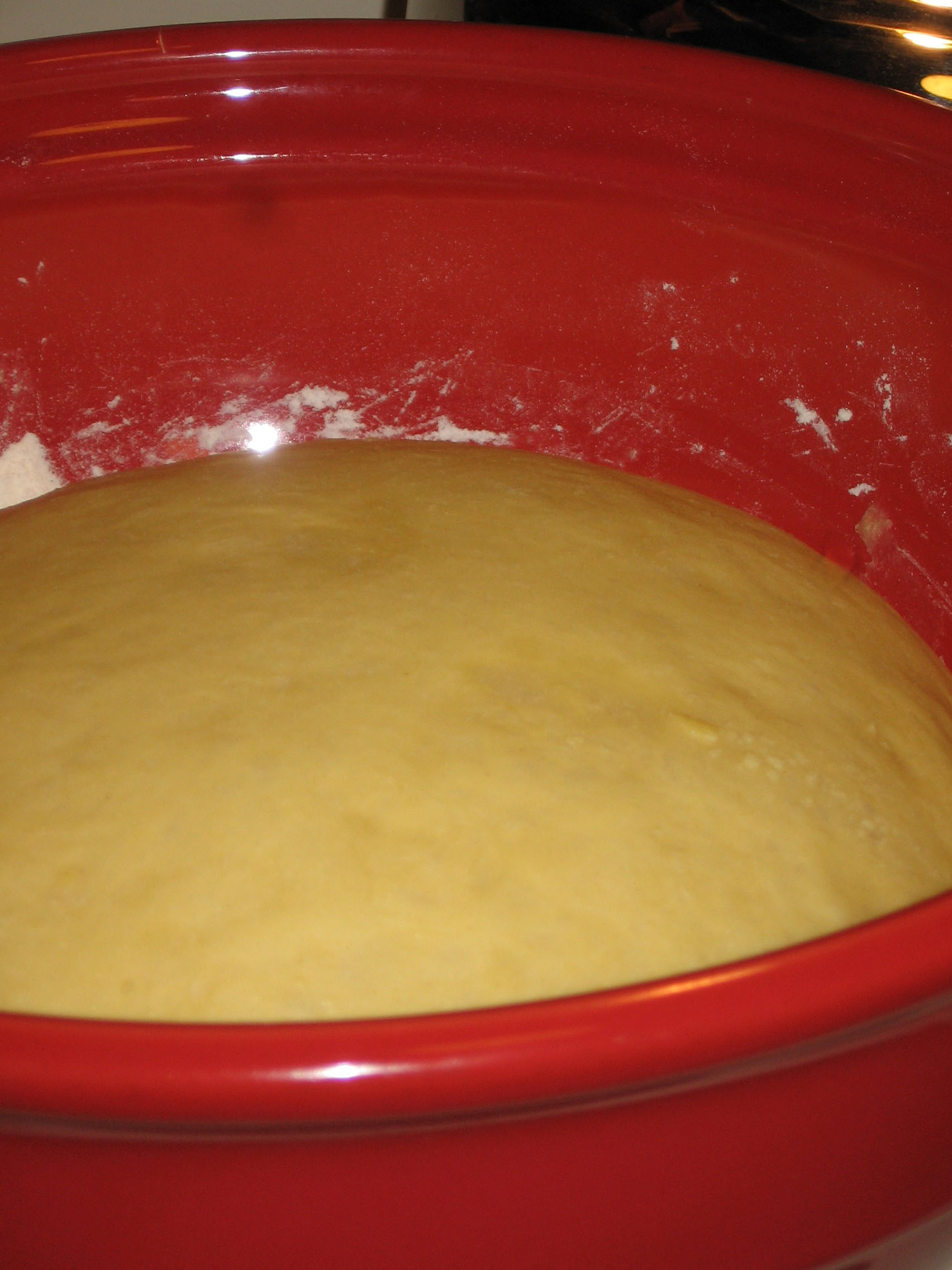
I made up the dough and filling, went out for a bit, and returned to a balloon of dough in my red bowl. It punched down nicely, and I shaped it into a large rectangle.
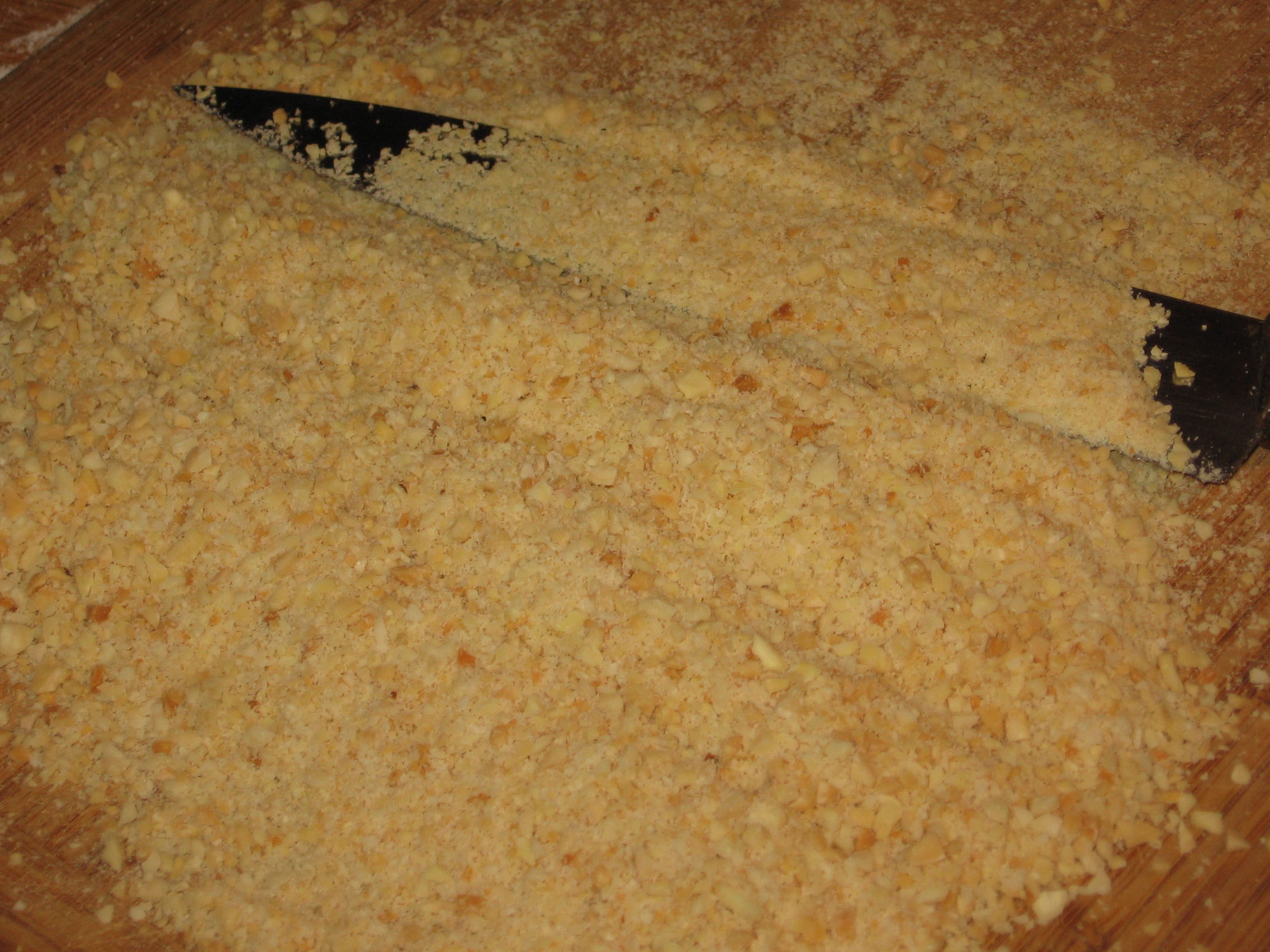
The filling is made up of finely chopped toasted almonds, chopped dried cherries, an egg, sugar, vanilla and almond extract. Oh, and butter!

I spread out the filling and sprinkled the cherries on top.
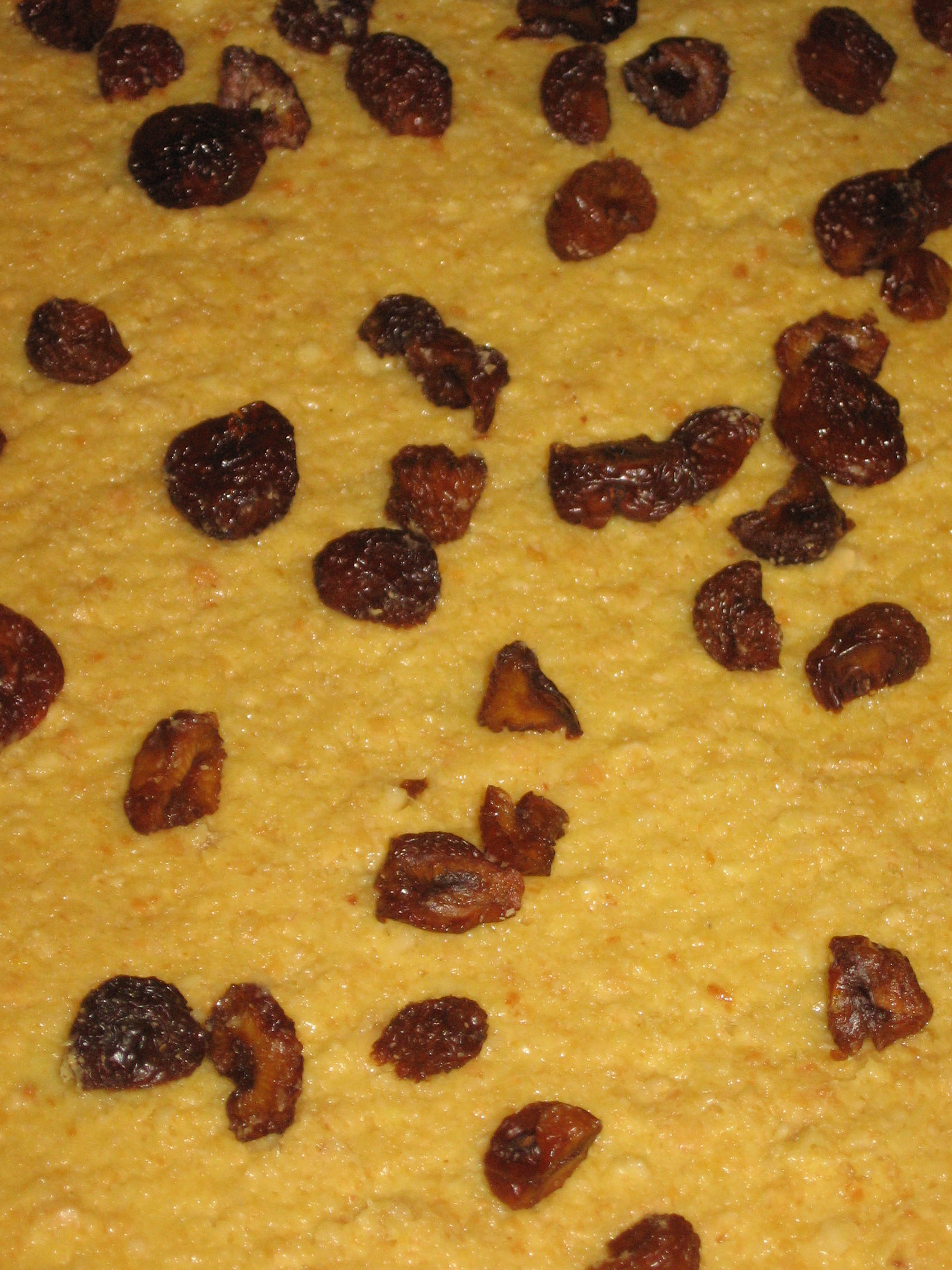
Then rolled the entire thing up into a log, and made a crescent.

And covered with a tea towel and set to rise again. This time more quickly, right above the fire.

And then into the oven. Bakety bake bake bake. I was tired, so I set the oven timer and went to bed, thinking that I would wake up when it dinged. I am not sure that I did… When I got up, it was still cooking, and ‘nicely browned’ on the top.
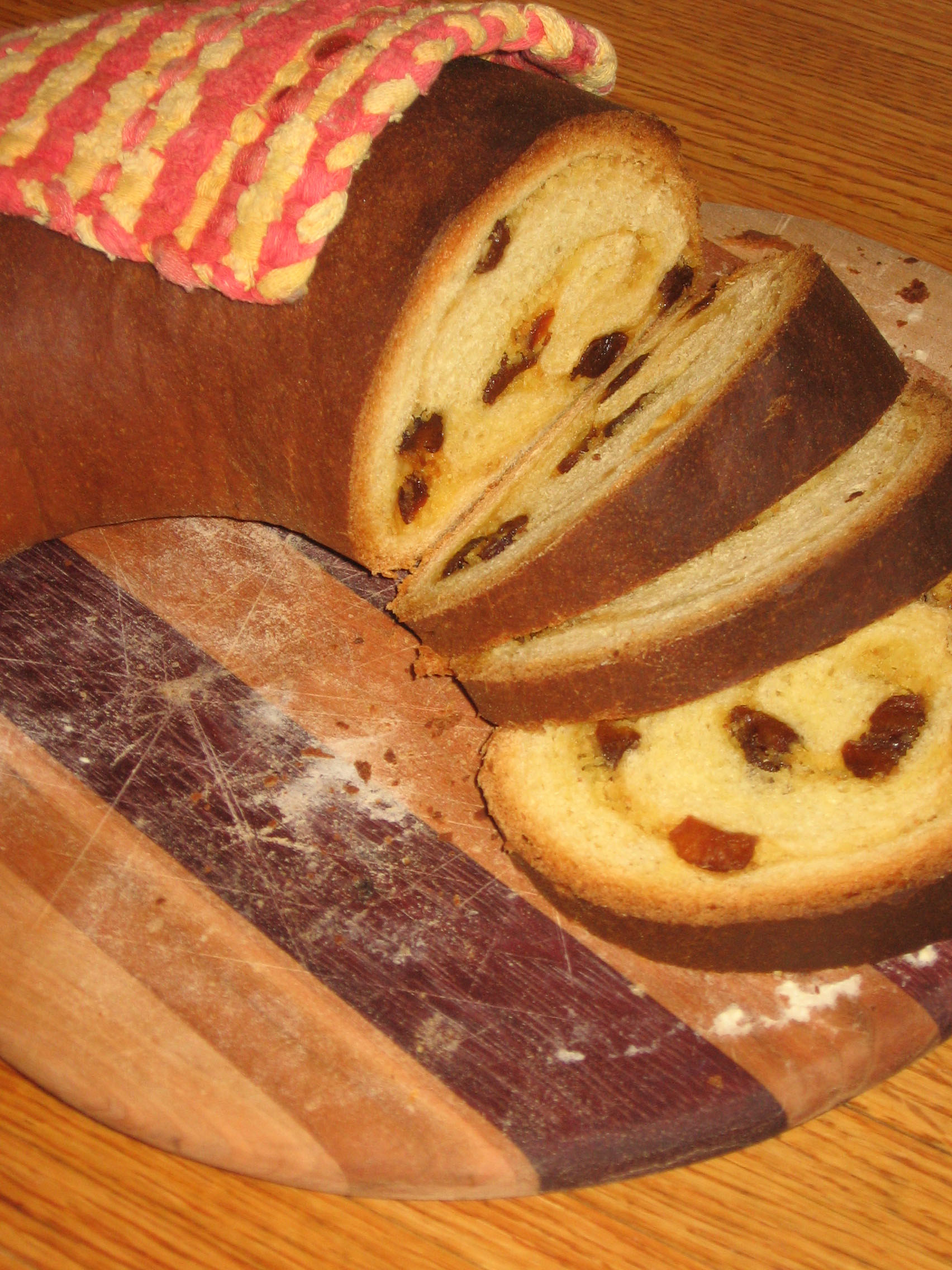
This years babka might be a little bit drier and crisper than last years, but still quite yummy. I need to have some coffee for it!
orange and sweaters
December 27, 2010

Here is another orange sweater. I just can’t help making them. I found the pattern for this in an old magazine that someone gave to my mom. It turns out that the someone is a friend of mine and she made the sweater and wore it out!
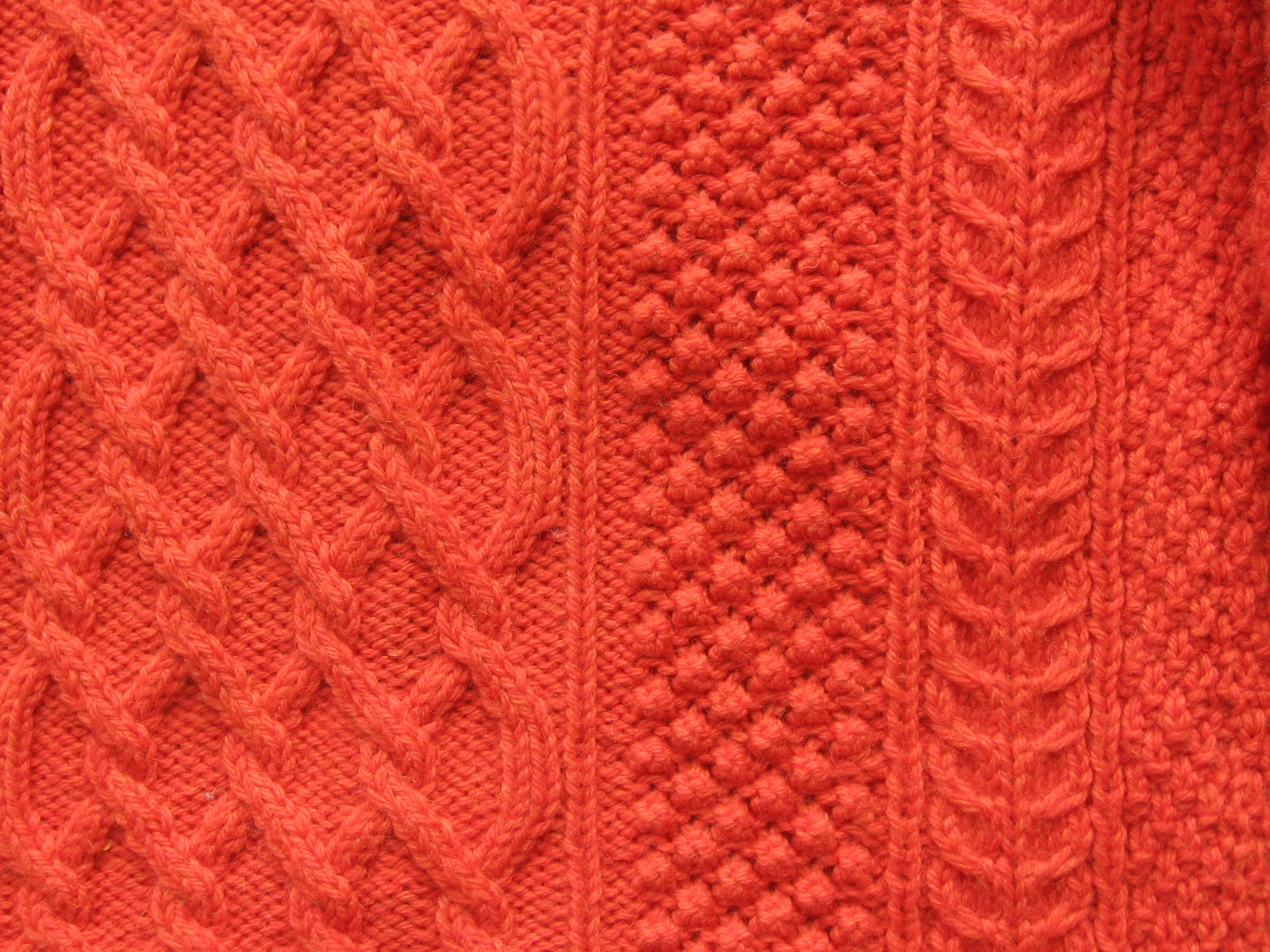
The sweater is made up of three cable patterns and double moss stitch. The first pattern is a fisherman’s cable, the second is called blackberry stitch (looks like little popcorns to me) and the third is called antler. I made a test swatch for all three patterns along with my gauge to get to know the stitches before I started the project. I also washed and blocked the gauge, which is super important. A tip from my friend Jeanne McCanless!

The sweater is pretty straightforward. No shaping on the body, which I like, and simple set in sleeves. Usually I need to sew my sleeves in a few times, but these sleeves went right in on the first try.
As I was knitting the sweater I became worried that it wouldn’t fit. Instead of waiting to sew all the parts together, I washed and blocked the whole thing minus on sleeve. The result was that I couldn’t exactly figure out where the second sleeve needed to be finished to match up with the first…and I think that I knit the sleeve cap four times…
I used Cascade 220, a relatively inexpensive yarn, and am really happy with the results. I was planning on making it in the traditional cream, but when this orange yarn came in I couldn’t help it…My sweater cost $42.37 including tax, which to me is a pretty good price for a wool sweater! (Minus the time…) I am looking forward to see how the yarn holds up to lots of wear. I have a feeling that it will wear really well.
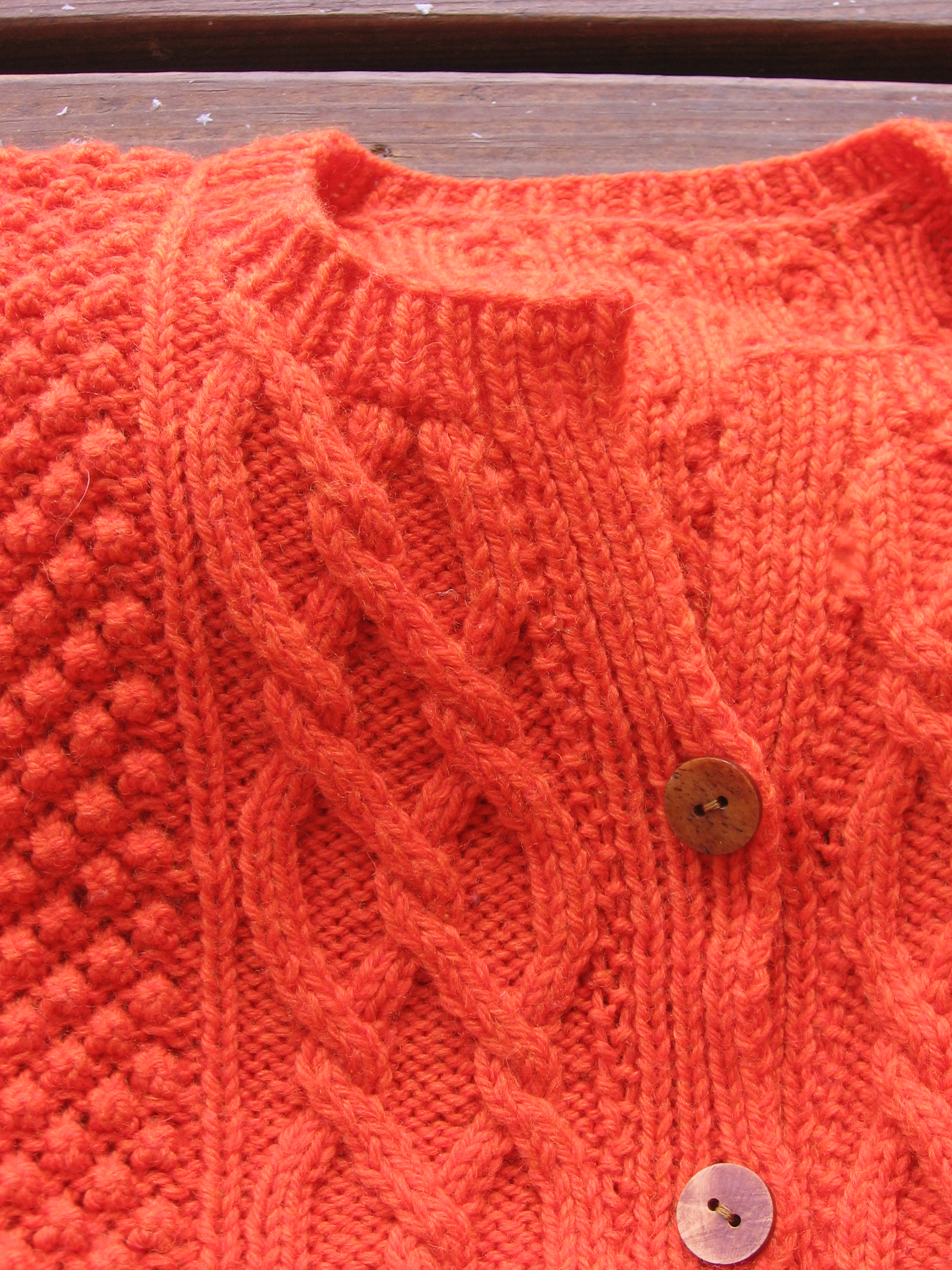
I found some bone buttons at the store. I am a little bit bummed as there were only six of them and I needed seven. I am going to look for a seventh, and until then I will leave the top button open at all times. The button band was sewn on after, and I think that I could have made it a little bit tighter and the buttons wouldn’t have pulled as much. I might go in and redo this part later….
www.athomestoreonline.com
December 3, 2010
I am happy to say that we have gotten our website, www.athomestoreonline.com up and running, just in time for holiday shopping!! Stop in to visit our site (or the store if you are in Iowa)!
Our website has a selection of our favorite store items, including Nicholas Mosse Irish Pottery, Burleighware from England, hand made baby slippers, Italian torrone, panforte, and panettone, Moomin books, mugs, and bowls from Finland, and much more! We are adding new items every day, so keep checking back!

borken pecan pie
November 25, 2010
Pecan pie, from a recipe from my dear friend Jeanne McCanless. Jeanne passed away last week, and we are all thinking of her, and all that she shared with us, taught us, and gave us. She is someone who I am particularly thankful for today!
Here is her pecan pie recipe. Due to a slight spelling error it has turned into “borken” pie, which is how I will definitely remember it.
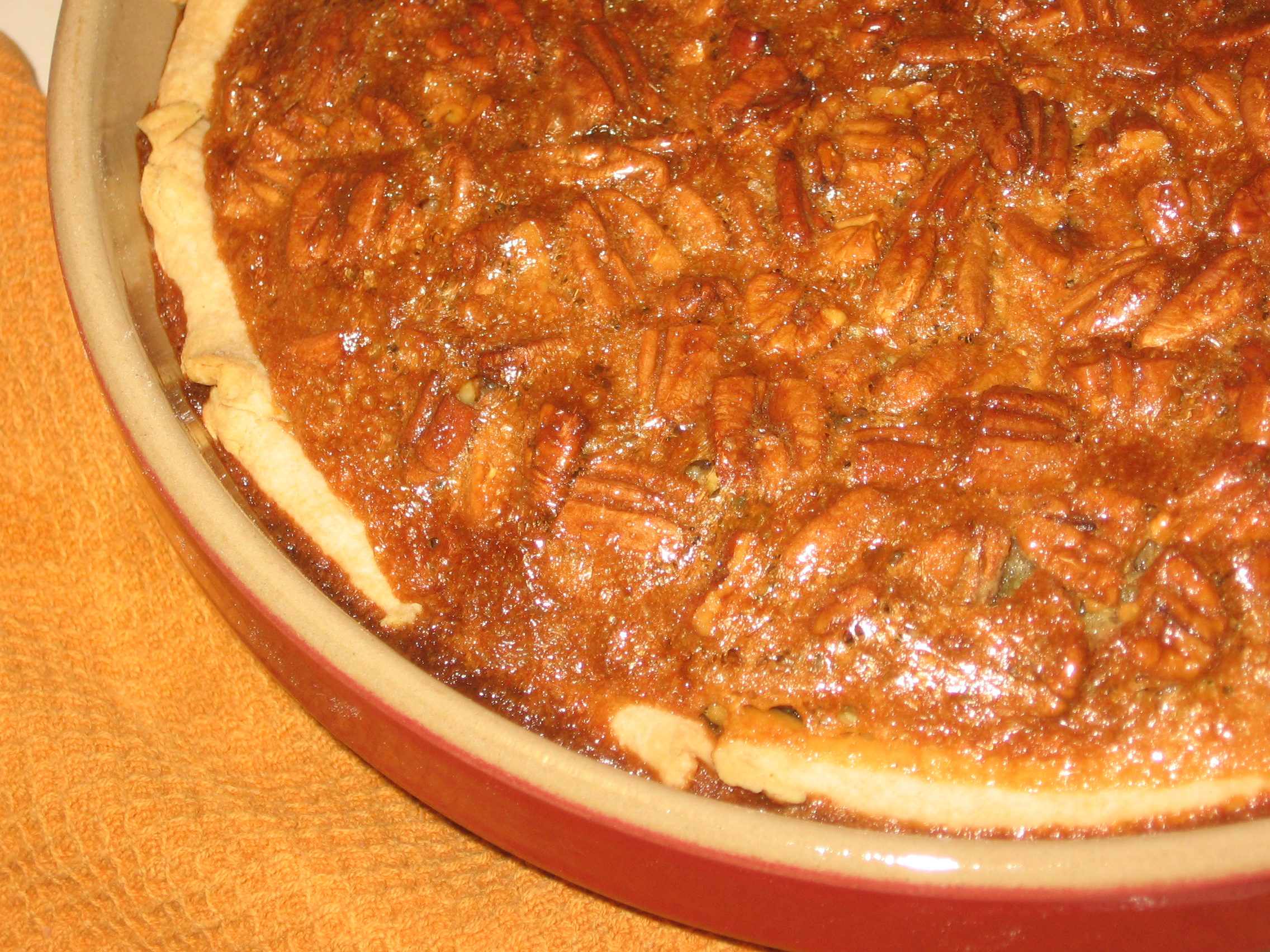
Utterly Deadly Southern Pecan Pie (Borken Pecan Pie)
4 eggs
1-1/4 cups clear Karo syrup
1-1/2 cups borken [sic] pecans
1 cup sugar
4 Tbsp. butter
1 tsp. vanilla
Boil sugar and syrup together three minutes. Beat eggs (not too stiff) pour in slowly the hot syrup, add the butter, vanilla and pecan meats. Turn into a raw pie shell and bake 350 degrees for 45 minutes or until set.
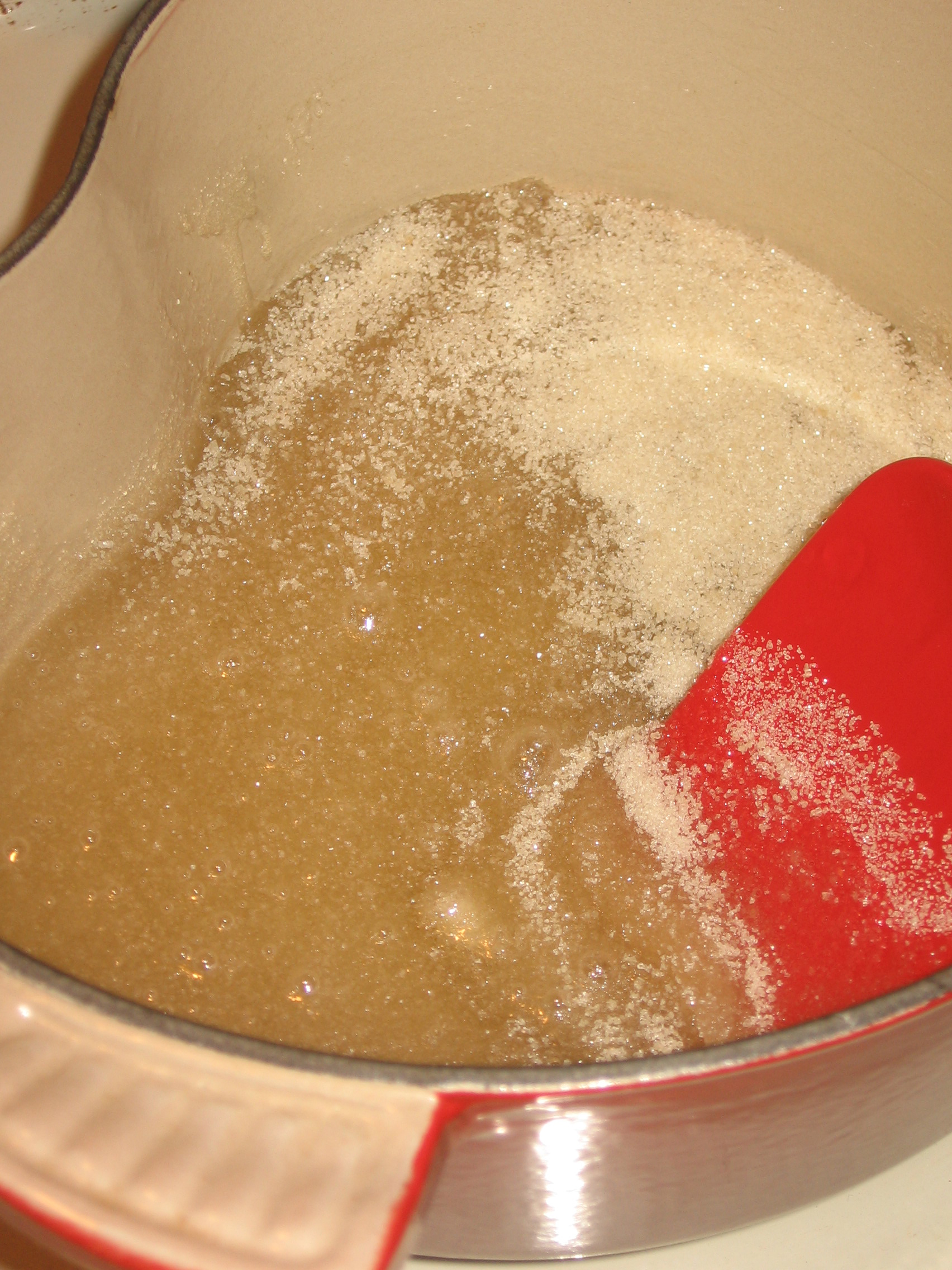
I didn’t follow the recipe exactly…which is typical. I was afraid to add the eggs right into the hot syrup, so I whisked the butter and syrup into the eggs, bit by bit. I also added an extra 1/2 cup pecans…

The pecans came from my dad. I think that he got them at the Dutchman’s Store, and they are this year’s crop from Missouri. Yum!
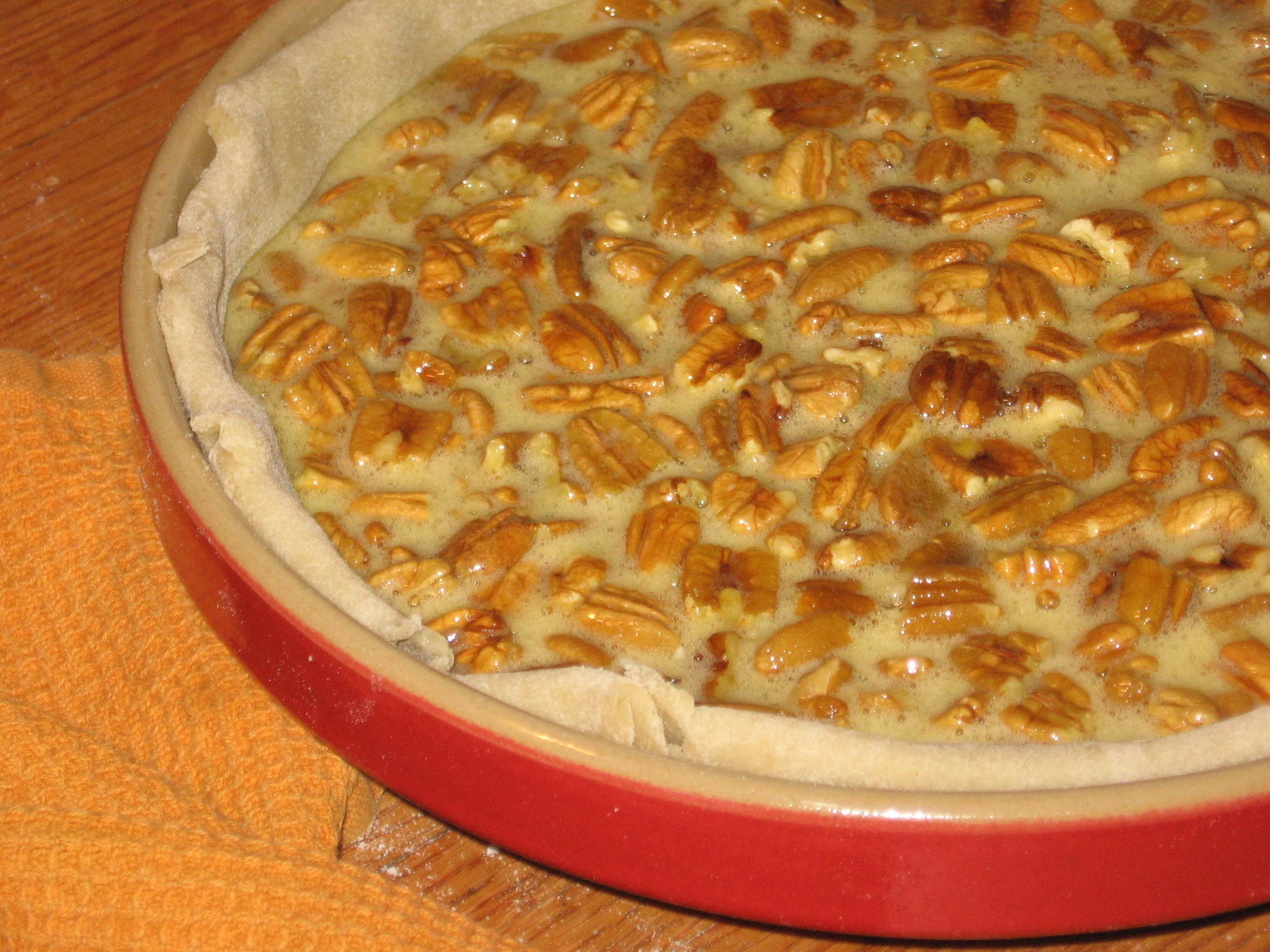
Jeanne got the recipe from a coworker when she was a telephone operator. According to Jeanne’s son Jamie, they would actually have the pie on Christmas Eve, as it is super rich! It would be a treat all by itself.
firewood structures
November 25, 2010
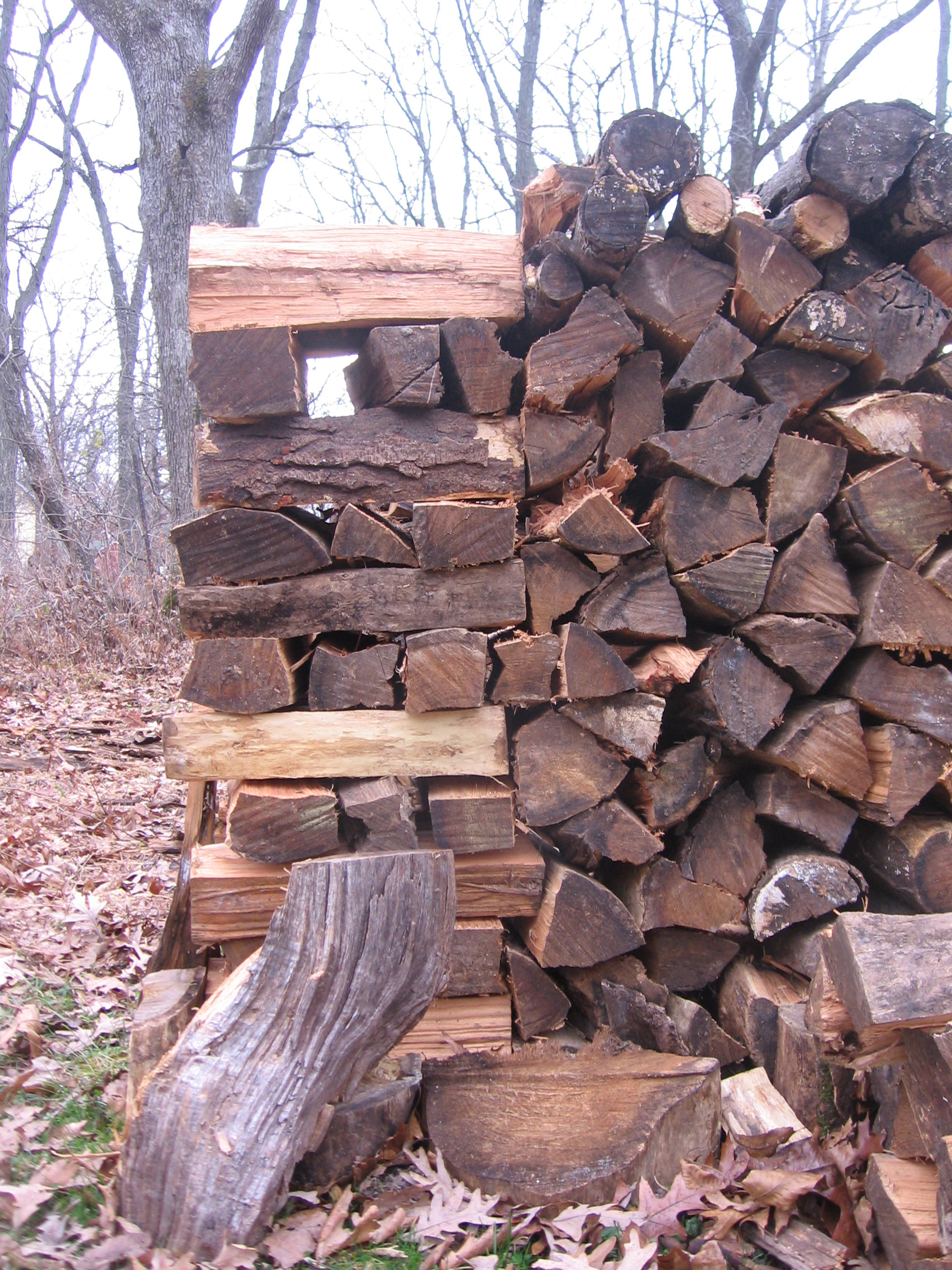
We collected a lot of firewood this year.
My favorite structure to build is a beehive. I am not sure where this style of firewood stacking originated, but I first saw it in Brighton (IA…). There is a u-pick Christmas tree farm there and they have some very beautiful stacks of firewood.
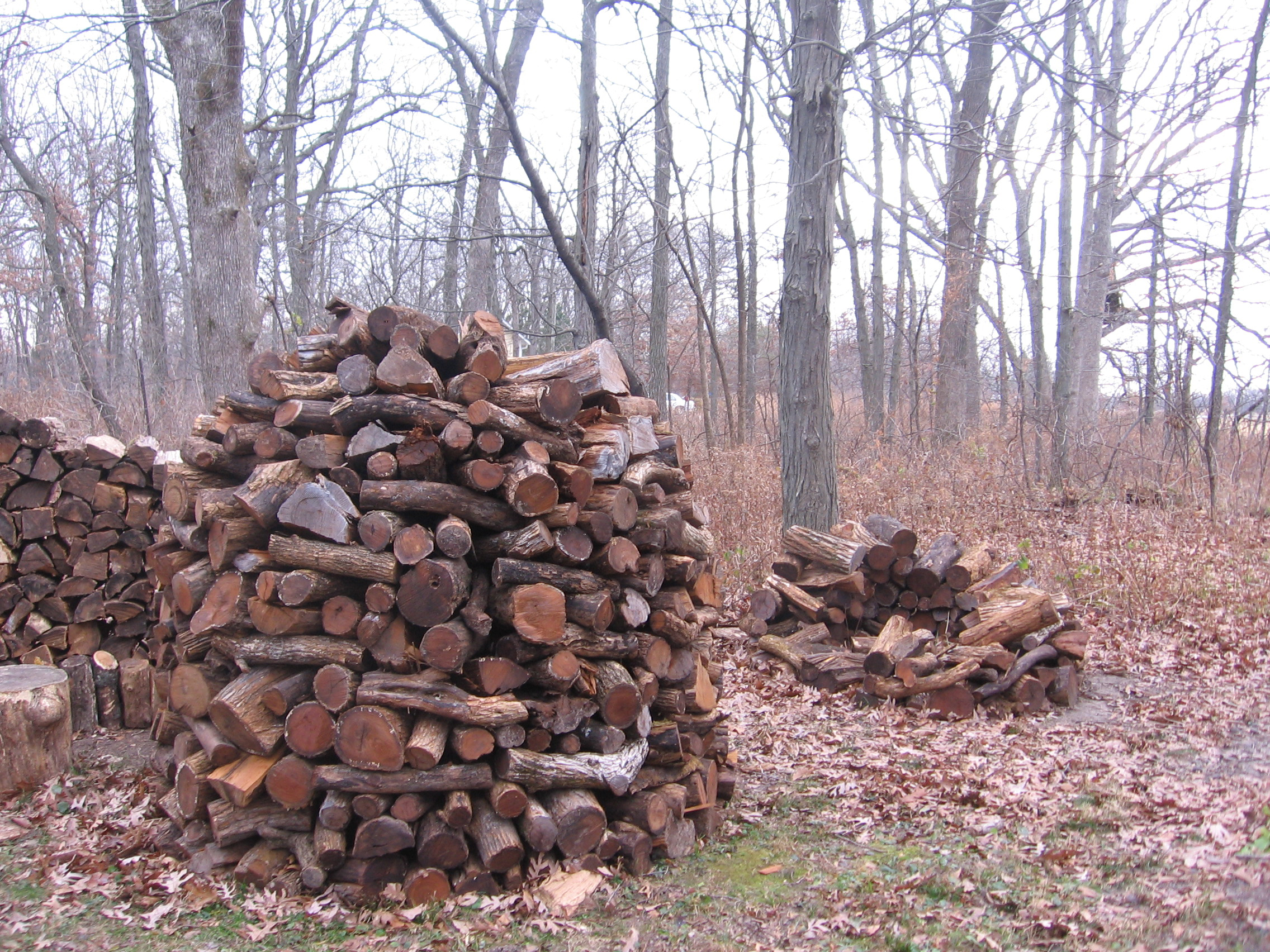
The trick to building a beehive (in my experience) is to keep the logs tilting towards the center of the shape. I do this by laying small curved logs perpendicular to the rest of the stacked logs. This raises the outside edge, and seems to create a sturdy structure. The tops are formed by laying the logs closer and closer the center, until they meet. I don’t know how this would work on larger structures, but it worked well for my hives.
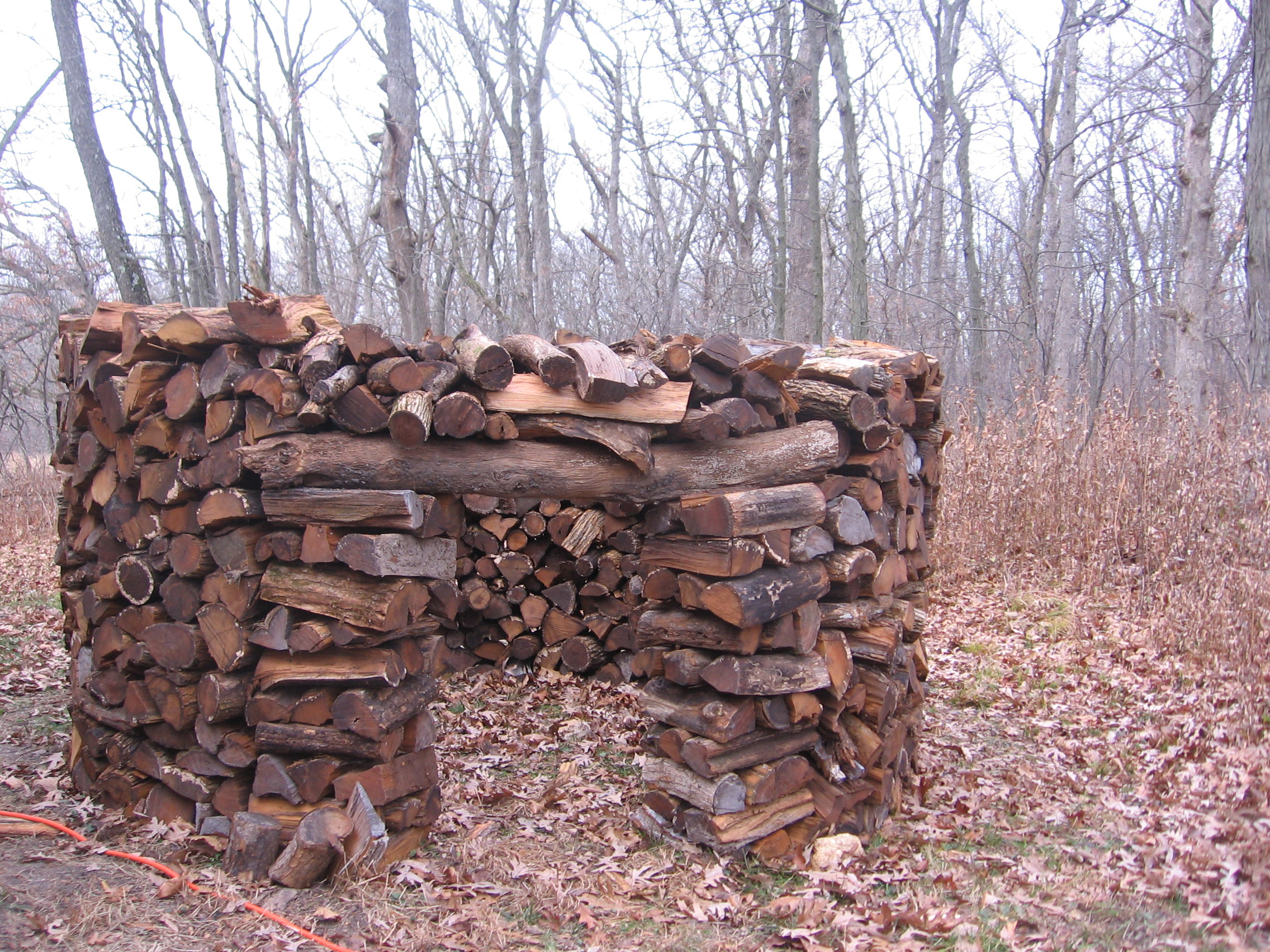
This is a circle house, inspired by some beautiful ancient ruins in New Mexico. I have plans somewhere down the line to put some sort of roof on it, but it might get used up first…

All the beehives and fences before the first snow. I can’t wait to see them covered!
honey, pears, and yeast!
November 13, 2010
A few months ago I had an excess of pears and apples, and an interest in making mead. My friend Brenda makes mead, and it is quite yummy! I called her up, and she sent me a box of supplies right away!!
The steps are simple, but they do need to be followed precisely. Sterilize everything within an inch of its life, except for the fruit peels, which contain natural yeasts. Chop up the fruit (I used apples and pears in one batch and pears and lemons in the other), mix with yeast, and stir in a plastic fermenting bucket. Then cap it with an air lock, and let it ferment. I left my bucket in the basement for about 2 months. (No pictures of the first steps…)
Yesterday it was time to start the second step. The racking process. It is my understanding that this process is to rid the mead of sediments. It is done initially to get rid of the fruits, etc., and can be done again at a later time to remove more sediments.
Step one was of course again to sterilize everything! I washed my plastic tubing, my airlocks, a big spoon for scooping out the fruit, and of course, two new glass gallon jugs.

Then it was time to open the fermenting buckets. The smell was sharp and a little yeasty, but not unpleasant. I carefully scooped out all the fruit, which had sparkly consistency, almost carbonated. There were a few quite rotten looking pieces, but mostly they looked okay.

Next step was to set up the siphoning system. Very simple and effective workings of a plastic tube. I placed the bucket on the counter, and the empty glass jug on the floor, and siphoned the honey colored mead from the top bucket to the bottom. Everything worked well, until I managed to overfill my jar and spill mead all over the floor…
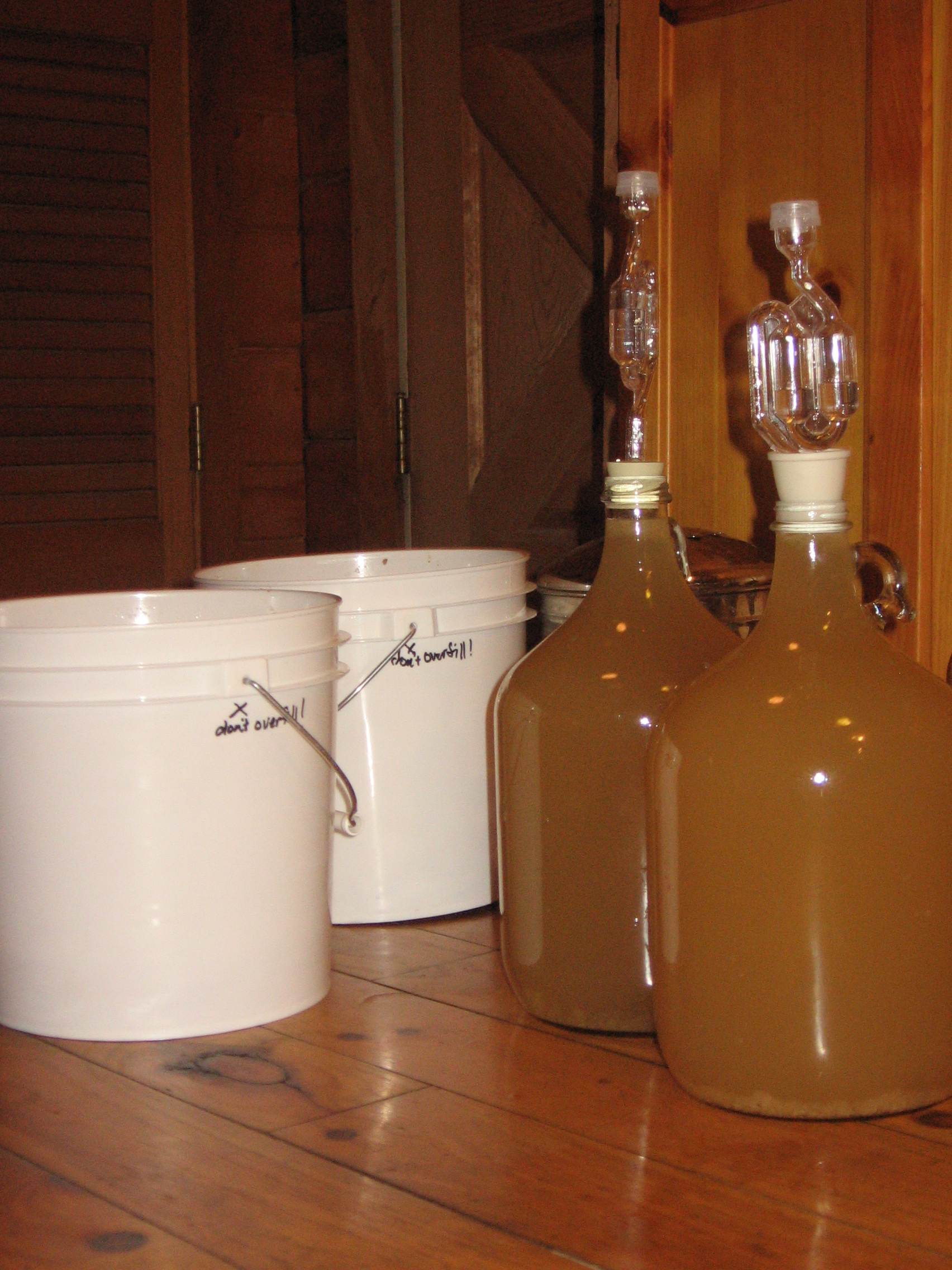
Now the mead is safely in glass fermenting jars, with airlocks in place. Back to the basement for another 6 (or 8, or 10?) months until the mead is ready to be bottled! I tasted the mead as I was siphoning, and it was actually rather pleasant. And the rich honey color of the liquid is lovely to look at!
 living in the woods and making stuff


