when in minneapolis, pick blueberries
July 18, 2010

I drove up to visit Swati in Minnesota last night. Just about the first thing we did Saturday morning was go and pick blueberries. We wanted to bake a pie, and figured that we should use what was fresh and pick-able.

We got to the berry patch around ten, and apparently it was a busy day, and we were late! Fortunately they found us a row to pick berries, and we got going. We noticed that there were more berries on the bushes to either side of us. After we finished our row, we went back to the house to ask for another one, and they said there weren’t any, and to look in our row for more berries…we took the opportunity to jump a few rows over and RAID.
We got a lot more berries that way, browsing the vacant rows.
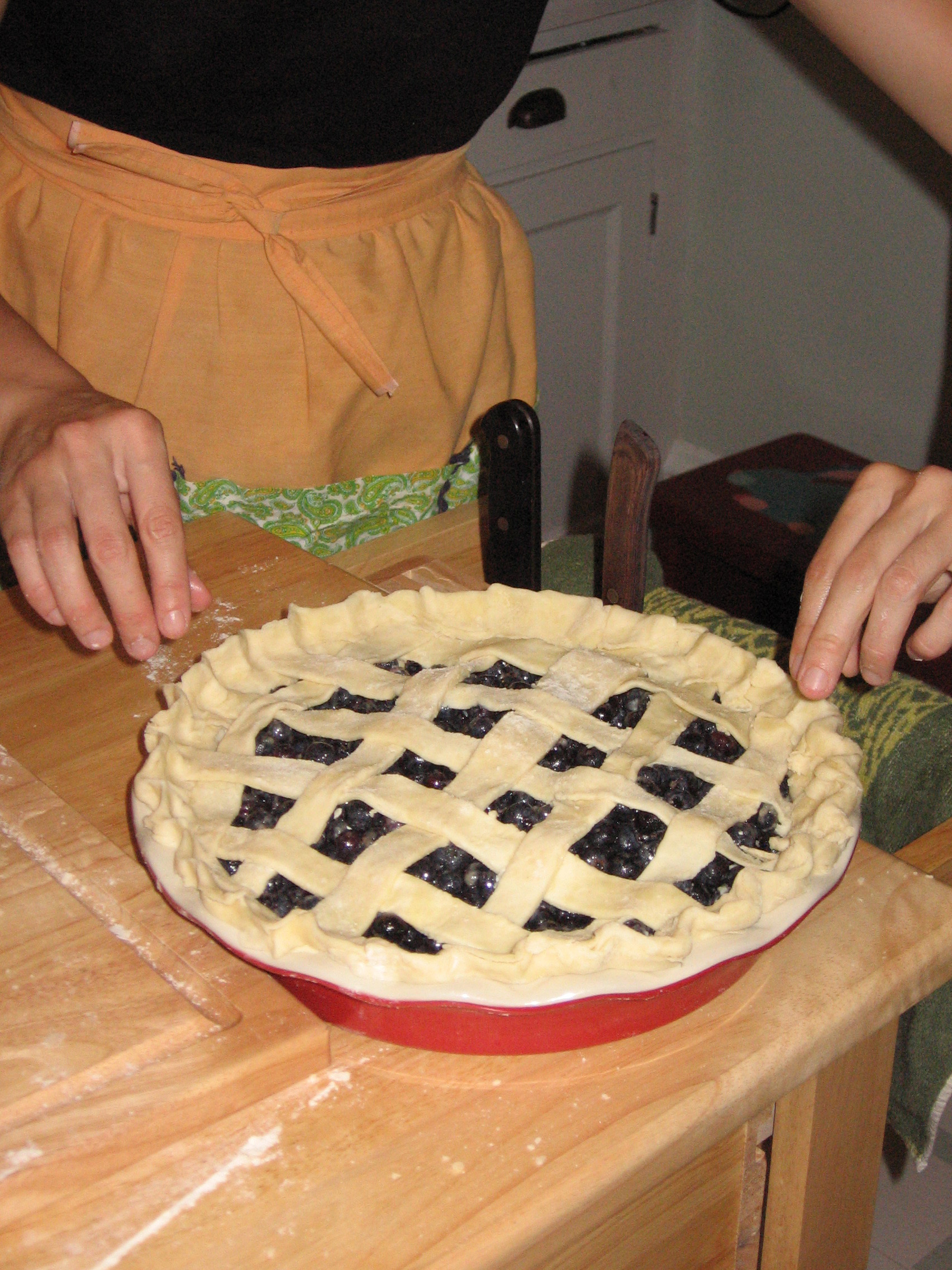
When we got home, we promptly ate berries with cream. Then we baked a pie.

We ate pie for dessert, then for breakfast. With vanilla ice cream.

roasted vegetable tart
July 13, 2010
A customer has been telling me about this tart for a while. She was in the store this morning, and we talked about it again. The basic directions are to make a tart with a cheese layer, then top it with roasted vegetables.
On the way home from work I picked up a package of feta cheese, a tub of ricotta cheese, and a box of butter.

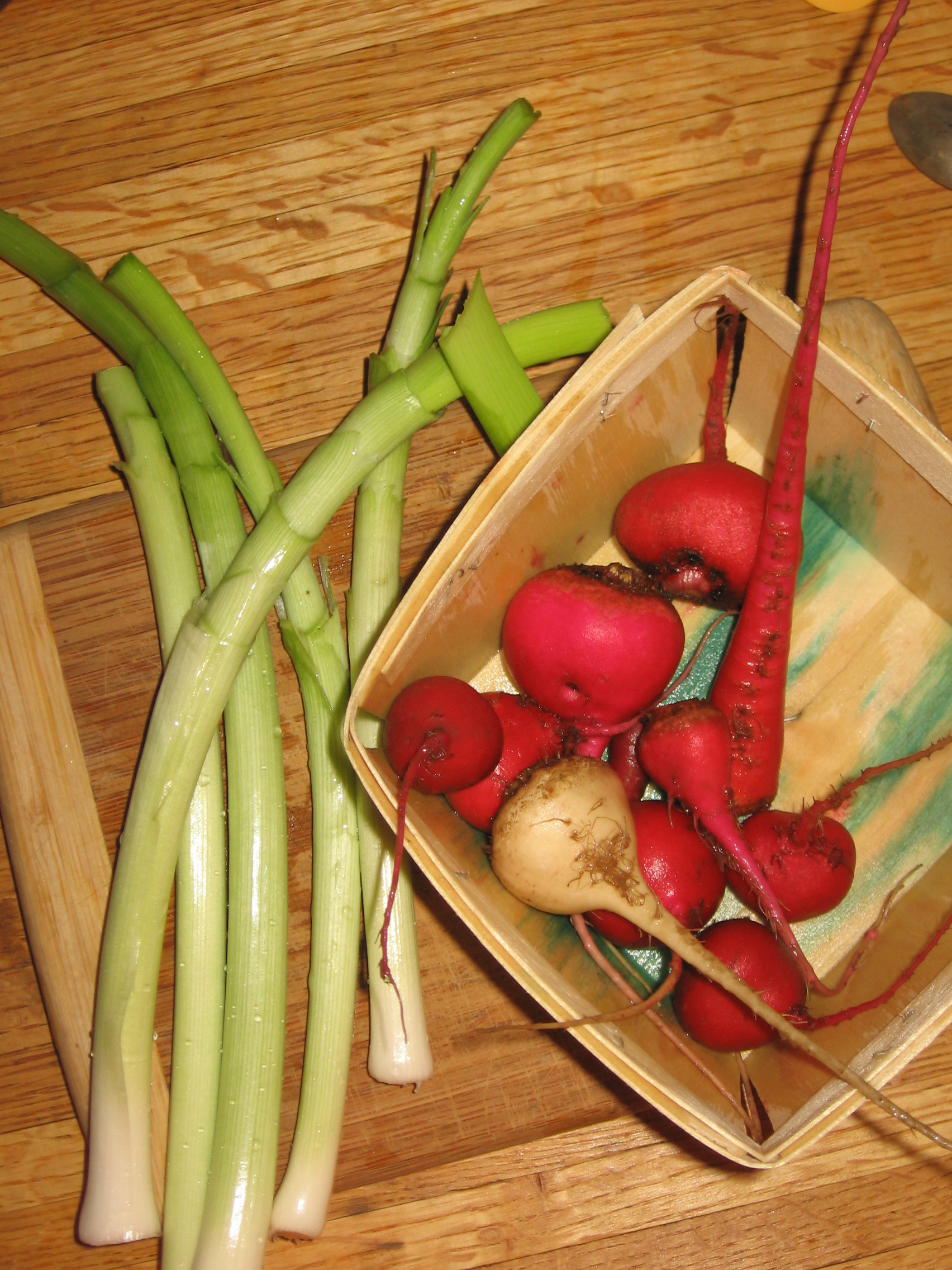
I raided my fridge, my mom’s fridge, and the garden for fresh vegetables and herbs. Beets, basil, eggplant, zucchini, leeks, thyme, corn, and tomatoes. All from the garden, market, or csa. We were loaded with stuff. I washed and chopped up the beets and leeks and put them in my cast iron casserole and started roasting them. Then I made the dough for the crust. It needed to chill in the fridge for a while, so meanwhile, I peeled and chopped the eggplant and zucchini, and added them to the roasting vegetables, one at a time.

Next I mixed up the base layer of the tart. A package of feta cheese, 3/4 of a tub of ricotta cheese, and a little bit of prairie breeze cheese. To this mixture I added some chopped pickled pimentos, a handful of chopped basil, and some black pepper.

Time to roll out the dough and prebake the crusts.

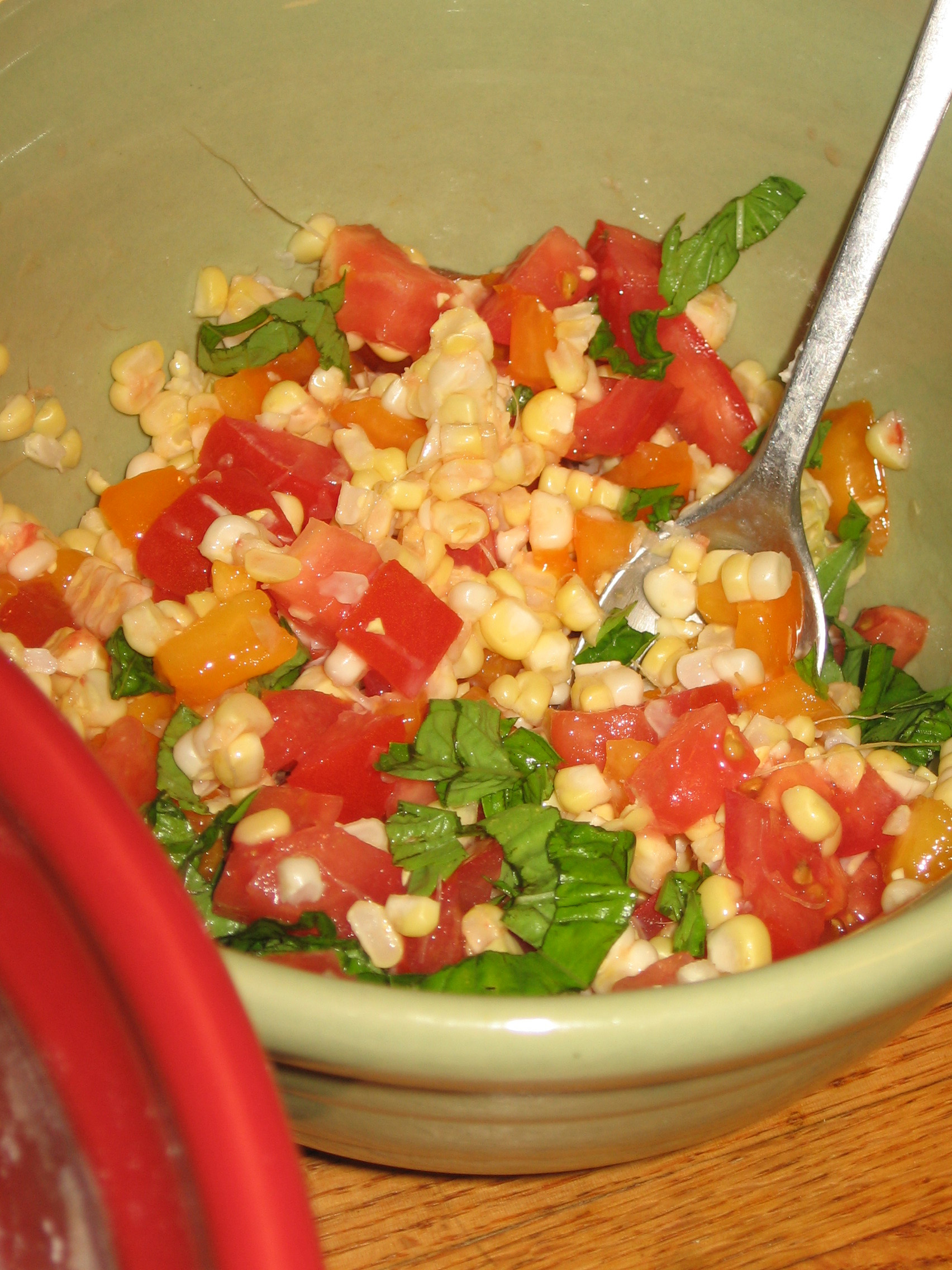
I made two crusts, and put them in the oven for a little while first to bake so that they were nice and crispy when I was finished. While they were baking, I chopped some tomatoes, and cut the kernels off of a few ears of corn. I sauteed this in butter, with fresh basil and salt.
When the crusts were finished baking, I took them out and layered the filling. The cheese mixture first, then the roasted vegetables, finishing with the corn and tomatoes for color.

I put the tarts back in the oven, and baked them for about an hour (I think..). I took them out and served them right away..they probably should have sat for a few minutes to settle first, but I was a little behind schedule…
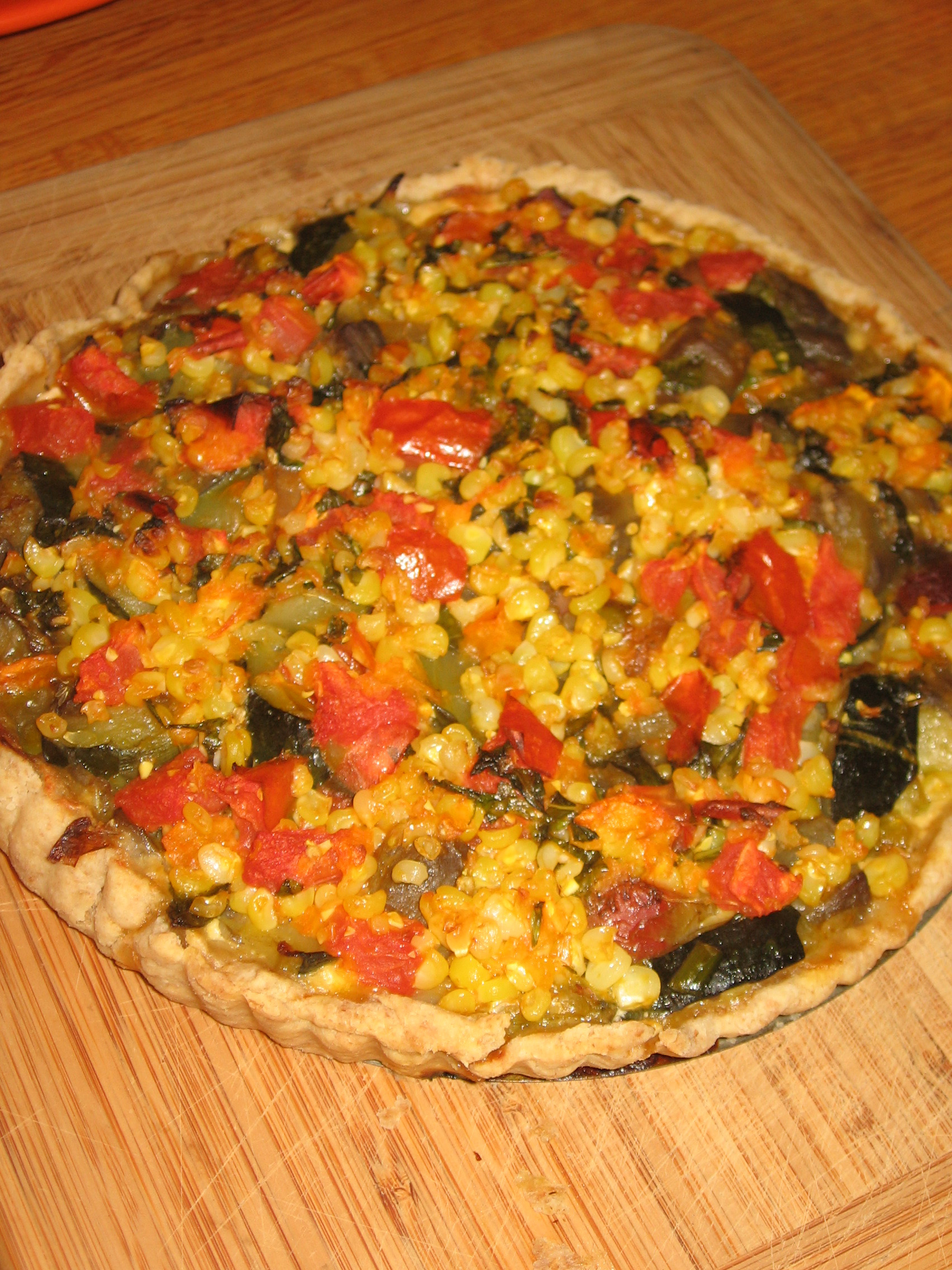
Just a little note: I had a few pieces of tart left and put them in the fridge overnight. They tasted way better cold and the next day!!
pickles for jeanne
July 10, 2010
My friend Jeanne and I were talking about pickles the other day, and she told me about a recipe that her mother used to make. Mustard pickles. 2 quarts cucumber, 2 quarts cauliflower, 2 quarts pearl onions. Covered with a mess of vinegar, sugar, mustard, turmeric, and flour. The recipe calls for a gallon of vinegar! (I cut the recipe in half…)

When I told my mom about the recipe, she said that my grampa used to make the same pickles, or a slight variation. We looked in Joy of Cooking, and they were right there, too, again slightly different.

I followed Jeanne’s recipe pretty much exactly. I went to the market this morning, bright and early, and picked up some small onions, pickling cucumbers, and cauliflower. I took them home and cut, cleaned, and blanched them in boiling salted water. Then I strained and cooled them, and they sat in the fridge for the rest of the day, draining off any excess juices. (The recipe calls for cooking them and then letting them drain over night. I looked at several different recipes, and each is a little different, cooking some things more than others, etc.)
When I got home this afternoon, I started the canning pot going and made the paste of sorts to pour over the vegetables. Vinegar with sugar, mustard, turmeric and flour. I mixed the dry ingredients together and then added some vinegar to form a thick paste. Then I added this to the rest of the vinegar in the pot and heated it until boiling.
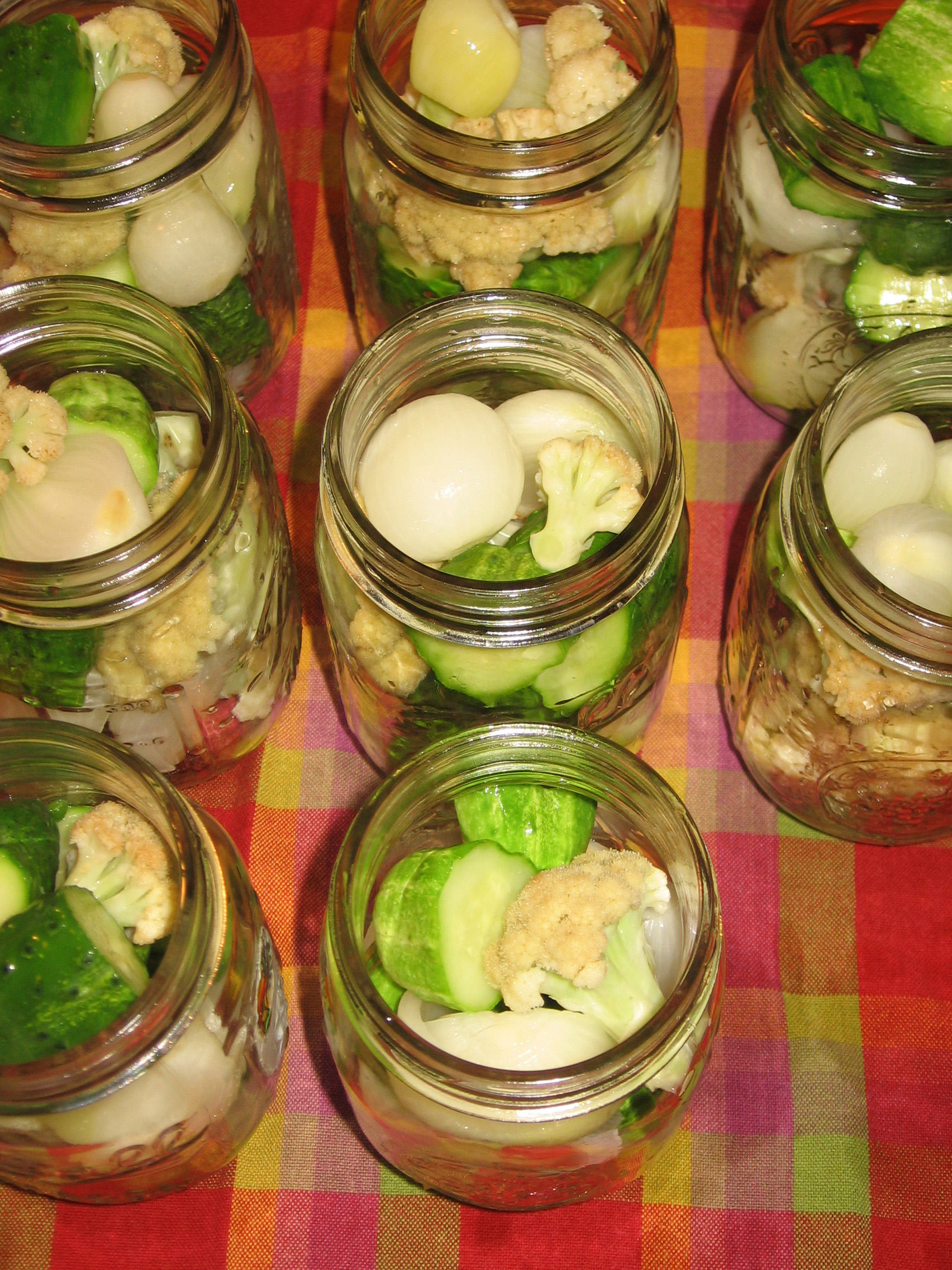
Meanwhile, I took the drained vegetables out of the fridge and divided them between 8 pint jars. When the vinegar mixture was just to boiling, I poured it over the vegetables, sealed the jars and processed them as usual.

black currant hedge
July 10, 2010

There is a beautiful brick wall that my grampa built around the stairs to the basement. My front yard is north facing, tree filled, and pretty shady (although sunny right now in the middle of the day in the summer..). The space in front of the brick wall has been a convenient resting place for dead leaves, twigs, and spiders. A friend of mine gave me a bunch of black currant plants from the bushes in her yard, and I decided to try to create a currant hedge. I love currants! I can still remember the first time I had a big wooden basket of them, in the train station in Switzerland, with my best friend. They are a joy to eat, and the idea of walking out my kitchen door to a patch of currants is lovely!
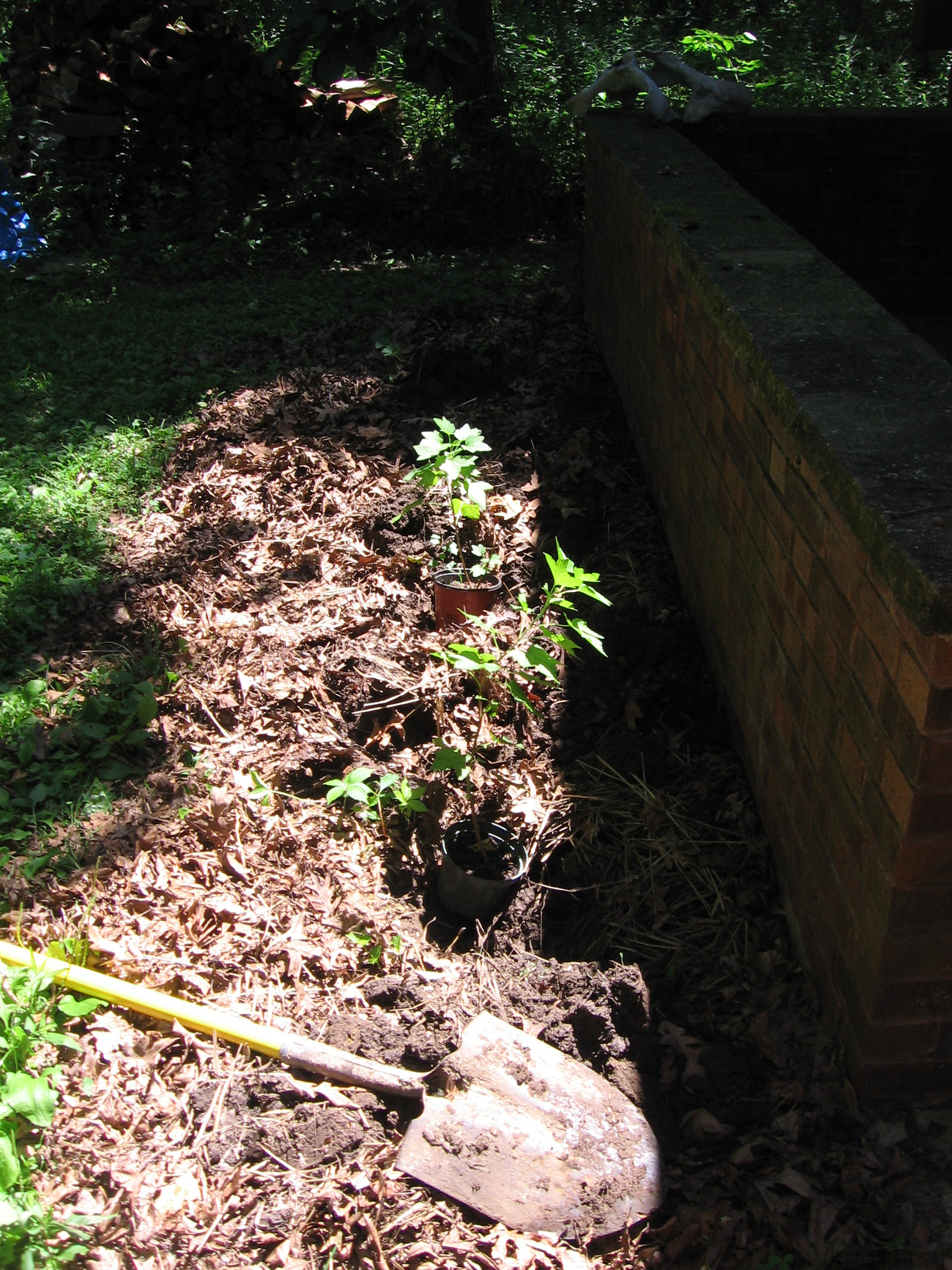
So for now, there are four plants. Two tiny ones, and two a bit bigger (maybe one year and two year sprouts?). I planted them 36 inches apart, about a foot or so from the wall, and I will see what happens. According to my limited research and knowledge, currants like sun, but are pretty shade tolerant. This might be the perfect spot for them. As usual, it takes me a great leap of faith to plant things like bushes and trees…I am always curious as to whether they will “take.”
finished tunic
July 9, 2010

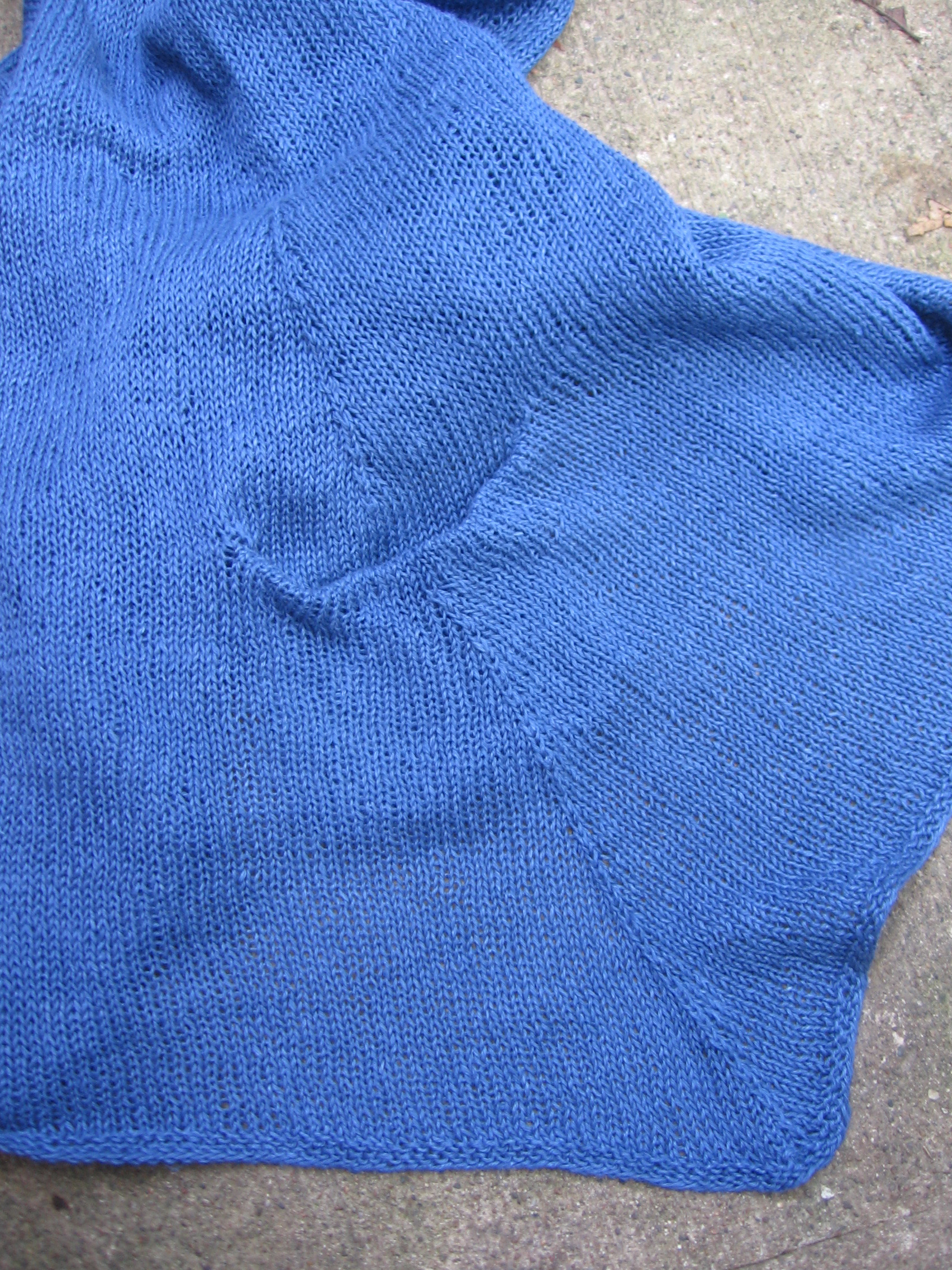
Last night I finished my first (?) tunic (liesl from cocoknits.com), sewed in most of its ends (not for the shoulder seams as I wanted to make sure that I liked the armhole length) and blocked it. I washed the garment in wool wash, and then pressed most of the water out onto towels. I have been dehumidifying my house the past few days (it is super humid here and I don’t have air conditioning) and so I left the tunic to dry under the dry hot air stream from the dehumidifier.
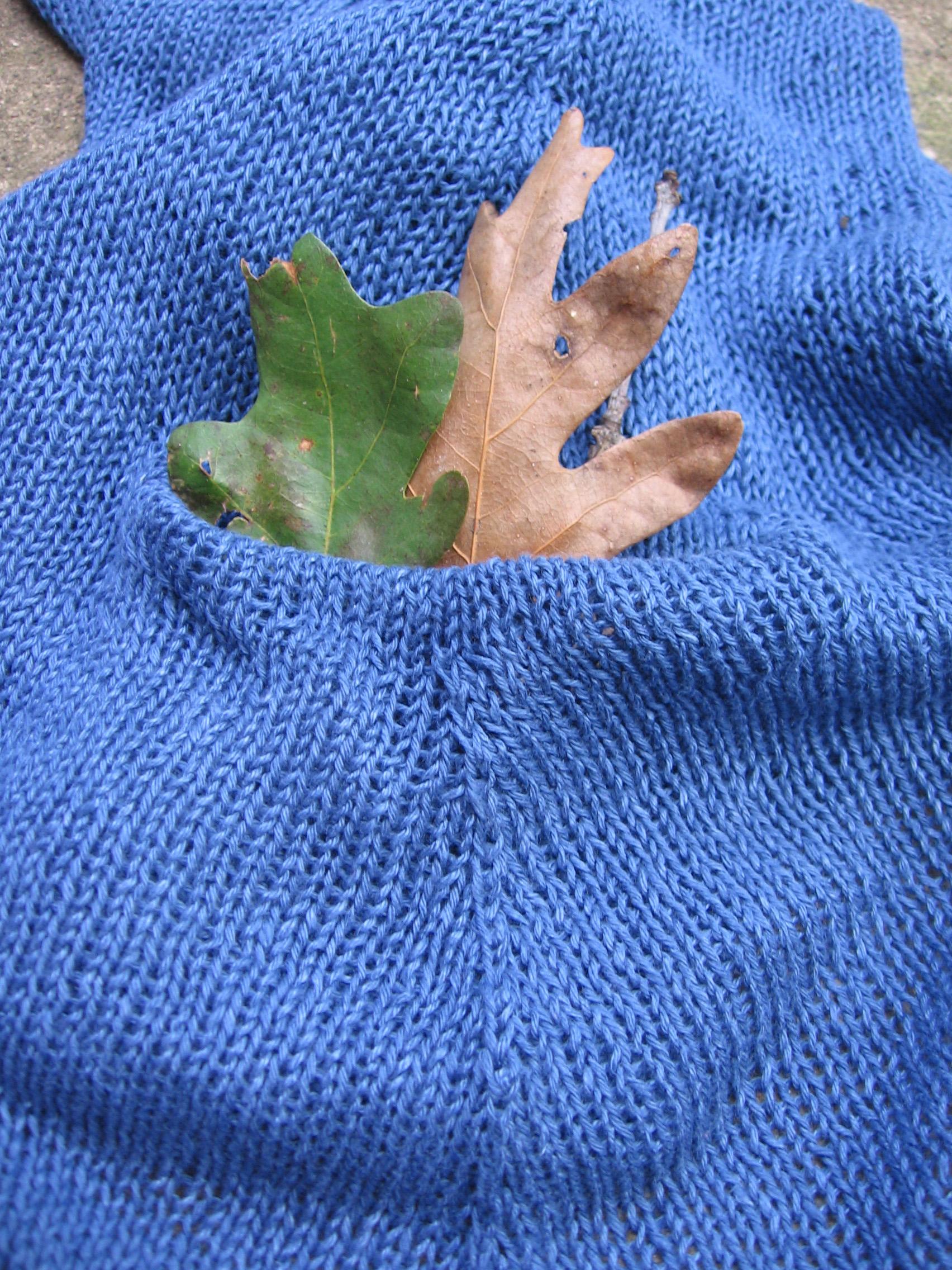
The pockets are my favorite part. I worked about 9 or 10 inches of the bottom, and then using a smaller needle, knit back and forth on the pocket stitches (about 30 on either side). After a while, I picked up the original garment and continued knitting.
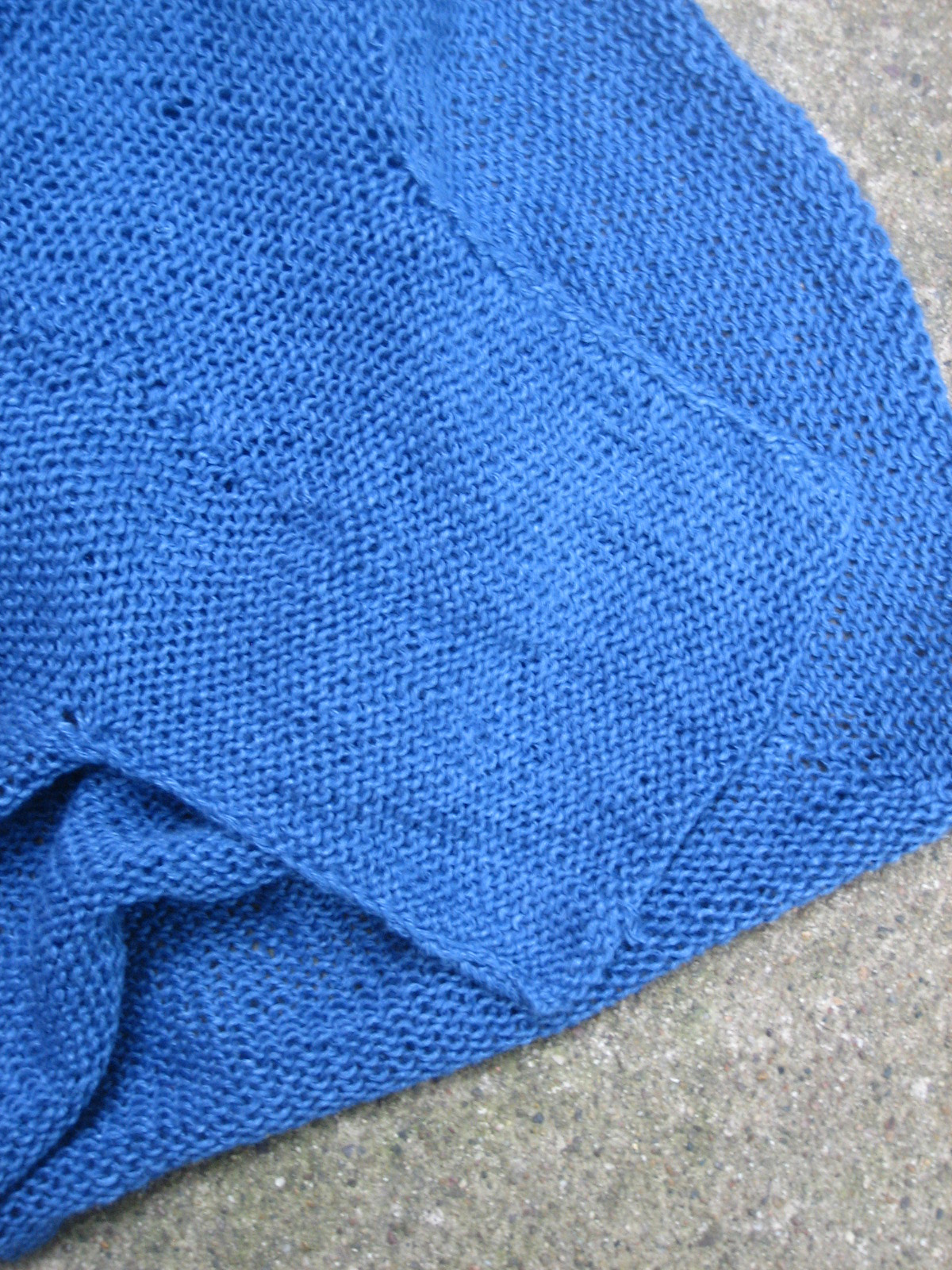
(The pockets are basically extra loops of knitting, which I later sewed together.)

Around the neckline, the pattern called for using a diagonal bind off, which created a beautiful continuous line (no need to go back and pick up stitches!). The front straps reach around to the shoulder seams, which rest on the back of the garment.

The yarn is Louet Euroflax linen, sport weight, in french blue. One of my favorite yarns, one of my favorite colors.
a very large jar of soon-to-be-pickles
July 6, 2010

This is my first attempt at making sour pickles. I have made sweet bread and butter pickles, and pickled other things, but never have I fermented cucumbers for pickles. A friend dropped off a bag of pickling cucumbers to the store a few days ago, and today I remembered them in my fridge and set out to make something with them!

I found a recipe in my pickling cookbook (The Joy of Pickling) for a brined dill pickle using horseradish and mustard seeds. I love horseradish, and tried to find some fresh in town. I had no luck, and then called my friend Bob in East Pleasant Plain and he pulled up several plants for me. I have way more than I needed for the recipe, so I am going to preserve the rest in sugar and vinegar, and then plant the tops of the roots so that I can start a patch of my own!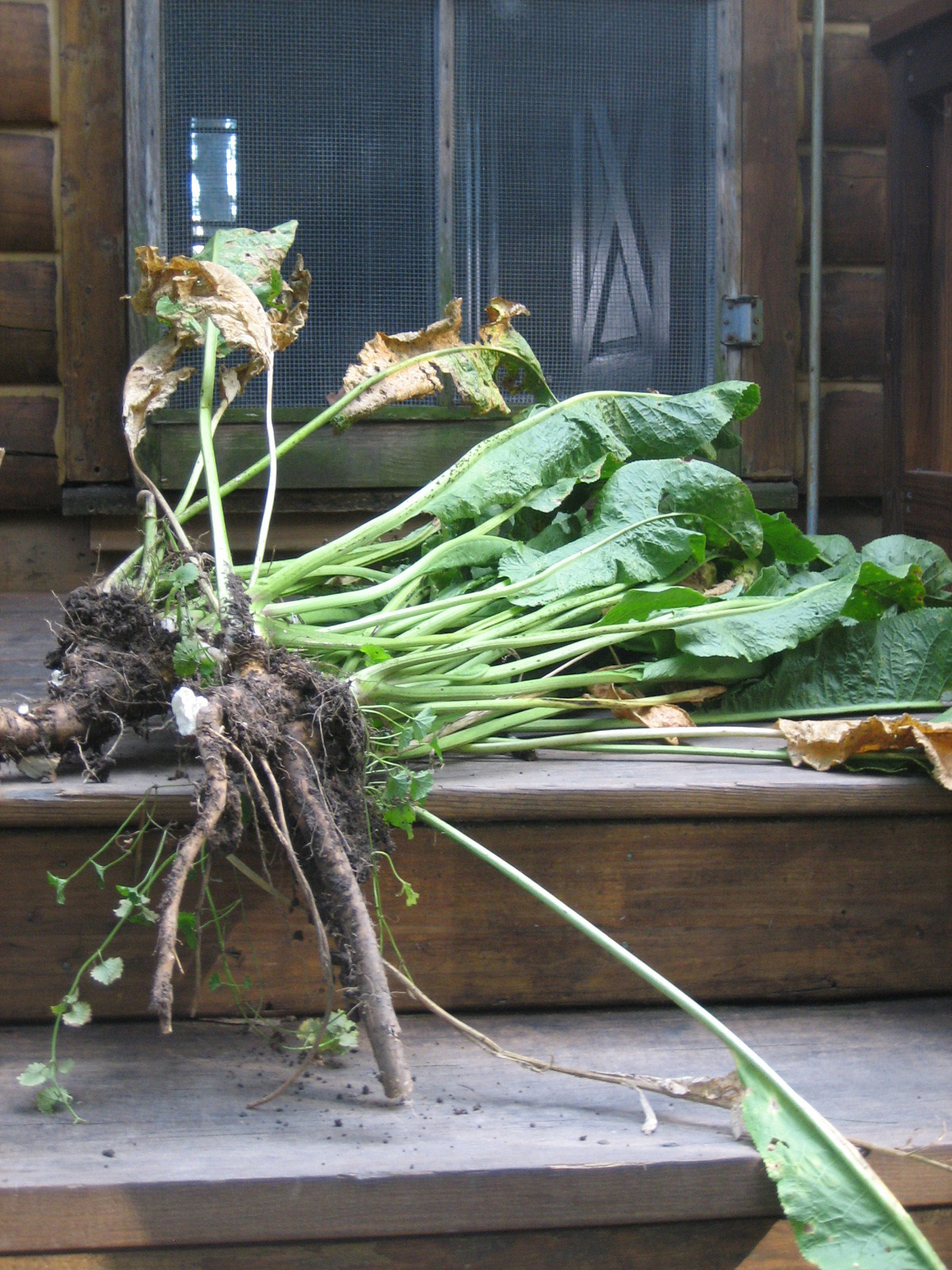
The recipe also called for a handful of grape leaves. I picked some from my dad’s vine, and laid them in the bottom of the jar. I then layered the cucumbers, dill sprigs, chopped horseradish, onion slices, mustard seeds, and celery leaves in a 3 liter glass jar.

I am excited to watch the fermentation process through the glass.
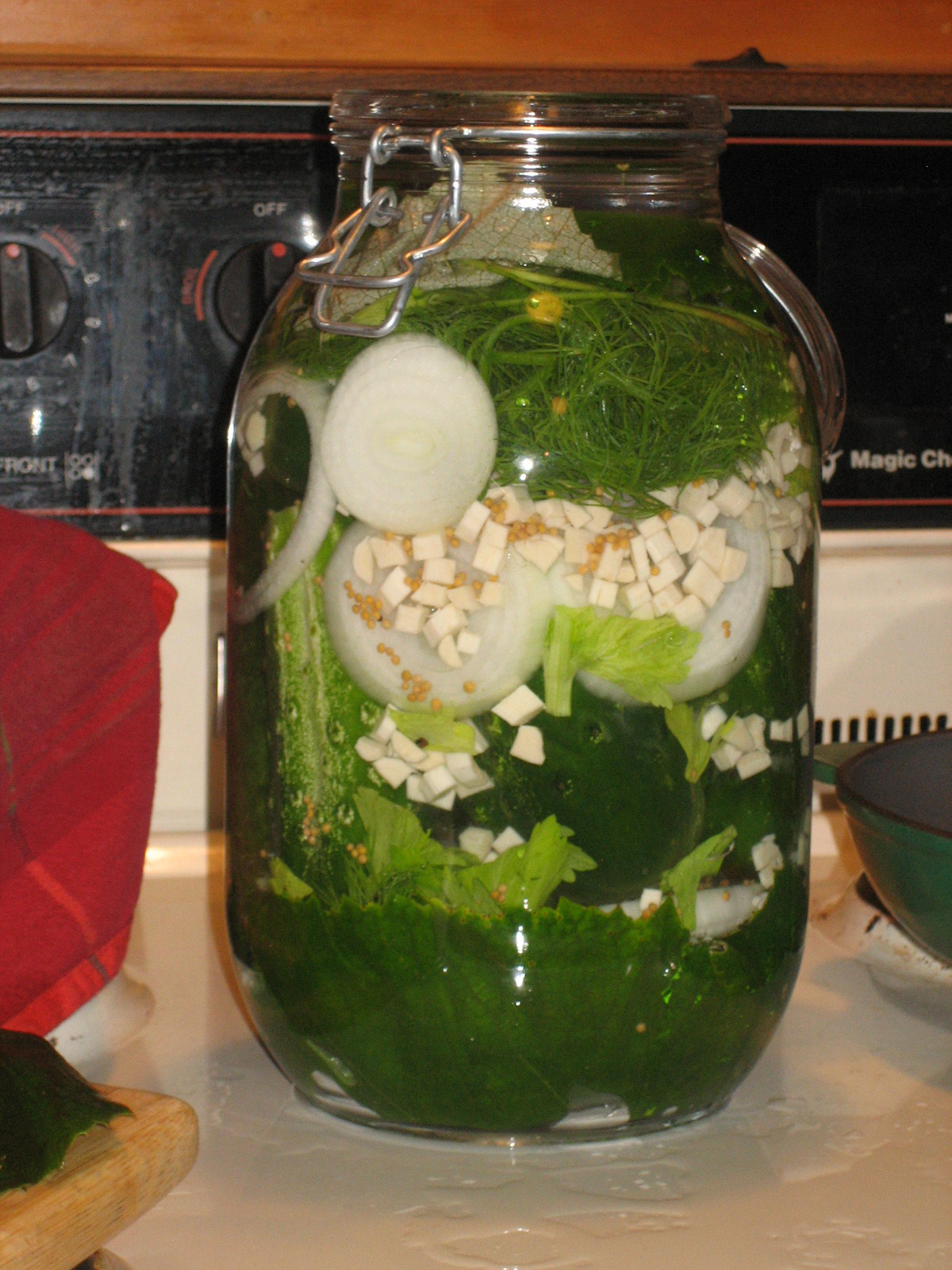
After I had added all the ingredients to the jar I added the brine, and covered the entire thing with another batch of grape leaves. Then on top of that I placed a ziplock bag filled with brine to weight the ingredients down. It is very important that the vegetables remain submerged at all times!
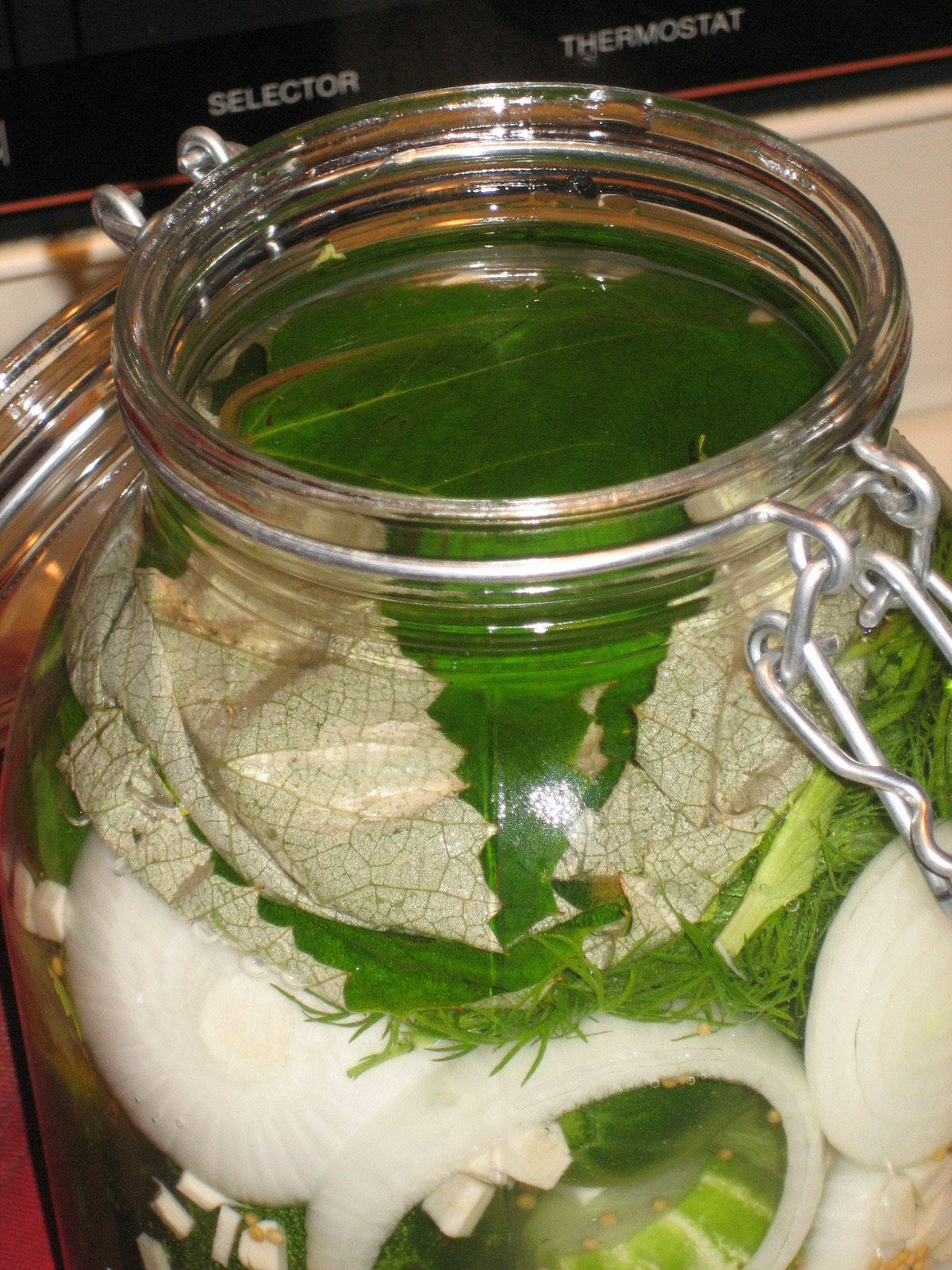
The pickles will ferment for 2 to 3 weeks. After they have fermented fully, they are ready to eat, and should last in the fridge for about 4 months. I could also jar them, but don’t think that will be necessary…
things that haven’t worked
July 5, 2010
Sometimes things don’t work. I feel compelled to report on a few projects that that I started, with high hopes, that didn’t result in much. Here are two that I wouldn’t go out and strongly recommend.
- Planting chestnuts (the actual nut) in the ground in the fall, under various layers of protection.
- Trying to get rid of weeds using clear plastic.

Last fall I got really into picking chestnuts. I gathered nuts for eating, and saved some of the particularly nice big ones to plant. I planted the chestnuts, covered them with cardboard, poked a hole for the sprout to come up, and covered the whole thing with chicken wire. Nothing came up. Oh, except for a lot of weeds….
I think an animal must have gotten in and eaten the nuts, or something. I don’t know.
At the same time, I transplanted two chestnut seedlings from a friend. One was a one year old tree, and the other about two years old. The chestnut seedlings are both doing well, and I have high hopes that in about 5 years I might have a chestnut crop! Especially with my little hive of pollinators happily stationed in their tree near by!
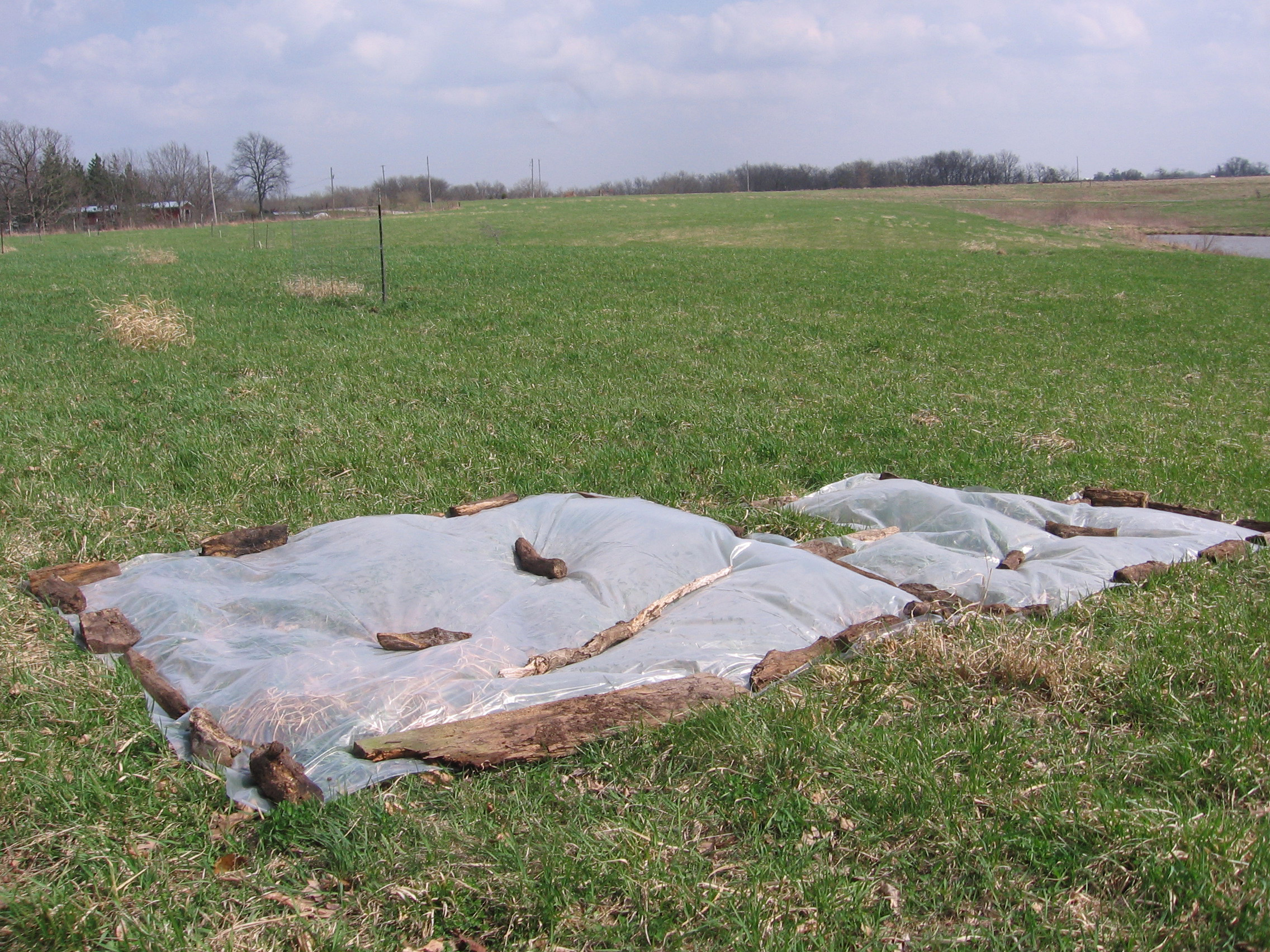
Jay and I experimented with a sheet of clear plastic to get rid of some of the grass in our pumpkin patch. We covered the majority of the space with cardboard and straw, but in one corner we used clear plastic. The idea was that it would create a greenhouse and get so hot that the grass (and its seeds) would cook, and we would end up with a nice clean slate to plant pumpkins…

It certainly did create a greenhouse… Maybe we didn’t leave it on long enough, but it seemed that the grass under the plastic just wouldn’t really die. Some of it did, but not very consistently. Some of the plastic blew off, and other parts made great water catchers/mosquito breeding grounds. And the whole mess smelled terrible! So…we took the plastic off and used the cardboard and straw technique, which worked really well!

apricots in stages
June 29, 2010

Today I picked up apricots from my friend’s tree. I didn’t pick them off of the tree, but from the ground. Little apricots, that are a bit spotty, but absolutely delicious! They are abundant, like little quail sized easter eggs, all over..

I brought the little speckled fruits home, and sat on my porch to pit them. Today was a perfect day to sit outside. Sunny breezy, and only a few bugs…after the apricots were pitted I covered them in sugar and a little lemon juice.
The power went out, so I couldn’t finish making the jam, but it doesn’t hurt to have the fruit sit in sugar for a bit. A few hours later, I turned on the heat, cooked the apricots, washed my jars, and heated my water for a hot water bath. The usual steps for jam, with a kitchen full of sweet apricots.

The finished jam was thicker than I expected it to be, and some of the cute little spots on the skin still showed up. And I have already had a huge spoonful of jam in my yogurt!
black raspberries
June 28, 2010
Black raspberries remind me the most of my childhood. We would go out into the woods and fields and pick as many as we could. We would bring the berries home and my mom would help us make jam, pies, and crumbles. It would always be a few precious jars. Black raspberries are sometimes all over the place, but more often few and far between. And it is way too easy to eat the berries while you are out foraging…

My friend Bob took me to some really good spots in a field next to his house a few days ago and we picked and picked and picked. He has a good system for picking berries. Belt an empty milk jug with the top cut off around your waist, and have both hands free to pick, balance, and navigate through the undergrowth.

After picking the berries, I took them home and was way too busy for a few days to do anything other than eat a few here and there. This morning I got them out, sat on the porch, and sorted out the sticks and leaves.

Then I sugared the berries, and added a little lemon juice to make a batch of jam.

Black raspberries are incredibly dark, sweet and full of seeds, which I love. I made a simple jam, and bottled it to save mostly for my brother, who lives in the city.

nature’s colors
June 22, 2010
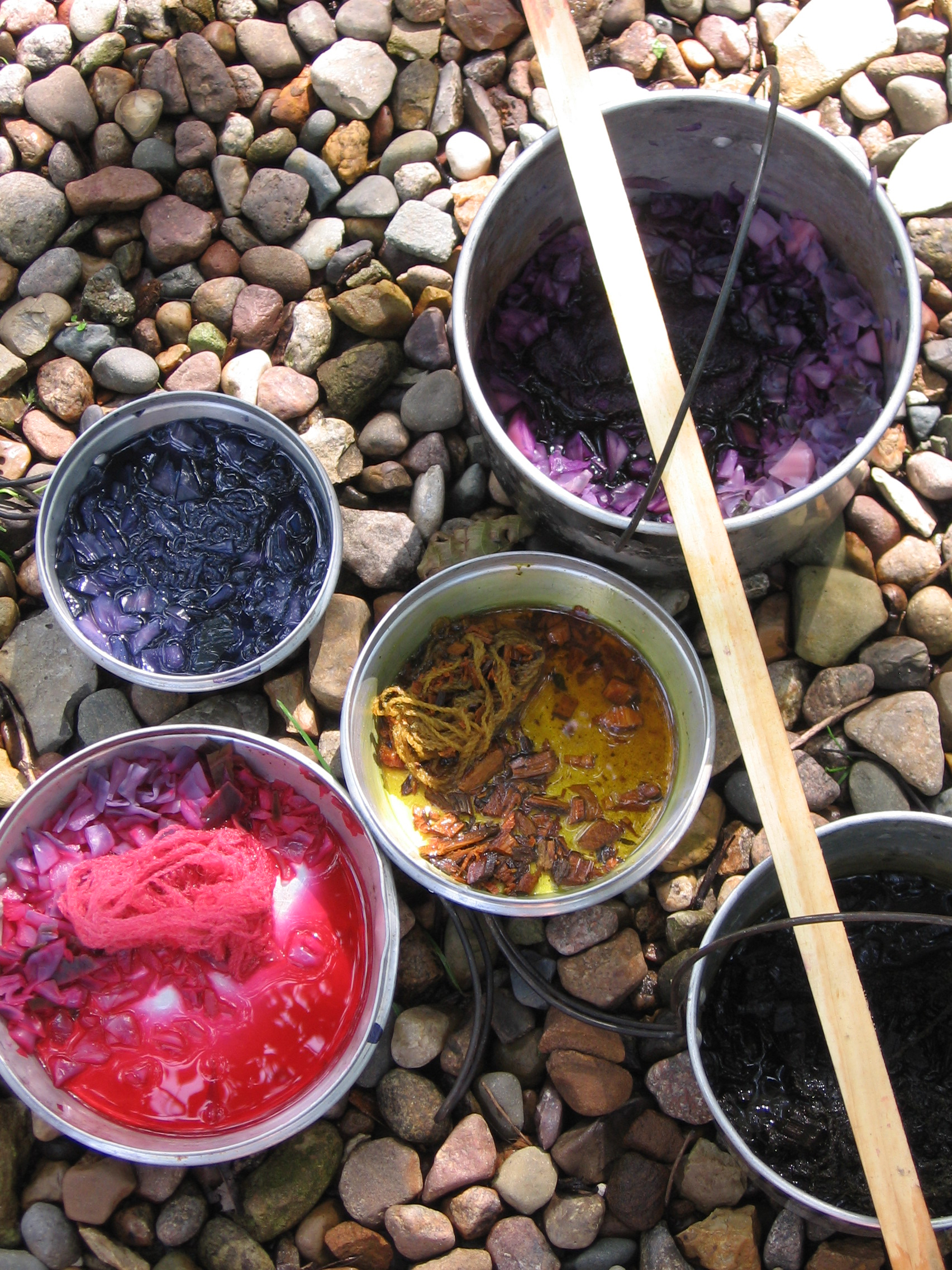
Anna Baumann and I spent the better part of the afternoon yesterday dying wool with plant dyes. We are going to have a natural dying workshop at the store this Saturday, and we were going over some of the things that we were going to use.

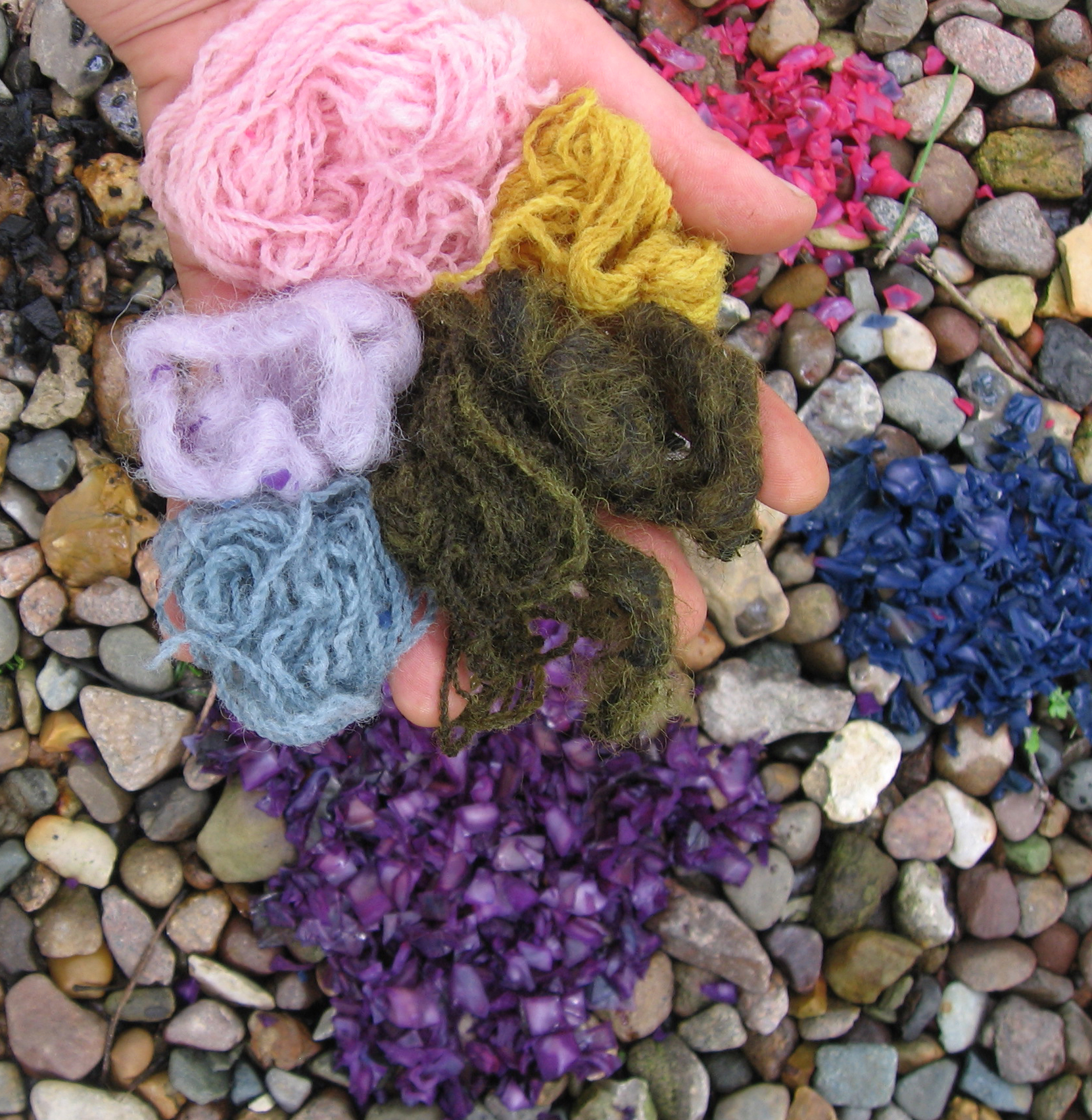
We hacked away at an Osage Orange log, and chopped up some purple cabbage, to come up with 5 beautiful colors!

We started with locally grown sheep’s wool, spun into a lace weight yarn. Little sample spools to test the colors and mordants!

For the Osage Orange dyes, we started with wood chips. Into the dyepot with some water and the wool.

After gently simmering the dyes, we added different mordants to our color mixtures with varying results.

Brightening from the citric acid and alum, and darkening and dulling from the iron. All beautiful colors though.
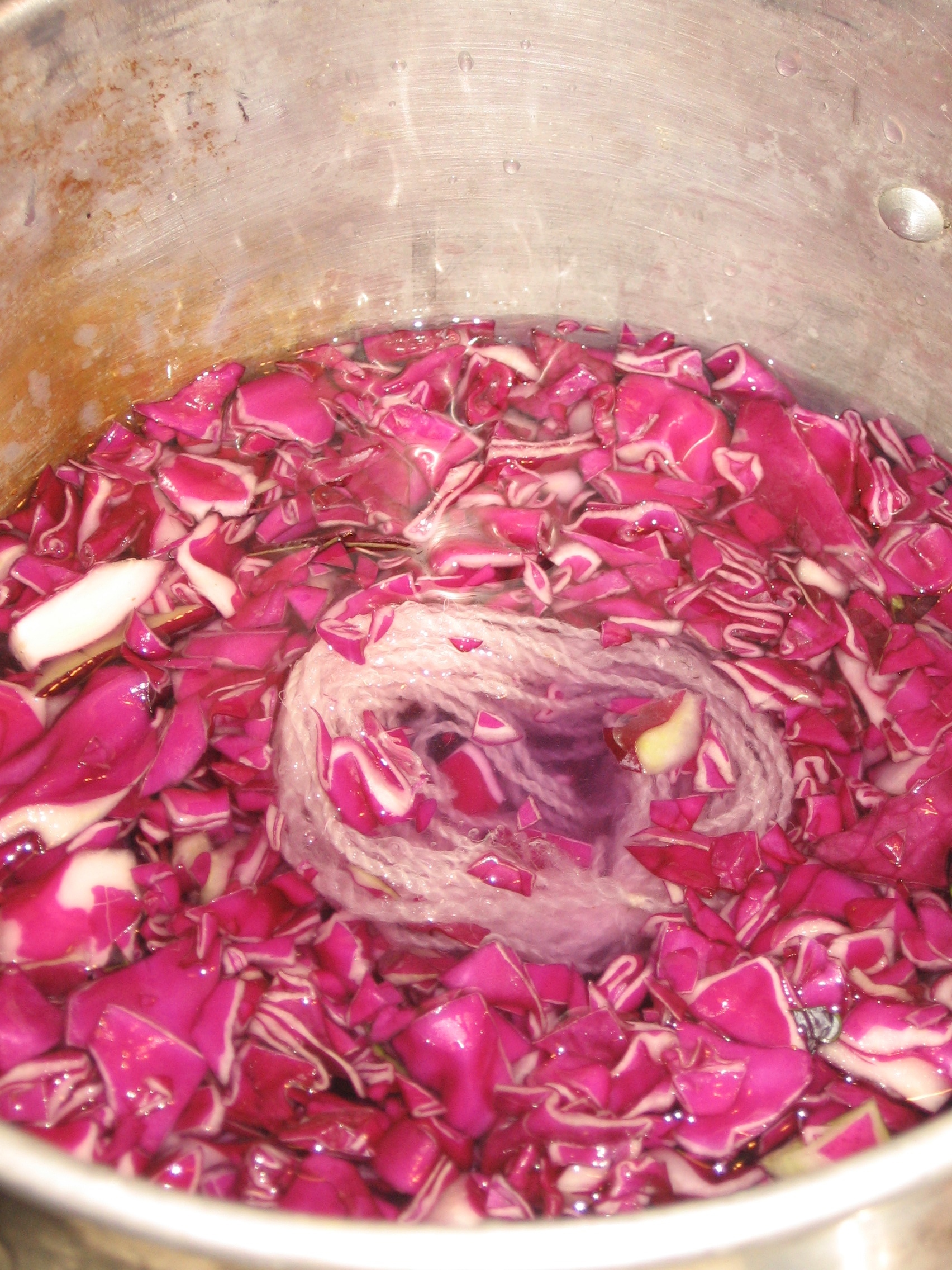
Meanwhile, the cabbage was very gently simmering on the stove. We used three separate batches of yarn (two yarn, one roving) to test the different mordants.

The cabbage with iron,

with the magic of citric acid, turning the dyebath bright pink,
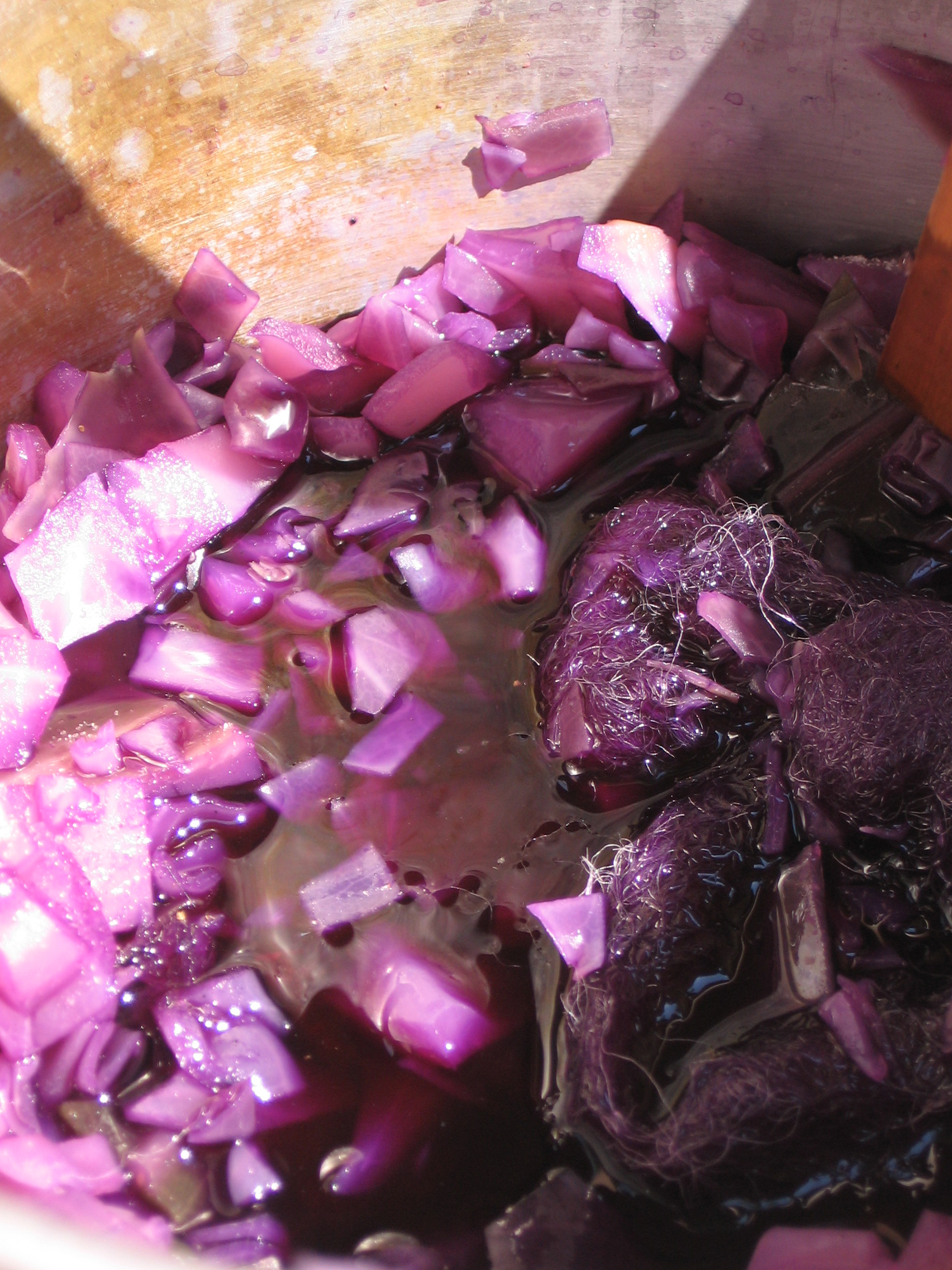
and with alum, keeping with the purple cabbage look.
We took the finished wools out to the driveway to dump the dyestuffs, and rinse. They looked beautiful all laid out amongst the rocks. The final wools kept different amounts of the original dyes. Some faded more than others…so exciting!!
 living in the woods and making stuff