have your beer (and eat it too)
March 17, 2010

Sometimes I need to remind myself that I can indeed bake a cake. I bake cakes so rarely, that when I see something that looks interesting, and I have the inclination, I just need to do it! This afternoon, while browsing npr.org, I found a recipe for Chocolate Guinness Cake. Being the lovely beer drinking holiday that it is tomorrow, I decided to make this one…
Then I went through all the formalities. Made a list (left it at home by accident), called my brother to look up the recipe online and advise as to the type of beer recommended (while wandering aimlessly through the wine and spirits section of Drugtown), bought the rest of the ingredients from memory, went home, and baked the cake.
I love the satisfaction of following a thought from start to finish so quickly. (It wasn’t a particularly daunting task, but completed all the same.)

I don’t think that I have ever tried beer in baking. Sometimes my mom cooks with beer (most famously, welsh rarebit), but I can’t remember her baking anything either.
This particular recipe, by Nigella Lawson, calls for called for Guinness, and so I went to Drugtown and purchased a 6 pack (taking care to get the “real” stuff imported from Ireland), for which I only needed one cup…

The beer is heated in a large saucepan with the butter, and it created in my kitchen a deliciously tasty aroma of beer and butter…sounds kind of gross, but it wasn’t . I have never mixed a cake in a saucepan, and was a little worried that I might cook the eggs and sour cream mix (being incorporated below). I didn’t though, and everything went smoothly, and I got the batter into the springform pan and into the oven.
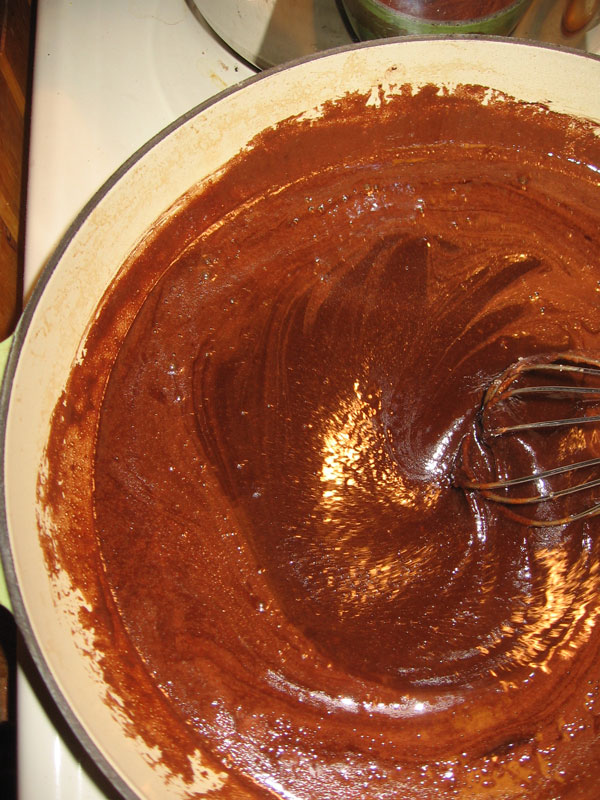
I broke down and drank the left over bit of beer (breaking my no drinking while operating hot ovens rule..). There was only a little left, and it tasted particularly delicious paired with the left over batter!

The frosting is a cream cheese, cream, and sugar frosting. It is layered onto the top to mimic the frost on the top of a pint of Guinness. The cake isn’t too sweet, and the tartness of the cream cheese goes well with the rich chocolate flavor of the cake.

I took the cake into to work in my pie carrier basket, which is the perfect size to carry pies and cakes around. As the day went on, the cake gradually diminished in size, and when I took the basket home, there was one piece left for my mom…thanks to everyone that helped in eating!
valentine hearts
February 13, 2010

My mom and I made these this morning. She has been making these for Valentines Day for as long as I can remember. The cookies are sweet, but not too sweet, because of the chopped almonds. The pink frosting with almond extract is delicious. And the fresh taste of raspberry jam in the center completes them. This actually might be my favorite cookie. There is something about making a cookie once a year that makes it extra special. I like to make these and pass them out to friends on Valentines day.
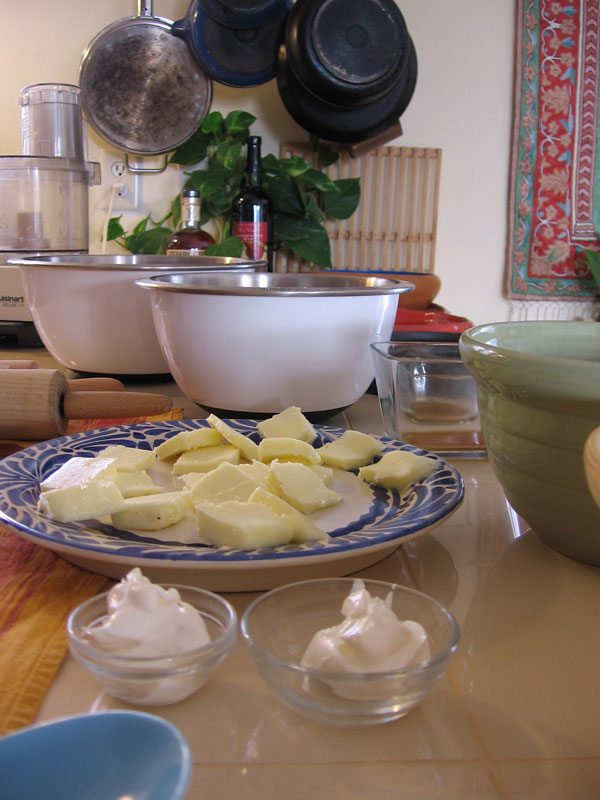
When I made it over to my mom’s house this morning, she had all the ingredients measured out, cooking show style.
The cookie dough is a simple mixture of the usuals. Butter, flour, nuts, sugar, etc. I like to make assorted sizes (we got carried away and only made one size this year..), but nothing too big as the cookies are double layered. Too big and there is just too much cookie.

We first chopped the nuts, rather coarsely in the food processor. Then we creamed butter and sugar, added vanilla and sour cream (egg replacement), and finally the flour. The dough is rather dry and crumbly, but you don’t want it too moist, or it will turn a little cake like and the cookies won’t be as crisp.

My mom rolled all the cookies out.

She was really good at jiggling the dough with the spatula to separate the cookies from the surrounding dough.

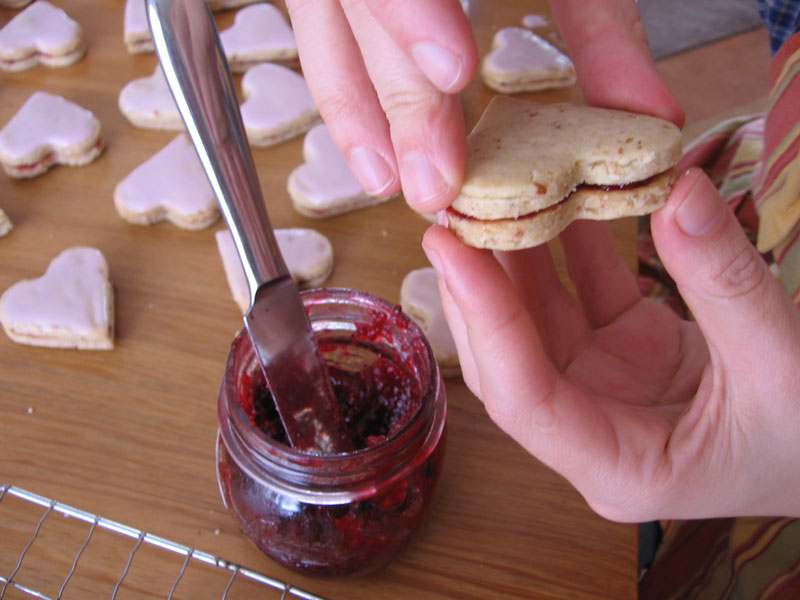
Once the cookies were cooled, it was time to spread them with jam, and make little cookie sandwiches. I saved a jar of homemade raspberry jam that I made this fall for the center layer. I put on just enough to make the cookies stick, making sure that nothing dripped down the sides of the cookies.

It is important to jam the undersides of the cookies together. They stick better that way, and then the outside of the cookies look better too!
The icing is made with powdered sugar (we used the natural stuff, even though it is a little more “home-made” looking), almond extract and vanilla. To give it color, we chopped up some beet stems and boiled them for a few minutes in water. Then we added the colored water to the icing, adding a little extra powdered sugar to stiffen it up.

The icing is carefully applied to the top of the cookie with the back of a spoon (another trick I learned from my mom…).

The whole jam and frosting part took for ever!
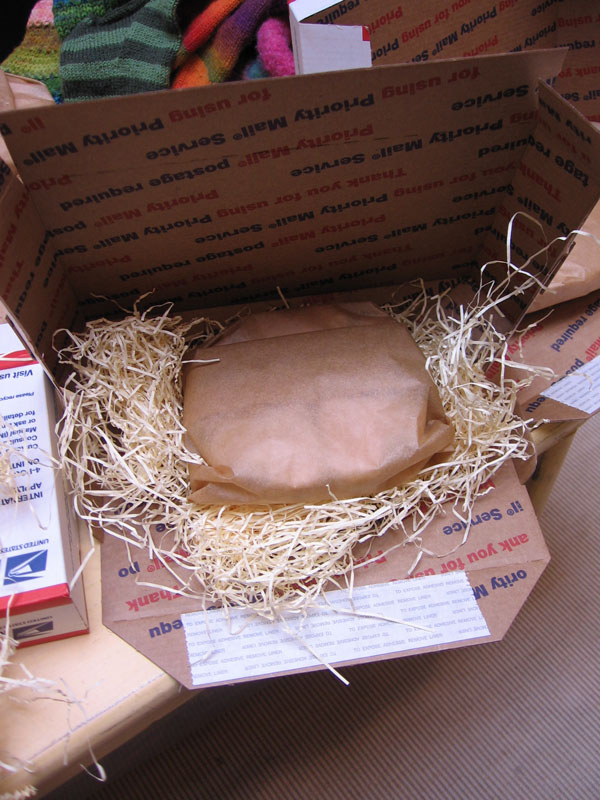
And always, last step is to wrap the cookies up in parchment paper packages. This particular grouping is ready to go to the post office!
hojicha pudding
February 7, 2010

Miles and Nozomi took us to a beautiful Japanese restaurant when we were in New York City last week. One of the highlights of the meal (there were many!) was a cold pudding, flavored with roasted green tea (hojicha). As we were eating the pudding, we discussed about how we could make it, and decided that it must have been made with soy milk, and that it would be nice and healthy.
Not the case. My mom asked the waiter if he could tell her what was in the pudding, and after a few minutes someone came back and told us that in the kitchen it was made with milk, cream, eggs, a little sugar at the end, and of course roasted green tea, or hojicha.
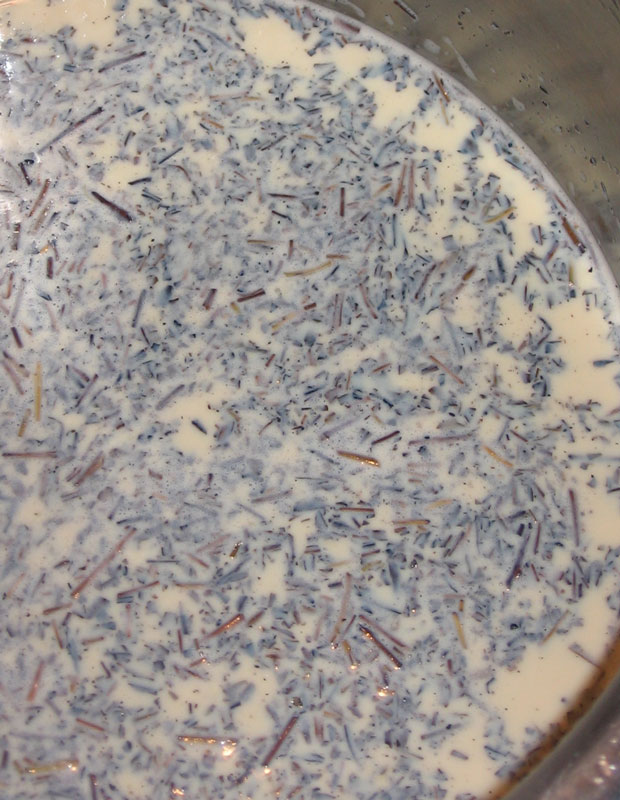
Upon further discussion, we discovered that the tea is steeped in hot milk, which is then added to cream, eggs, and sugar. We jotted everything down on a scrap of paper, and stopped at a Japanese supermarket down the street on the way home and picked up some hojicha.
When I got home from my trip, I was very excited to get started figuring out the recipe. Both Nozomi and I came up with a few similar recipes online, and I tried one today (slightly adjusted) with medium/good results.

The recipe below is very closely based on one that I copied from a website containing lots of green tea recipes.
Hojicha Pudding
Ingredients:
1 3/4 cups milk
2 eggs
2 tablespoons heavy cream
2 tablespoons sugar
15 grams hojicha (toasted green tea)
Preheat oven to 320 degrees.
In a baking dish (I used a glass 9 x 13 casserole dish) place 6 little oven safe ramekins. Set aside.
In a small saucepan, steam milk, remove from heat and add hojicha. Cover with a lid and let tea steep for 5 minutes. Meanwhile, mix eggs in separate bowl and set aside. After 5 minutes, add sugar and cream to milk and tea mixture, and stir until sugar is dissolved. Pour tea mixture slowly into eggs through a strainer, whisking the eggs as you do. At this point, pour mixture through a sieve to remove any little lumps (I forgot this step…). Pour mixture evenly into 6 ramekins, and add hot water to the pan, being careful not to splash water into the ramekins. Place baking dish into oven, and bake for 20-30 minutes, or until done. It is finished when it sets up nicely. I asked my friend Mary and she said pudding should be about like pumpkin pie…
Chill and serve.
I am not completely happy yet with this recipe. For some reason, it seems a bit heavier than the version served at the restaurant, and slightly different. I don’t have a lot of experience with making puddings, so I might have to do a little research to figure out what I need to change.
pears poached in grapefruit wine with cranberries
December 29, 2009
I made these a few weeks ago, and they were delicious! And way too easy. I have a shelf of canned pears in my pantry. They are preserved in a 30 percent simple syrup. I also have a somewhat dwindling (but still plentiful) supply of grapefruit wine. I simply opened the jar of pears, plopped them into the pan, added a cup or so of grapefruit wine, and put the pot on the woodstove to simmer over lunch.
If you don’t have home canned pears and grapefruit wine, I would recommend peeling and poaching fresh pears in water with a little sugar to taste. You can add a cup or so of regular white (or red) wine, and some additional citrus peel here as well.

Meanwhile, I prepared a sauce of cranberries. Place a handful or so of cranberries in a medium sized pot on the stove (medium heat). Add a few strands of orange zest and a sprinkling of sugar. Not too much that it makes the cranberries sweet, but not so little that they are unbearably sour. If you have just rinsed the cranberries, the water left should be sufficient, but if you are starting with dry cranberries, add a sprinkling of water. Cook over medium heat, stirring until most of the berries have popped, and the sugar has caramelized a little. Set aside.

Ladle the warm pears and a generous amount of the liquid into a little bowl. Spoon the cranberry mixture over the top and serve right away. I would definitely serve with fresh cream. The bitterness of the grapefruit wine complements the sweetness of the canned pear syrup, which is almost a juice, and the cranberries give the whole thing an extra zing!
(They look really pretty, but I didn’t get around to taking a picture of the final product…)
hazelnut marzipan kisses
December 15, 2009
I am trying to think of a better name for these, but until I (or someone else) come up with something, kisses they are. This is a very simple treat that I learned how to make in Switzerland (but I don’t think that it is traditionally Swiss). There are three ingredients; marzipan, toasted hazelnuts, and chocolate.
My favorite marzipan to use for this particular recipe is imported by my friends’ company, Purely Organic. It is very sweet, so a little goes a long way. I made about 60 candies with one package of marzipan, and I think that you could stretch it even more.
To make about 60 kisses
1 package (8.8 oz) marzipan
about 60 nuts (toast extra just in case)
a few chunks of chocolate (sorry to be vague but I didn’t measure…)
Toast the hazelnuts in a 350 degree oven for about 10 minutes. WATCH LIKE A HAWK. Over toasting nuts is one of the easiest things to do!

After the hazelnuts are toasted, the skins crack and are easy to remove. I usually place the nuts in a towel and rub them together until the skins come most of the way off, and then finish removing them with my fingers. Make sure to wash your hands when you are finished removing the skins, as you don’t want them ending up stuck all over you nice light brown marzipan.

The next step is to pinch off a piece of marzipan and roll it into a little ball.

When you have made a few balls, press a hazelnut into the top. I like to have the point of the nut facing up. Because marzipan dries out quickly, it is important to do this in batches so that the edges don’t crack. Make a few balls, add the hazelnuts, and continue like this.
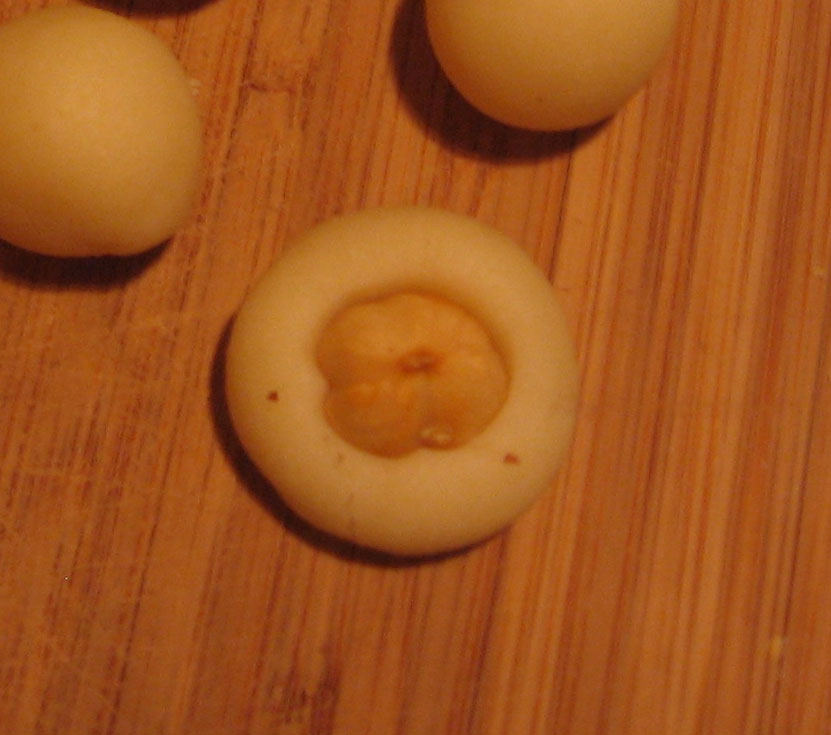
Once you have finished making the candies, you can dip them in melted dark chocolate. This step is optional, but I definitely love adding the brown cap. Kind of like a little acorn. I melted my dark chocolate chunks in a double boiler that would have made my sister squirm. But I only dropped the chocolate pan into the water once, and the finished product came out well, so I think it was okay. I guess the main thing with heating chocolate in a double boiler is that you don’t want the top pan to touch the water below, or the chocolate will get too hot. (If you have any questions, just call Heli-Claire!)
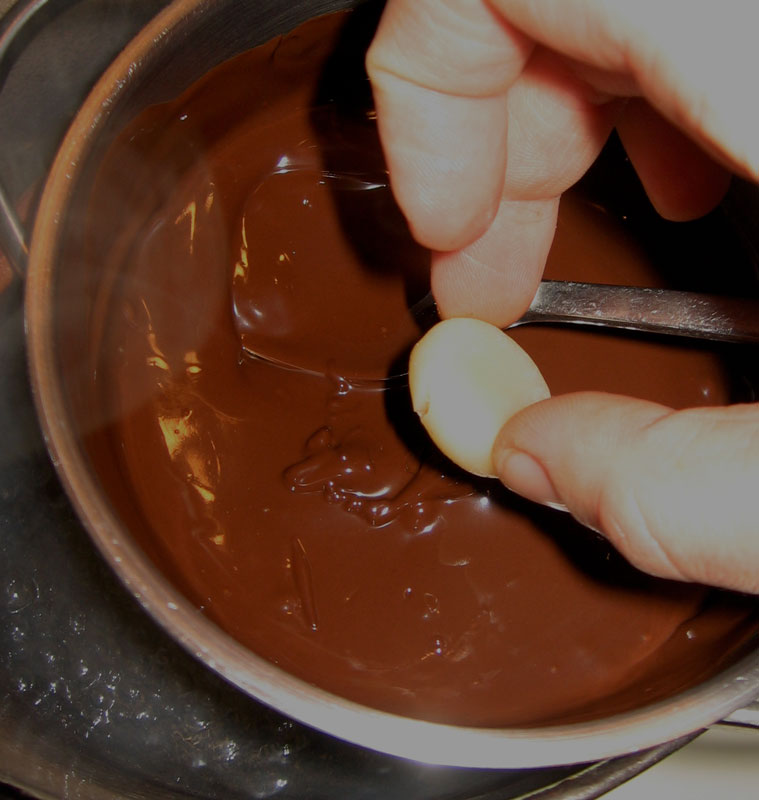
After the kisses are dipped, leave them out until the chocolate cools.

After the chocolate cools, I place the kisses in an air tight container with sheets of waxed paper between the layers. They keep well, although I can’t really tell you how long, as they usually are gone within a few days…
brandied cranberries
December 9, 2009
Last Monday my dad and I went down to the Dutchman’s store in Cantril. We found a nice collection of items including a new pair of lined pigskin gloves for firewood duty, some potting soil, hotpads, peanut butter filled pretzels, and cranberries! Fresh Wisconsin cranberries to be exact. Two large bags of them…
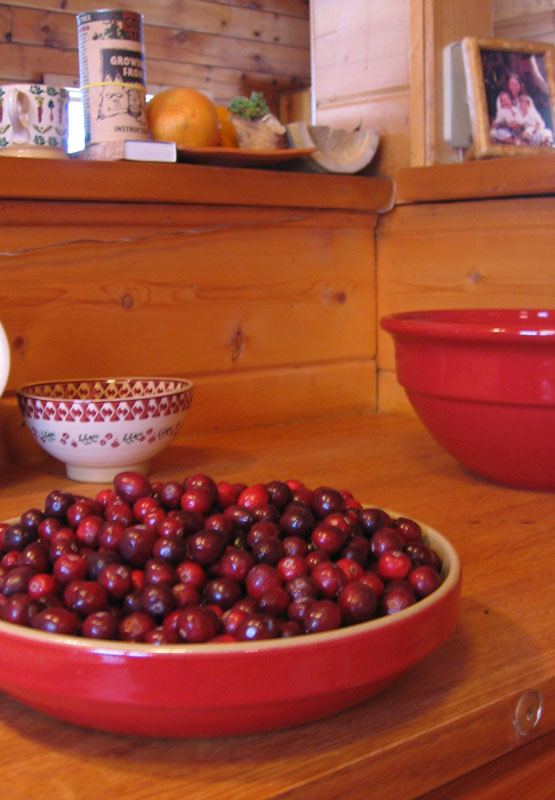
I can’t resist a good looking batch of fruit, and so I grabbed them up and brought them home, thinking the whole while about everything that I could make.

Brandy, cranberries, cinnamon, sugar, and orange zest. That is it! The recipe is from Joy of Jams, Jellies, and Other Sweet Preserves, by Linda Ziedrich. I made one batch and liked it so much that I made a second! The recipe is simple, and the preserves can be processed for storage, or eaten right away! I put mine in little jars to give away, or open and eat all by myself. (Sometimes pint or 1/2 pint jars are too big for me to finish soon enough, so the smaller servings come in handy. And they are cute.)
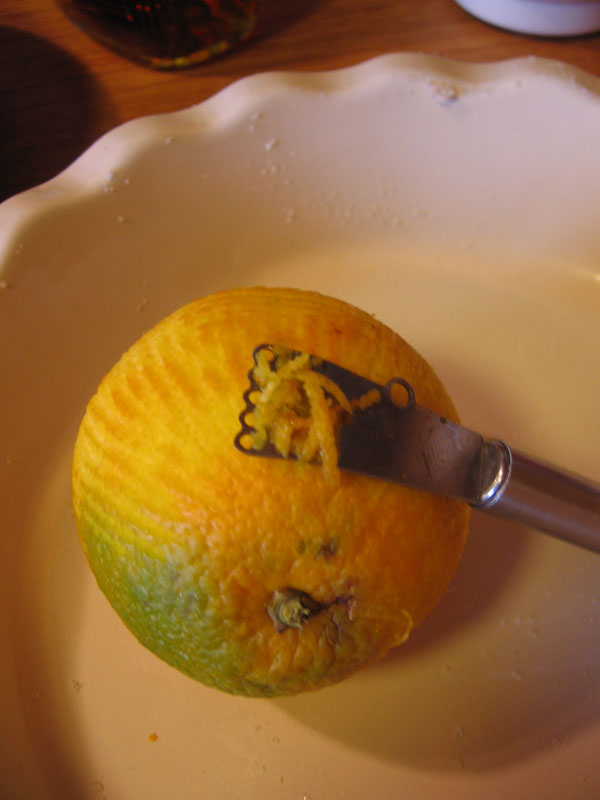
I used one of my favorite tools on this project; a citrus zester. There are sharpened little circles across the top, and you drag the zester down the side of the orange (or lemon, lime, etc) and it peels nice even strips off. The hole on the side is for larger pieces of zest. I am not much of a gadget person, but this particular tool is awesome!

Cranberries, sugar, and zest, ready to be baked in a slow oven. The sugar almost caramelizes a little, and the flavors mellow and come together. I would guess that most of the alcohol cooks out of the brandy, but the taste is definitely still there!

The finished preserve is a rich dark red, with a hint of cinnamon and a refreshing tang.
my grandma’s pumpkin pie
November 27, 2009
When it comes to pumpkin pie, this is the recipe that I always use. It is my dad’s mom’s recipe, and since I never met her, it is one of those things that makes me feel closer to her! I love to know that I do some of the same things that she did sometime way back when.
I was so tired last night when I got home from work, that I didn’t have any energy to put the pumpkin in the oven to bake. The result was that I had to drag myself out of bed at about 5:30 this morning to pop the squash in the oven!

Baking pumpkin is actually really easy. Whack off the stem of the pumpkin or squash. You can also use sweet potatos if you don’t have pumpkin, or you want to try something new. Cut the pumpkin in half, from top to bottom and remove seeds and any other stringy things. Place pumpkin cut side down on a jellyroll pan or in a baking dish. Fill the pan about 1″ high with water (if you are in a hurry you can use boiling water here to speed up the process). Bake in a 350 degree oven until completely tender, about 1 or 1 1/2 hours. When you stick a knife into the top it should go in really easily.

Remove pumpkin from oven, take out pan with water, and remove the peel. Place pumpkin pieces into a collander to drain. This is important especially if the pumpkin is particularly moist.
Here is my Grandma’s Recipe for Pumpkin Pie (more or less)
Preheat oven to 450 degrees.
1 9″pie crust (recipe for about 2 crusts, or one pie crust with decorations, etc) It is best to have the dough prepared in advance so that it can chill in the fridge while you are preparing the filling.
1 teaspoon nutmeg (use a little less if freshly ground)
1 teaspoon cinnamon
1 teaspoon ginger
1 teaspoon cardamom (use a little less if freshly ground)
1/2 teaspoon salt
3/4 cup sugar
6 tablespoons sour cream
2 1/2 cups pumpkin (her recipe calls for 1 3/4 cups, but my sister and I both prefer it with more pumpkin)
Whisk the above ingredients in a medium bowl. Stir until ingredients are combined, then add 1 can evaporated milk.
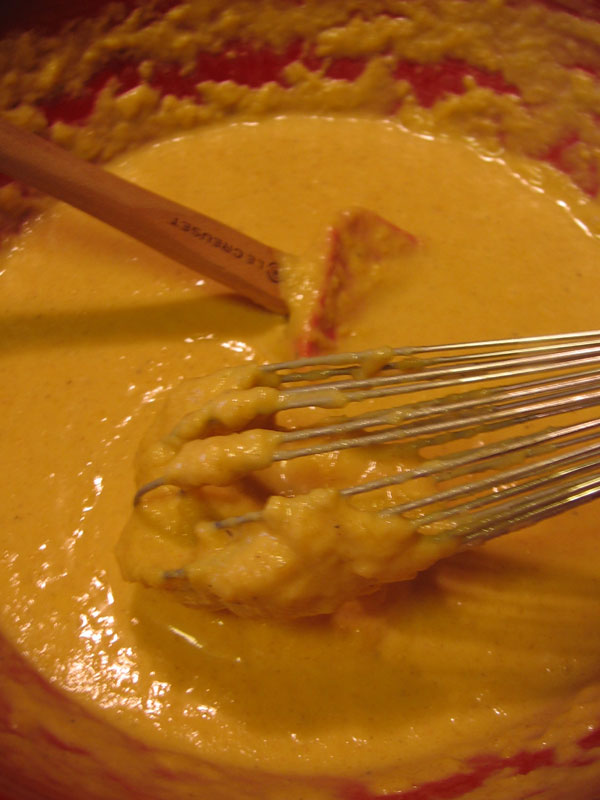
Mix thoroughly and then put through a food mill, or in a food processor. The above image is before the food mill. I personally like my pie with more texture, so I use a food mill, or nothing at all. A food processor takes out all the texture! (NOTE: My sister purees the pumpkin by itself first. I think that this might be the usual way to do it!!)

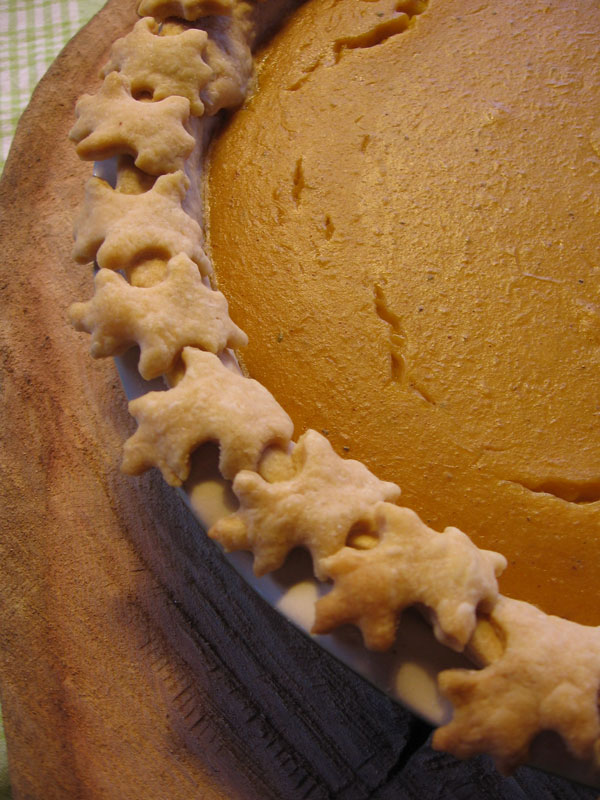
Roll out dough and place in the pie pan, cutting edges nicely. I added little leaves that I cut out with a miniature leaf cookie cutter. It was really fun to make them and I loved how the extra detail looked on the finished pie.

Pour the pumpkin filling into the pie and place into oven. After 10 minutes, turn the oven down to 350 degrees and bake until pie is firm, and a knife comes out clean when stuck into center of pie (about 35 minutes more). I placed some parchment paper around the edges to protect the crust from burning. I find that my pies generally take more than the additional 35 minutes to cook. Not sure why.
birthdays, moms, and crepes
November 24, 2009

My mom came over this morning with a bowl of crepe batter, a bowl of sugar, her crepe pan, and a bundle of packages wrapped in recycled wrapping paper. I have to say that I have the best mother EVER!!
So we made crepes for breakfast. With sugar and lemon juice. Very simple and delicious. My grampa used to make crepes like that, and also that is how my mom has had them in Germany (and my grampa is German, so maybe there is a connection!).

The crepe batter (she used the recipe from Joy of Cooking) is made using eggs, flour, water, milk, butter, and salt. It is fine to leave some of the lumps, as they work their way out. We used her crepe pan, which is carbon steel, made in France, as well as my pan, which is a cast iron griddle. Kind of a crepe off, to test which pan worked better. We decided that we liked the texture of the crepes from her pan, although the heat was better in my pan. She isn’t used to my stove, so her pan ended up getting a little too hot. (Might be a stove thing more than a pan thing.)
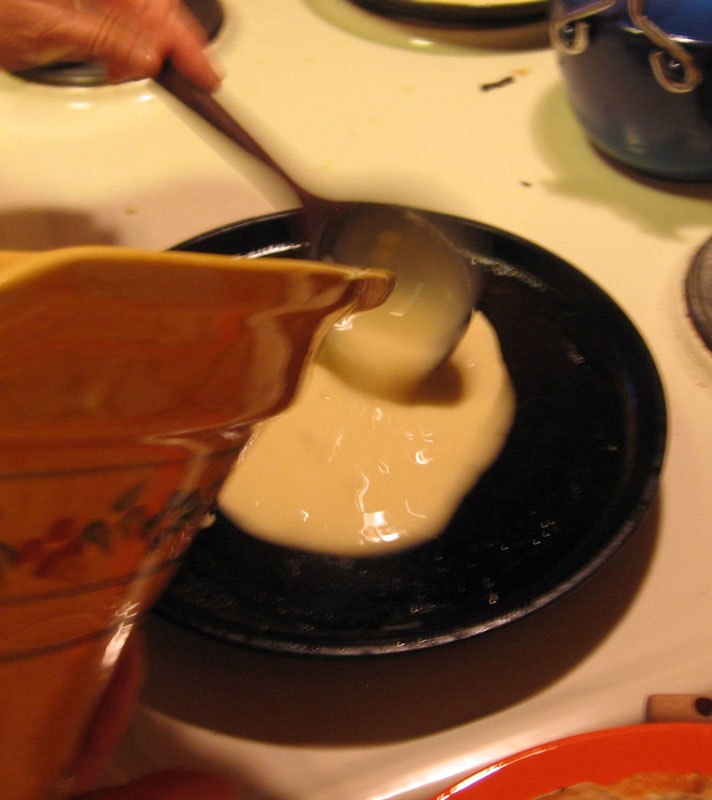
First, place a little oil in the pan. I like to swish it around with a pastry brush instead of paper towel (I don’t actually have any paper towel…). When the pan is hot, not smoking, pour in the batter and swirl the pan around so that the batter evenly coats the bottom of the pan. We used about a 1/2 cup or so of batter per crepe (I think).
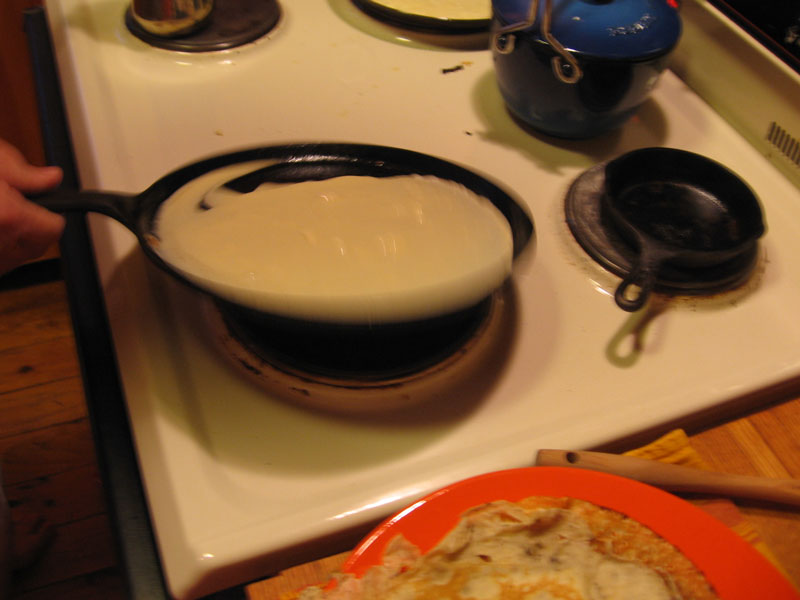
A nicely “swished” crepe, waiting to be turned. You can see that it is cooking nicely by looking at the bubbles on the edges. It is good to remember here that the first crepe often turns out a little funky. Just like pancakes. You need to make sure the temperature is correct, and work out any kinks in timing, amount of oil etc. Then things generally smooth out and work well.

Let the crepe cook, until the first side is golden. Flip crepe carefully, using a spatula to lift up the edges.

Cook the second side of the crepe, and then place finished crepe on a plate (this plate can be warmed, or placed in a low oven to keep crepes warm if you are making a large quantity).
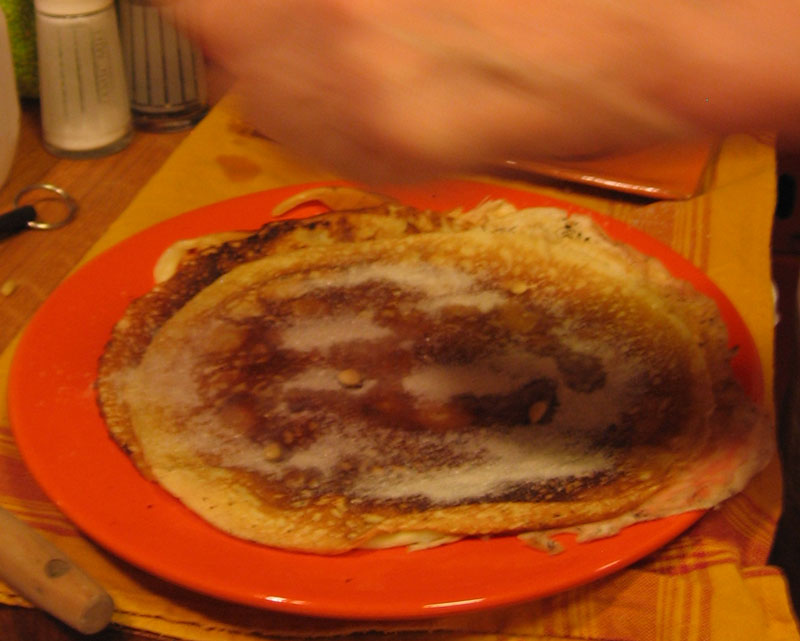
When we finished making all the crepes, we sprinkled each crepe with sugar (to taste) and then a squeeze of lemon juice. My mom folds them in half and then in half again.

We ate our crepes at the table with some coffee and a jar of apple sauce!

pears with heli
October 10, 2009
A few weeks ago Emily, Clint and I went to Clint’s pear tree (planted back in 1987 or so) south of town and harvested a bucket of then “slightly” unripe pears. We made some yummy pies, and the rest of the pears sat in my kitchen in the bucket, with me nibbling occasionally.

When I was talking with Heli about visiting her, I asked if she wanted me to bring the pears up for us to can. She did, so I tossed the whole collection in the back seat of the car (along with the chestnuts, and a whole bunch of last minute herbs from the garden). Today we collected the supplies for pear preserves with ginger and lemon, from The Joy of Jams, Jellies, and other Sweet Preserves, by Linda Zeidrich.
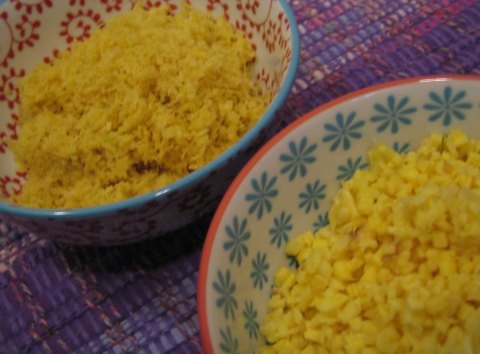
The recipe includes a generous amount of lemon zest and minced ginger, and sits out on the counter for quite a few hours. The kitchen smells lovely! A delicate mixture of pears, ginger and lemon.
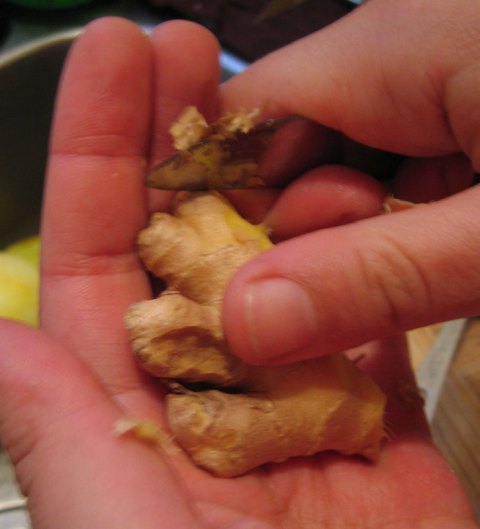
I can’t remember where I learned this, but it is a nifty trick for peeling ginger. When you are peeling fresh ginger, use the back side of a butter knife (I think that there might be a tool for this as well) to scrape the peel off. This is the easiest way to peel ginger without taking off too much of the root.

For mincing the ginger, Heli, trained in the Deli, had a little tip. Chop the ginger (or anything that you might be chopping) with your hand over the middle part of the knife finger tips up. This protects them as you chop quickly (as she is demonstrating!)
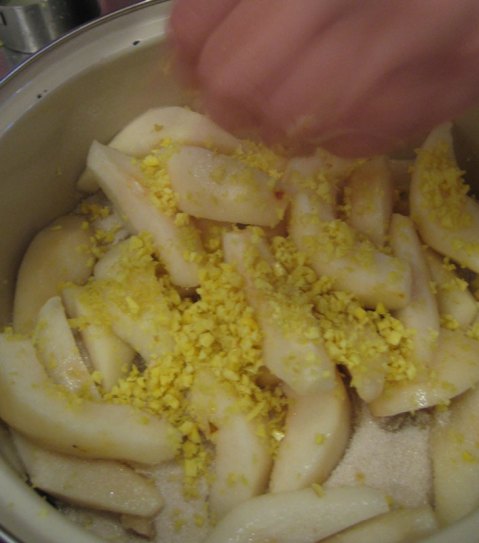 As we peeled the pears we layered them with the sugar, ginger, and lemon (as per recipe). We had fun here, with the pot in the kitchen between us, chopping and layering. Heli had a clear plan that we needed to layer 4 sliced pears and then add the sugar, etc. I accidently started adding the spices early and was clearly instructed that we hadn’t added enough pears yet…love to be back with the sister!!!

Later…
After sitting overnight, the sugar dissolved, and the pears were ready to slowly cook for several hours. We were in the kitchen, stirring the pears every so often, while we made Monte Bianco. As the pears cooked, they turned a beautiful burnt orange color. I am a little concerned though as we ended up with a lot of liquid, and not too many pears floating in it… I think that if I were to do it again I would maybe change the sugar to fruit ratio, which seemed high on the sugar side. The recipe did suggest using the pears over ice cream, which I think would be good! Or maybe with fresh cream!!

Finished pears, cooling on the window sill. Soon to be whisked off to a cool, dark cupboard for better storage.
chestnuts (visiting the city and making stuff)
October 10, 2009
Yesterday I made the 8 hr drive to Ann Arbor to visit the youngest Witherspoon. When we were in Italy a few years ago we learned how to make Monte Bianco, a chestnut dessert that was the favorite of one of our friends there. We have made Monte Bianco since then using our friends recipe, but this year we decided to try a new recipe from The Chestnut Cookbook by Annie Bhagwandin.
One of the best things that we have discovered about chestnuts this season is how to peel them really easily. A few weeks ago when I made chestnut ravioli Brenda and I boiled the nuts for about 20 minutes. They came out of the shells quite well, but sometimes the nuts stuck, and the inner peel was difficult to remove.  This time we boiled them whole for 5 minutes, and then chopped them in half. It was much easier to cut them with the shells softened, but the nuts were still intact, and popped right out of the shells!!
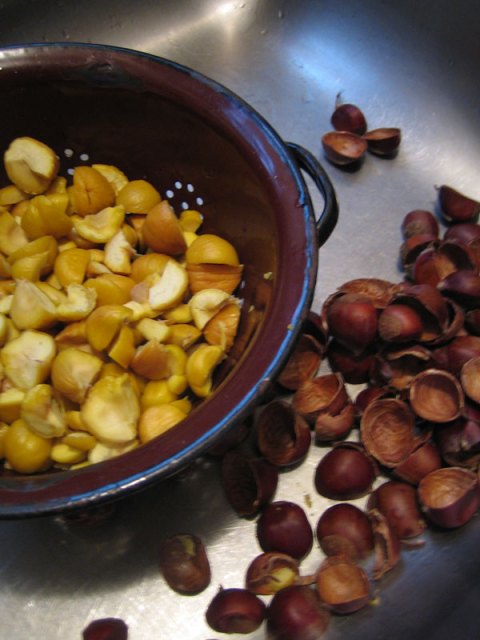 We kept the majority of the nuts in hot water as we worked, which makes them easier to remove.
To make Monte Bianco, parboiled chestnuts are simmered with whole milk with a snip of vanilla bean and then pureed to form a stiffish paste. 
We pureed the chestnuts with the milk using a stick blender. The puree was a little thinner than we would have liked, and we think that we could have simmered the nuts a little longer.

As the chestnuts were simmering, we made a vanilla sugar syrup (a variation on our recipe) and then added it to the pureed chestnuts. The puree needs to be stiff to make the little noodles, so we left it in the fridge over night to firm up, and by the morning it was ready to go!
We put the chestnut puree through Heli’s new food mill and came up with the little “worms” that make Monte Bianco! As an aside, this is the absolute best food mill I have ever encountered. The fold out legs have rubber on them and it grips to the top of the bowl so there is no slippage at all!! Really easy to assemble and use!
We needed some cream to top our noodles, so we whipped some up in a mason jar. We thought it would take for ever, but it only took about 2 minutes of vigorous shaking!

Freshly whipped cream in the sunlight.

The finished product. Chestnut vermicelli dusted with unsweetened cocoa powder and whipped cream. A mountian with snow on the top!!
 living in the woods and making stuff