chestnut cornbread stuffing
November 28, 2009
I made it home Wednesday night with a package of cornbread stuffing and a bag of cornmeal. (I wasn’t sure if I would be up to baking the cornbread and all…) But when I woke up Thursday morning, I was kind of excited about making stuffing from scratch. The recipe for stuffing that I came up with was inspired by a recipe from Chestnut Cookbook, the package of stuffing that I brought home, and my sister’s comments while I was cooking.
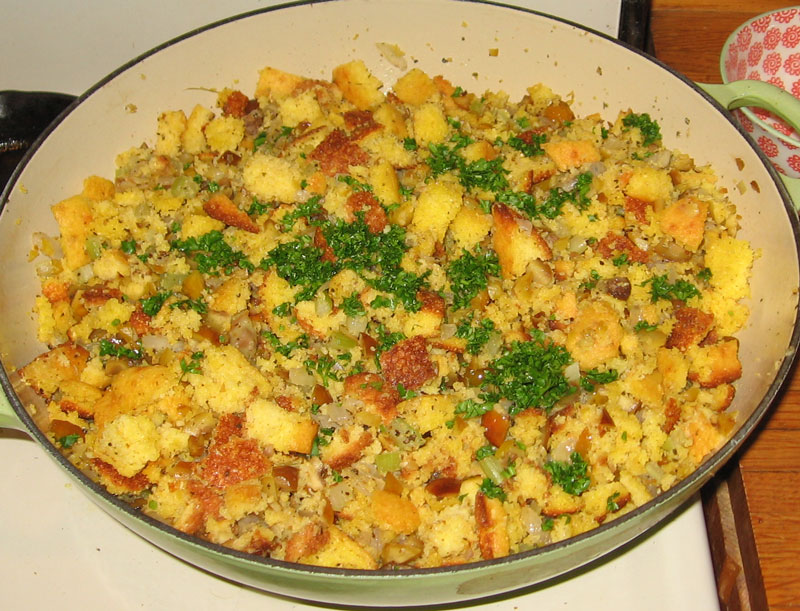
The steps were pretty simple, but it took a while to bake the cornbread, let it dry out, etc, etc. I was particularly excited because a few months ago I froze some chestnuts that I gathered. (I know that you can bury them in sand, sawdust, or other things, but I didn’t really have time to figure that all out. I was also concerned about the likely mouse problem that could result from leaving a huge pile of unguarded chestnuts in my basement.)

My Approximate Recipe for Chestnut Cornbread Stuffing
1 recipe southern style cornbread from Joy of Cooking (preferably baked in advance so that it can dry out) cut into 1″ cubes
1 lb fresh/frozen chestnuts (still in shells)
2 stalks celery finely chopped
1 medium onion finely chopped
1/3 cup butter
2 generous tablespoons sage (to taste)
salt and pepper to taste
a bit of fresh parsley for garnish
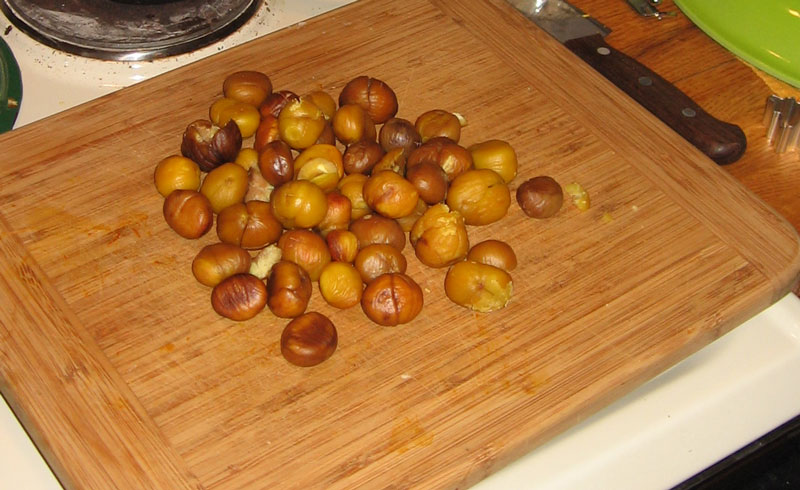
Cut an X into the top of each chestnut and then bake them in a 350 degree oven for about 30 minutes (or until tender). I bake them in a covered dish, and when I remove the dish from the oven I take a few nuts out at a time, leaving the rest warm for easier shell removal. Remove shells and chop finely. Set aside.

Meanwhile, melt butter in large pan over medium heat. Add onions and then a minute or two later the celery. Cook until translucent, taking care not to burn. Add sage, salt and pepper to taste, and chestnuts. Stir for a few minutes, and then add breadcrumbs. Pour in a little boiling water (I am sorry to say, I have no idea how much I used here..maybe about a cup). It should be enough to moisten the breadcrumbs, but not make them soggy. Cover and place in a 350 degree oven for a few minutes to warm before serving. I guess that you could stuff it inside a bird too, but I really don’t have any idea how!
my grandma’s pumpkin pie
November 27, 2009
When it comes to pumpkin pie, this is the recipe that I always use. It is my dad’s mom’s recipe, and since I never met her, it is one of those things that makes me feel closer to her! I love to know that I do some of the same things that she did sometime way back when.
I was so tired last night when I got home from work, that I didn’t have any energy to put the pumpkin in the oven to bake. The result was that I had to drag myself out of bed at about 5:30 this morning to pop the squash in the oven!

Baking pumpkin is actually really easy. Whack off the stem of the pumpkin or squash. You can also use sweet potatos if you don’t have pumpkin, or you want to try something new. Cut the pumpkin in half, from top to bottom and remove seeds and any other stringy things. Place pumpkin cut side down on a jellyroll pan or in a baking dish. Fill the pan about 1″ high with water (if you are in a hurry you can use boiling water here to speed up the process). Bake in a 350 degree oven until completely tender, about 1 or 1 1/2 hours. When you stick a knife into the top it should go in really easily.

Remove pumpkin from oven, take out pan with water, and remove the peel. Place pumpkin pieces into a collander to drain. This is important especially if the pumpkin is particularly moist.
Here is my Grandma’s Recipe for Pumpkin Pie (more or less)
Preheat oven to 450 degrees.
1 9″pie crust (recipe for about 2 crusts, or one pie crust with decorations, etc) It is best to have the dough prepared in advance so that it can chill in the fridge while you are preparing the filling.
1 teaspoon nutmeg (use a little less if freshly ground)
1 teaspoon cinnamon
1 teaspoon ginger
1 teaspoon cardamom (use a little less if freshly ground)
1/2 teaspoon salt
3/4 cup sugar
6 tablespoons sour cream
2 1/2 cups pumpkin (her recipe calls for 1 3/4 cups, but my sister and I both prefer it with more pumpkin)
Whisk the above ingredients in a medium bowl. Stir until ingredients are combined, then add 1 can evaporated milk.
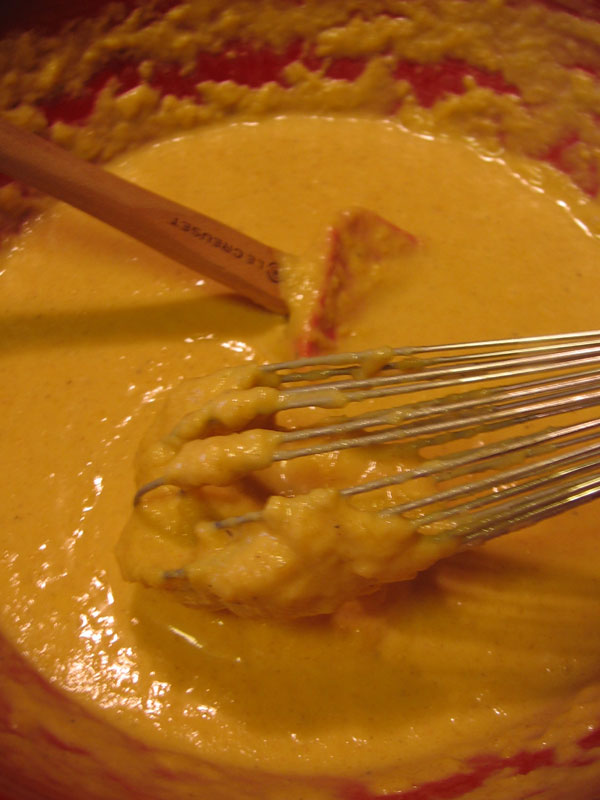
Mix thoroughly and then put through a food mill, or in a food processor. The above image is before the food mill. I personally like my pie with more texture, so I use a food mill, or nothing at all. A food processor takes out all the texture! (NOTE: My sister purees the pumpkin by itself first. I think that this might be the usual way to do it!!)

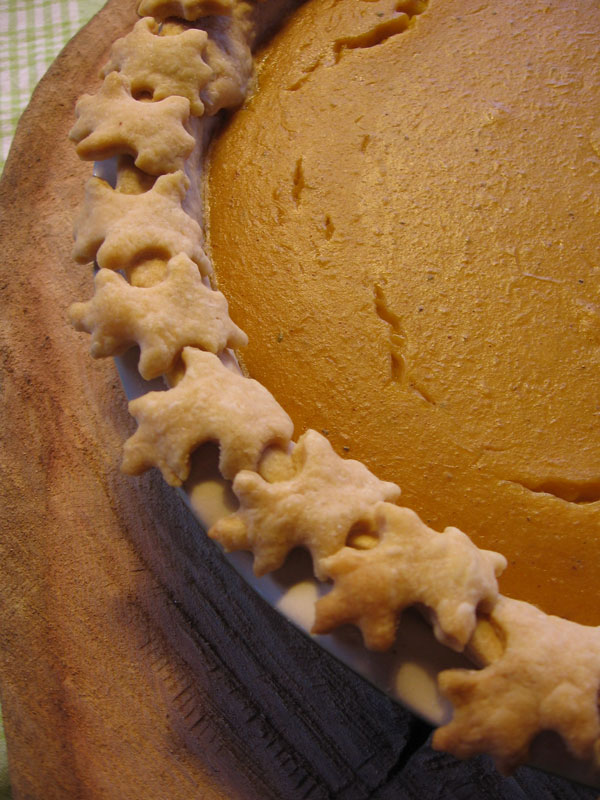
Roll out dough and place in the pie pan, cutting edges nicely. I added little leaves that I cut out with a miniature leaf cookie cutter. It was really fun to make them and I loved how the extra detail looked on the finished pie.

Pour the pumpkin filling into the pie and place into oven. After 10 minutes, turn the oven down to 350 degrees and bake until pie is firm, and a knife comes out clean when stuck into center of pie (about 35 minutes more). I placed some parchment paper around the edges to protect the crust from burning. I find that my pies generally take more than the additional 35 minutes to cook. Not sure why.
tofu turkey legs (thanksgiving part I)
November 27, 2009

This isn’t really my favorite Thanksgiving food item, but there is something so magical or whimsical about it that I have to say it is my favorite Thanksgiving idea. Being vegetarian, I have never had the fun of eating turkey. I don’t really have a problem with that, and don’t really feel like I am missing some huge taste or anything. Maybe I just haven’t had any really good turkey yet…some day I will probably get around to trying it, but for now I will be happy with enjoying the company of the wild turkeys that strut down my lane, and be satisfied with tofu turkey legs.

I don’t know who came up with this recipe. But I do have a clear memory of my siblings and I wandering through the woods in search of the perfect “bones” (actually twigs). And then I have an image of tofu turkey legs roasting in the little toaster oven on the counter, probably because there wasn’t any room left in the oven. I can imagine my mom, busy all morning with baking, getting ready for guests, polishing silver, etc, etc, enjoying a quick break when we all trooped outside in search of twigs.
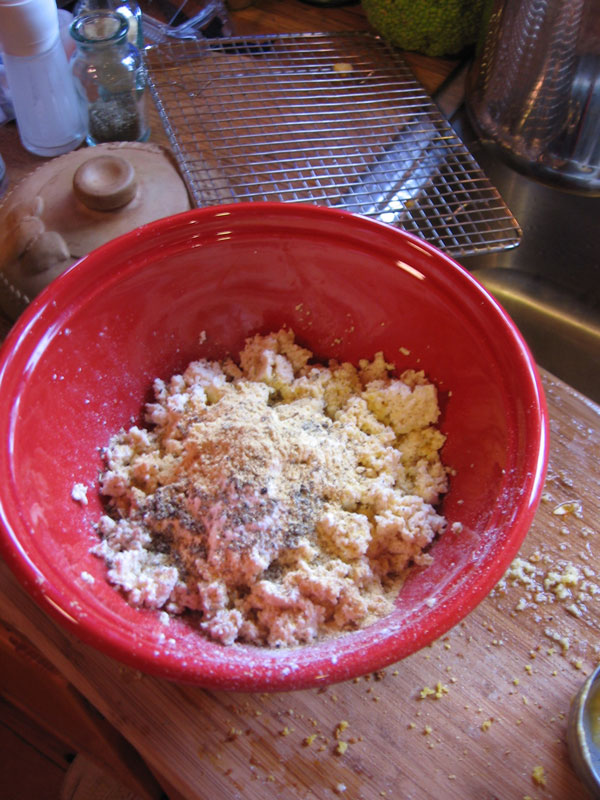
I went over to my mom’s house this morning and borrowed her hand written recipe card for tofu turkey legs. The general recipe is vague. I ended up adding a lot of sage to make the tofu taste good. And quite a bit of pickle juice from some bread and butter pickles that I made in the summer. Salt and pepper, mustard powder, and more sage. And some fresh parsley from the garden (still going!!!). And cornmeal for texture.
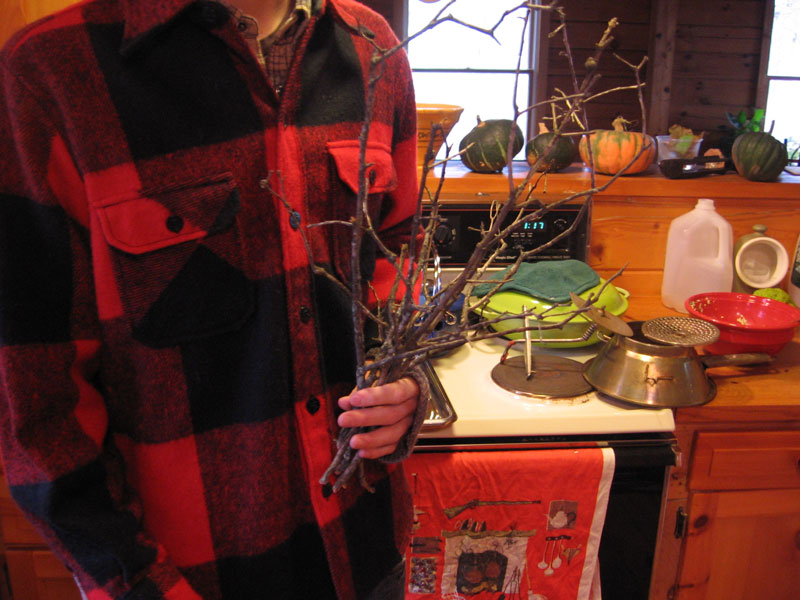
I sent Skye out to forage for the bird legs in the yard. He came back in, and we broke off a good bunch for our legs.

Break the branches into as manageable sizes as you want. I think that they end up being easier to handle if they are about 6″ or so long. Generally I would suggest to wash them, but we didn’t and the toasty oak bark definitely gave the legs a nice flavor! It ends up being a bit more rustic that way.

Mix up the tofu, and whatever you add to make it taste good and stick together, and press it onto the sticks. This step needs to be done carefully. The tofu really needs to be pressed onto to the sticks well, or it might fall off during cooking or transferring…

The finished turkey leg looks lovely on a plate full of thanksgiving sides. We opted for kale over green beans as the kale was fresh and green and in our garden!
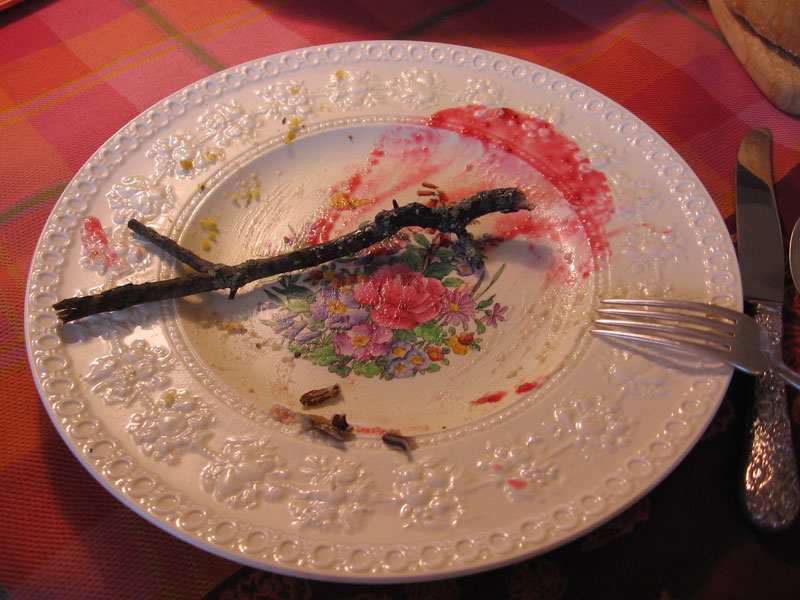
I just love the finished dinner plate. Fancy china, freshly polished silver, pressed linen tablecloth, and a lichen covered dirty twig. hehehe
birthdays, moms, and crepes
November 24, 2009

My mom came over this morning with a bowl of crepe batter, a bowl of sugar, her crepe pan, and a bundle of packages wrapped in recycled wrapping paper. I have to say that I have the best mother EVER!!
So we made crepes for breakfast. With sugar and lemon juice. Very simple and delicious. My grampa used to make crepes like that, and also that is how my mom has had them in Germany (and my grampa is German, so maybe there is a connection!).

The crepe batter (she used the recipe from Joy of Cooking) is made using eggs, flour, water, milk, butter, and salt. It is fine to leave some of the lumps, as they work their way out. We used her crepe pan, which is carbon steel, made in France, as well as my pan, which is a cast iron griddle. Kind of a crepe off, to test which pan worked better. We decided that we liked the texture of the crepes from her pan, although the heat was better in my pan. She isn’t used to my stove, so her pan ended up getting a little too hot. (Might be a stove thing more than a pan thing.)
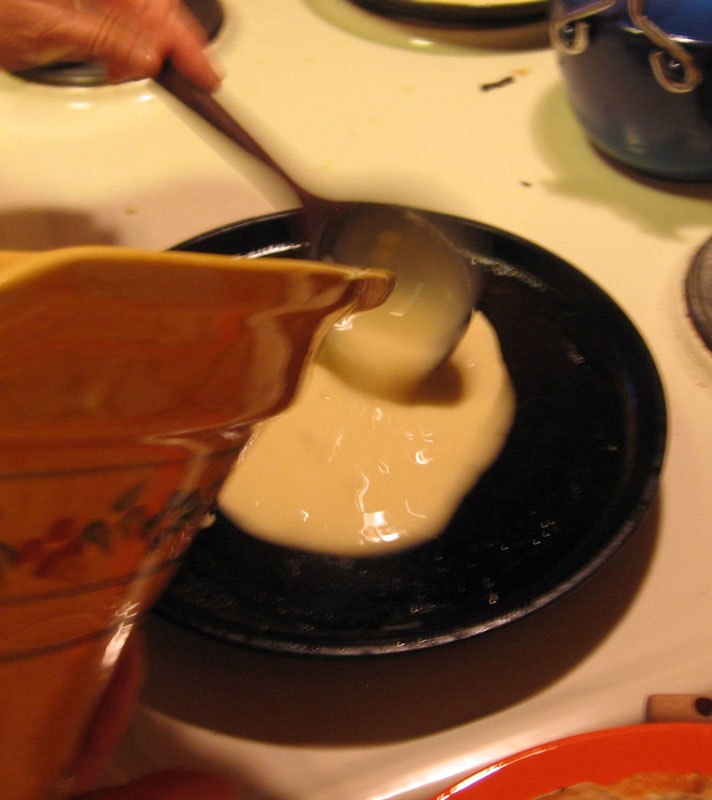
First, place a little oil in the pan. I like to swish it around with a pastry brush instead of paper towel (I don’t actually have any paper towel…). When the pan is hot, not smoking, pour in the batter and swirl the pan around so that the batter evenly coats the bottom of the pan. We used about a 1/2 cup or so of batter per crepe (I think).
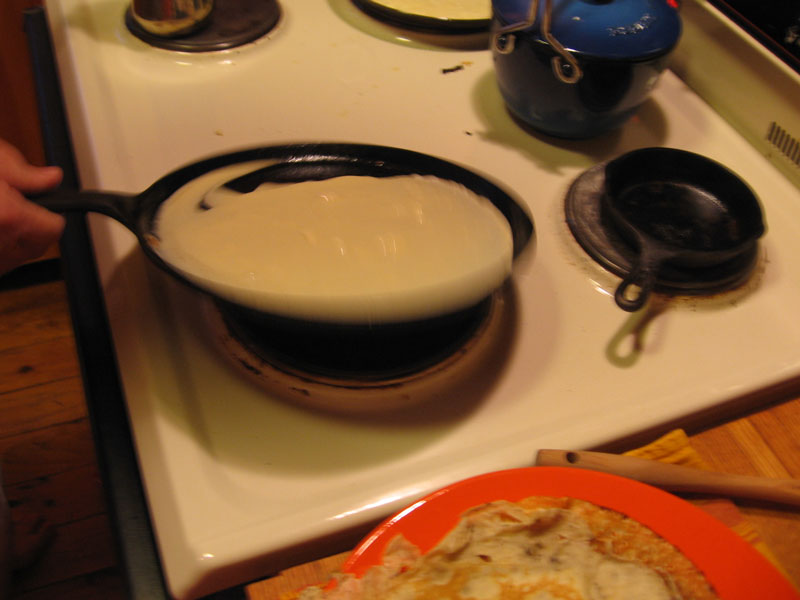
A nicely “swished” crepe, waiting to be turned. You can see that it is cooking nicely by looking at the bubbles on the edges. It is good to remember here that the first crepe often turns out a little funky. Just like pancakes. You need to make sure the temperature is correct, and work out any kinks in timing, amount of oil etc. Then things generally smooth out and work well.

Let the crepe cook, until the first side is golden. Flip crepe carefully, using a spatula to lift up the edges.

Cook the second side of the crepe, and then place finished crepe on a plate (this plate can be warmed, or placed in a low oven to keep crepes warm if you are making a large quantity).
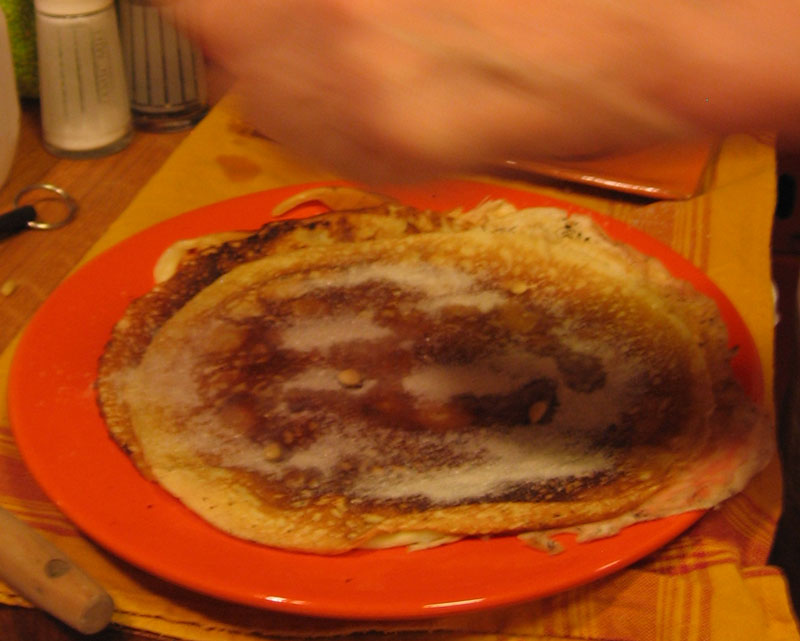
When we finished making all the crepes, we sprinkled each crepe with sugar (to taste) and then a squeeze of lemon juice. My mom folds them in half and then in half again.

We ate our crepes at the table with some coffee and a jar of apple sauce!

pizza, peels, and burns…
November 14, 2009
The last few times I made pizza I used my cast iron pizza pan. It heats up really well, and retains the heat for quick, even cooking. I usually preheat my oven to abut 500 degrees with the pizza tray in there. Then, I place the pizza dough in the oven for a few minutes first, and then remove it, add the sauce and cheese, and finish baking. The only difficulty has been in getting the pizza (rising on the counter) into the oven and neatly onto the preheated pan. 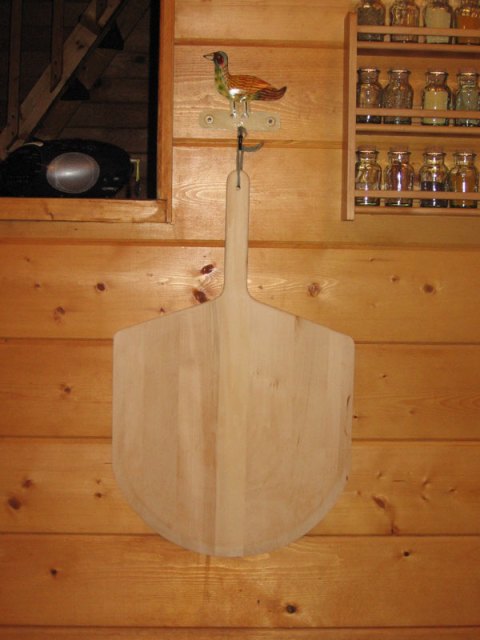
So…I brought home a pizza “peel” from the store last night to help with this process! I have been wanting one for a long time, and finally got around to getting one. It is really handy, because you can roll out the dough and leave it to rest on the peel, covered with cornmeal (I forgot to get some so I used a liberal amount of flour). When the pizza is ready to go into the oven, the long handle is perfect for sliding it in without too much awkwardness!

My dough recipe is currently located on two sticky notes. I copied it out of my sister’s journal from Italy. I usually make about 1/3 of the above recipe, and that is a huge pizza! If I preheat my oven to 500 degrees, I usually don’t cook it quite as long as the recipe says either. I just watch the pizza like a hawk until it looks finished.

Here is the dough. According to Erika, our pizza teacher, the dough should have the consistency of an earlobe. Plenty of kneading and plenty of olive oil helps with this. After I kneaded the dough I rolled it out and placed it on the peel to rise. I then chopped some fresh mozzarella cheese into chunks, and set aside. For sauce I used a jar of tomatoes that I put up this summer!! 
Last night I made the mistake of poking the top of the pizza dough while it was in the oven. There was a large bubble, and I popped it and seared the back of my finger with steam…a little reminder NOT to stick your fingers in a hot hot oven!

Here is the finished pizza. It is a little bumpy because of the big bubble, but it tasted really yummy. I think that if I had used a little more water in the crust it wouldn’t have turned out quite as crispy, but it was good anyway. My mom and I ate it with sauerkraut on top. Sauerkraut seems to be sneaking its way into lots of different dishes these days…
roasted chestnuts
October 24, 2009
 This might be the simplest way to prepare chestnuts (with the exception of eating them raw, which apparently some people swear by). Take a sharp knife and cut an x across the top of the nut, pop as many as you want in a covered dish and stick them in the oven. I cooked mine in a 400 degree oven until they were tender, which I think took about 30 minutes, although I wasn’t watching the clock. I took them out, put a pot holder under the roaster, wrapped the whole thing in a towel to keep the chestnuts warm, and sat down by the fire to enjoy a quick dinner.
The trick is to keep the chestnuts warm as you are peeling them. Keep most of them tightly wrapped up as you crack open a few at a time. This is harder on the thumbs (mine tend to get a little burned when I am opening the toasty shells). The “x” cut into the top of the nut makes it really easy to peel them. I put one in a cloth napkin in my hands and pressed the nut slightly to crack the shell. Because the chestnuts I used were cured (left to dry out for a few days before refrigeration) the peel came off very easily and the nuts had a deliciously toasted sweet flavor.
This particular batch of chestnuts came from a chestnut farm in Winfield, Ia, about 40 minutes away from me. The farm is certified organic, and run by three generations, a grandfather and grandmother, daughter, and grandson!! They have about 3 acres planted with chestnut trees, that they planted in 1992, and last year they harvested about 6,000 lbs of chestnuts! They sent me home with a baggie of nuts to plant in the field outside my house. I am going to try and have a mini chestnut tree nursery. (Let me know if you want a tree next summer!) The nuts that they gave me were from a tree planted from a chestnut from a tree owned by a woman in Kentucky (I think, or maybe Tennessee). The story goes that everyone in the area knew about her tree, and how wonderful the chestnuts were from that tree, sweet and large. She was very protective of her tree, and wouldn’t give any chestnuts away. Seems kind of silly to me. One night, someone stole into her yard and got some of the chestnuts anyway…
one berry pies
September 24, 2009
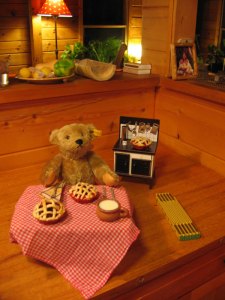
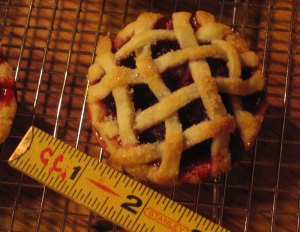
I have been wanting to do this for a long time. Kathy brought me some berries from the market, and I promptly ate most of them, and had to re pick some berries from the back garden. Not sure that I need to say more. Except that my mom came over half way through the baking process and the results were more perfect pies and a teddy bear picnic on my counter.



pears, pie and aprons
September 23, 2009
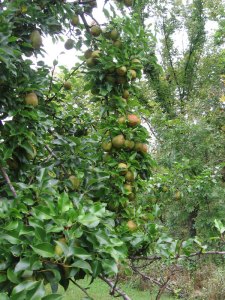
Pears, and more pears. My friend Clint planted this tree in 5th grade, and now look at it! We spent all day picking pears and apples, wandering through the fields, peeling pears, and baking pies. And wearing aprons!

This has to be the best way to pick pears! At least the lower ones. The tree is absolutely loaded. There are so many pears everywhere. We filled our entire bucket, but barely made a dent in the pear population.
Here is a general recipe for pear pie. I am not the most precise cook, so hopefully the directions are clear enough..
Pear Pie
Filling
8 large pears, or a mixture of pears and apples (The pears were a little unripe so we decided to add apples to them when we were baking.)
1 teaspoon vanilla, or a snip of a vanilla bean
3/4 cup sugar (more or less depending on the tartness of fruit)
a pinch of salt
1/4 cup flour
several dots of butter
Pie Dough
1 1/2 cups flour
1 stick unsalted butter
a little salt (I use salted butter and a bit of salt, and so does my mom..)
1/2 cup ice water
Mix flour, salt and butter with a pastry cutter until texture resembles cornmeal. Add ice water a bit at a time until mixture comes together to form a ball. Divide dough into two balls and chill at least 1/2 hr in fridge.
Meanwhile, peel, core and slice apples and pears. Place in pot, with a little water and vanilla bean. Cook until pears are soft. This step allows you to fit more fruit in the pie! Add sugar, salt, and flour. You can let the pears cool a little before you put them in the pie shell (we didn’t, but it is probably a good idea..).
Roll out pie dough, place one in pie pan, fill with filling, and place top on. Seal the edges, and poke the top with a fork.
Bake in a 450 degree oven for 10 minutes, and then bring temp down to 350. Bake for an additional 35-45 minutes, until top is nicely golden. You might need to cover the pie with some parchment paper if it gets too brown on the top early on. Remove, and cool as long as you can wait.
Yummy with vanilla ice cream!

 living in the woods and making stuff